








The modern web development ecosystem is currently undergoing a period of rapid transformation. As architectural patterns shift toward more efficient rendering strategies and the ECMAScript standard continues to expand its native capabilities, developers are finding themselves at a crossroads of new tooling and evolving best practices. This report explores the recent shift in the Vite ecosystem, the implications of the newly minted ECMAScript 2026 standard, and the changing landscape of software testing and AI-assisted development.
1. Main Facts: The Open-Source Pivot and Standard Advancements
The Vite+ Paradigm Shift
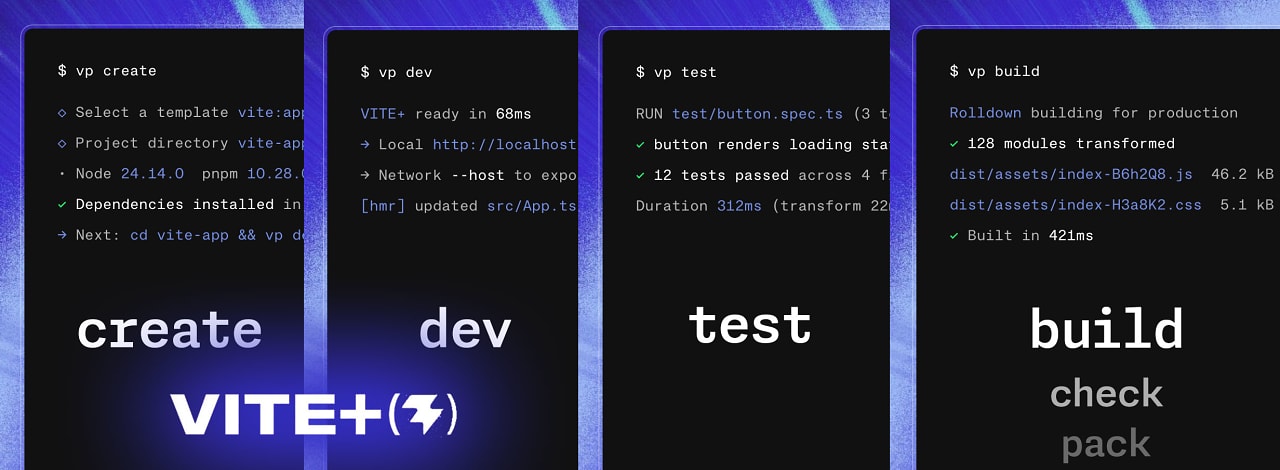
Perhaps the most significant development in the build-tooling space is the maturation of Vite+. Originally conceived as a commercial project designed to create a sustainable funding model for the broader Vite ecosystem, Vite+ has taken a dramatic turn toward accessibility. Earlier this year, the project was officially transitioned to an open-source model under the permissive MIT license. This shift is intended to accelerate adoption, invite community contributions, and ensure that the performance optimizations inherent in Vite+ are available to the widest possible audience of developers, rather than being gated behind a commercial barrier.
ECMAScript 2026: A Standard Solidified
The ECMAScript 2026 specification, a massive 876-page document, received official approval last week. This update represents a concerted effort by the TC39 committee to bridge the gap between developer productivity and runtime performance. Key additions, such as Array.fromAsync and native Base64/Hex conversion support for Uint8Array, signal a move toward reducing the dependency on heavy third-party polyfills and utility libraries.
2. Chronology of Developments
- Early 2026: Vite+ developers announce the transition of the project from a commercial, proprietary offering to a fully open-source MIT-licensed project.
- Mid-2026: Initial public beta releases of Vite+ gain traction, with community testing identifying key performance bottlenecks in large-scale enterprise builds.
- Late June 2026: Final deliberations on the ECMAScript 2026 specification reach a consensus.
- July 2026: The ECMA-262 standard is formally approved, bringing native support for advanced array and binary data handling to the browser and server-side runtimes.
- Current Status: Developers are actively integrating ECMAScript 2026 features, with Node.js trailing slightly behind browser runtimes in its implementation of specialized functions like
Math.sumPrecise.
3. Supporting Data and Technical Innovations
The Testing Revolution
As the complexity of web applications grows, the manual creation of end-to-end (E2E) UI tests has become a primary bottleneck for development teams. Innovations like Meticulous AI have emerged to solve this, utilizing a testing paradigm that requires zero manual intervention from developers. By recording user interactions and automatically creating an evolving test suite, companies like Notion, Dropbox, and LaunchDarkly have reported significant reductions in regression cycles. This data underscores a shift in industry expectations: developers are no longer expected to write every test case manually, but rather to manage the systems that generate them.

Rendering and Hydration
The technical debate surrounding rendering strategies continues to intensify. As outlined by industry experts like Neciu Dan, the industry is moving toward a more nuanced understanding of "islands" and "resumability." The choice between Server-Side Rendering (SSR), streaming, and React Server Components (RSC) is no longer a binary decision but a calculated architectural choice based on the specific interactivity requirements of the application.
The "No-JS" Movement
Simultaneously, a counter-movement is gaining momentum. Aaron T. Grogg’s recent catalog, Things You No Longer Need JavaScript For, highlights how advancements in native CSS and HTML have effectively deprecated the need for JavaScript in many common UI patterns. This movement is not merely a stylistic choice; it is a performance-first philosophy that advocates for leveraging browser primitives to reduce payload sizes and main-thread blocking.
4. Official Responses and Industry Perspectives
Carson Gross on AI in the Workflow
Carson Gross, the creator of htmx, recently provided a candid reflection on the role of artificial intelligence in software engineering. Rather than viewing AI as a replacement for the developer, Gross frames it as a diagnostic assistant. Using a concrete example of debugging a complex issue with Claude, Gross demonstrates that AI is best utilized for "investigative work"—helping to parse logs or suggest potential causes for bugs—rather than writing the entirety of an application’s logic.
Furthermore, Gross addresses the "older developer" perspective, a topic frequently ignored in the hype-cycle of new tech. He notes that the experience of senior engineers allows them to apply a skeptical, pragmatic lens to AI-generated code, ensuring that the convenience of automation does not come at the cost of architectural integrity.
The Standardization Perspective
The approval of the 2026 spec was met with broad praise from the community. Pawel Grzybek, in his comprehensive round-up of the changes, noted that the speed of adoption by browser vendors has been unprecedented. "The fact that most of these features are ready to use in production immediately upon specification approval is a testament to the collaborative nature of modern web standards," Grzybek remarked.
5. Implications for the Future of Web Development
The End of "Over-Engineering"
The convergence of these trends—native ECMAScript features replacing polyfills, the rise of "No-JS" CSS patterns, and AI-assisted debugging—suggests that we are entering an era of "Lean Web Development." Developers are increasingly encouraged to return to the fundamentals of the web, relying on browser-native capabilities rather than complex build pipelines or bloated dependency trees.
Building for Sustainability
The transition of Vite+ to open-source is a clear indicator that the industry values long-term ecosystem health over short-term commercial gain. By lowering the barrier to entry for high-performance build tools, the maintainers are effectively "democratizing" the performance standards that were once exclusive to the largest tech firms.
The AI Integration
The integration of AI into the developer workflow, as seen with Meticulous AI and the practices shared by Carson Gross, represents a fundamental change in the "Developer Experience" (DX). As testing becomes automated and bug investigation becomes a collaborative effort with LLMs, the role of the human developer is shifting from that of a "coder" to that of an "architect" or "orchestrator." The focus is moving toward high-level logic, user experience design, and system reliability, while the "grunt work" of manual testing and polyfill management is increasingly handled by the infrastructure itself.

Final Thoughts: A Call to Adapt
For developers looking to remain competitive in late 2026, the mandate is clear:
- Adopt Native Standards: Audit your dependencies. If a standard feature in the 2026 spec can replace a library, make the switch to reduce bloat.
- Evaluate AI Critically: Integrate AI into your debugging and testing pipelines, but maintain a senior-level oversight to ensure accuracy and maintainability.
- Architect for the User: As rendering strategies like streaming and islands mature, ensure your architectural choices are driven by user-perceived performance rather than the latest framework trends.
The web of 2026 is faster, more standardized, and more automated than ever before. While the pace of change is dizzying, the trajectory is positive: toward a web that is more resilient, easier to maintain, and fundamentally more powerful for those who build upon it. Whether you are managing a massive enterprise application or a small personal project, the tools available today offer a unique opportunity to build better, faster, and with significantly less effort than at any point in the history of the internet.