










New Delhi — As artificial intelligence rapidly redefines the boundaries of software creation, the foundational role of the software developer is undergoing a profound transformation. Rather than shrinking the scope of the profession, AI is expanding it, pushing engineers to look past syntax and focus heavily on systems architecture, security, operational scale, and human intent.
In a recent, exclusive conversation with Indianexpress.com during his visit to New Delhi, Darko Mesaroš, Distinguished Developer Advocate at Amazon Web Services (AWS), unpacked these shifting paradigms. Drawing upon more than two decades of experience in tech, systems administration, and software engineering—including an 11-year tenure at AWS—Mesaroš provided a comprehensive roadmap for how developers can navigate the era of automated code generation, manage the proliferation of "AI slop," and balance the liberating chaos of experimental "vibe coding" with disciplined, contract-bound engineering.
Main Facts: Redefining the Developer’s Role
The narrative that artificial intelligence will render software developers obsolete is fundamentally flawed, according to industry veterans like Mesaroš. While AI tools can generate code in fractions of a second, code writing has historically been merely a byproduct of true software engineering.
- Coding vs. Engineering: Writing code has traditionally absorbed the vast majority of a developer’s effort, but it is only one component of a holistic discipline.
- Expanded Skill Sets: The modern developer must master much more than writing an efficient function in languages like Rust; they must understand customer bases, systems design, horizontal scaling, and live production operations.
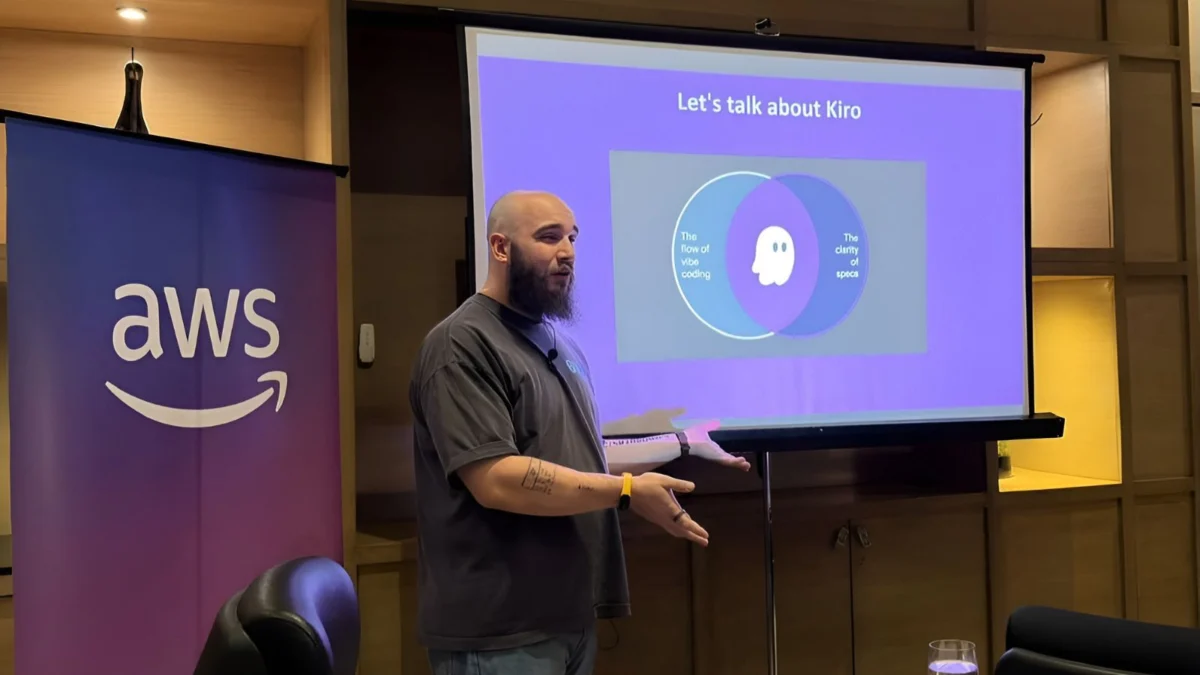
- The Rise of Spec-Driven Development (SDD): To combat the unstructured, chaotic nature of AI-generated applications, AWS’s developer-focused tools—such as the AI-powered IDE Kiro—champion a structured paradigm where requirements and design decisions are formally specified before code generation begins.
- Persistent AI Memory: Addressing a major bottleneck in AI tooling—the lack of session continuity—AWS tools like Kiro Crew utilize open-source agent orchestrators equipped with long-term memory features that learn a developer’s unique coding habits across multiple sessions.
- Massive Ecosystem Investments: Highlighting Amazon’s long-term bet on India’s tech landscape, CEO Andy Jassy previously announced a commitment of over $13 billion toward cloud and AI infrastructure between 2026 and 2030, alongside global initiatives committing over $500 million to cloud and AI training.
Chronology: The Journey from Manual Coding to AI Agents
To understand where software development stands today, it is helpful to trace the rapid evolution of developer workflows over the past decade:
- Pre-2023 (The Era of Manual Craftsmanship): Software engineering was heavily bound to manual syntax writing, boilerplate generation, and meticulous debugging. Developers spent countless hours translating abstract logic into concrete lines of code across various frameworks and libraries.
- 2023–2024 (The Advent of Assistant Tooling): Early generative AI models entered the mainstream, acting primarily as autocomplete engines or chat-based syntax generators. While helpful, these models suffered from severe context limitations, forcing developers to repeatedly explain their technology stacks, architectural preferences, and coding styles at the start of every new session.
- 2025 (The Era of Vibe Coding and Prototyping): Developers began embracing a loose, iterative back-and-forth communication style with AI agents—colloquially dubbed "vibe coding." While exceptional for rapid prototyping, exploration, and creative brainstorming, this unstructured method frequently yielded poorly optimized applications, technical debt, and fragmented codebases.
- 2026 and Beyond (The Spec-Driven and Orchestrated Era): The industry is pivoting toward structured frameworks and persistent memory. Tools like AWS’s Kiro and open-source orchestrators like Kiro Crew introduce cross-session memory and strict specification contracts, ensuring that AI-generated software aligns precisely with human intention and enterprise-grade architectural standards.
Supporting Data and Technical Metrics
The rapid adoption of AI coding tools is accompanied by hard metrics reflecting both the scale of developer engagement and the technical complexities of agentic orchestration:
- 11 Years of AWS Leadership: Darko Mesaroš brings over two decades of tech industry experience, including more than a decade at AWS, giving him a unique vantage point on global cloud and development trends.
- 10,000+ Pull Requests: Exemplifying the collaborative scale of modern open-source AI tooling, AWS’s Kiro Crew has processed over 10,000 pull requests. Crucially, every single software change and pull request was meticulously reviewed and approved by a human engineer, emphasizing that accountability remains strictly human.
- 273 Learned Lessons: Demonstrating the efficacy of persistent memory in AI agents, Mesaroš noted that Kiro Crew has accumulated 273 distinct contextual lessons based strictly on his personal interactions, preferences, and coding habits.
- 10 Million+ Learners: Within India alone, more than 10 million individuals have participated in various AWS training and certification initiatives.
- $13 Billion Investment Horizon: Demonstrating long-term confidence in the region’s digital economy, Amazon committed over $13 billion to India’s cloud and AI infrastructure spanning the 2026–2030 timeframe, complemented by a worldwide commitment of over $500 million dedicated strictly to student cloud and AI training.
Official Perspectives: Navigating "AI Slop" and Vibe Coding
During his discussion with Indianexpress.com, Mesaroš addressed several controversial topics currently dominating developer forums, ranging from the utility of vibe coding to the existential threat of low-quality automated software.
Vibe Coding vs. Spec-Driven Development
Many purists view vibe coding—the casual, iterative prompting of an AI agent until it produces a working prototype—as a threat to engineering discipline. Mesaroš, however, offered a more balanced perspective:
"Vibe coding is not going away. It’s an integral part of software development because it’s not just about—you have to write this complicated thing every time you do anything. Vibe coding is there to help you explore, build prototypes, and experiment with what you want to build."
Despite its utility in the creative phase, Mesaroš stressed that production environments require a much higher standard of accountability, which is where spec-driven development (SDD) takes center stage. By turning the prompt process into a formal contract between the engineer and the AI agent, SDD establishes clear boundaries for what needs to be produced.
Eliminating "AI Slop"
The ease of generating code via automated agents has led to an unprecedented volume of poorly constructed applications flooding the market. Mesaroš did not mince words regarding this phenomenon:
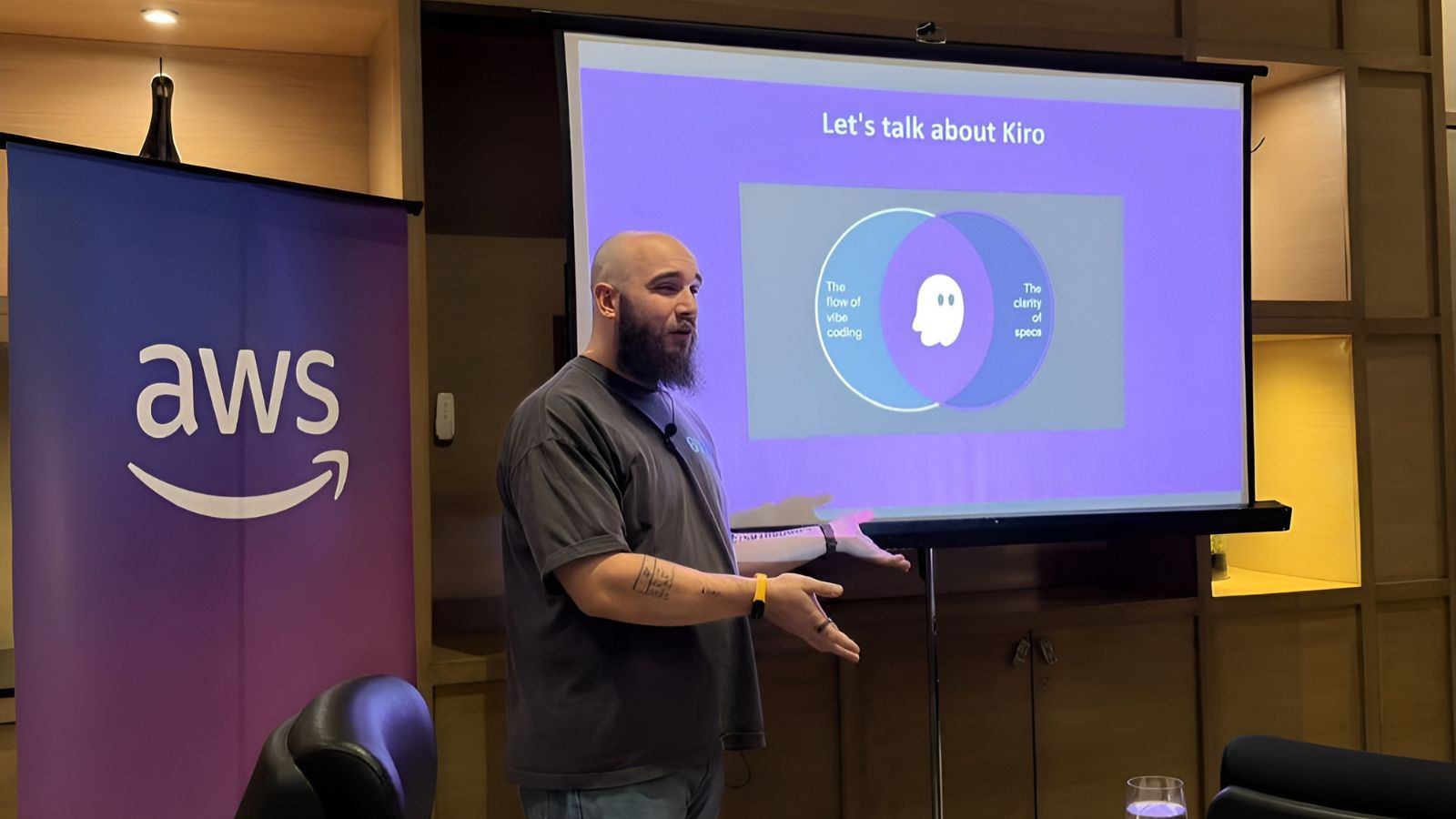
"We’ve seen so much AI slop out there… I actually mean AI slop applications, and we all know what they look like when we see them. So spec-driven development absolutely helps prevent that."
Context, Memory, and Cost Efficiency
A persistent grievance among developers utilizing early-generation AI tools has been memory loss across sessions. Developers were forced to continuously re-explain their software architecture, coding frameworks, and library preferences. Mesaroš highlighted how AWS is solving this through orchestrators like Kiro Crew:
"I have 273 lessons Kiro Crew has learned from me interacting with it."
Furthermore, addressing the financial overhead of running large-scale language models for routine coding tasks, Kiro integrates intelligent "auto" routing. This feature ensures that simpler tasks are directed to cost-effective, streamlined models rather than draining resources by defaulting to the largest and most expensive models available.
Implications for the Future of Software Engineering
As the software development landscape crosses into a fully agentic era, several critical implications emerge for developers, enterprises, and regional ecosystems like India’s burgeoning tech corridor.
1. The Dual Mandate: Broadening and Deepening Skills
The advice for engineers looking to remain competitive is clear: resist specialization in a single programming language, framework, or library. Instead, developers must simultaneously broaden their understanding of system architecture, infrastructure, and operations while deepening their technical curiosity by using AI tools to inspect how foundational systems operate under the hood.
2. Absolute Human Accountability
While AI agents can write functions, suggest patches, and manage repository workflows, the ultimate legal, ethical, and operational responsibility remains firmly planted on human shoulders. As demonstrated by the 10,000+ human-approved pull requests in Kiro Crew, automation accelerates velocity, but human oversight ensures system integrity.
3. India’s Position as a Global AI Engine
With massive capital infusions, including Amazon’s multi-billion-dollar infrastructure commitment and tens of millions of professionals participating in upskilling programs, India continues to solidify its status as a cornerstone of the global digital economy. Mesaroš observed that while Indian developers share the same foundational challenges as their global peers, their unique enthusiasm and dedication to building innovative systems position them exceptionally well for the AI-driven future.
Ultimately, the evolution of software development is not about writing less code; it is about elevating the developer from a manual syntax writer to a systems architect who orchestrates intelligent agents to solve complex human problems.



