NEW DELHI — As states across India aggressively compete to capture a lucrative slice of the nation’s rapidly expanding artificial intelligence (AI) economy, top public policy think tank NITI Aayog has stepped in with a rigorous blueprint. Aimed at steering policy away from vanity investment announcements and toward sustainable, resource-conscious development, the agency has released a pioneering policy document titled “The Data Centre Evaluation Framework to Help States Plan for Sustainable Growth.”
The initiative comes at a critical juncture for India. With the explosive growth of generative AI, cloud computing, and digital governance initiatives, the country’s appetite for massive data storage and high-performance computing facilities is soaring. However, these facilities are notoriously resource-intensive, placing immense strain on local power grids, water tables, and municipal infrastructure.
NITI Aayog’s newly minted framework seeks to ensure that state governments look beyond the glossy headline figures of Memorandums of Understanding (MoUs) and instead audit whether a proposed project’s power, water, land, environmental, and connectivity needs can genuinely be met without harming local communities or existing resource pools.
Main Facts: Core Pillars of the New Framework
Developed in close collaboration with Deloitte India, alongside critical inputs from the Ministry of Electronics and Information Technology (MeitY), the Ministry of Power, and the Department for Promotion of Industry and Internal Trade (DPIIT), the framework serves as an advisory guide for state-level decision-makers. Rather than imposing an unyielding, top-down regulatory burden, it offers a modular evaluation matrix designed to promote sustainable, high-value investments.
The framework is built upon four foundational pillars:
- Infrastructure Readiness: Ensuring that power transmission networks and water supplies are physically commissioned before final operational approvals are granted.
- Resource Safeguards: Protecting public utilities, agricultural needs, and residential drinking water by mandating long-term availability studies.
- Outcome-Linked Incentives: Tying government subsidies, land concessions, and tax exemptions directly to verifiable milestones such as job creation, localized procurement, and strict energy efficiency targets.
- Environmental and E-Waste Compliance: Enforcing stringent lifecycle management for electronic waste, batteries, and diesel generator footprints.
Chronology of Development: How the Policy Took Shape
The formulation of the Data Centre Evaluation Framework reflects a multi-layered, consultative policymaking process spanning several months of inter-ministerial dialogue and industry engagement:
- Late 2025 – Early 2026: State governments ramp up aggressive incentive packages, tax holidays, and land sops to court global hyperscalers and domestic data centre operators. Concurrently, state distribution utilities (discoms) raise internal flags regarding unprecedented spikes in projected electricity demand and localized water stress.
- Mid-2026: Recognizing the risk of uncoordinated growth and potential grid instability, NITI Aayog initiates a task force in partnership with Deloitte India to study global best practices and local vulnerabilities.
- August 2026: Extensive stakeholder consultations are conducted involving key central ministries—MeitY, the Ministry of Power, and DPIIT—as well as industry representatives from the telecommunications and real estate sectors.
- October 14, 2026: NITI Aayog officially publishes the comprehensive framework, laying down guidelines for state governments to overhaul their single-window clearance and project appraisal mechanisms.
Supporting Data: The Anatomy of Resource Stress
To understand why NITI Aayog has introduced such prescriptive measures, one must examine the staggering resource footprint of modern data centres.
Power and Grid Stability
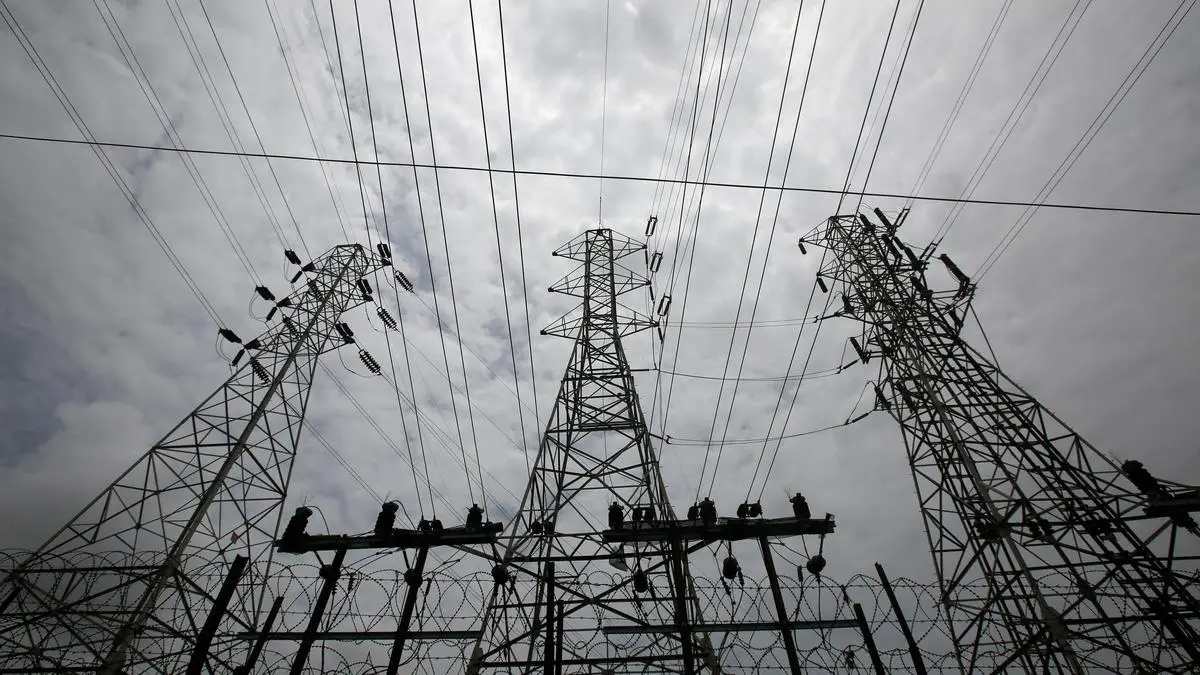
Data centres operate on a 24/7 basis, requiring uninterrupted power (often referred to as ‘baseload’ power) coupled with massive redundancy systems. Under the new framework, states must require developers, power distribution companies (discoms), and State Transmission Utilities (STUs) to jointly formulate a comprehensive power-readiness and ramp-up plan.
Key power-related mandates include:
- Staged Approvals: Additional electricity capacity must only be officially approved after the necessary generation and transmission infrastructure has been physically commissioned, and agreed-upon technical and payment milestones are met.
- Smart Grid Integration: For any facility exceeding 20 megawatts (MW) of capacity, the framework dictates automated demand-response readiness and seamless integration with State Load Despatch Centre (SLDC) telemetry and control systems, in alignment with applicable grid codes.
- Verifiable Green Energy: Developers claiming carbon offsets through renewable energy and battery-storage systems must provide concrete proof of these arrangements before receiving credit toward reducing grid electricity consumption baselines. Furthermore, facilities are expected to drastically cut their reliance on backup diesel generators.
Water Conservation and Sourcing
Cooling systems in modern data centres consume millions of liters of water daily, triggering potential conflicts with local agricultural and municipal water needs.
The framework tackles this head-on by recommending:

- Long-Term Hydrological Assessments: States must mandate a 30-year seasonal assessment of water resources—covering surface water, groundwater, municipal supplies, and treated wastewater—before clearing projects.
- Strict Alternative Sourcing: Alternative water supplies (such as treated sewage or gray water) will only be factored into project viability if they are legally contracted, physically connected, and reliably available at the exact time capacity is commissioned.
- Desalination Mandates: In geographic zones where chronic water stress prevents additional freshwater abstraction, developers will be legally required to utilize desalinated water where technically and economically feasible.
Official Responses and Stakeholder Perspectives
The release of the framework has sparked widespread discussion across government corridors, industry chambers, and environmental groups.
Speaking on condition of anonymity, a senior official at the Ministry of Power noted that the guidelines are vital to preventing grid collapse in industrial hubs experiencing sudden clustering of digital infrastructure. "We cannot allow a localized rush for server farms to destabilize regional power feeds meant for farmers and households. Transmission planning must march in lockstep with digital expansion," the official stated.
Industry bodies, while acknowledging the added compliance layers, have generally welcomed the clarity provided by the policy. A representative from a major digital infrastructure association remarked: "Clear rules, predictable timelines, and transparent single-window clearance matrices reduce long-term regulatory friction. While the emphasis on water and power audits is stringent, it also protects developers from undertaking projects in unviable locations."
State governments, particularly those in southern and western states that serve as India’s primary tech hubs, are reportedly reviewing their existing industrial policies to align with NITI Aayog’s recommendations. Several states are already exploring the creation of dedicated "Data Centre Zones" outfitted with pre-vetted infrastructure.
Implications: Reshaping India’s Digital and Fiscal Landscape
The implementation of NITI Aayog’s framework carries profound implications for India’s economic trajectory, federal governance, and environmental sustainability.
1. Shift from Quantitative to Qualitative Investment
For years, state governments measured success by the sheer quantum of investment announcements notched during global investor summits. The new framework forces a paradigm shift toward net economic and fiscal contribution. States must now weigh government-provided incentives—such as land concessions, stamp-duty waivers, and subsidized power tariffs—against actual local returns, including high-skill job creation, local R&D investments, and domestic hardware procurement.
2. Streamlining Bureaucracy via Digital Single-Windows
To mitigate fears that the framework would introduce bureaucratic red tape, NITI Aayog has strongly advocated for structural administrative reforms. The guidelines propose that states publish a comprehensive compliance matrix detailing:
- Applicable clearances and responsible regulatory authorities
- Mandatory documentation and indicative processing times
- Clear escalation mechanisms for delayed files
- Integration with digital single-window systems for real-time application tracking
3. Environmental Accountability and Circular Economy
By enforcing standardized metrics—such as Power Usage Effectiveness (PUE), Water Usage Effectiveness (WUE), and Carbon Usage Effectiveness (CUE)—the framework brings transparency to the environmental footprint of digital infrastructure. Furthermore, mandatory lifecycle planning for electronic waste (e-waste), spent lithium-ion and lead-acid batteries, and eventual site decommissioning ensures that India avoids the pitfalls of short-sighted tech expansions that leave behind toxic environmental liabilities.
4. Cooperative Federalism
While individual states retain the autonomy to craft their own industrial policies, the Centre—through NITI Aayog, MeitY, and DPIIT—acts as a standard-setting anchor. By providing model guidance, assessment templates, and unified reporting benchmarks, the central government ensures that states do not engage in a "race to the bottom" by compromising environmental safeguards and public utility stability just to undercut rival jurisdictions.
Conclusion
NITI Aayog’s Data Centre Evaluation Framework marks a mature, forward-looking evolution in India’s economic policy. As the nation races to build the physical backbone for the global artificial intelligence revolution, this framework ensures that the digital future is built on solid, sustainable ground. By harmonizing energy demands, water conservation, environmental safeguards, and fiscal prudence, India is positioning itself not just as a high-volume destination for global capital, but as a responsible, resilient leader in sustainable digital infrastructure.