











In the rapidly shifting landscape of enterprise technology, the shelf life of a "best-in-class" AI model is measured in weeks rather than years. For businesses, this volatility creates a strategic dilemma: how to leverage state-of-the-art intelligence without being shackled to a single provider or forced into a perpetual cycle of architectural redesign. Microsoft’s answer to this challenge is Microsoft Foundry, an evolving, model-agnostic foundation designed to allow organizations to build, deploy, and refine agents that grow alongside the frontier of artificial intelligence.
The Core Philosophy: A Model-Agnostic Foundation
The fundamental premise of Microsoft Foundry is that the "agent foundation" must be decoupled from the specific AI models that power it. As models advance, businesses need the operational freedom to swap out underlying technologies—moving from a legacy LLM to a newer, more efficient frontier model—without dismantling the enterprise systems, data pipelines, and governance controls they have already spent significant capital to establish.
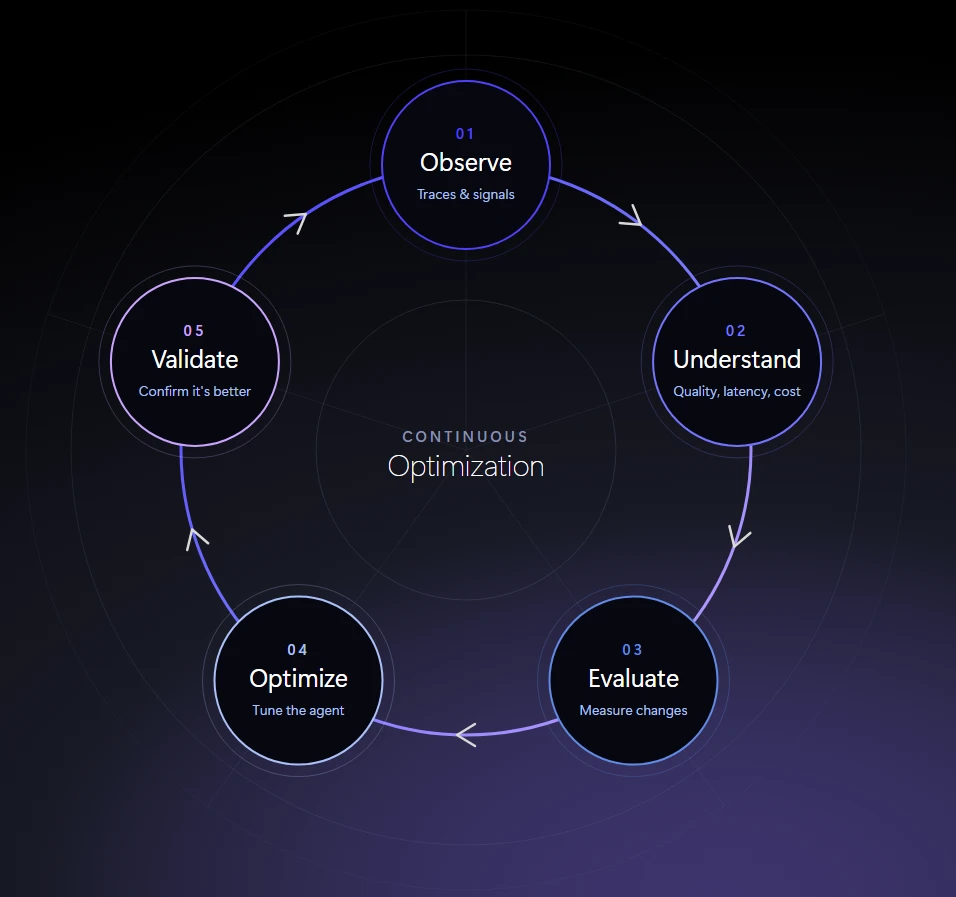
Foundry achieves this through a "hill-climbing" methodology. This is not a static "deploy and forget" approach; it is a continuous loop of observe, evaluate, optimize, and validate. By treating AI development as an iterative process supported by production telemetry, Microsoft is shifting the industry focus from simple prompt engineering to robust, lifecycle-managed agentic workflows.
Frontier Expansion: The Arrival of GPT-6 and Claude Opus 5.5
This week marks a significant milestone in the maturity of Microsoft Foundry with the integration of the latest frontier models. The platform now provides native access to the GPT-6 family from OpenAI—including the high-performance GPT-6 Sol and GPT-6 Luna variants—as well as Anthropic’s Claude Opus 5.5.
The strategic significance of this update is not tied to any single model’s capability, but rather to the breadth of choice now available within a unified environment. For developers, the "best" model for a coding agent is rarely the "best" model for high-volume customer service or deep research. Foundry allows enterprises to perform comparative evaluations across these models using their own proprietary data, measuring tradeoffs in latency, cost, and quality to select the optimal engine for each specific workload.
Voice as a Native Agent Experience
Perhaps the most transformative update to the platform is the introduction of Voice Agents in Foundry Agent Service, now in public preview. Historically, voice-enabled AI was a fragmented discipline, requiring developers to stitch together separate speech-to-text engines, orchestration layers, and monitoring tools.
Foundry simplifies this by treating voice as a native citizen of the agent architecture. Whether using GPT Realtime, Azure Realtime, or third-party MAI voice models, developers can now deploy voice agents that handle natural turn-taking, handle interruptions gracefully, and operate across more than 80 languages and 140 locales. This unified approach allows a single business logic to power multiple channels—from Microsoft Teams and phone systems to web interfaces—ensuring that brand identity and domain-specific vocabulary remain consistent regardless of the interaction medium.
Resilience and Long-Running Workflows
Enterprise tasks are rarely instantaneous. From complex financial report generation to multi-stage supply chain research, many AI-driven tasks require durability and the ability to handle interruptions. Microsoft has addressed this with Long-running resilience in Foundry Agent Service.
If a host process fails or a connection drops, the agent no longer loses its progress. Through the Microsoft Agent Framework, the system utilizes durable checkpointing, allowing agents to resume exactly where they left off. This capability, combined with "CodeAct" and "Hyperlight" containers for isolated code execution, ensures that agents can operate with the reliability required for production-grade enterprise software.
Case Study: Fashable’s Digital Transformation
The real-world utility of these advancements is exemplified by Fashable, an AI-driven platform transforming the fashion industry. By leveraging Foundry’s ecosystem of models, knowledge bases, and tools, Fashable has streamlined the transition from design conceptualization to virtual try-on and campaign imagery.
"People don’t think in prompts, they think in conversations," says Orlando Ribas Fernandes, CEO of Fashable. By integrating voice-first agentic capabilities into their workflow, Fashable has effectively bridged the gap between complex AI systems and non-technical stakeholders. The results are stark: the company reports that its clients have slashed product development timelines from months to mere weeks, with one major retailer reducing physical sampling budgets by 60%.
The Continuous Improvement Loop
Microsoft Foundry’s "hill-climbing" approach is supported by a sophisticated analytics suite that turns production evidence into actionable data. When an agent is live, Foundry tracks performance metrics—quality, latency, and cost—and surfaces recurring issues.
The platform provides a closed-loop system where:
- Observation: Traces are captured in real-time.
- Evaluation: Insights are generated, identifying where the agent is underperforming.
- Optimization: The "Agent Optimizer" suggests changes, such as tweaking instructions or swapping model configurations.
- Validation: The updated agent is tested against the organization’s benchmarks to ensure performance gains before full rollout.
This systematic approach minimizes the "gut-feeling" development cycle, replacing it with evidence-based refinement that keeps agents aligned with business objectives over the long term.
Governance and Enterprise-Grade Controls
As AI agents move from experimental "side-projects" to critical infrastructure, the necessity for stringent governance has never been higher. Microsoft has integrated Foundry deeply with Microsoft Entra and Agent 365, allowing administrators to manage agent lifecycles with the same rigor as traditional software assets.
Key governance features include:
- Identity Lifecycle: Agents can be blocked, disabled, or reassigned, with these policies enforced directly at the runtime level.
- Network Egress Controls: Organizations can define granular allow/deny rules for where an agent can send data, mitigating the risk of unauthorized information exfiltration.
- AI Gateway Tier: Arriving in October, the new Azure API Management integration will support a "hub-and-spoke" governance model, allowing platform teams to centrally curate approved models while providing developers with the freedom to experiment within established guardrails.
- Safety Verification: The new open-source
run-assert-evalSkill automates the verification process, running safety, toxicity, and quality assertions in sequence to provide a clear audit trail of agent reliability.
Strategic Implications for the Future
The release of these capabilities signals a shift in how Microsoft views the AI market. By positioning Foundry as the "operating system for agents," Microsoft is betting that the winning enterprises will be those that can iterate the fastest.
The integration of voice, the focus on long-running resilience, and the tightening of governance controls suggest that the "wild west" era of LLM experimentation is closing. In its place, we are seeing the rise of professionalized, highly governed, and continuously optimized agentic fleets.
For CIOs and engineering leads, the implications are clear: the focus must move away from "choosing a model" and toward "building a capability." By leveraging a platform that abstracts the underlying model complexity, businesses can focus on the unique value they bring to their customers—whether that is designing fashion, automating supply chains, or redefining customer service through natural, voice-driven interaction.
As Fashable and other early adopters demonstrate, the value of this approach is measured in saved months, reduced budgets, and the ability to scale innovation at the speed of the frontier. Microsoft Foundry is not merely a toolset; it is an architectural strategy for the next decade of enterprise software development.



