










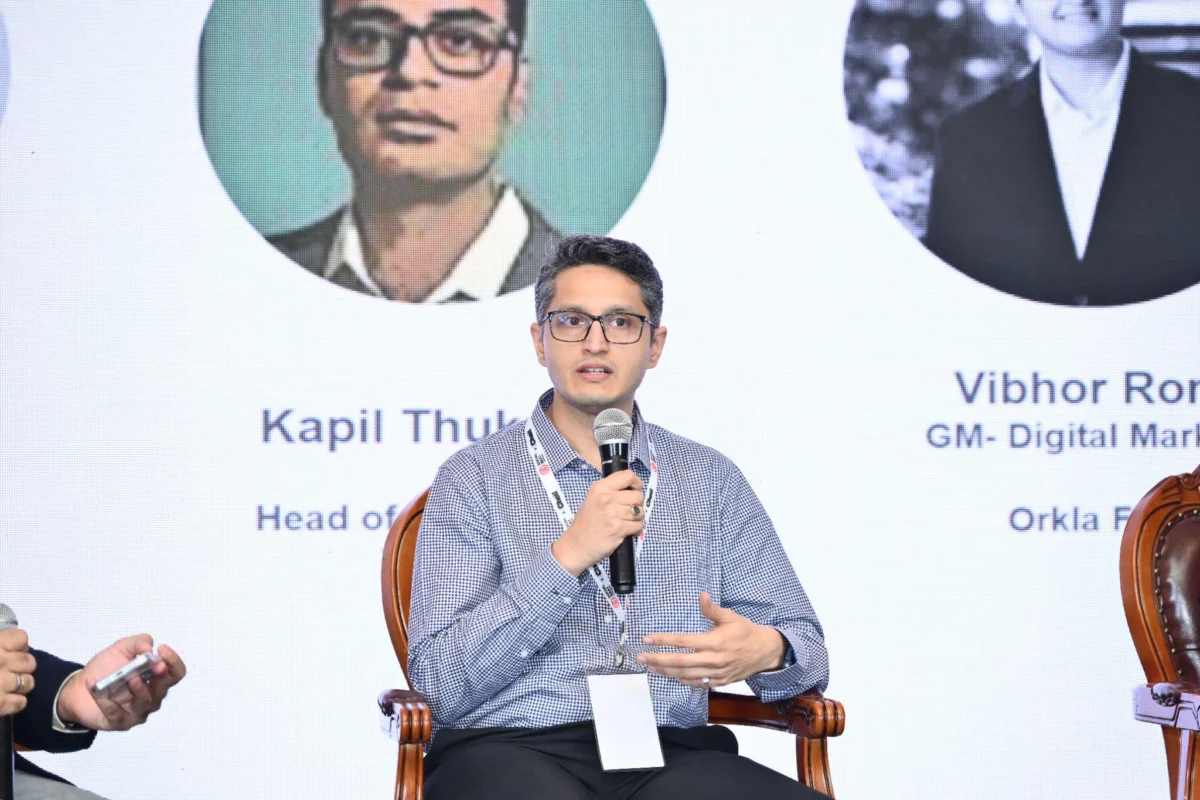
17th Digital Leadership Summit, Bengaluru | July 31, 2026
In an era defined by the frantic pursuit of digital visibility, where marketing budgets are often measured by "cost-per-click" and "share-of-voice," a fundamental shift is occurring in the Indian business landscape. The 17th Digital Leadership Summit in Bengaluru, held on July 31, 2026, served as a lightning rod for this transition. Across three core themes, industry leaders moved away from the ephemeral metrics of modern advertising to rediscover the bedrock of long-term commercial viability: genuine, earned trust.
The consensus from the summit was striking: brand trust is not a media outcome to be purchased through programmatic advertising or viral campaigns. Instead, it is a byproduct of decades of consistent delivery, operational integrity, and the cultivation of organic, unpaid communities.
The Illusion of Influence: Why B2B Software is Breaking the Mold
For years, the standard B2B SaaS playbook—often imported from Silicon Valley—has dictated that marketing success is synonymous with influencer partnerships. However, Kapil Thukral, who leads digital marketing at Tally, offered a perspective that challenged the very foundation of this model.
The "Well-Wisher" Paradox
When asked if Tally utilizes chartered accountants and business owners as an influencer channel, Thukral’s answer was a definitive "no." His reasoning cuts against the grain of conventional marketing wisdom: in the Indian B2B software market, a professional class of "credible reviewers" simply does not exist. Unlike the consumer tech space, where professional reviewers have built careers around product analysis, the B2B sector lacks this bench of paid talent because the demand for such a layer never materialized.
Tally’s solution is a return to the oldest form of marketing: the organic community. By fostering offline networks of tens of thousands of practitioners—tax experts, accountants, and business owners—Tally has built a reservoir of brand advocacy that money cannot buy. "In long-term brand building, the role of a well-wisher cannot be bought with any amount of paid advertising," Thukral noted.
The implication for Indian marketers is profound. Most budget sheets include a line item for "influencers," but virtually none include one for "well-wishers." The latter is harder to measure, lacking the neat dashboards of social media platforms, yet it possesses a compounding power that far exceeds the reach of paid creators.
Chronology of a Shift: From Awareness to Authority
The summit highlighted a significant evolution in how brands perceive their position in the market. Historically, the marketing funnel has been top-heavy, obsessed with brand education and awareness. However, for established entities, this approach is becoming increasingly obsolete.
The Prestige Model: Authority over Education
Akila Chandrasekar of TTK Prestige articulated a distinction that is rapidly becoming a cornerstone of brand strategy. For a legacy brand, the digital conversation should not begin with "who we are"—the market already knows—but with "why we matter today."
This transition marks a shift from brand education to brand authority. Marketing spend is moving away from the top of the funnel (awareness) and toward the bottom (consideration and intent). Yet, this carries its own set of constraints. As Chandrasekar noted, an iconic brand cannot afford to run twenty simultaneous, low-stakes experiments. Every move is weighted by the imagery built over decades; a single misstep risks diluting a hard-won reputation.
The Challenger’s Asymmetry
The summit also scrutinized the "startup counter-move." When a challenger enters a segment that a legacy brand has spent forty years building, the challenger can afford to focus every rupee and every ounce of creative energy on a single, sharpened proposition. For the incumbent, this creates a state of perpetual vigilance. A heritage brand cannot walk away from any segment it has historically served, leading to an asymmetry where the legacy player must defend on ten fronts while the challenger attacks on one.
Supporting Data: The Factory as the Frontline
If marketing states the promise, it is the factory that keeps it. This sentiment, voiced by Ankit Kedia, Founder and General Partner at Capital A, served as a stark reminder of the crumbling wall between operations and marketing.
Operational Integrity as Marketing
Kedia’s observation was grounded in the reality of product failure. In the eyes of the consumer, there is no distinction between a brand and its supply chain. A leaking shampoo bottle is not a failure of the cap manufacturer; it is a failure of the brand. In an age where packaging is commoditized, the only remaining edge for a business is the agility that comes from controlling one’s own production.
Data presented at the summit indicated that brands with in-house manufacturing capabilities—maintaining roughly 80% control over their product lifecycle—experience significantly higher long-term retention. The "glamorous" side of marketing is increasingly being eclipsed by the "un-glamorous" reality of supply chain reliability. The customer may never audit the supply chain, but they experience its quality every time they interact with the product.
Official Responses and Strategic Restraint
Vibhor Ronge of MTR (part of Orkla India) provided a masterclass in the discipline of restraint. For a century-old institution, relevance is not synonymous with content velocity. While smaller, D2C labels may feel compelled to chase every digital trend, heritage brands face an obligation to their own legacy.
"We do catch trends," Ronge noted, "but only the ones that add something back to the brand." This selective participation protects the brand’s equity from the dilution that often follows the frantic pursuit of ephemeral digital attention.
Navigating the "SEO is Dead" Cycle
Kapil Thukral’s commentary on the cyclical nature of marketing panic was particularly resonant. For nine years, he has heard that SEO is dead, that content is dead, and that advertising is dead. His conclusion? The announcements aren’t necessarily wrong—they are simply incomplete. The job of a marketer is not to pick a side, but to evolve through the noise. With the rise of zero-click searches, discovery has become a winner-takes-all market, and those who ignore this reality do so at their own peril.
Implications: The Road Ahead
What does this mean for the future of brand building in India? The summit’s conclusions point toward a more intentional, community-centric, and operationally focused strategy.
1. The Audit of Advocacy
Brands must move beyond the vanity metrics of "likes" and "shares." The most critical question for any leadership team today is: Which of your customers would defend you in a room you are not in? If the answer is "none," then your marketing is merely noise, not equity.
2. Focus as a Defensive Moat
Heritage brands must resist the temptation to mirror the activity of startups. Instead, they should leverage their focus. By doubling down on the core segments where they possess deep authority, they can neutralize the "asymmetry" of challenger brands.
3. The End of the Marketing-Operations Silo
The days of marketing teams operating in a vacuum are over. If the product fails, the brand fails. Organizations must integrate their operational milestones into their brand narrative, treating the supply chain as a primary pillar of the customer experience.
Final Synthesis
The 17th Digital Leadership Summit underscored a vital truth: in a digital world, the most successful brands are those that act like analogue entities. They prioritize long-term, human-centric relationships over short-term conversion metrics. They recognize that while marketing can purchase attention, only consistency can purchase trust.
As we look toward 2027 and beyond, the brands that survive will be those that understand the difference between the noise of the algorithm and the silence of a loyal, unpaid community. For the Indian marketer, the path forward is not found in a new tool or a platform update—it is found by returning to the factory, the community, and the promise that has anchored the business from day one.



