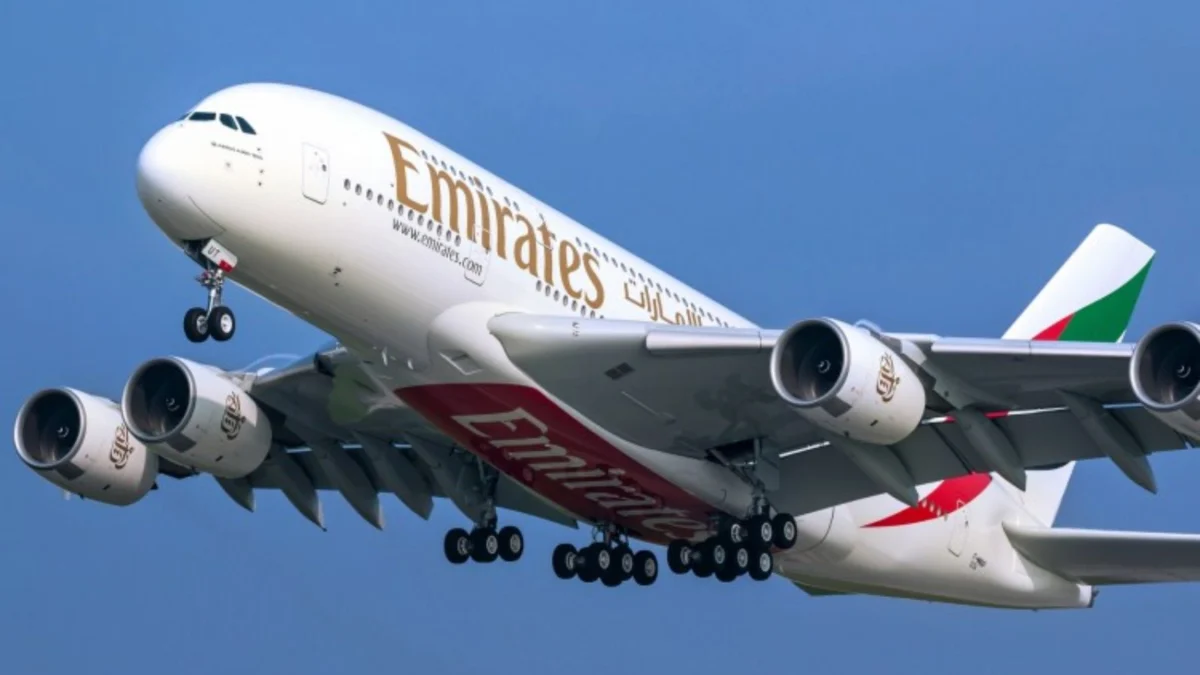
MUMBAI/NEW DELHI — Dubai-based mega carrier Emirates has firmly stated its preference to maintain its existing flight operations at Mumbai’s Chhatrapati Shivaji Maharaj International Airport (CSMIA), pushing back against proposals by the airport operator to shift a portion of its schedule to the newly developed Navi Mumbai International Airport, situated approximately 50 kilometers away.
The resistance from the largest foreign carrier operating to and from India highlights a growing tension between global airline heavyweights, airport operators, and domestic aviation policy. At the heart of the standoff is a directive by the Adani Group—which operates both the existing Mumbai airport and the greenfield Navi Mumbai facility—proposing that a third of all international flights from CSMIA be transitioned to the new airport to accommodate massive infrastructure revamps.
However, international carriers, led by Emirates, argue that Navi Mumbai is currently unequipped to handle large-scale, high-frequency global operations. The debate also casts a spotlight on long-standing geopolitical and economic frictions regarding India-Dubai bilateral flying rights, national carrier ambitions, and the strategic evolution of South Asia’s aviation ecosystem.
Main Facts
The core of the current controversy involves a major capacity and infrastructure squeeze in India’s commercial capital.
- The Standoff: The Adani-controlled Mumbai International Airport Ltd (MIAL) sought to redirect roughly one-third of international flights from CSMIA to the upcoming Navi Mumbai International Airport. The plan was designed to clear the runway for extensive modernization work on Mumbai’s older passenger terminals, a project projected to take up to four years.
- Emirates’ Position: Emirates, which operates 167 weekly flights across nine Indian cities—including 35 weekly rotations out of Mumbai and 28 out of Delhi—has openly expressed its reluctance to move. Senior airline executives argue that Navi Mumbai lacks the mature operational ecosystem required for global carriers, specifically pointing to shortages in specialized cargo warehousing and catering infrastructure.
- Temporary Reprieve: Following intense pushback from international airlines and subsequent intervention by the Ministry of Civil Aviation (MoCA), the proposed flight cuts and mandatory relocations have been deferred. International flight schedules out of Mumbai will remain unchanged at least until the end of March 2027, giving the operator and airlines time to draft a more collaborative capacity-management roadmap.
- The Bilateral Bottleneck: Emirates has clarified that its willingness to operate out of secondary facilities like Navi Mumbai is contingent upon an expansion of the India-Dubai bilateral air services agreement. With current seat quotas entirely exhausted for years, Emirates asserts it cannot fragment its existing, strictly capped frequency allocations without risking commercial viability.
Chronology of Events
The friction between airport developers, federal regulators, and international airlines has unfolded through a carefully timed sequence of operational demands, regulatory interventions, and strategic pushbacks.
Phase 1: The Navi Mumbai Vision and Capacity Pressures
For years, the Mumbai Metropolitan Region has grappled with severe airspace and terminal congestion. CSMIA, operating as a primary single-runway-crossing dual-entry hub, reached near-saturation levels. The conceptualization and eventual construction of the Navi Mumbai International Airport by the Adani Group were billed as the ultimate relief valve for western India’s aviation choke points.
Phase 2: MIAL’s October 2025 Relocation Blueprint
To initiate vital long-overdue modernization and expansion works on its older passenger terminal, MIAL informed carriers that it would slash 265 international flights per week out of a total of 770 starting late October. Airlines were instructed to either move one-third of their affected schedules to Navi Mumbai or suspend those routes entirely for the duration of the multi-year renovation phase. Under these calculations, Emirates alone would have been forced to migrate 10 of its weekly frequencies.
Phase 3: Industry Pushback and Ministerial Intervention
Faced with immediate operational disruption, slot losses, and commercial anxieties, global carriers mounted a collective resistance. The matter escalated to the Ministry of Civil Aviation. Recognizing the potential fallout on international connectivity and tourism, MoCA intervened, halting the abrupt relocation schedule.
Phase 4: The March 2027 Deferral
In a crucial policy update, the implementation date for international flight cuts and shifts was officially deferred until the end of March 2027. MIAL and the affected airlines are now tasked with formulating a joint, phased transition and capacity-management strategy ahead of upcoming seasonal scheduling blocks.
Supporting Data and Operational Realities
To understand why carriers like Emirates are digging in their heels, one must examine the intricate logistical web required to support wide-body international operations.
During the launch event for Emirates’ flagship Airbus A380 service to and from Delhi, Essa Sulaiman Ahmad, Emirates’ Senior Vice President of Commercial Operations for West Asia and Indian Ocean, laid bare the infrastructural prerequisites that a greenfield airport must fulfill before winning the confidence of global super-connectors.
"The Navi Mumbai Airport is not ready… At an airport, you would require facilities for catering, you would require a facility, for example, for cargo warehousing. So those elements, until it gets kind of fully built into an ecosystem, I think it’s going to be difficult for any of the airlines to shift," Ahmad explained.
The Numbers Behind the Network
- Total Emirates Indian Footprint: 167 weekly flights connecting nine distinct gateways across India.
- Mumbai Hub Volume: 35 weekly flights, representing a critical volume of business, VFR (Visiting Friends and Relatives), and premium transit traffic.
- Delhi Hub Volume: 28 weekly flights, recently supercharged with the reintroduction of the high-capacity Airbus A380.
- The Bilateral Ceiling: The current India-Dubai bilateral air services agreement caps capacities at roughly 66,000 seats per week per direction for carriers of both nations. This quota was maxed out years ago, leaving zero numerical flexibility for foreign carriers to scale up operations at new or existing domestic stations without a formal diplomatic revision.
Despite these limitations, Ahmad noted that if bilateral seat entitlements are eventually expanded, Navi Mumbai would present distinct geographical advantages. Specifically, its proximity to Pune and superior logistics corridors linking directly to the Nhava Sheva Port make it an attractive commercial catchment area for future expansion.
Official Responses and Stakeholder Perspectives
The debate over Mumbai’s aviation future brings competing visions of Indian aviation into sharp focus, balancing private infrastructure monetization against national airline protectionism.
The Airport Operator’s Dilemma
For the Adani Group and MIAL, the construction of Navi Mumbai is a multi-billion-dollar enterprise designed to future-proof the financial capital’s aviation requirements. However, a greenfield airport requires immediate anchor tenants and steady traffic volumes to justify its capital expenditure and achieve operational break-even. Forcing established carriers to distribute their flights between CSMIA and Navi Mumbai is viewed by the operator as a necessary step to populate the new facility and relieve CSMIA’s congested tarmac.
The Foreign Carrier Perspective
Emirates and other Gulf-based operators view the forced migration as commercially premature. Without integrated ground-handling ecosystems, robust cargo facilities, and seamless premium passenger lounges matching the standards of CSMIA’s Terminal 2, shifting high-value wide-body routes risks diluting service quality and operational reliability. Furthermore, without additional bilateral seat entitlements, splitting frequencies across two separate airports within the same metropolitan zone creates logistical fragmentation for airlines operating tight turnaround schedules.
The New Delhi Calculus: Protectionism vs. Liberalization
Underpinning this commercial dispute is a broader, long-term strategic shift within India’s Ministry of Civil Aviation and among domestic champions like Air India and IndiGo.
For decades, millions of Indian travelers flying to North America, Europe, and Africa relied on connecting hubs in the Gulf—such as Dubai (DXB) and Doha (DOH)—to reach their final destinations. Indian policymakers have grown increasingly vocal about redirecting this lucrative traffic. The central government’s strategic objective is to transform domestic mega-carriers into global network powerhouses, encouraging Indian airlines to deploy wide-body fleets directly to long-haul destinations rather than feeding foreign hub-and-spoke networks.
Consequently, New Delhi has shown extreme reluctance to expand bilateral flying rights with Dubai and other Gulf states. Indian authorities argue that granting additional seat quotas to foreign mega-airlines would undercut the international expansion plans of domestic carriers who are heavily investing in re-fleeting and expanding their own international networks.
Broader Implications for the Indian Aviation Landscape
The standoff at Mumbai airport is more than a localized scheduling dispute; it is a microcosm of the structural growing pains transforming India’s aviation sector into one of the largest and most competitive aviation markets in the world.
- Infrastructure Sequencing: As India builds out massive greenfield airports under ambitious urbanization plans, the timing of airline migration remains a delicate dance. Regulators must carefully weigh the commercial demands of airport operators against the operational thresholds required by global airlines.
- The Future of Bilateral Air Rights: The deadlock over the India-Dubai seat quota illustrates that aviation diplomacy is increasingly being used as a lever of industrial policy. Until domestic carriers achieve parity in long-haul capacity, foreign airlines seeking expansion will likely find doors closed at the diplomatic negotiating table.
- Consumer Impact: For millions of business and leisure travelers relying on seamless connectivity out of Mumbai, the deferral of flight cuts until March 2027 provides a welcome shield against sudden fare spikes and disrupted itineraries. However, long-term capacity constraints at CSMIA remain unresolved, meaning a comprehensive, market-wide solution must be hammered out before the new deadline expires.
As MIAL and international airlines return to the drawing board to craft a viable capacity-management framework, the industry will be watching closely to see how India balances the competing imperatives of infrastructure growth, global connectivity, and national carrier sovereignty.