







The battle for the desktop browser has shifted from a contest of speed and security to a high-stakes duel over artificial intelligence integration. In a bold move that effectively turns the world’s most popular browser into a gateway for its own ecosystem, OpenAI has unveiled a powerful new Chrome extension. This update brings the full, familiar experience of ChatGPT directly into Google’s Chrome, allowing the AI to act as a persistent, tab-aware companion for users across the internet.
By integrating a sidebar that functions alongside active webpages, OpenAI is directly challenging Google’s internal push to make Gemini the default assistant for Chrome users. This development marks a significant escalation in the ongoing "AI Browser War," as both companies race to become the primary interface through which the modern world accesses the web.
Main Facts: Bringing ChatGPT to the Sidebar
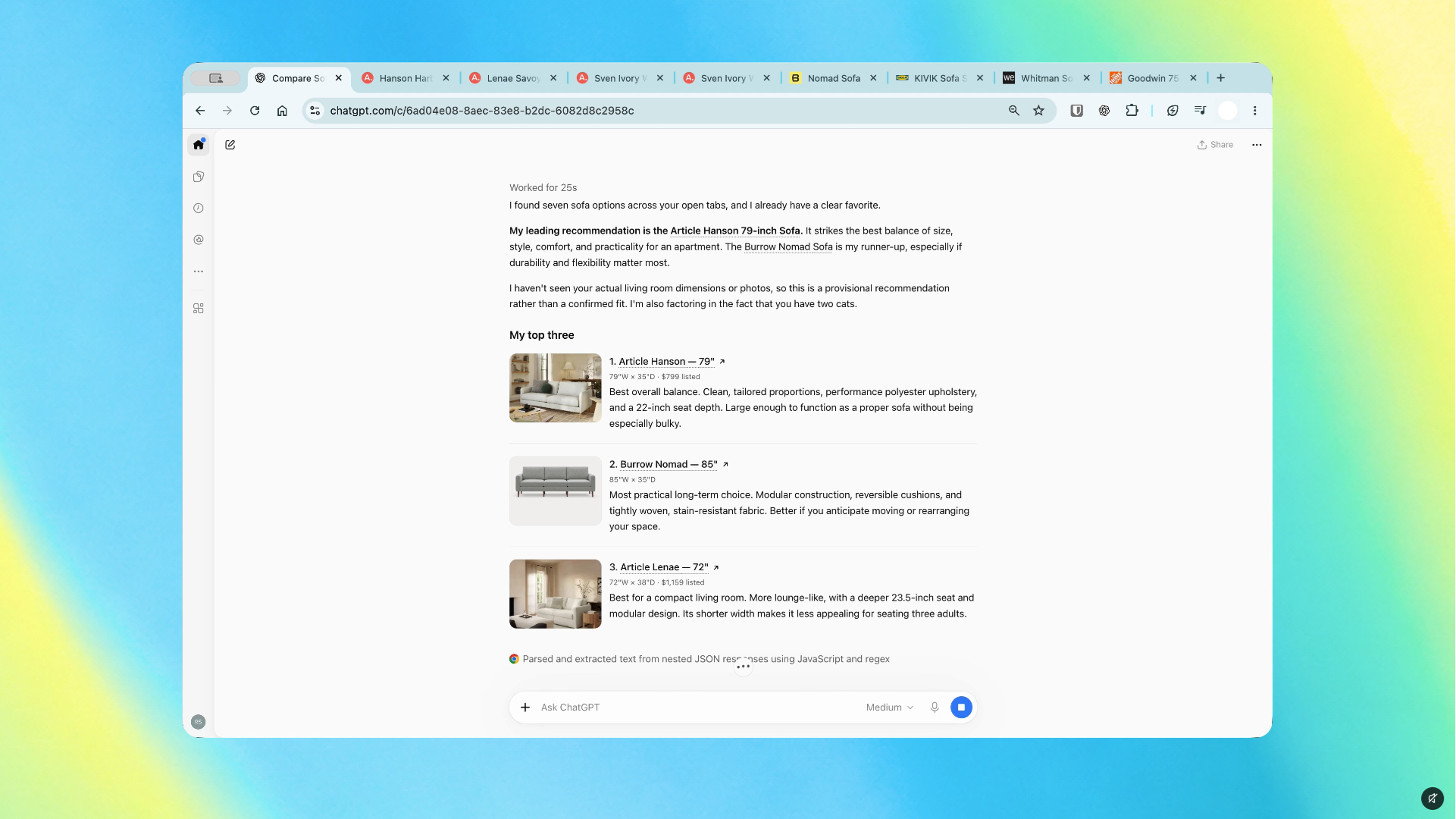
The core of this update is a seamless, contextual integration. Once installed via the Chrome Web Store, the ChatGPT extension provides a persistent sidebar that remains active regardless of which website a user is visiting.
Key features include:
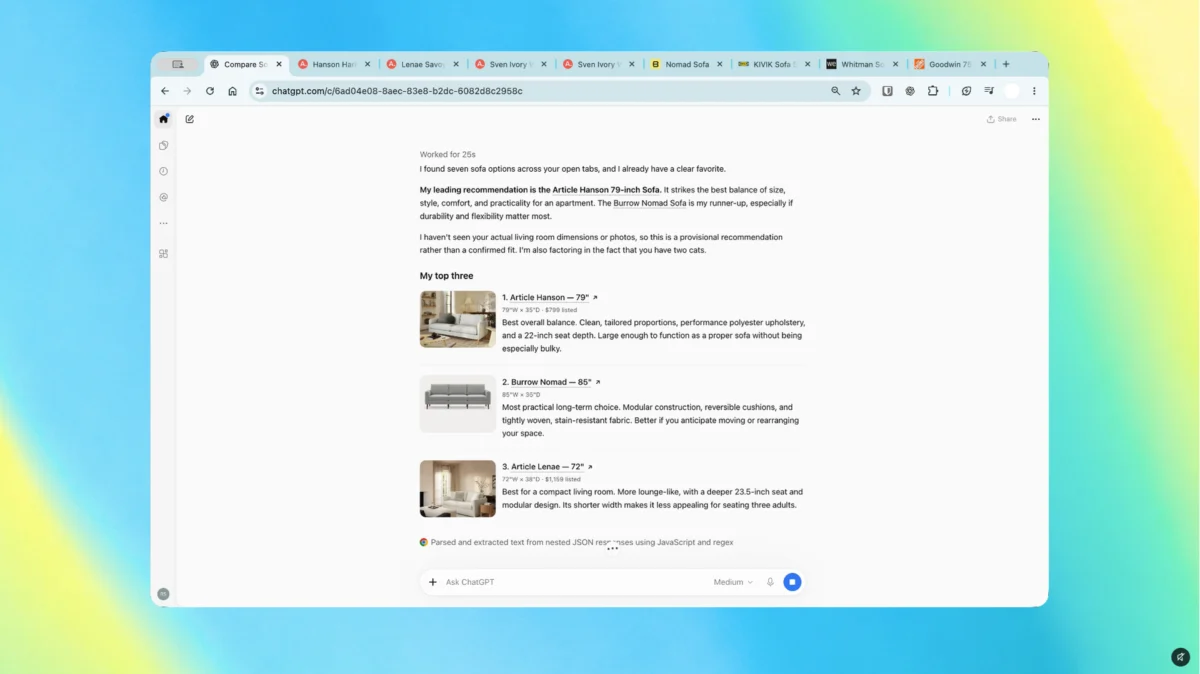
- Tab-Aware Intelligence: ChatGPT can now read and analyze the content of multiple open tabs simultaneously. This allows users to summarize long-form articles, compare disparate sources, and synthesize information without having to manually copy and paste text.
- ChatGPT Work Integration: This represents a leap from passive assistance to active agency. Through "ChatGPT Work," the AI can interact with websites on the user’s behalf—filling out forms, organizing tab clusters, and managing file downloads.
- Persistent Presence: By removing the need to switch between the browser and a separate ChatGPT tab, OpenAI has significantly reduced the friction in the user experience, making the AI feel like a native browser feature rather than a third-party tool.
Chronology: The Evolution of AI-Integrated Browsing
The integration of generative AI into web browsers has been a multi-year project for both tech giants, though their approaches have diverged significantly.
Early 2023: The rapid rise of ChatGPT forces Google to declare a "code red." Google pivots its primary focus toward AI integration, setting the stage for the deep incorporation of Gemini into its suite of products, including Chrome.
Late 2024: Google begins aggressive testing of Gemini features within Chrome, utilizing its unique position as the browser developer to provide "first-party" AI performance, such as tab organization and predictive text.
October 2026: OpenAI launches its comprehensive Chrome extension. This is a tactical maneuver designed to counter Google’s advantage. By placing a high-performance, cross-tab-capable assistant directly into the Chrome sidebar, OpenAI essentially "hijacks" the interface that Google intended for its own proprietary AI.
Present Day: Users now face a choice: stick with the browser-native Gemini, or install the OpenAI extension to bring a potentially more familiar, robust, and versatile ChatGPT experience into the Google-controlled environment.
Supporting Data: Why Contextual Browsing Matters
The shift toward AI-assisted browsing is driven by the increasing complexity of information gathering. According to recent user behavior studies, the average knowledge worker toggles between 10 and 20 tabs per session. The cognitive load required to synthesize this information manually is immense.
OpenAI’s new extension addresses this "tab fatigue" by offering:
- Contextual Comparison: Research suggests that when comparing products across four or more retailers, user accuracy drops by 30% due to information overload. ChatGPT’s ability to "read" all tabs and create a comparison table in the sidebar directly mitigates this.
- Reduced Context Switching: The time lost in switching tabs, copying data, and navigating back to an AI prompt adds up to roughly 45 minutes of lost productivity per day for power users. An integrated sidebar is estimated to save at least 15–20 minutes of that daily "switching tax."
- Human-in-the-Loop Automation: While automated form-filling is a massive time-saver, OpenAI’s implementation acknowledges the need for security. By requiring user confirmation for sensitive tasks (like submitting a registration form), the tool balances efficiency with necessary human oversight.
Official Responses and Strategic Positioning
While Google has remained relatively quiet regarding this specific extension, the company has consistently signaled that its long-term strategy for Chrome is to make Gemini an "ambient" part of the user experience. By building Gemini directly into the Chrome engine, Google offers features that are theoretically faster and more secure than those provided by third-party extensions.
OpenAI’s leadership, conversely, has framed this release as a commitment to user accessibility. By making ChatGPT "follow" the user, the company is betting that brand loyalty to their model outweighs the "built-in" convenience of Gemini. OpenAI’s decision to allow the extension to access open tabs is a calculated risk—one that prioritizes user utility but requires high levels of trust regarding data privacy.
Implications: The Future of the AI-First Browser
The implications of this move are profound for both the tech industry and the end user.
1. The Browser as a Battleground
Chrome is currently the most valuable piece of real estate on the internet. By allowing OpenAI to dominate the sidebar, Google is essentially allowing a competitor to rent space in its own house. If this trend continues, we may see browsers becoming "AI-agnostic," where the user chooses their AI assistant as easily as they choose their search engine.
2. Privacy and Security Concerns
The "tab-aware" nature of this extension necessitates a high level of permission. Users must authorize the extension to read the content of their browsing sessions. While OpenAI has implemented granular controls, the potential for sensitive information—such as medical records, banking data, or private emails—to be processed by an AI model is a significant privacy concern that regulators will likely scrutinize.
3. The Death of Manual Browsing?
We are approaching an era where the browser is no longer just a window to the web, but an agent-driven environment. As tools like ChatGPT Work evolve, the need for manual navigation may diminish. If an AI can fill out a form, compare prices, and summarize findings in seconds, the role of the user changes from "browser" to "supervisor."
4. A War of Ecosystems
This update is the first major salvo in a new phase of the AI war. Google holds the browser; OpenAI holds the model. If users overwhelmingly prefer the intelligence of ChatGPT over the integration of Gemini, Google may be forced to either improve Gemini’s performance to match or, theoretically, restrict the ability of third-party extensions to access browser data—a move that would invite antitrust lawsuits.
Final Analysis: Is the Upgrade Worth It?
For the casual user, the new ChatGPT extension is a convenience. It allows for quick queries while reading without the mental interruption of switching tabs. However, for the power user, it is a productivity game-changer.
The ability to treat a browser full of tabs as a single, queryable database is a paradigm shift. Yet, the warning signs remain: accuracy is not guaranteed, and the "black box" nature of AI means users must still verify critical information. Furthermore, the risk of over-delegating tasks to an AI agent—even one as capable as ChatGPT—is real.

As we look toward the future, the integration of these models into our daily tools is inevitable. Whether OpenAI’s "invading" strategy succeeds in displacing Gemini within Google’s own ecosystem will depend on one simple metric: which assistant makes the internet feel less like a chore and more like a tool. For now, OpenAI has provided a compelling reason to stick with their platform, turning Google’s greatest asset into a host for their most potent product. The browser wars have officially entered the age of the AI companion.