










In the rapidly evolving landscape of digital commerce, the traditional retail model is undergoing a seismic shift. For decades, the path to growth for merchants was linear: source products, manage inventory, and sell directly to consumers. However, the rise of the digital marketplace—a model popularized by giants like Amazon, eBay, and Alibaba—has redefined the boundaries of scalability. Today, retailers are no longer just selling their own stock; they are becoming the architects of their own ecosystems.
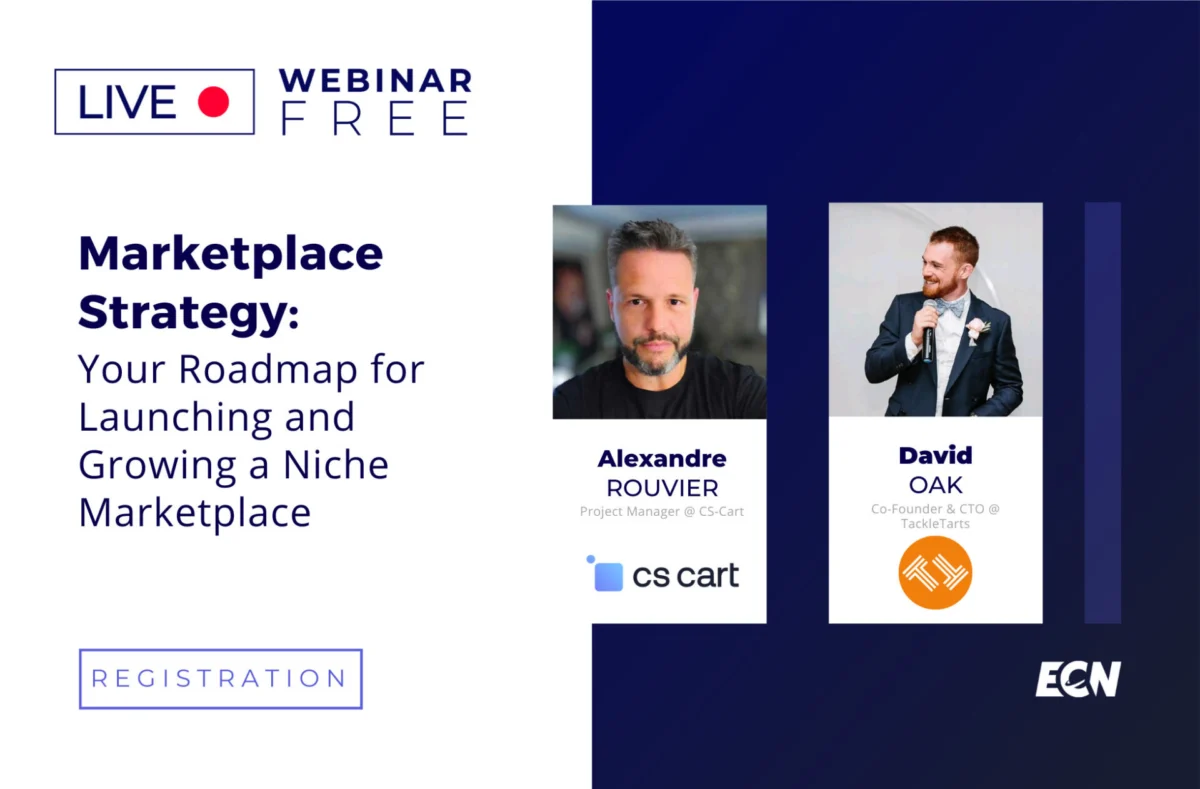
By launching a proprietary marketplace, retailers can transition from being mere sellers to becoming platform owners. This strategic pivot allows them to diversify their revenue streams, expand their product catalogs without the burden of inventory management, and cultivate a community of third-party vendors. But how does an established retailer make this leap? A recent deep-dive presentation hosted by E-Commerce Nation, featuring experts from CS-Cart and the success story of TackleTarts, provides a roadmap for this transformation.
Main Facts: The Strategic Pivot to Marketplace Models
The core value proposition of a marketplace is the “network effect.” As a retailer adds more vendors, the variety of products increases, which attracts more customers, which in turn attracts more vendors. This virtuous cycle is the engine of modern e-commerce.
For many retailers, the decision to build a marketplace is driven by three primary factors:
- Inventory Agility: By onboarding third-party merchants, retailers can test new product categories and niche markets without the financial risk of purchasing and warehousing stock.
- Customer Retention: A marketplace provides a “one-stop-shop” experience. When customers find everything they need on a single site, their loyalty to that platform increases, reducing the likelihood that they will jump to competitors.
- Data Superiority: Operating a marketplace grants retailers access to vast amounts of consumer behavior data across a broader range of categories, allowing for more precise marketing and personalized shopping experiences.
However, the technical barrier to entry remains the most significant hurdle. Building a robust, multi-vendor infrastructure requires sophisticated software capable of handling complex commission structures, vendor onboarding, and real-time order synchronization.
Chronology: The Evolution of the Retail Marketplace
The transition toward marketplace models did not happen overnight. It is the result of a multi-decade progression in digital business strategy.
- 1995–2000: The Infancy of Peer-to-Peer. Early pioneers like eBay proved that the internet could facilitate transactions between strangers. During this era, the concept of a "retailer-owned marketplace" was virtually non-existent; sites were either shops or auction houses.
- 2000–2010: The Rise of Platform Integration. Amazon begins its transformation from a bookstore into "The Everything Store," inviting third-party sellers to list alongside its own inventory. This period proved that the marketplace model could coexist with first-party retail.
- 2010–2020: The SaaS Democratization. With the advent of specialized software-as-a-service (SaaS) platforms, the technical complexity of building a marketplace began to drop. Tools like CS-Cart emerged, providing out-of-the-box solutions that allowed mid-sized retailers to replicate the infrastructure of industry giants.
- 2020–Present: The "Every Retailer a Platform" Era. Driven by the pandemic, which accelerated the need for digital diversification, retailers across all sectors—from automotive parts to home decor—are now launching internal marketplaces to protect their market share against global giants.
Supporting Data: Why the Model Works
The economic rationale for the marketplace model is supported by compelling industry metrics. According to research cited in the E-Commerce Nation webinar, marketplaces currently account for more than 60% of all global online sales.
When a retailer transitions to a marketplace, the overhead cost per unit sold drops significantly. Because the third-party sellers handle the logistics and product storage, the retailer’s capital expenditure (CAPEX) is redirected toward platform development, marketing, and customer experience. Furthermore, market analysts note that marketplace-based retailers see an average increase in "time-on-site" of 40% compared to traditional e-commerce stores. This is largely attributed to the deeper product assortments that keep users browsing for longer periods.
The technical case study presented by CS-Cart emphasizes that the success of these transitions hinges on "Vendor Experience." If the platform is difficult for third-party sellers to use, they will migrate to competitors. Therefore, the data suggests that investments in intuitive vendor dashboards and automated payout systems are directly correlated with long-term platform growth.
Official Responses and Expert Insights
During the collaborative session between CS-Cart and TackleTarts, industry experts underscored that the biggest mistake retailers make is viewing the marketplace as a purely technical project.
"Developing a marketplace is 20% code and 80% community management," the speakers noted. The experts argued that the technical framework—provided by solutions like CS-Cart—is the foundation, but the true value lies in the retailer’s ability to curate the right set of vendors.
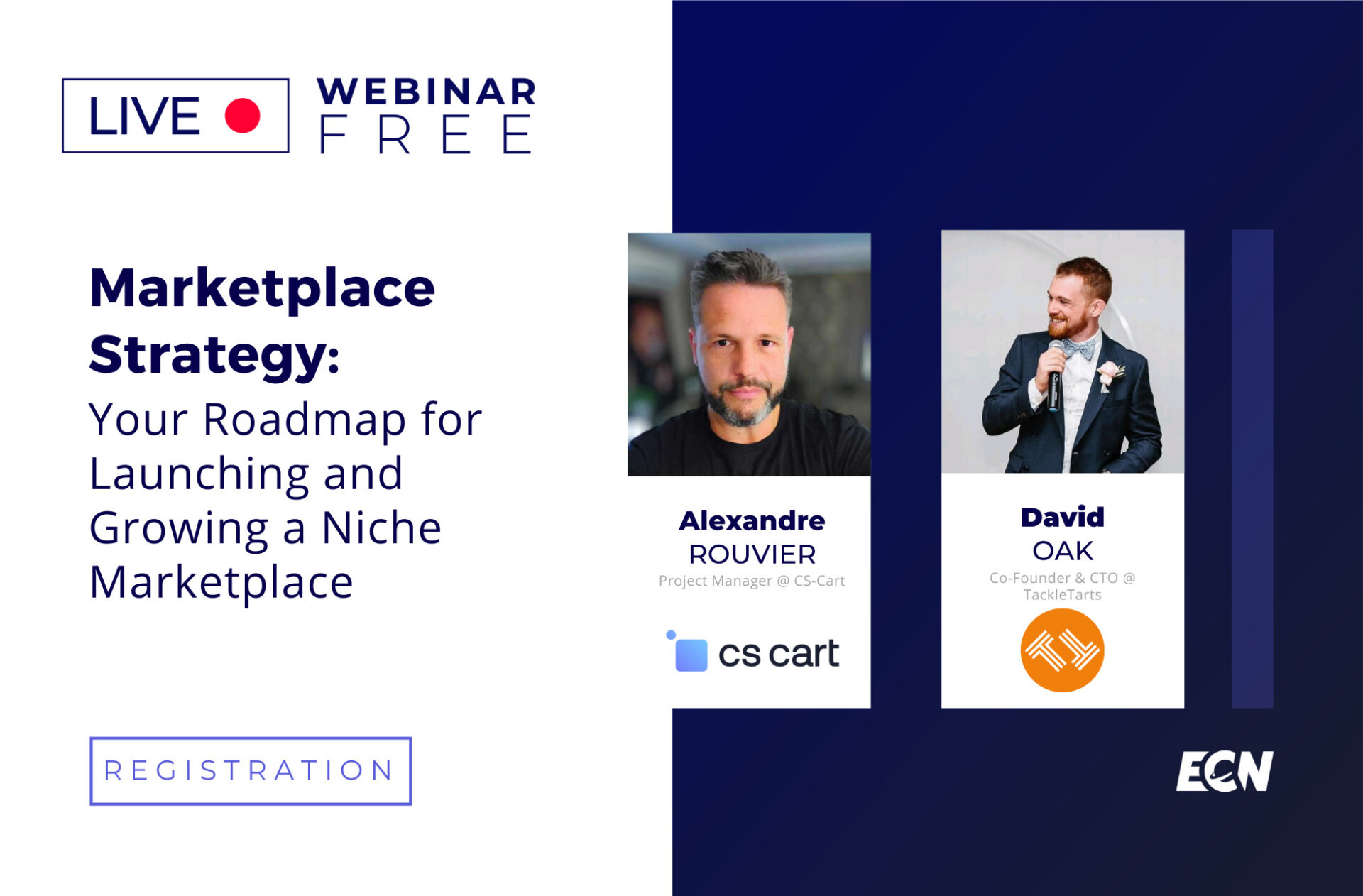
TackleTarts, a niche player in the fishing and outdoor sector, shared their journey of scaling from a single-brand site to a comprehensive marketplace. Their strategy focused on "quality over quantity." By strictly vetting third-party sellers, they ensured that the products entering their ecosystem matched their brand’s reputation. Their official response to skeptics of the model is clear: "You don’t need to be Amazon to have a marketplace. You just need to be the authority in your specific niche."
The CS-Cart team added that the "platform-as-a-service" approach allows retailers to maintain full control over the look and feel of the site. Unlike selling on Amazon, where you are a tenant in someone else’s house, building your own marketplace makes you the landlord.
Implications: The Future of Retail Strategy
The shift toward marketplace models has profound implications for the future of the retail sector.
1. The Death of the Middleman?
As retailers become marketplaces, they are essentially cutting out the traditional wholesale middlemen. By creating a direct line between the manufacturer/distributor and the consumer, they increase margins for all parties involved. This disintermediation is a major threat to legacy distributors who do not adapt their business models.
2. The Rise of "Niche Ecosystems"
We are moving away from a world where one or two giant marketplaces dominate all of commerce. Instead, we are seeing the rise of "verticalized" marketplaces. A user might buy their electronics on a generalist site, but they will buy their niche, high-performance specialized equipment from a marketplace curated by a brand they trust. This trend favors retailers who have built a strong community around their expertise.
3. Technological Sovereignty
Retailers who do not build their own marketplaces risk becoming "product vendors" on someone else’s platform. This is a dangerous position, as the platform owner can change algorithms, fees, or even launch private-label competitors at any time. Building an internal marketplace is, in essence, an act of protecting one’s business sovereignty.
4. Collaborative Commerce
The webinar highlighted a critical shift: collaboration. Retailers are beginning to see their peers not just as competitors, but as potential partners. By inviting non-competing merchants to sell on their platform, they create a symbiotic environment that makes the entire industry more resilient.
Conclusion: How to Get Started
For those looking to replicate these successes, the path forward involves three distinct phases:
- Assessment: Determine if your customer base is asking for products you don’t currently stock. If your customer service team is constantly asked about products you don’t have, you have the demand necessary for a marketplace.
- Infrastructure Selection: Research scalable software solutions. The presentation by CS-Cart highlights the necessity of choosing a platform that is modular—one that can grow from a handful of vendors to thousands without requiring a complete rebuild.
- Vendor Recruitment: Start with a pilot program. Select a small group of trusted suppliers who can test the vendor interface and provide feedback. Once the workflow is optimized, open the floodgates to a broader range of merchants.
The transition to a marketplace model is not merely an IT upgrade; it is a fundamental evolution of the business model. It requires a shift in mindset from "selling products" to "facilitating commerce." As the digital landscape becomes increasingly crowded, retailers who successfully manage this transition will not only survive—they will define the future of their respective industries.
To dive deeper into the technical specifications and strategic blueprints discussed during the E-Commerce Nation event, interested parties are encouraged to review the full replay of the CS-Cart and TackleTarts presentation. The era of the retail platform is here; the question is no longer if you should build a marketplace, but how quickly you can adapt to capture the opportunity.



