









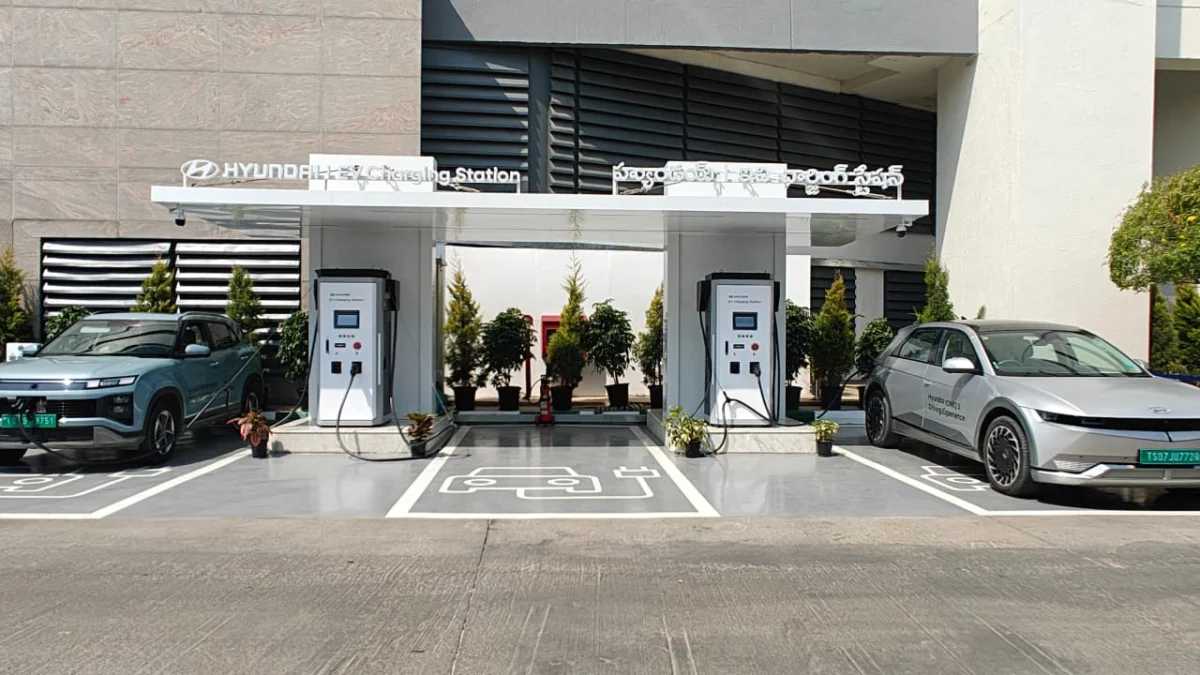
In a landmark move aimed at accelerating the adoption of electric vehicles (EVs) across the Indian subcontinent, Hyundai Motor India has announced the launch of an expansive, unified digital charging platform. This strategic initiative provides EV owners with seamless access to an extensive network of 30,000 charging points, marking a significant milestone in the country’s transition toward sustainable mobility.
The announcement, made on July 20, 2026, signals a paradigm shift in how automotive manufacturers approach the "range anxiety" that has historically hampered widespread EV adoption. By integrating disparate charging infrastructures into a single, cohesive ecosystem, Hyundai is positioning itself as a leader in the infrastructure-backed transition to electric transportation.
The Core Development: Bridging the Infrastructure Gap
The cornerstone of this initiative is a new, unified digital platform—a centralized hub designed to streamline the charging experience for EV drivers. Developed in close collaboration with leading Charge Point Operators (CPOs) and various service providers, the platform eliminates the need for users to juggle multiple apps, subscription models, or payment gateways.
A Brand-Agnostic Solution
Crucially, while the initiative is spearheaded by Hyundai Motor India, the platform is designed to be inclusive. It is open to electric vehicles across all brands, emphasizing the company’s commitment to growing the broader EV ecosystem rather than sequestering its own customers into a proprietary "walled garden." This open-access philosophy is expected to harmonize the fragmented charging landscape in India, providing a standardized experience for all EV users regardless of the make or model of their vehicle.
Chronology: The Road to 30,000 Points
The journey toward this unified network did not happen overnight. It is the culmination of years of strategic planning, infrastructure partnerships, and technological refinement.
- Early 2024: Hyundai Motor India identifies the primary pain points for potential EV buyers, with "charging accessibility" consistently ranking as the top barrier to purchase.
- Late 2024: Negotiations begin with major Indian CPOs to integrate API protocols, allowing for real-time visibility of charger status (available, occupied, or under maintenance).
- Mid-2025: The pilot phase of the unified software platform is launched in select metropolitan regions, including Delhi-NCR, Mumbai, and Bengaluru.
- Early 2026: The network undergoes a rigorous testing phase, focusing on payment interoperability and user interface optimization.
- July 20, 2026: Official launch of the platform, granting access to an initial network of 30,000 charging points spanning both urban centers and key highway corridors.
Supporting Data: Why This Matters for India’s EV Market
The sheer scale of 30,000 charging points is a transformative figure for the Indian automotive market. To understand the significance, one must look at the current trajectory of India’s EV goals.
The Math of Mobility
According to industry analysts, the number of electric vehicles on Indian roads is projected to grow by a compound annual growth rate (CAGR) of over 40% through 2030. However, infrastructure growth has historically lagged behind vehicle sales. By aggregating 30,000 points, Hyundai is effectively providing a "safety net" for long-distance travel.
- Geographic Distribution: The network covers major national highways, ensuring that the current 200–400 km range limitations of modern EVs are mitigated by high-speed DC fast chargers placed at strategic intervals.
- Efficiency Metrics: The platform’s real-time monitoring capability is expected to reduce "dead-heading"—the time spent driving to a charger only to find it out of service or occupied—by an estimated 35%.
Official Responses and Stakeholder Perspectives
The industry reaction to Hyundai’s announcement has been largely positive, with experts noting that the company has effectively "de-risked" the EV buying process for the average consumer.
Corporate Vision
A spokesperson for Hyundai Motor India noted during the launch: "Our goal has always been to remove the friction from the electric mobility transition. By partnering with CPOs and service providers, we are not just selling cars; we are providing a comprehensive mobility solution. The openness of this platform reflects our belief that the electric revolution is a collective journey."
Industry Analyst Commentary
Market analysts have lauded the move as a strategic masterstroke. "Most manufacturers focus on the vehicle itself," says Dr. Anjali Rao, an automotive industry consultant. "Hyundai is realizing that in the EV era, the ‘product’ is actually the network. By taking the lead in infrastructure integration, they are building brand loyalty that transcends the vehicle hardware."
Implications: The Future of the Indian EV Landscape
The implications of this rollout extend far beyond Hyundai’s immediate customer base. It sets a new benchmark for corporate responsibility and infrastructure development in the automotive sector.
1. Standardization of the User Experience
The biggest challenge for Indian EV owners has been the fragmentation of payment systems. By unifying these under one digital interface, Hyundai is forcing a standard that others will likely have to follow to remain competitive. This simplifies the user journey—from discovering a charger to initiating the charge and completing the payment—into a few taps on a smartphone.
2. Boosting Consumer Confidence
"Range anxiety" is a psychological barrier as much as a technical one. When a consumer knows there are 30,000 reliable, mapped, and accessible points available, the perception of EVs as "city-only vehicles" begins to erode. This is expected to drive a surge in demand for mid-range and long-range electric SUVs and hatchbacks.
3. Strengthening the CPO Ecosystem
By partnering with existing CPOs rather than attempting to build 30,000 chargers from scratch, Hyundai has provided a consistent revenue stream for infrastructure providers. This encourages further investment in the sector, as CPOs now have a guaranteed pipeline of users directed to their stations via the Hyundai platform.
4. Environmental and Economic Impact
With the Indian government aiming for 30% EV penetration by 2030, this initiative provides the necessary infrastructure backbone to meet those targets. The reduction in reliance on fossil fuels, coupled with the optimization of the grid through smarter charging patterns enabled by the platform, positions India as a rapidly maturing EV market.
Conclusion: A Turning Point for Sustainable Transport
The announcement of the 30,000-point charging network is a clear signal that the transition to electric vehicles in India has reached an inflection point. By prioritizing infrastructure integration and adopting an inclusive, brand-agnostic approach, Hyundai Motor India is not only solving a logistical problem but is also shaping the future of the nation’s transport architecture.
As the country moves toward a greener future, initiatives of this nature serve as the essential bridge between ambition and reality. The platform is currently live, and as it continues to scale, it is likely that the "range anxiety" that once defined the EV conversation in India will soon become a footnote in the history of the country’s automotive evolution.
For the average Indian consumer, the message is simple: the road ahead is now fully electrified, and the infrastructure to support that journey is finally within reach.