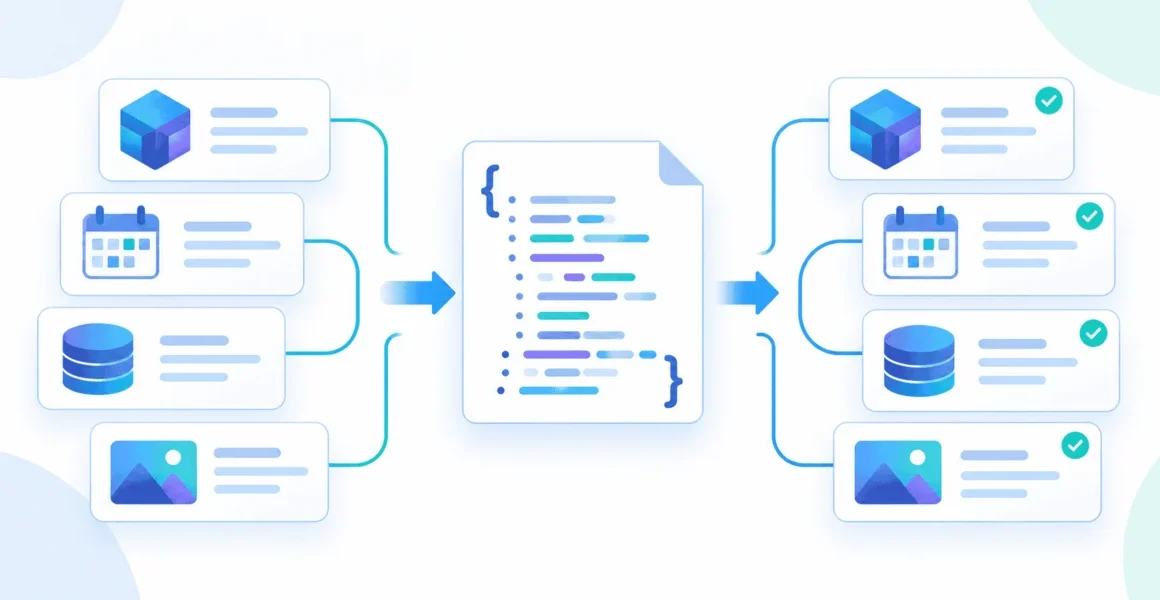











In the rapidly evolving landscape of generative artificial intelligence, the "app fatigue" phenomenon has become a significant barrier to productivity. Professionals today often find themselves juggling multiple subscriptions: one for high-level reasoning, another for coding, a third for creative image generation, and a fourth for automated workflows. Abacus AI, a platform founded by researchers with deep roots in Google Brain and enterprise machine learning, has positioned itself as the definitive answer to this fragmentation.
By integrating over 100 language, image, and video models into a single interface—complemented by deployment infrastructure and autonomous agents—Abacus AI promises to consolidate the fragmented AI stack. However, as with any "super-app" strategy, the trade-off between breadth and specialization remains a critical point of contention. This review analyzes the platform’s architecture, pricing, and practical efficacy to determine whether it truly simplifies professional workflows or merely adds another layer of complexity.
The Genesis of Abacus AI: From Enterprise to Consumer
Founded in 2019, Abacus AI emerged during a period of transition in the machine learning industry. While the company initially focused on specialized enterprise applications—such as predictive modeling, fraud detection, and anomaly detection—the explosion of Large Language Models (LLMs) in 2023 prompted a pivot toward a more expansive, consumer-facing toolkit.
The company’s roadmap has been rapid. What began as a machine learning platform evolved into a suite of tools including ChatLLM (the conversational interface), RouteLLM (an intelligent model router), and Abacus AI Agent (formerly known as DeepAgent). This evolution reflects a broader trend in the industry: moving away from standalone chatbots toward autonomous "work-engines" that can execute multi-step tasks. By 2026, the company had established itself as a multi-modal powerhouse, catering to everyone from individual developers building prototypes to enterprises requiring VPC-compliant AI infrastructure.
Supporting Data: The Architecture of the Platform
Abacus AI is not a single product; it is a layered ecosystem. Understanding the value proposition requires breaking down the core components:
1. The Conversational Hub: ChatLLM
ChatLLM is the platform’s primary interface. It offers a "neutral ground" where users can toggle between state-of-the-art models from OpenAI, Anthropic, Google, xAI, and DeepSeek. The key differentiator here is project-based organization; rather than having hundreds of disparate chat threads, users can bundle files, spreadsheets, and conversations into specific projects.
2. Autonomous Execution: Abacus AI Agent
The platform’s agentic layer allows for the execution of complex tasks—such as scraping data, analyzing a repository, or writing a research report—without constant user intervention. Unlike a standard chatbot that provides text, the agent interacts with a browser and terminal to produce tangible artifacts.
3. Developer and Creative Tooling
The platform extends into specialized domains:
- Desktop: A local coding assistant that supports privacy-conscious workflows by processing local files without cloud uploads.
- Studio: A centralized workspace for generative media, featuring over 50 models for audio, image, and video synthesis.
- AppLLM & SuperComputer: These tools provide a "no-code/low-code" pathway to deployment, allowing users to move from a prompt-based prototype to a hosted, live application with a database and authentication.
The Credit Complexity: Understanding the True Cost
One of the most persistent critiques of Abacus AI involves its credit-based billing system. While the marketing highlights an accessible $10/month entry point, the reality of "power user" economics is different.
The Credit Mechanism:
Credits are not a one-to-one currency for messages. Instead, they function as a resource-usage metric. A simple text prompt might cost a fraction of a credit, whereas a video generation task or a long-running autonomous agent session can consume credits at a rapid, variable rate.
The Economic Implications:
- Basic Tier ($10/mo): Ideal for users who primarily utilize the ChatLLM interface for text-based analysis and occasional model comparison.
- Pro Tier ($20/mo): Necessary for those who rely on persistent agents, the SuperComputer environment, or frequent media generation.
- Enterprise Tier ($5,000+/mo): A distinct commercial tier designed for organizations that require SSO, SAML, dedicated compute, and HIPAA/SOC 2 compliance.
Independent user reports from platforms like G2 and Trustpilot frequently highlight "credit anxiety," where users report their monthly allocations being exhausted faster than anticipated. While the platform provides a billing dashboard for real-time monitoring, the volatility of credit costs remains a hurdle for those requiring predictable monthly expenditures.
Implications: The Trade-off Between Breadth and Precision
The central tension of Abacus AI is the "Generalist vs. Specialist" debate.
The Case for Consolidation
For a consultant, agency marketer, or technical founder, the benefits of consolidation are undeniable. Having the ability to run a competitive analysis on a document using Claude, then generate a slide deck image using a specialized vision model, and finally deploy a prototype via AppLLM—all within one login—significantly reduces context-switching. This unified environment acts as a force multiplier for workflows that are inherently interdisciplinary.
The Risks of Aggregation
Conversely, for a user whose work is strictly contained—for instance, a developer who lives in a single-model environment—the added complexity of the Abacus AI interface can be a burden. Furthermore, the platform acts as an abstraction layer; when a provider updates their model or alters their API behavior, there can be a slight latency or discrepancy in how that model behaves within the Abacus interface compared to the first-party, native product.
Recent research into AI routing—the technology that automatically selects the "best" model for a given prompt—suggests that while these systems are improving, they are not yet perfect. A "router" cannot always predict which model will offer the highest accuracy for a highly specific, niche prompt.
Official Stance and Security Protocols
Abacus AI has invested heavily in its security narrative to compete with enterprise-grade offerings. The company maintains the following:
- Data Privacy: Explicit claims that customer data is not used to train proprietary or generalized foundation models.
- Encryption: AES-256 for data at rest and TLS 1.2+ for data in transit.
- Compliance: SOC 2 Type II and ISO/IEC 27001:2022 certifications, alongside HIPAA and GDPR alignment for enterprise clients.
However, users must exercise caution. The platform’s security is only as strong as the user’s configuration. Granting a "Desktop Agent" access to local terminal files or connecting an agent to a business Slack channel creates a significant attack surface. The company’s policy of "no data retention" for its Roleplay product, for example, should not be conflated with the data handling policies of its broader professional suite.
Final Assessment: Is it Worth the Subscription?
Abacus AI is a sophisticated platform that rewards users who are willing to learn its nuances. It is not a "magic button" that automates work with zero effort; it is a professional workstation that requires the same oversight one would apply to any sophisticated piece of enterprise software.
The Verdict: 8/10
Abacus AI receives a high rating for its ambition and the coherence of its toolset. It is arguably the best "all-in-one" solution for power users who are tired of managing a dozen disparate AI subscriptions.
Recommended for:
- Technical Founders: Who need to move from ideation to deployment quickly.
- Marketing/Creative Agencies: Who require a sandbox to test multiple media models.
- Analytical Researchers: Who need a unified repository for complex, multi-model document synthesis.
Not recommended for:
- Casual Users: Who only need a simple, reliable chatbot for occasional questions.
- Budget-Sensitive Users: Who require perfectly predictable monthly expenses.
- High-Stakes Automators: Who are looking for "set-it-and-forget-it" solutions for sensitive, irreversible tasks.
Ultimately, the platform is worth trying during an introductory month. The key to success is to move from the "exploration phase"—where one tests every tool—to a "workflow phase," where one integrates only the specific components that provide tangible, measurable value to their day-to-day productivity. In the era of AI, the winners will not be those who use the most tools, but those who curate the right stack for their specific goals.