








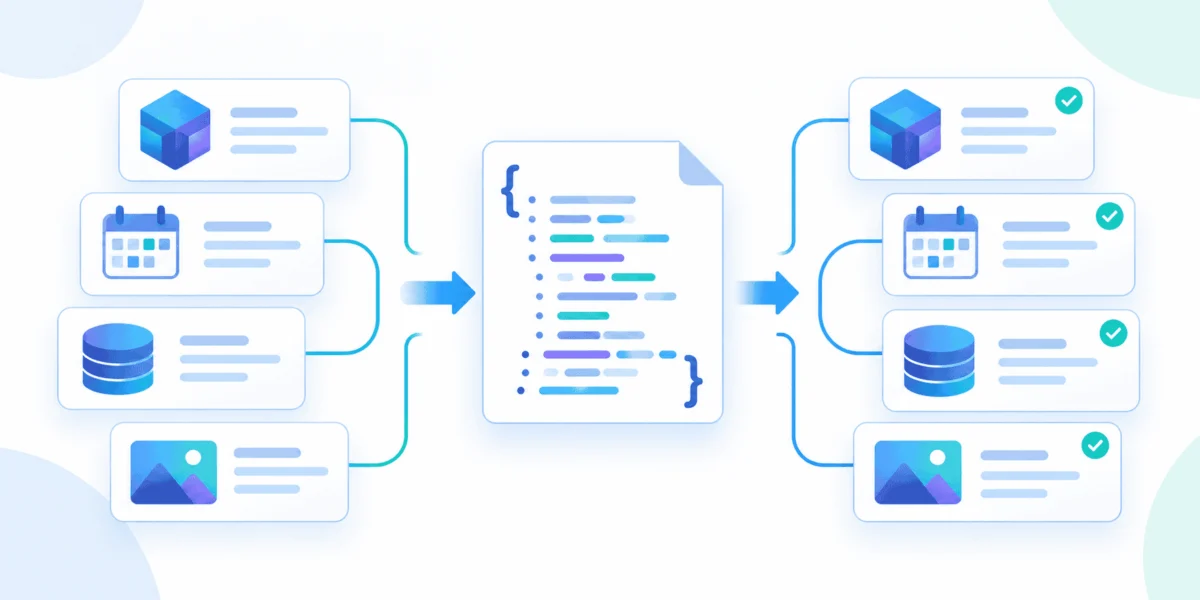
In the high-stakes world of machine learning engineering, the glamour of training state-of-the-art neural networks often masks the grueling reality of daily operations. Seasoned practitioners know that the vast majority of their time is not spent refining model hyperparameters or tweaking architectural layers; it is spent on "data plumbing"—the meticulous, often invisible process of cleaning, transforming, and moving structured datasets between files, microservices, and APIs.
As machine learning systems evolve from monolithic scripts into complex, distributed architectures, the ability to serialize and deserialize data with absolute reliability becomes a critical bottleneck. When your system crashes because a datetime object or a Path reference cannot be read by a JSON serializer, the impact isn’t just a minor inconvenience—it’s a disruption to the entire data lineage.
This article explores how to transcend the native limitations of JSON in Python, creating a professional-grade serialization pipeline that handles custom data types, manages schema migrations, and ensures graceful recovery from malformed input.
The Core Problem: JSON’s Native Limitations
At its heart, JSON is a data-interchange format designed for simplicity. It supports a limited subset of types: strings, numbers, booleans, arrays, objects, and null. However, the Python ecosystem is rich with complex, object-oriented types—datetime, set, Path, and Enum—that are essential for managing modern machine learning experiments.
Consider a standard experiment configuration dictionary:
from datetime import datetime
from enum import Enum
from pathlib import Path
import json

class ModelType(Enum):
    RANDOM_FOREST = "rf"
    NEURAL_NET = "nn"

experiment_config =
    "experiment_id": 1042,
    "model_type": ModelType.NEURAL_NET,
    "features": "age", "income", "location", # A Python set
    "data_path": Path("/data/v2/train.csv"),
    "timestamp": datetime.now(),
    "nested_meta": "retries": 3
When a developer attempts to call json.dumps(experiment_config), the process immediately triggers a TypeError: Object of type ModelType is not JSON serializable. This failure is the primary point of friction in data pipelines. It forces developers to write ad-hoc conversion scripts, leading to brittle codebases and inconsistent data handling.
1. Defining a Custom Encoder: The First Line of Defense
To solve this, we must extend the standard library’s capabilities. By subclassing json.JSONEncoder, we can inject custom logic into the serialization process. The key is to override the default() method, which acts as a fallback for any object the standard serializer doesn’t recognize.
The Implementation Logic
By implementing an isinstance check for each type, we can transform non-serializable objects into a structured dictionary format that includes a metadata tag (__type__). This "marker" is vital for the reconstruction process later.
class RobustEncoder(json.JSONEncoder):
    def default(self, obj):
        if isinstance(obj, datetime):
            return "__type__": "datetime", "value": obj.isoformat()
        if isinstance(obj, set):
            return "__type__": "set", "value": list(obj)
        if isinstance(obj, Path):
            return "__type__": "path", "value": str(obj)
        if isinstance(obj, Enum):
            return obj.value
        return super().default(obj)
By passing cls=RobustEncoder to json.dumps(), we convert our configuration into a robust JSON representation. This preserves the semantic meaning of our data while remaining strictly within the boundaries of standard JSON format.
2. Chronology of Data Reconstruction: The Custom Decoder
Serialization is only half the battle. If you cannot reliably recover the original data types, the system remains fragile. The inverse process requires using an object_hook in json.loads(). This hook allows us to intercept every nested dictionary during the parsing phase and re-instantiate the original Python objects.
Error Handling and Graceful Recovery
In production environments, data often arrives malformed or corrupted. A robust decoder must anticipate these issues. By wrapping the reconstruction logic in a try-except block, we ensure that a single corrupt field does not bring down an entire batch processing job.
import logging

def robust_decoder(dct):
    if "__type__" in dct and "value" in dct:
        type_name = dct["__type__"]
        val = dct["value"]
        try:
            if type_name == "datetime":
                return datetime.fromisoformat(val)
            elif type_name == "set":
                return set(val)
            elif type_name == "path":
                return Path(val)
        except (ValueError, TypeError) as e:
            logging.warning(f"Malformed data detected: e. Falling back to raw value.")
            return val
    return dct
This approach creates a "self-healing" pipeline. Even if the metadata tag is present but the data is unparseable, the system logs a warning and preserves the raw value rather than throwing an exception, allowing the pipeline to continue.
3. Implications of Schema Evolution
In the lifecycle of a machine learning model, metadata schemas are rarely static. You will inevitably add new hyperparameters, deprecate old metrics, or change the structure of your nested metadata. Hard-coding object creation based on JSON keys often leads to "Version Mismatch" errors when older experiment logs are loaded into a newer codebase.
Managing Schema Migrations
The solution is to implement a factory function that serves as a bridge between the raw loaded dictionary and the required application state. This layer handles defaults, migrations, and validation.
def load_experiment_config(json_data: str) -> dict:
    raw_dict = json.loads(json_data, object_hook=robust_decoder)

    # Validation and Defaulting Layer
    validated_config =
        "experiment_id": raw_dict.get("experiment_id", "unknown"),
        "model_type": raw_dict.get("model_type", "rf"),
        "features": raw_dict.get("features", set()),
        "data_path": raw_dict.get("data_path", Path("./default.csv")),
        "timestamp": raw_dict.get("timestamp", datetime.now()),
        "learning_rate": raw_dict.get("learning_rate", 0.001), # New hyperparameter
        "nested_meta": raw_dict.get("nested_meta", )

    return validated_config
This pattern ensures that your software is backward compatible. When you add a new field like learning_rate, your application doesn’t break when reading legacy files; it simply assigns a sensible default.
Supporting Data and Best Practices
To maintain a professional standard, teams should adhere to the following principles when implementing this pipeline:
- Immutability: Always treat the serialized data as read-only. Never modify the dictionary in-place during the decoding phase.
- Centralization: Keep your
RobustEncoderandrobust_decoderin a shared utility library within your organization. Consistency across microservices prevents "serialization drift." - Logging: Log every instance of a fallback during decoding. If your logs start showing frequent "Malformed data detected" warnings, it is a leading indicator that your data upstream is changing in ways you haven’t accounted for.
Performance Considerations
While custom encoders and decoders add a minor overhead, the performance cost is usually negligible compared to the I/O latency inherent in loading large JSON files. The benefits of type safety and robust error handling far outweigh the millisecond-level increases in parsing time.
Official Recommendations for Future-Proofing
While the techniques described above are effective for standard Python applications, developers working in environments with high data velocity—such as real-time inference systems—should consider these additional strategies:
- Pydantic Integration: For highly complex schemas, consider moving beyond standard
jsonand utilizingPydantic. Its native support for type validation and serialization viaBaseModelcan automate the "schema migration" logic described in this article. - Schema Registry: In larger enterprise environments, consider using a schema registry (like Confluent or a simple custom service) to track versions of your experiment configurations.
- Testing: Always unit test your serialization pipeline. Create a "round-trip" test that takes a Python object, serializes it to JSON, and then deserializes it, verifying that
obj == decoded_obj.
Conclusion: The Hidden Payoff
The transition from "scripting" to "engineering" is defined by the resilience of the system you build. By taking control of the serialization and deserialization process, you transform data plumbing from a source of constant bugs into a reliable, invisible foundation for your machine learning workflows.
We have demonstrated that the path to robust systems involves three fundamental pillars:
- Custom Encoding to handle non-standard types.
- Intelligent Decoding that includes error recovery.
- Schema Management to handle the inevitability of change.
By applying these strategies, machine learning engineers can move away from the "fix-it-when-it-breaks" mentality and toward a more proactive, stable, and scalable infrastructure. The time you invest today in building this plumbing will be repaid tenfold in the stability and reliability of your models tomorrow.