







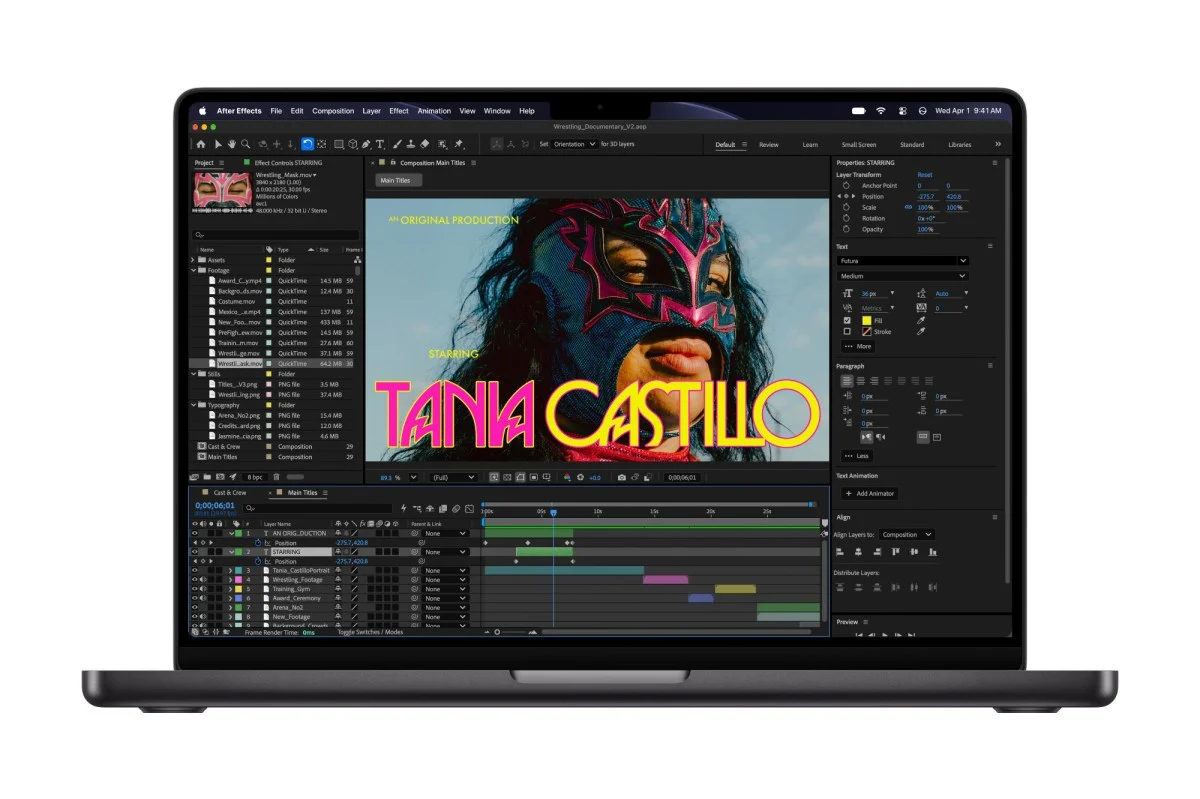
CUARTO, California — In a major hardware refresh that signals the next evolutionary phase of its proprietary silicon strategy, Apple has officially announced updates to its entry-level 14-inch MacBook Pro and popular all-in-one iMac lineup. Powered entirely by the newly minted M6 processor, these systems introduce significant architectural improvements, enhanced graphics capabilities, and cutting-edge wireless connectivity standards.
This release marks a notable generational leap. The previous iteration of the base 14-inch MacBook Pro utilized the M5 chip, while the iMac line was last overhauled in 2024 with the M4 architecture. By bypassing an interim generational cycle for the desktop line and directly integrating its newest silicon across these pivotal form factors, Apple is attempting to cement a unified performance standard across its consumer and prosumer ecosystems.
Main Facts: What’s New in the M6 MacBook Pro and iMac
The centerpiece of this hardware drop is, indisputably, the Apple M6 processor. Designed to push the boundaries of energy efficiency and computational throughput, the M6 introduces advanced core layouts, integrated hardware acceleration for ray tracing, and dedicated neural processing hardware.
The 14-Inch MacBook Pro
The base-tier 14-inch MacBook Pro receives a robust performance injection courtesy of a fully enabled M6 silicon die.
- Processing Architecture: Features a 12-core CPU utilizing an innovative 2+4+6 core layout, balancing high-performance and high-efficiency clusters to optimize demanding multitasking workflows and battery longevity.
- Graphics & AI: Equipped with a 12-core GPU featuring dedicated Neural Accelerators embedded directly into each core. This architecture also brings advanced hardware-accelerated ray tracing to the entry-level pro machine, alongside a dual 16-core Neural Engine designed to supercharge machine learning tasks.
- Memory & Storage: The base configuration starts with 16GB of unified memory, scalable up to 24GB or 32GB. Notably, memory bandwidth varies by capacity: the 16GB base option runs at 153 GB/s, while the 24GB and 32GB configurations unlock the full 170 GB/s bandwidth. Storage starts at a generous 1TB as standard, with upgrade paths extending to 2TB and 4TB.
- Connectivity: The MacBook Pro integrates Apple’s proprietary N1 wireless networking chip, introducing support for Wi-Fi 7 (802.11be) and Bluetooth 6.
The iMac Lineup
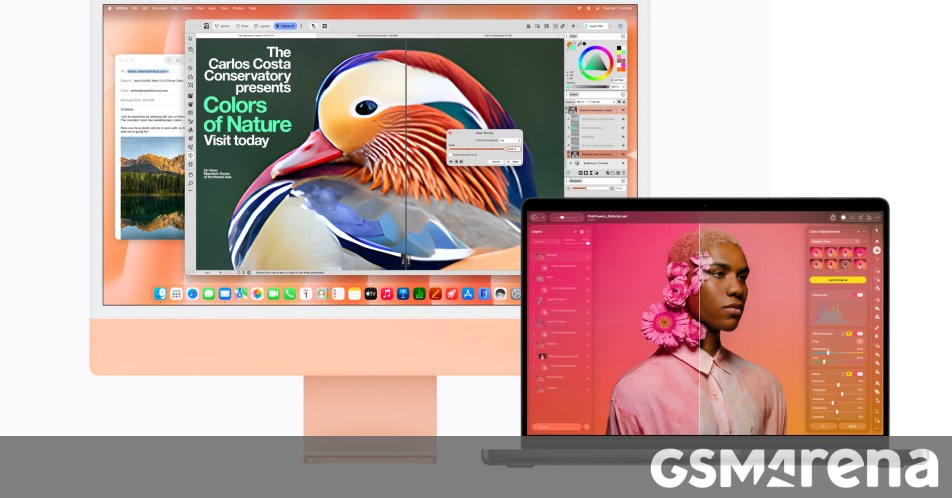
Apple’s all-in-one desktop receives a dual-tier M6 treatment, offering two distinct configurations tailored to different user requirements.
- Configurations: The top-tier iMac features the fully enabled 12-core CPU / 12-core GPU M6 variant. Meanwhile, the entry-level iMac employs a slightly scaled-down M6 chip featuring a 10-core CPU (arranged in a 2+3+5 layout) and a 10-core GPU equipped with Neural Accelerators and ray tracing support. Both models retain the dual 16-core Neural Engine.
- Memory & Storage: Both iMac variants start with 16GB of unified memory. The base configuration can be upgraded to 24GB, while the top-end model offers options for 24GB or 32GB. Intriguingly, unlike the MacBook Pro, Apple’s specifications suggest that even the 16GB base iMac leverages the full 170 GB/s memory bandwidth. Storage options begin at a 256GB SSD standard, with tiers for 512GB and 1TB available on both models, and a maximum 2TB option exclusive to the top tier.
- Display & Connectivity: Alongside the integration of the Apple N1 wireless networking chip for Wi-Fi 7 and Bluetooth 6, the iMac introduces an optional nano-texture glass display finish to combat glare in brightly lit office environments.
Beyond these internal and wireless upgrades, the external chassis designs and I/O layouts of both the 14-inch MacBook Pro and the iMac remain identical to their immediate predecessors.
Chronology: The Road to the M6 Silicon Era
To understand the weight of the M6 release, it is necessary to trace Apple’s silicon journey over the past few years. The rollout of the M-series processors has fundamentally disrupted the personal computing landscape, shifting the industry benchmark from raw clock speeds to performance-per-watt metrics.
- Late 2020 – The M1 Vanguard: Apple initiates its transition away from Intel architecture, introducing the M1 chip. The initial wave of devices redefines expectations for battery life and thermal management in thin-and-light laptops and desktops.
- 2022–2023 – M2 and M3 Iterations: The M2 architecture refines manufacturing nodes, offering iterative gains. Shortly after, the M3 family introduces hardware-accelerated ray tracing and dynamic caching to Mac hardware for the first time, signaling Apple’s serious intent regarding high-end graphics and gaming.
- 2024 – The M4 Era and iMac Refresh: The iMac receives a comprehensive update powered by the M4 chip, focusing heavily on on-device artificial intelligence capabilities and neural processing power. At this stage, the desktop line experiences a rapid cadence of updates.
- 2025 – The M5 Transition: Apple deploys the M5 chip to refresh the base 14-inch MacBook Pro, continuing incremental improvements in transistor density and multi-core efficiency.
- October 2026 – The M6 Launch: Apple bypasses extended life cycles for the M5-era desktops and unifies its consumer laptop and desktop offerings under the M6 banner. By bringing Wi-Fi 7, Bluetooth 6, and advanced neural accelerators across the board, the company sets a new hardware baseline for the late 2020s.
Supporting Data: Specifications, Pricing, and Availability
Pricing reflects Apple’s positioning of these machines as premium productivity tools. The entry threshold for the professional laptop category remains steady, while the iMac maintains its dual-track pricing strategy based on core count and configurations.
Pricing Breakdown
- 14-Inch MacBook Pro (Base M6, 12-Core CPU/GPU, 16GB RAM, 1TB Storage): Starts at $1,999.
- iMac (Base M6, 10-Core CPU/GPU, 16GB RAM, 256GB Storage): Starts at $1,499.
- iMac (Top M6, 12-Core CPU/GPU, 16GB RAM, 256GB Storage): Starts at $1,699.
Launch Timeline
- Pre-orders: Open tomorrow, October 28.
- Official Release / In-Store Availability: Friday, November 6.
Comparative Technical Matrix
| Feature / Component | 14-Inch MacBook Pro (M6) | Base iMac (M6) | Top iMac (M6) |
|---|---|---|---|
| CPU Configuration | 12-core (2 Performance + 4 Efficiency + 6 Balanced layout) | 10-core (2 Performance + 3 Efficiency + 5 Balanced layout) | 12-core (2 Performance + 4 Efficiency + 6 Balanced layout) |
| GPU Configuration | 12-core with Neural Accelerators & Ray Tracing | 10-core with Neural Accelerators & Ray Tracing | 12-core with Neural Accelerators & Ray Tracing |
| Neural Engine | Dual 16-core | Dual 16-core | Dual 16-core |
| Base Unified Memory | 16GB (Upgradable to 24GB, 32GB) | 16GB (Upgradable to 24GB) | 16GB (Upgradable to 24GB, 32GB) |
| Memory Bandwidth | 153 GB/s (16GB) / 170 GB/s (24GB/32GB) | 170 GB/s (All configurations) | 170 GB/s (All configurations) |
| Base Storage | 1TB SSD (Up to 4TB) | 256GB SSD (Up to 1TB) | 256GB SSD (Up to 2TB) |
| Wireless Tech | Apple N1 (Wi-Fi 7, Bluetooth 6) | Apple N1 (Wi-Fi 7, Bluetooth 6) | Apple N1 (Wi-Fi 7, Bluetooth 6) |
| Display Options | Standard Liquid Retina XDR | Standard Retina 4.5K (Nano-texture optional) | Standard Retina 4.5K (Nano-texture optional) |
| Starting Price | $1,999 | $1,499 | $1,699 |
Official Responses and Industry Context
While Apple’s official press releases through its Newsroom focus on the seamless integration of high-performance silicon and next-generation connectivity, industry analysts have been quick to dissect the strategic implications of these announcements.
In official statements accompanying the hardware reveal, Apple emphasized that the M6 architecture is designed to handle increasingly complex local machine learning workloads without compromising thermal efficiency. The incorporation of Neural Accelerators into every single GPU core represents a philosophical shift: machine learning is no longer treated as a supplementary task handled solely by a discrete Neural Engine, but rather as a fundamental compute paradigm integrated into graphics and general processing pipelines.
Furthermore, supply chain insiders have pointed out that the inclusion of the Apple N1 wireless chip is a crucial milestone. By moving away from third-party networking controllers and integrating custom Wi-Fi 7 and Bluetooth 6 silicon, Apple gains tighter end-to-end control over its hardware stack, optimizing power consumption and reducing latency for ecosystem-specific features like AirDrop, Continuity, and Universal Control.
Implications: What the M6 Refresh Means for Consumers and the Market
The deployment of the M6 chip across the entry-level 14-inch MacBook Pro and the iMac has several profound implications for the broader personal computing ecosystem.
1. The Democratization of Advanced AI and Ray Tracing
By ensuring that even the cut-down 10-core M6 in the base iMac features hardware-accelerated ray tracing and embedded Neural Accelerators, Apple is establishing a high baseline for all users. Creative professionals, students, and casual users alike will find themselves equipped to run local large language models, complex generative design tools, and modern ray-traced titles smoothly. This removes the performance penalty traditionally associated with "base model" hardware purchases.
2. Future-Proofing Through Next-Gen Connectivity
The inclusion of Wi-Fi 7 (802.11be) and Bluetooth 6 via the Apple N1 chip ensures that these machines are ready for upcoming network infrastructure upgrades. As routers and enterprise networks transition to Wi-Fi 7 standards, M6 Mac owners will experience lower latency, higher throughput, and more reliable connections in congested environments. For desktop users in shared office spaces, this is a particularly welcome quality-of-life upgrade.
3. Pricing Strategy and Market Positioning
Starting the 14-inch MacBook Pro at $1,999 while providing a generous 1TB of base storage signals Apple’s confidence in the value proposition of its prosumer portables. Meanwhile, maintaining a $1,499 starting price for the base iMac while doubling down on memory bandwidth and neural capabilities keeps the all-in-one competitive against Windows desktop alternatives.
4. Pressure on Competitors
As Apple continues to iterate on its in-house silicon strategy with custom touches like the N1 wireless chip and deeply integrated neural processing cores, traditional PC and component manufacturers face mounting pressure. The gap between generic x86 architectures and tightly integrated system-on-chip designs continues to widen, particularly in the realm of power-constrained laptops and all-in-one desktops.
Conclusion
The arrival of the M6-powered 14-inch MacBook Pro and iMac refreshes demonstrates Apple’s sustained momentum in silicon engineering. By focusing on holistic enhancements—ranging from core layout optimizations and memory bandwidth scaling to next-generation Wi-Fi 7 connectivity—Apple has successfully delivered a compelling update that reinforces the long-term viability of its Mac lineup heading into the latter half of the decade.