







The landscape of artificial intelligence is undergoing a profound shift. For the past two years, the industry has been obsessed with the "Chatbot" paradigm—a simple input-output loop where a Large Language Model (LLM) generates text based on a static prompt. However, as developers push the boundaries of what these models can achieve, a new architecture has emerged: the AI Agent.
Unlike standard LLMs that merely predict the next token, AI agents are designed to reason, utilize external tools, and execute multi-step workflows to achieve specific goals. With the recent release of the OpenAI Agents SDK, the barrier to entry for building these sophisticated systems has collapsed. What once required thousands of lines of custom code to manage state, tool execution, and error handling can now be accomplished in a handful of Python scripts.
The Paradigm Shift: From Chatbots to Agents
To understand the significance of the OpenAI Agents SDK, one must first distinguish between a standard LLM application and an agentic workflow. A conventional LLM application operates on a linear, transactional model: Prompt → Model → Response. Once the model generates its text, the process concludes.
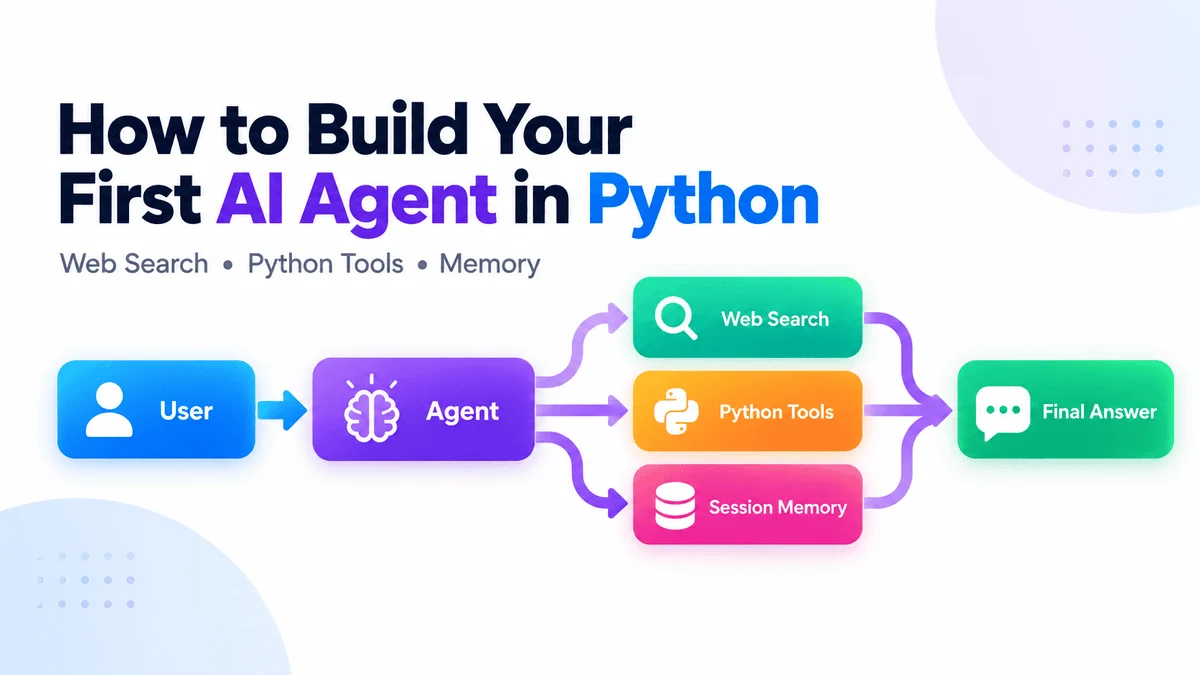
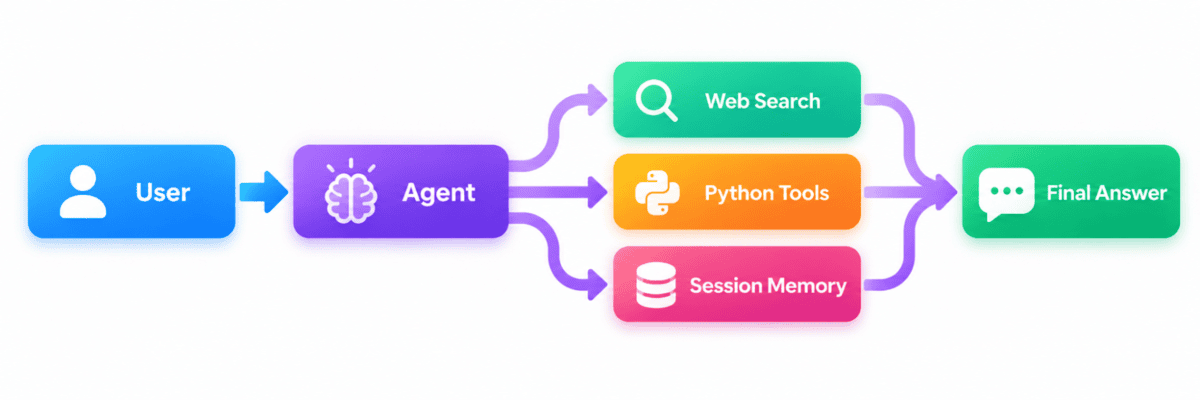
An AI agent, by contrast, operates on a recursive loop: User → Agent → Tool Execution → Agent → Final Response.
The intelligence here lies in the "Agent" layer, which is empowered to act as a decision-maker. Instead of simply answering a question, the agent evaluates the requirements of the task. If a user asks, "What is the cost of running these GPUs?" the agent realizes it lacks specific data and proactively initiates a search or performs a calculation. This ability to interleave reasoning with action is the hallmark of modern agentic systems.
The OpenAI Agents SDK simplifies this by introducing the Runner object. The Runner abstracts the complexities of the execution loop, automatically sending requests to the model, parsing tool-calling requests, executing those tools in the Python environment, and feeding the results back to the model until a resolution is reached.
Chronology of Development: Setting Up the Foundation
The transition to building an agent begins with creating a robust development environment. Modern Python tooling, such as uv, has made dependency management significantly faster and more reliable.
1. Project Initialization
Developers looking to experiment with these capabilities should start by establishing a clean workspace. Using uv, the process is streamlined:
mkdir first-ai-agent
cd first-ai-agent
uv init
uv add openai-agents
This setup ensures that all dependencies—specifically the openai-agents package—are isolated from the system Python, preventing "dependency hell" as the project grows.
2. The Agentic "Hello World"
The simplest implementation of an agent involves defining its identity and its toolset. By instantiating an Agent class, developers provide instructions (the "system prompt") that guide the model’s behavior.
In the initial implementation, one might provide a WebSearchTool(). This hosted tool allows the agent to reach out to the internet, retrieve real-time data, and synthesize it into a coherent response. This is a crucial evolution from pre-trained models, which are fundamentally limited by their "knowledge cutoff" dates.
Supporting Data: Why Tool Integration Matters
The true power of an agent is not just its ability to search the web, but its ability to become an extension of the developer’s local environment. By using the @tool decorator, any Python function can be converted into an agent-accessible capability.
The Mechanism of Action
When a developer tags a function with @tool, the SDK automatically generates a schema that the LLM interprets. The model uses this schema to understand:
- The function’s purpose: Derived from the docstring.
- The required inputs: Extracted from type hints.
- The expected output: Used to refine the next steps in the reasoning loop.
For example, a function designed to calculate order totals—taking price and quantity as arguments—becomes a high-fidelity tool. When the agent receives a request like "I need 14 GPUs costing $2.49 each per hour," it doesn’t try to guess the math. It correctly identifies that it needs to call the calculate_total function, passes the extracted parameters, and returns the accurate result to the user. This eliminates "hallucinations" in arithmetic, which are common in vanilla LLMs.
Persistent Memory: Building Contextual Intelligence
A significant limitation of early AI systems was their "amnesia." Every prompt was a blank slate. To build a production-grade agent, one must implement persistent memory.
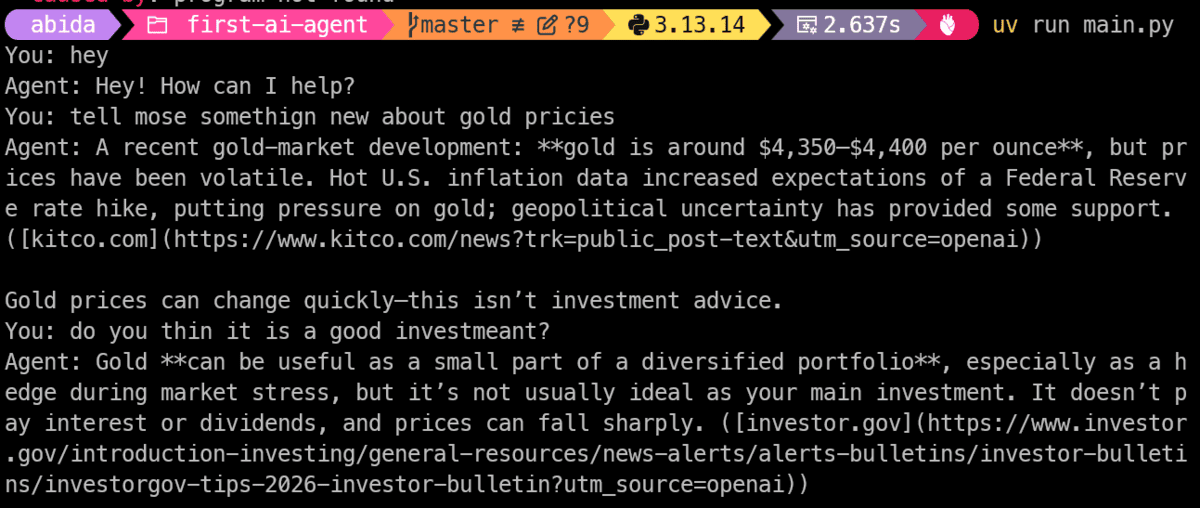
The OpenAI Agents SDK addresses this through the Session architecture. By utilizing an SQLiteSession, developers can store the history of a conversation in a local file. When the agent receives a follow-up query, the Runner pulls the previous interactions from the database, providing the model with the necessary context to understand relative pronouns (e.g., "What about the version after that?").
For enterprise-scale applications, this architecture is modular. Developers can swap the SQLite backend for more robust solutions like Redis, PostgreSQL, or MongoDB, ensuring that the agent can scale across thousands of concurrent users without losing the thread of conversation.
Official Perspectives and Technical Implications
OpenAI’s approach with this SDK highlights a broader industry trend: the commoditization of infrastructure. By providing a standardized way to handle tracing and execution, OpenAI is effectively pushing developers to focus on high-level logic rather than low-level plumbing.
The Role of Tracing
One of the most critical features for developers is the built-in tracing capability. In complex agentic systems, it is often difficult to debug why an agent made a specific decision. Did it fail because the instructions were ambiguous, or because the tool returned an unexpected error?
Tracing allows developers to visualize every step of the "thought process." By inspecting the OpenAI dashboard, engineers can see:
- The initial reasoning step.
- The specific tool call requested by the model.
- The raw input and output of that tool.
- The final synthesis.
This transparency is essential for "Guardrails"—the process of ensuring that an AI agent acts predictably and safely. As agents move from research projects to production tools, this level of observability becomes a regulatory and operational requirement.
Implications for the Future of Software Development
The emergence of these tools suggests that the future of software development will be increasingly "agentic." We are moving toward a world where developers act more like system architects and less like manual coders. Instead of writing a function for every possible user intent, a developer will define a set of tools, provide clear documentation for those tools, and let the agent navigate the space of possible solutions.
Scaling the Architecture
The architecture outlined in this guide serves as a foundation. From here, the path forward is clear:
- APIs: Connecting agents to external SaaS platforms (Salesforce, GitHub, Slack).
- MCP Servers: Utilizing the Model Context Protocol to standardize how agents interact with data repositories.
- Multi-Agent Systems: Creating a hierarchy where a "Manager Agent" delegates tasks to "Specialist Agents" (e.g., a Research Agent, a Coding Agent, and a Data Analysis Agent).
Final Thoughts
Building your first AI agent is a transformative experience. It changes your perception of what a Large Language Model can do—from a clever text generator to a functional partner capable of executing tasks in the real world. By leveraging the OpenAI Agents SDK, you are not just building a chatbot; you are building a system that can reason, adapt, and act.
As you expand your agent’s capabilities, remember the golden rule of agentic design: start small. Build one workflow that works perfectly, ensure your tool definitions are precise, and iterate from there. The complexity of your AI system should grow in direct proportion to the utility it provides to your users. In the evolving landscape of AI, those who master the "Agent Loop" today will define the software experiences of tomorrow.
About the Author
Abid Ali Awan is a certified data scientist and technical writer specializing in machine learning and data science. He holds a Master’s degree in technology management and is passionate about building AI solutions that address complex human challenges. Connect with him at abid.work or on LinkedIn.