











In a milestone that bridges a critical gap between theoretical capability and practical reliability, researchers from IBM and the University of Chicago have successfully executed a quantum computation that satisfies the rigorous criteria for quantum advantage. Utilizing an innovative error-correction strategy to encode 70 logical qubits, the collaborative team completed a complex mathematical task in […]
Breaking Boundaries in Quantum Networking: ISTA Physicists Realize 20-Year-Old Prediction for Fully Autonomous Entanglement
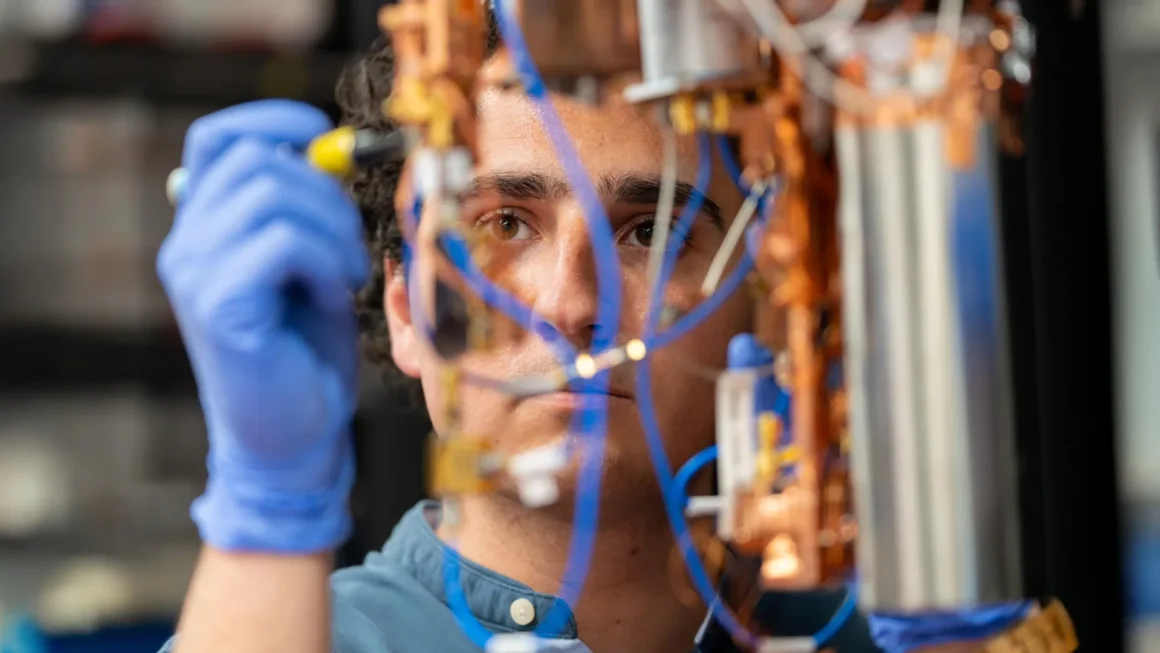
KLOSTERNEUBURG, Austria — In a breakthrough that could fundamentally reshape the architecture of future quantum supercomputers and distributed networks, researchers at the Institute of Science and Technology Austria (ISTA) have successfully demonstrated a fully autonomous method for linking physically separated quantum bits (qubits). Published recently in the prestigious journal Physical Review X, the experiment marks […]

Breakthrough in Silicon Quantum Computing: RIKEN Researchers Overcome Major Multi-Qubit Interference Hurdle
TOKYO — In what may prove to be a foundational milestone for the commercialization of quantum computing, an international team of researchers has demonstrated unprecedented parallel control of silicon spin qubits. Published in the prestigious journal Nature Physics, the breakthrough addresses one of the most stubborn bottlenecks in the development of silicon-based quantum processors: the […]

OpenSSL 4.1.0 Released: DTLS 1.3 Support, Post-Quantum Optimizations, and Critical Implementation Hurdles
The OpenSSL project has officially released version 4.1.0, a significant milestone that introduces long-awaited support for Datagram Transport Layer Security (DTLS) 1.3. While the inclusion of this protocol—defined in RFC 9147—marks a major advancement for secure communication over datagram-based transports like UDP, the release arrives with a caveat: developers are being warned of four specific, […]
A Thousandfold Leap Forward: Chalmers Researchers Accelerate Quantum Operations to Overcome the Industry’s Greatest Obstacle
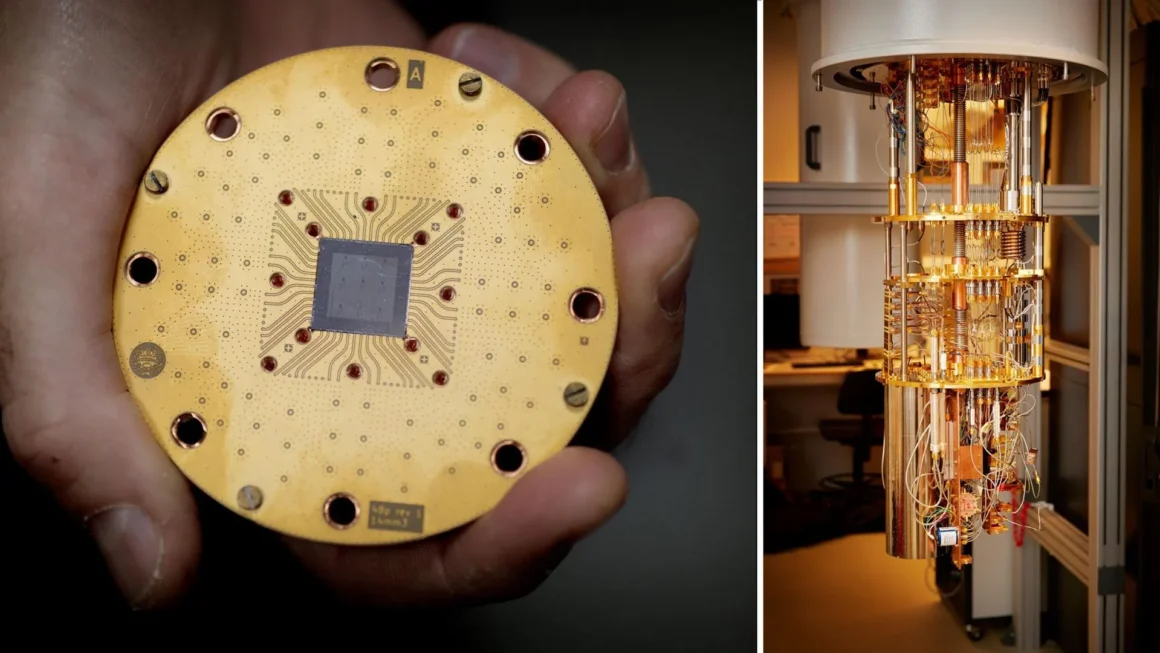
GOTHENBURG, SWEDEN — In the high-stakes, hyper-competitive global race to build functional quantum computers, time is arguably the most unforgiving enemy. Unlike classical computing bits—which are robust, reliable, and binary—quantum bits, or qubits, exist in a delicate state of superposition and entanglement. This fundamental nature grants them staggering computational potential, capable of unlocking breakthroughs in […]

Unlocking the Universal Quantum Future: Researchers Harness Non-Abelian Anyons to Bypass Major Error-Correction Bottlenecks
CAMBRIDGE, MASS. / CHICAGO, ILL. — In the high-stakes race to build practical, scalable quantum computers, researchers often run into a fundamental architectural wall: versatility versus stability. Just as a conventional laptop must be capable of running an infinite variety of software to be useful, a practical quantum computer must eventually be able to handle […]

Breakthrough at the University of Surrey: Novel Superfluid Helium Qubit Promises a 100-Fold Reduction in Quantum Computing Error Rates
GUILDFORD, UK — In a development that could reshape the trajectory of the quantum computing industry, researchers at the University of Surrey have unveiled a radical new qubit design. Published in the journal npj Quantum Information, the proposal addresses the single greatest hurdle in the commercialization of quantum technology: scalability hindered by extreme error rates. […]

Beyond Classical Boundaries: Oxford Researchers Recreate the Elusive Aharonov-Bohm Effect Using Hybrid Quantum Computing
OXFORD, UK — In the realm of classical physics, objects are bound by direct contact or tangible forces: a ball is thrown, a magnet pulls iron, and an electric current drives a motor. But quantum mechanics has long subverted these intuitive rules. For decades, physicists have known that a subatomic particle does not actually need […]

Unlocking the Universal Quantum Future: Researchers Harness Non-Abelian Anyons to Sidestep Quantum Computing’s Costliest Bottleneck
CHICAGO AND MUNICH — In the relentless quest to build a practical, fault-tolerant quantum computer, scientists have long faced a fundamental architectural dilemma: how to build a machine with the versatility of a classical laptop while overcoming the extreme fragility of quantum information. Conventional quantum systems require massive computational overhead just to keep errors at […]

Breakthrough at the University of Surrey: Novel Superfluid Helium Qubit Promises a 100-Fold Reduction in Quantum Error Rates
GUILDFORD, UK — In what could mark a pivotal turning point in the race toward fault-tolerant quantum computing, researchers at the University of Surrey have unveiled a radically new approach to qubit design. By harnessing the bizarre, friction-free properties of superfluid helium-3, a team of physicists has proposed a device that could slash quantum error […]