




Climate Week NYC has long served as the premier stage for the world’s most pressing environmental discourse. Each year, the city transforms into a bustling epicenter for over 100,000 participants—ranging from venture capitalists and government policymakers to academic researchers and non-profit leaders—all converging to address the climate crisis. This year, held from September 21 to September 27, the event saw a significant expansion of institutional participation, headlined by a robust, multi-disciplinary presence from the Massachusetts Institute of Technology (MIT).
Through the MIT Climate Project, the university utilized multiple venues, most notably the Dream Downtown Hotel in Manhattan’s Chelsea neighborhood, to host a series of high-impact dialogues. With over 14 dedicated sessions and contributions from eight distinct MIT departments and labs, the university demonstrated that solving the climate equation requires more than just engineering breakthroughs; it requires a systemic "whole-of-MIT" mobilization that bridges the gap between laboratory research and real-world deployment.
The Strategic Importance of the New York Nexus
For MIT, the decision to maintain a strong presence at Climate Week NYC is rooted in the recognition that climate solutions cannot be developed in isolation. Evelyn Wang, MIT’s vice president for energy and climate and the Ford Professor of Engineering, emphasized that the university’s role extends far beyond theoretical research.
"The MIT Climate Project is a whole-of-MIT mobilization, but no single institution can deliver the climate solutions the world needs—from reducing greenhouse gas emissions to adapting to a changing climate and building more-resilient communities," Wang stated. She noted that Climate Week is essential because it convenes the diverse stakeholders—finance, industry, policy, and academia—who must align their incentives to drive meaningful change. By placing MIT’s intellectual capital in the center of this global network, the university aims to accelerate the transition from invention to impact.
Chronology of Engagement: A Week of Intensive Dialogue
The MIT delegation’s participation was carefully curated to address specific "frontiers" of the climate challenge, ensuring a balanced mix of high-level policy discussions and technical workshops.
Opening Horizons: AI and the Climate Equation
The week began with Evelyn Wang taking the stage at the official Climate Week NYC opening ceremony. Her address focused on the intersection of artificial intelligence and climate change, setting a tone of urgent optimism. Wang argued that AI is not merely a tool for optimization but a foundational technology that can assist in modeling complex climate systems, accelerating material discovery for batteries, and managing smart grids.
Mid-Week Innovation: The Bezos Earth Fund Collaboration
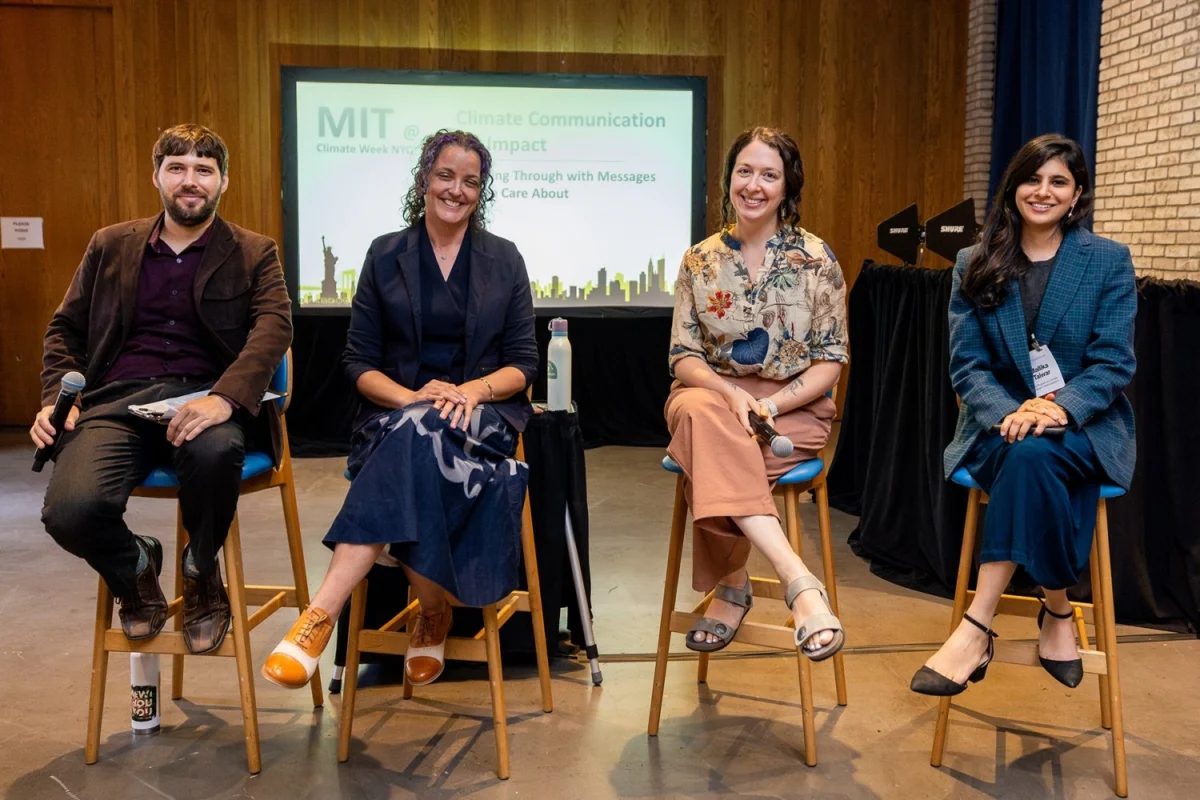
A central pillar of the week’s activities was a partnership with the Bezos Earth Fund. This session focused on the "innovation pipeline"—the notoriously difficult journey from a successful laboratory proof-of-concept to a commercially viable, scaled product.
Participants included a panel of MIT faculty and alumni spinout leaders—Asegun Henry, Seonghoon Woo, Ariel Furst, and Assil Halimi—who discussed the hurdles of "patient capital" and the necessity of specialized testing infrastructure. The conversation highlighted that for climate technologies, the laboratory is only the starting point; the real work lies in navigating the "valley of death" where many startups fail due to a lack of demonstration and pilot opportunities.
Deep-Dive Workshops and Technical Frontiers
Throughout the week, the MIT coalition hosted more than 14 specialized sessions. Key highlights included:
- The Future of Data Centers: Led by Gang Chen, the Carl Richard Soderberg Professor of Power Engineering, this session examined the mounting energy demands of the AI boom. Experts explored how to redesign data center architectures to be more sustainable and community-integrated.
- Super Pollutants: Jesse Kroll, the Peter de Florez Professor, led a workshop on "super pollutants"—gases that contribute significantly to peak warming but have shorter atmospheric lifespans than CO2. The session served as a call to action for cross-disciplinary teams to treat these pollutants as an "emergency brake" for the climate.
Supporting Data: Why "Hard-to-Abate" Matters
The technical sessions during the week underscored a critical reality: current technological solutions are insufficient for the scale of the crisis.
Data presented during the sessions revealed that super pollutants, such as methane and certain refrigerants, account for nearly half of all global anthropogenic warming to date. Unlike carbon dioxide, which lingers in the atmosphere for centuries, these pollutants provide a unique opportunity for rapid impact if they can be effectively abated. However, as Professor Kroll pointed out, a significant fraction of these emissions remains untreatable with current technology, necessitating a shift in R&D funding toward high-risk, high-reward innovations.
Similarly, the session on data centers highlighted an emerging tension in the digital age. As computational demand skyrockets, data centers have become a significant source of both energy consumption and local environmental stress. The MIT panels argued that without a shift in paradigm—integrating waste-heat recovery, renewable-powered cooling, and smarter load management—the very infrastructure powering the green transition could inadvertently exacerbate climate pressures.
Perspectives from the Frontline: Official Responses
The MIT delegation represented a wide array of expertise, from the Abdul Latif Jameel Water and Food Systems Lab (J-WAFS) to the MIT Sloan Sustainability Initiative. The recurring theme among all speakers was the necessity of human-centric design.
Claire Walsh, global director of policy and communications at MIT’s Abdul Latif Jameel Poverty Action Lab (J-PAL), provided a sobering reminder during her presentation: "Even when a technology is low-cost, it doesn’t mean it will diffuse naturally or get widely adopted." Walsh argued that engineers and climate scientists often overlook the "last mile" of implementation. She emphasized that for any technology to be effective, it must account for the economic incentives, cultural constraints, and daily realities of the end-user.
This sentiment was echoed by Ray Rothrock, a venture capitalist and life member of the MIT Corporation, who moderated the Bezos Earth Fund discussion. Rothrock highlighted that the "innovation pipeline" is often broken because investors are not aligned with the long timelines required for deep-tech climate infrastructure. "We need better pathways through the gaps," he noted, echoing Wang’s call for a more cohesive ecosystem that supports startups from the seed stage through to full-scale deployment.
Implications: The Road Ahead for MIT and the Global Community
The success of the MIT presence at Climate Week NYC suggests a shift in how academic institutions interact with the global stage. Rather than merely presenting research findings, MIT is positioning itself as a central facilitator for cross-sector collaboration.
1. Reconceptualizing the Innovation Pipeline
The primary implication of the week’s events is that the traditional "siloed" approach to climate innovation is dead. Future efforts must integrate policy, finance, and social science into the engineering process from day one. By involving the PKG Center for Social Impact and the MIT Climate Policy Center, the university is signaling that technological solutions must be socially and politically palatable to succeed.
2. A Call for "Patient Capital"
The discussions surrounding the Bezos Earth Fund collaboration reinforced the need for financial models that prioritize long-term climate stability over short-term quarterly gains. The "valley of death" for climate startups is not just a technological hurdle; it is a financial one. The takeaway for policymakers and investors is clear: if we want a net-zero future, we must fund the infrastructure that validates and scales nascent technologies.
3. Scaling for Global Impact
The final takeaway from the week was the emphasis on "contextual reality." Whether it was the discussion on data centers or the analysis of super pollutants, the message remained consistent: technology is not a panacea. It must be deployed with an understanding of global economic realities and local community needs.
As the MIT delegation returned to Cambridge, the impact of their week in New York remained clear. By facilitating over 700 attendees across multiple events, the MIT Climate Project has established itself as a critical node in the global effort to mitigate the climate crisis. The task now, according to Evelyn Wang, is to translate these connections into sustained action.
"When we connect the MIT community with this global network," Wang concluded, "we uncover powerful possibilities to strengthen not only our own efforts, but the world’s capacity for change."
The week in New York was more than just a series of panels; it was a blueprint for how a research-intensive institution can leverage its intellectual and social capital to address the defining challenge of the 21st century. As the world moves toward 2030, the collaborations formed in the Chelsea neighborhood will likely prove as vital as the laboratory breakthroughs they were designed to support.