










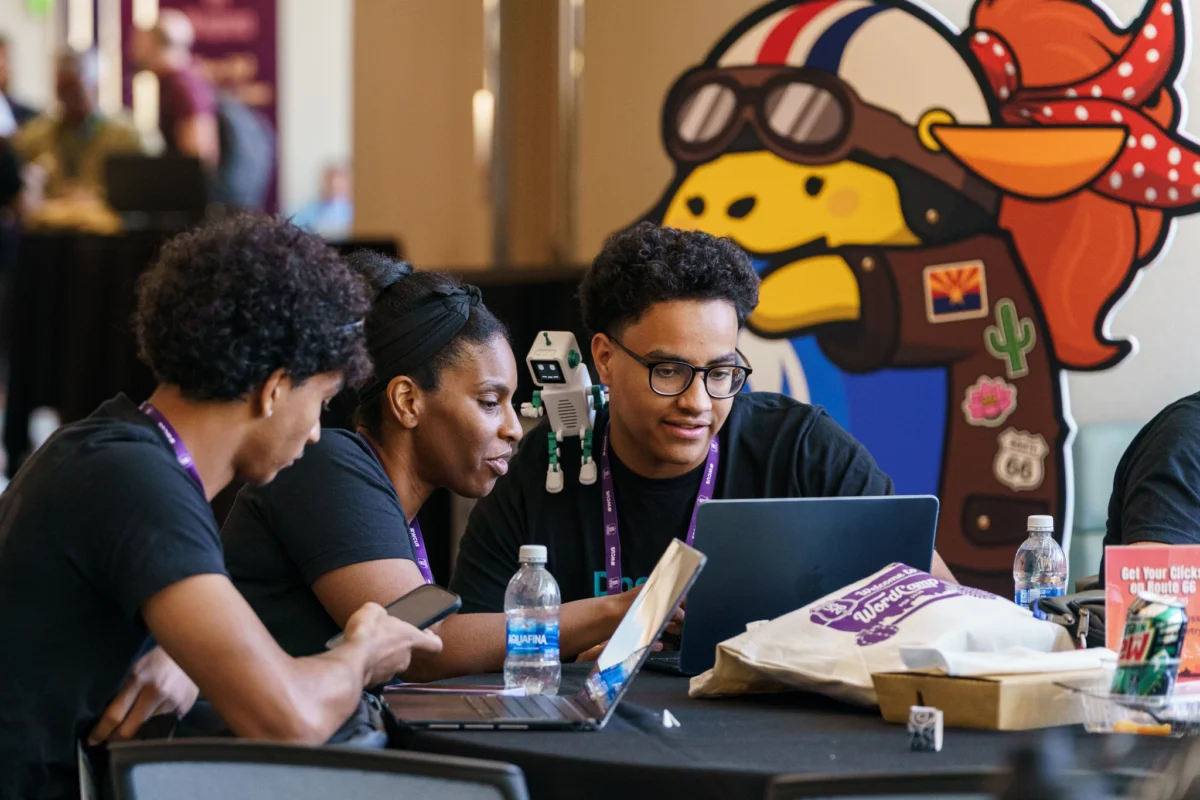
PHOENIX, ARIZONA — Beneath a punishing 111°F (44°C) desert sky, the global WordPress community converged on the Phoenix Convention Center for WordCamp US (WCUS) 2026. Over four action-packed days, more than 1,100 registered attendees—with thousands more tuning in via global livestreams—braved the Arizona heat to tackle the future of open-source publishing, artificial intelligence, and digital sovereignty.

From air-conditioned golf carts ferrying travelers between the Sheraton Phoenix Downtown and the convention center to bustling session rooms and the ever-popular Happiness Bar, WCUS 2026 delivered a masterclass in community resilience, technical evolution, and the enduring human element in technology.

Main Facts: The Scope and Scale of WCUS 2026
WordCamp US 2026 was defined by impressive operational metrics and milestone announcements:

- Attendance: Over 1,100 in-person attendees from around the globe, complemented by thousands of virtual livestream participants.
- Programming: More than 50 speaker-led sessions distributed across four distinct tracks, featuring hands-on workshops, keynotes, and deep-dive technical panels.
- Community Contributions: 425 participants—including 29 first-time contributors—formed 26 distinct teams during Contributor Day under the guiding mantra: "Real artists ship."
- Major Software Launch: Release leads officially pressed the button on WordPress 7.1 ("Mary Lou"), pushing out hundreds of thousands of downloads live on stage.
- Civic Recognition: Phoenix Chief Innovation Officer Michael Hammett presented a mayoral proclamation from Mayor Kate Gallego, officially declaring August 19, 2026, as Phoenix WordPress Day.
Chronology: A Four-Day Journey Through the Open Web
Days 1 & 2: Contributor Day and Showcase Day
The week kicked off with a restructured Contributor Day designed to emphasize immediate, tangible output. Operating under the banner "Real artists ship," the 425 participants split into 26 project-focused teams. Rather than getting bogged down in open-ended tasks, teams rallied around a new rapid-delivery model: goal owners pitched their projects in 30 seconds, allowing contributors to fluidly move between teams based on interest.

The results were immediate. By the end of the day, contributors had closed tickets, shipped pull requests, and reviewed themes for accessibility. Notable outputs included a new description-list block for glossaries and product details, robust email and password-reset testing tools, a Photo Directory importer, and foundational guidelines for AI integration within the project.

Monday transitioned into Showcase Day, shifting focus from code creation to long-term digital sustainability. High-profile case studies highlighted massive enterprise and civic migrations. Manny Costa opened the track by exploring civic websites where public accessibility and editorial workflows form an essential public service.

Two blockbuster sessions focused on publishers reclaiming digital independence:

- The Ankler: Nicola Catton detailed the publication’s massive migration of 15 newsletters away from Substack, successfully reclaiming direct control over subscriber data, revenue rules, and reader experience via a custom block theme.
- Daily Kos: Ben Greeley and Allison McHenry outlined the monumental migration of a platform boasting 1.5 million posts, 88 million comments, and 2.7 million users, supported by a public beta involving over 500 community members.
Day 3: Keynotes and Human Judgment in the Loop
The mid-week conference tracks dove headfirst into the industry’s most pressing debate: the intersection of artificial intelligence and human agency. Bo English-Wiczling opened the day with a keynote challenging the notion that AI replaces human labor. "AI doesn’t remove your work. It moves it," she noted, emphasizing that while AI can draft code in seconds, human oversight remains vital for ensuring keyboard navigation, theme consistency, and secure dependencies.

Loyal Pyczynski, drawing on his extensive experience at Disney and Meta, followed up with a keynote on creative confidence and iterative success, reminding the audience: "We need to make sure that we make better mistakes tomorrow. Success is an iterative endeavor, and time is our most precious resource."

The afternoon expanded outward into non-WordPress perspectives. In a standout fireside chat, Amanda Ventura of Waymo joined David Levine to discuss how public trust in autonomous technology is built through meticulous, repeated product practices and responsive feedback loops.

Day 4: Simplicity, Piplets, and the Future of WordPress
The final day brought high-energy product philosophy, civic honors, and the much-anticipated keynote conversation between WordPress co-founder Matt Mullenweg and Robert Jacobi.

Mullenweg’s closing thesis centered on an urgent call for radical simplicity: "I want WordPress to be known for simplicity, not just complexity." To illustrate this, he introduced WordPress Piplets—a modern evolution of a 2007 concept utilizing a single, self-modifying PHP file (up to 25MB, or roughly four million words) capable of storing its own data without a database or third-party packages, loading in a blistering 50 milliseconds.

The energy reached its peak when release leads were invited on stage to launch WordPress 7.1 ("Mary Lou"). Amid thunderous applause, the latest core version instantly began streaming out to hundreds of thousands of sites worldwide.

Supporting Data & Technical Highlights
- Performance & Architecture: The introduction of Piplets signals WordPress’s ongoing exploration of lightweight, portable publishing architectures, building upon previous milestones like SQLite integration and WordPress Playground.
- Profile Shortcuts: Attendees received word that
w.orgprofile shortcuts are rolling out immediately, allowing clean, shorthand redirects likew.org/@matt. - Five for the Future: Mullenweg addressed the discrepancy between pledged hours and active contributions, urging the community to transition toward impact-based metrics (commits, tickets closed, and organized events) rather than self-reported pledges.
- Beginner Workshops & Support: Throughout the four days, hands-on beginner workshops provided non-technical attendees with free hosting, custom domains, and live mentorship, while the Happiness Bar resolved countless custom CSS, ecommerce, and plugin queries.
Official Responses and Perspectives
The convention hall played host to cross-industry dialogue on open-source collaboration, security, and ethical AI development.

- Matt Mullenweg on Open Source Collaboration: Addressing audience questions regarding inter-community competition, Mullenweg encouraged open-source leaders to embrace cross-project cooperation. "Copying good code between projects is the entire point of open source," he stated, inviting leaders from other ecosystems to speak at future WordCamps.
- Amanda Ventura on Trusting Technology: Reflecting on Waymo’s safety and accessibility work, Ventura emphasized that trust is earned by listening to edge-case feedback—such as modifying app navigation and vehicle horn tones to better serve blind and low-vision riders in dense urban environments.
- Robert Jacobi on Community Growth: Reflecting on the demographic makeup of WCUS 2026, Jacobi noted a surging influx of first-time attendees—many of whom discovered the event simply by asking AI chatbots for the most innovative tech events happening in Phoenix.
Implications for the Open Web
WordCamp US 2026 will likely be remembered as an inflection point for the WordPress project. As artificial intelligence accelerates code generation and content creation, the community has firmly established that human judgment, security verification, and digital ownership are non-negotiable pillars of sustainable web development.

By pushing boundaries with lightweight architectures like Piplets, reinforcing supply-chain security, and empowering publishers to escape walled gardens (as demonstrated by The Ankler and Daily Kos), WordPress is positioning itself not merely as a content management system, but as the foundational infrastructure for an independent, open web.

As the Phoenix lights dimmed, the community turned its collective gaze toward the horizon. Recordings of all sessions remain accessible via us.wordcamp.org/2026, while the global caravan prepares for its next major milestones: the upcoming State of the Word, WordCamp Asia 2027 in Penang, Malaysia, and WordCamp Europe 2027 in Málaga, Spain.

Photo credits: Jaron Quach, Emily Chan, Wini Lao, Kendra Stowe, and Jennifer Swisher.



