










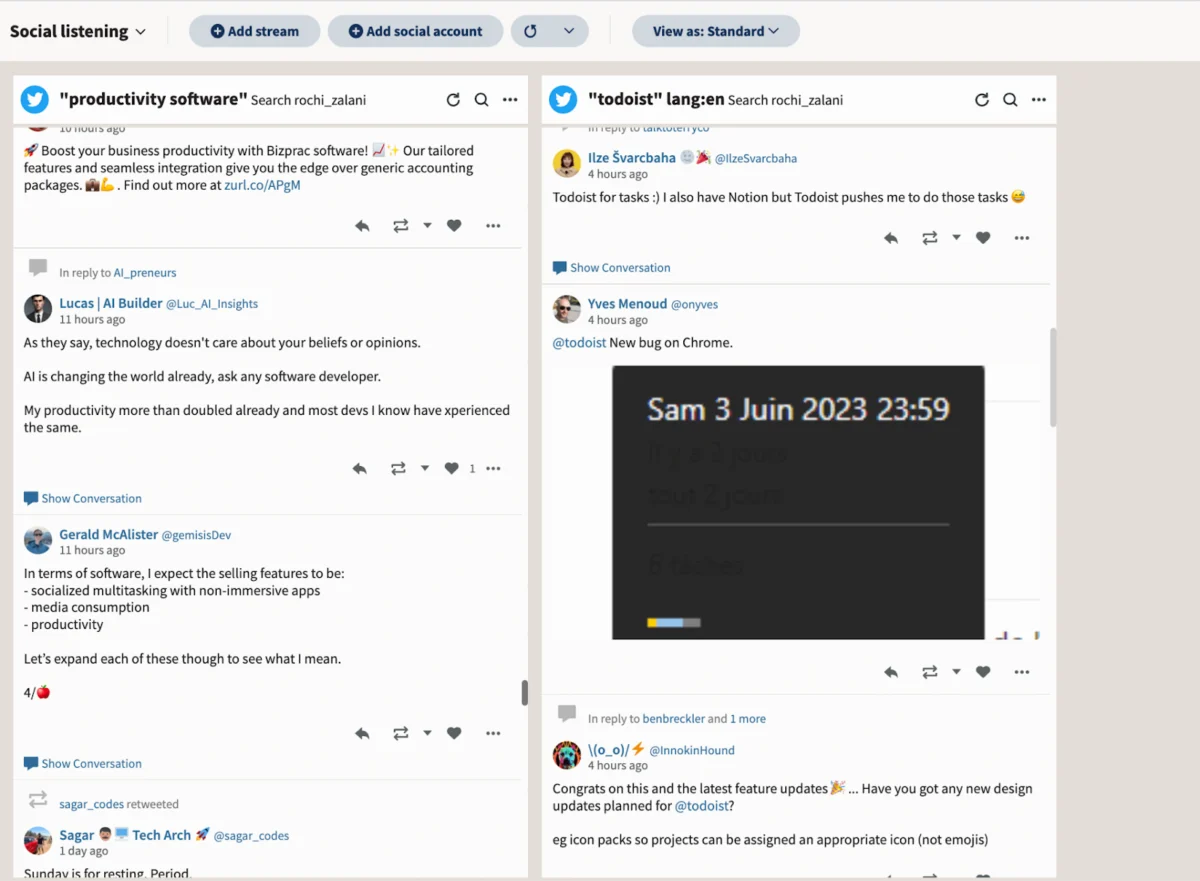
These are the 11 of the social media management tools — and plenty of alternatives to each tool, if you need them. Top options for social media management vary from beginner-friendly tools to enterprise-level platforms requiring deep analytics and CRM integration.
Here’s a quick summary:
| Tool name | Free plan / trial | Latest public price | Best for | Top features |
| Buffer | Free for up to 3 channels | $6/month per channel | Creators and small businesses | Smart scheduling, universal comment inbox, idea storage, analytics, optimal time recommendations, AI assistant, posting streaks |
| Hootsuite | 30-day free trial | $199/month per user | Mid-sized teams and social listening | Scheduling, analytics, team access controls |
| Tailwind | Free plan available | $29.99/month | Pinterest and small social accounts | Pin scheduling, browser pin extension, post queueing |
| SocialPilot | 14-day free trial | $30/month | Solo professionals to small teams | Scheduling, content library, collaboration; higher tiers add analytics and white-label |
| Zoho Social | Trial available | $15/month | Users in Zoho ecosystem | Integrated social and CRM tools, scheduling and editing |
| Sprout Social | 30-day trial | $199/month per user | Teams needing advanced analytics and social plus influencer tools | Unified inbox, analytics, social CRM, team collaboration |
| Oktopost | Not publicly available | Custom / enterprise pricing | B2B companies and enterprises | Campaign dashboards, buyer-journey tracking, content and advocacy management |
| Later | 14-day free trial | $25/month | Agencies and content schedulers | Media library, scheduling and posting across channels, content planning support |
| Socialinsider | 14-day trial | $99/month | Analytics-focused social media users and teams | Competitor and content-pillar performance analytics, dashboards |
| Manychat | Limited-feature plan | $15/month | Chat automation and DMs | Automated DMs, template campaigns, AI-guided workflow setup |
| Sprinklr | Enterprise tool — custom quote only | Custom / enterprise pricing | Large enterprises and brands with complex needs | Persona dashboards, multi-audience content, AI-based image detection, and social analytics |
1. Buffer
Best social media management tool for creators and small businesses
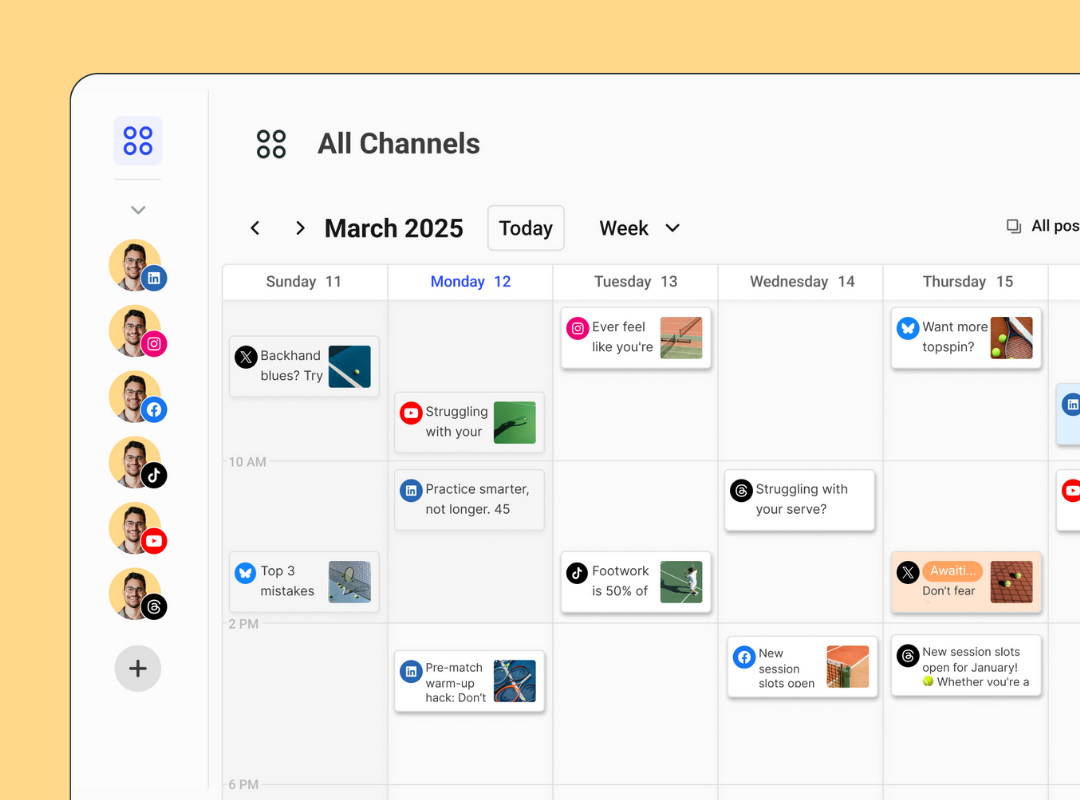
Buffer is often seen as the best plug-and-play social media tool, thanks to its easy-to-use system, low barrier to entry, and per-channel pricing flexibility.
Of course, Buffer’s first on this list — but not just because you’re reading the Buffer blog. I used Buffer as a customer first, and here’s why it stood out to me then (and still does now).
Favorite features:
The thing I love most about Buffer is its simplicity. On the surface, it looks straightforward: Add your social media accounts, start scheduling, and you’re off and running. But that’s just the beginning. Once you start exploring, you’ll find Buffer can do a whole lot more.
Buffer’s also quick to adapt when new platforms emerge. With new social channels launching rapidly (like Threads and Bluesky), you’d want a social media management tool that’s flexible and fast.
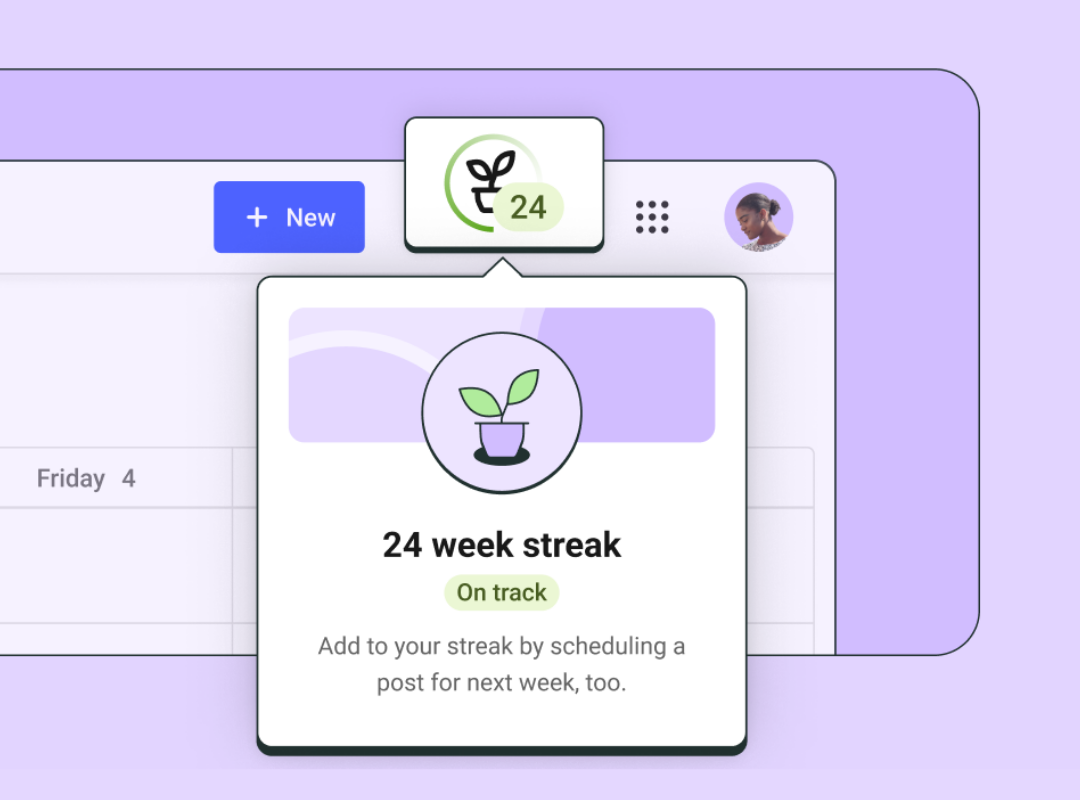
It’s one of the few social media scheduling tools with habit-building features like streaks, to help you post consistently.
And it’s continually coming up with handy features you’ll actually find helpful — like a template library to spark content ideas (especially when you’re short on time).
Buffer has all the basics covered: You can schedule social media posts easily, respond to comments, use its AI assistant to help speed up content creation and generate captions, and collaborate with your team easily.
Buffer works best for creators and small teams who value simplicity and flexibility over enterprise-level complexity. If you’re a solo creator or working with a small team, Buffer’s designed with you in mind.
Free plan/trial available: Yes. Free forever for up to three channels. All paid plans also have a 14-day free trial.
Price: Paid plans begin at $6 per month per channel.
2. Hootsuite
Favorite features:
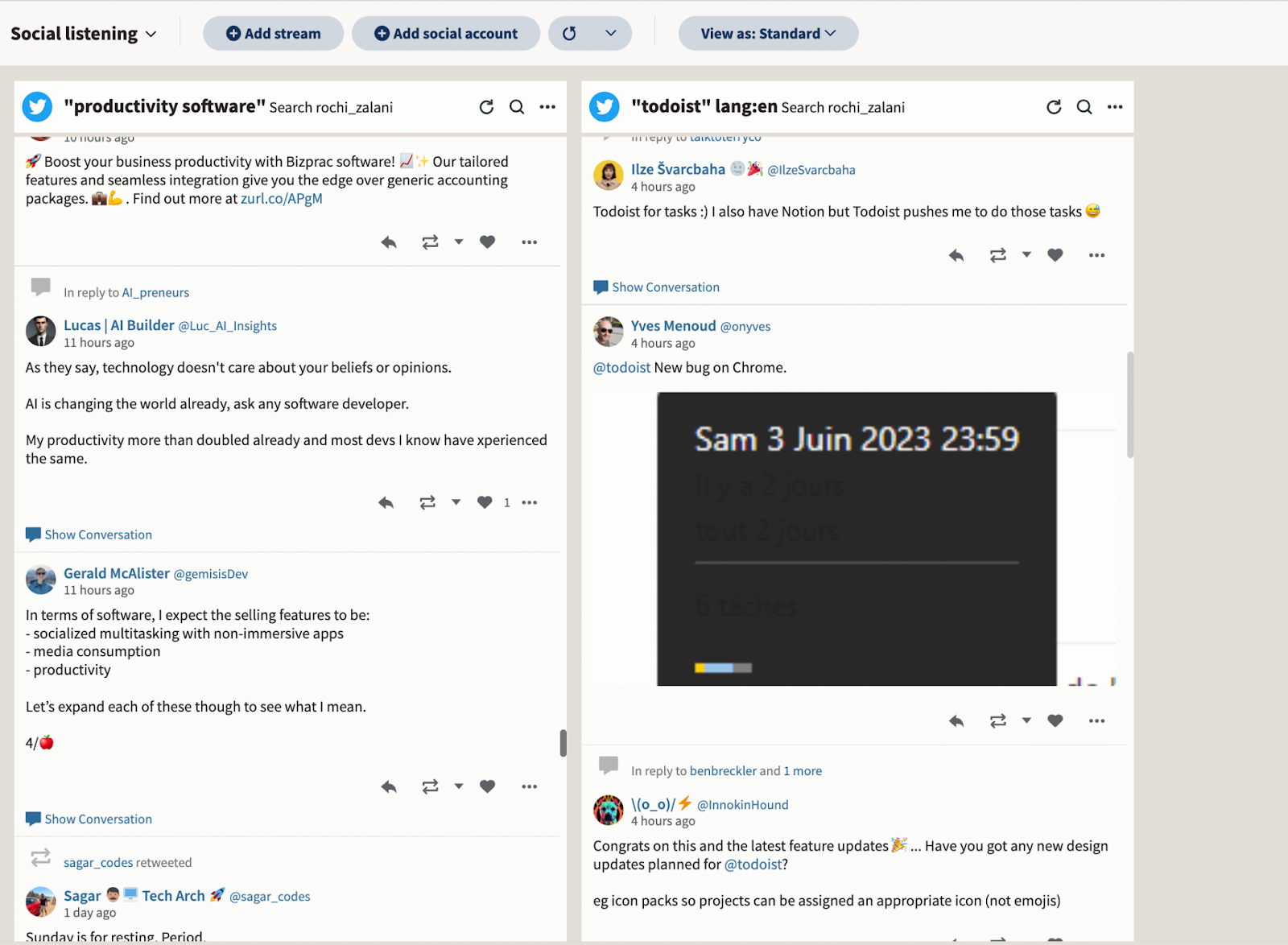
Hootsuite is well-known in the social media management world, and for good reason: Its social listening features are powerful — and it’s gotten even stronger since Hootsuite acquired Talkwalker into the fold, which means deeper insights into what people are saying about topics that matter to you.
You can choose your location and a topic to analyze, and the platform will give you an in-depth report about what people have been saying about that topic for the past week.
Hootsuite also has a great team management feature. You can create multiple sub-teams and minutely decide what level of access to give to your team members.
The AI assistant offers features like copywriting formulas and content repurposing. In my testing, though, the outputs usually needed significant editing before they were ready to publish.
The home dashboard can feel overwhelming, though. It’s packed with features, but that also means it’s not the easiest tool to navigate — especially when you’re just getting started.
Free plan/trial available: No free plans. Paid plans have a free trial of 30 days.
Price: Pricing starts at $199 per user per month.
3. Tailwind
Favorite features:
Sure, plenty of social media management software can help you schedule pins on Pinterest and manage your Pinterest account — but Tailwind was purpose-built for this job.
Tailwind was built specifically for Pinterest from the ground up — and it shows.
Its sole focus is on Pinterest, and it’s an official Pinterest partner. So if you’re someone who’s looking to burrow down on this platform or grow your following on Pinterest exclusively, you’ll want to check out Tailwind.
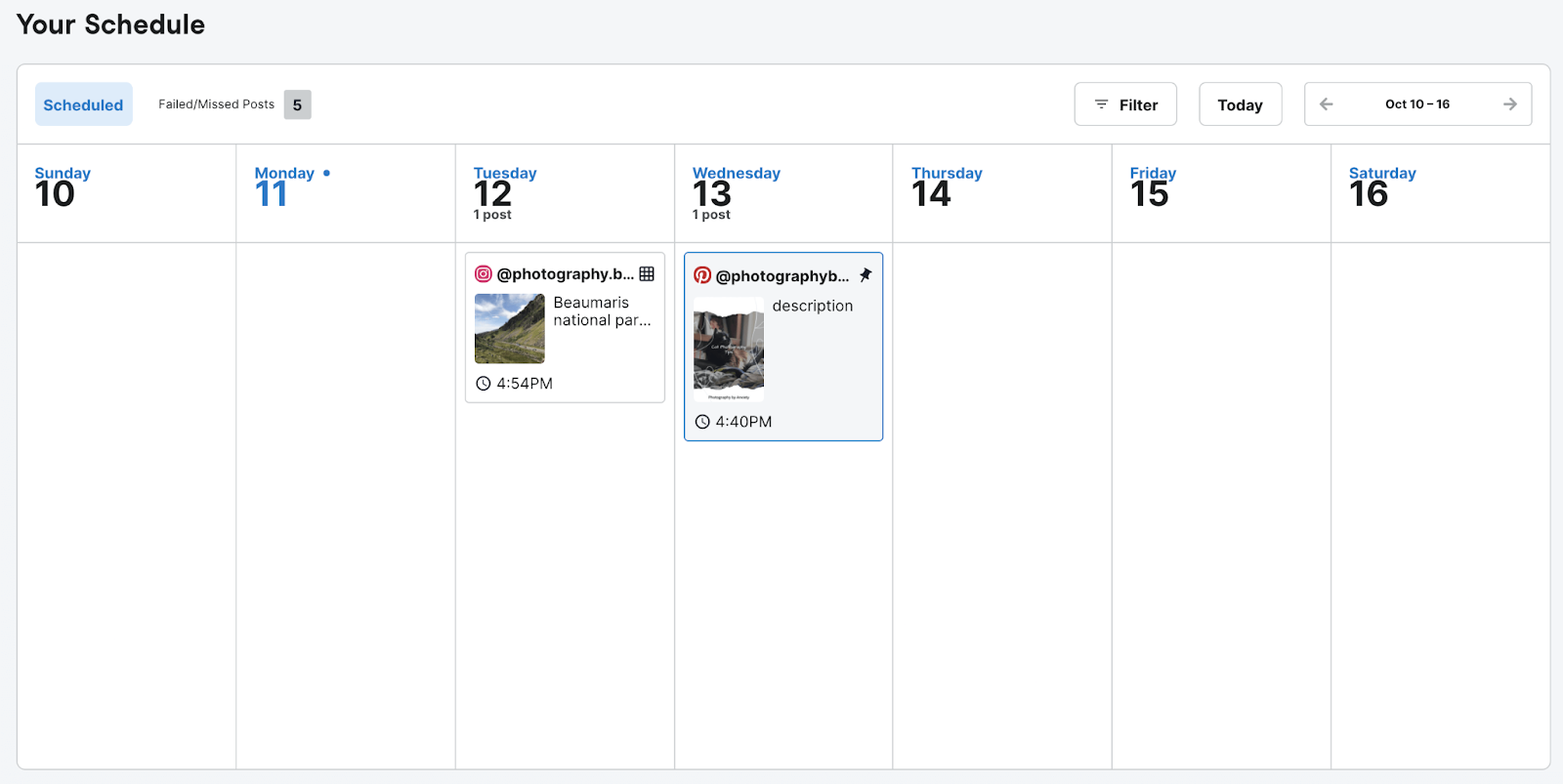
The thing I find most useful? You can transform your photos into fantastic pin designs in one click. It’s like having your own, personalized Canva for Pinterest within your social media management tool.
Apart from this, you can schedule pins, add them to preset boards, and even spread them out at various intervals for maximum engagement. On testing, Tailwind was quite easy to use. The browser extension didn’t work as smoothly for me, though your experience might vary depending on which browser you use.
The free plan is pretty limited, though — just five posts per month. If you’re serious about Pinterest (where consistency and volume really matter), you’ll likely need a professional plan from the start.
Free plan/trial available: Free plan available for one account and five social media posts per month.
Price: Paid plans begin at $29.99 per month.
Favorite features:
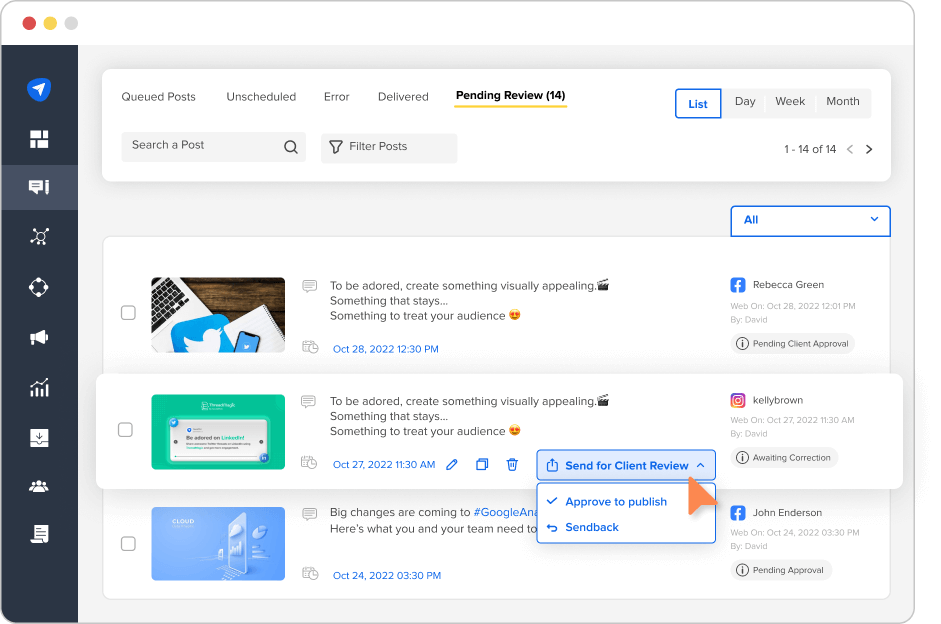
SocialPilot is clearly built with agencies in mind. Take the approval process: you can share direct personalized links (no sign-ups required) that compile everything your client needs to review on a single screen. The whole workflow is designed to be agency-first.
The dashboard is also user-friendly if you manage multiple clients. You can have different sub-dashboards for various clients to keep their management separated from the rest. You can also white-label the platform to provide a customized experience to your clients.
Like Hootsuite, SocialPilot offers granular control over which team members can do what tasks, but it’s much more affordable and simpler to use.
I didn’t mention the basic features like scheduling, reporting features, and AI features, but SocialPilot has all the fundamentals, too.
Free plan/trial available: No free plans. Free trial for all paid plans available for 14 days.
Price: Prices start at $30 per month. Only one user is included in this pricing. You need to upgrade your plan to add your team members.
Favorite features:
Zoho is a well-known name in the tech industry. It offers CRM solutions, email services, payroll processing, customer service software, and a whole lot of other products that knowledge workers use.
If you work in a company that already uses Zoho for various purposes, Zoho Social is a great social media management tool you should consider.
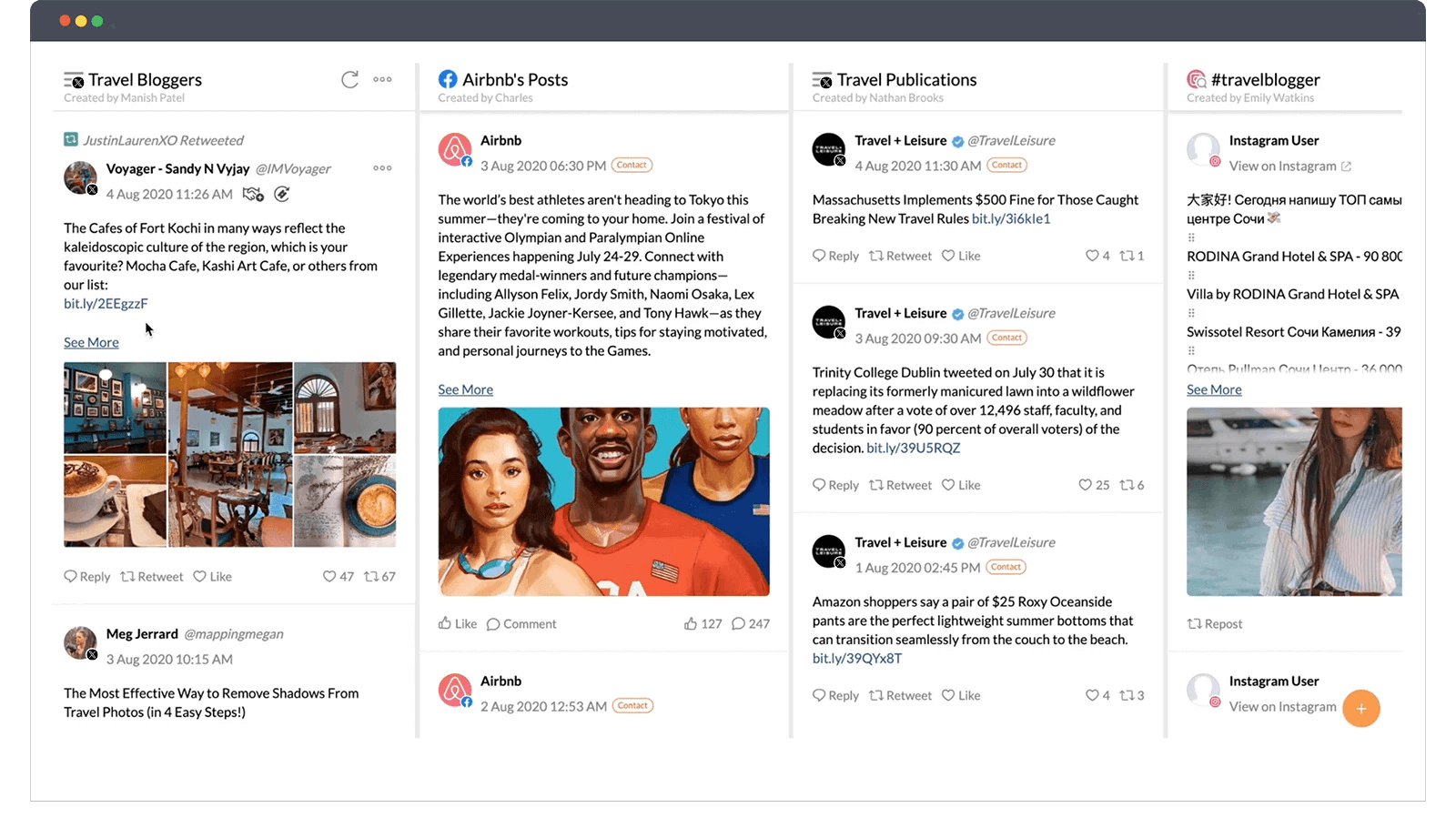
Zoho Social doesn’t have a standout feature that makes it unique in the market. But that isn’t to say it can’t get the job done. If you need something simple to schedule your posts, analyze their performance, and create the occasional report, Zoho can do the job just fine.
Zoho Social is especially great because it integrates with Zoho Desk (its customer service software). Some businesses just get a lot of queries from customers on social media.
If you’re one of those, Zoho Social is great because you can integrate social media for customer service and social media for marketing seamlessly.
I’d recommend signing up for Zoho Social only if you’re already in the Zoho ecosystem and your social media marketing strategy is still developing.
Once you’ve fleshed out a roadmap, you might move toward a more specialized social media management software that caters to your unique needs. Or if you have the budget, you can add a separate tool in addition to Zoho Social.
Free plan/trial available: There is a free plan for one team member. All paid plans have a 15-day free trial.
Price: Pricing starts at $15 per month.
Best for combining social media marketing, influencer marketing, and employee advocacy
Favorite features:
Sprout Social acquired Tagger Media in 2023. So, now, not only can it help you with social media management tasks like scheduling posts, tracking brand mentions, and monitoring analytics, but it can also help you find influencers and collaborate with them.
This is a major headache eliminated if you’re a social media manager responsible for running your social media marketing plan and your influencer marketing strategy.
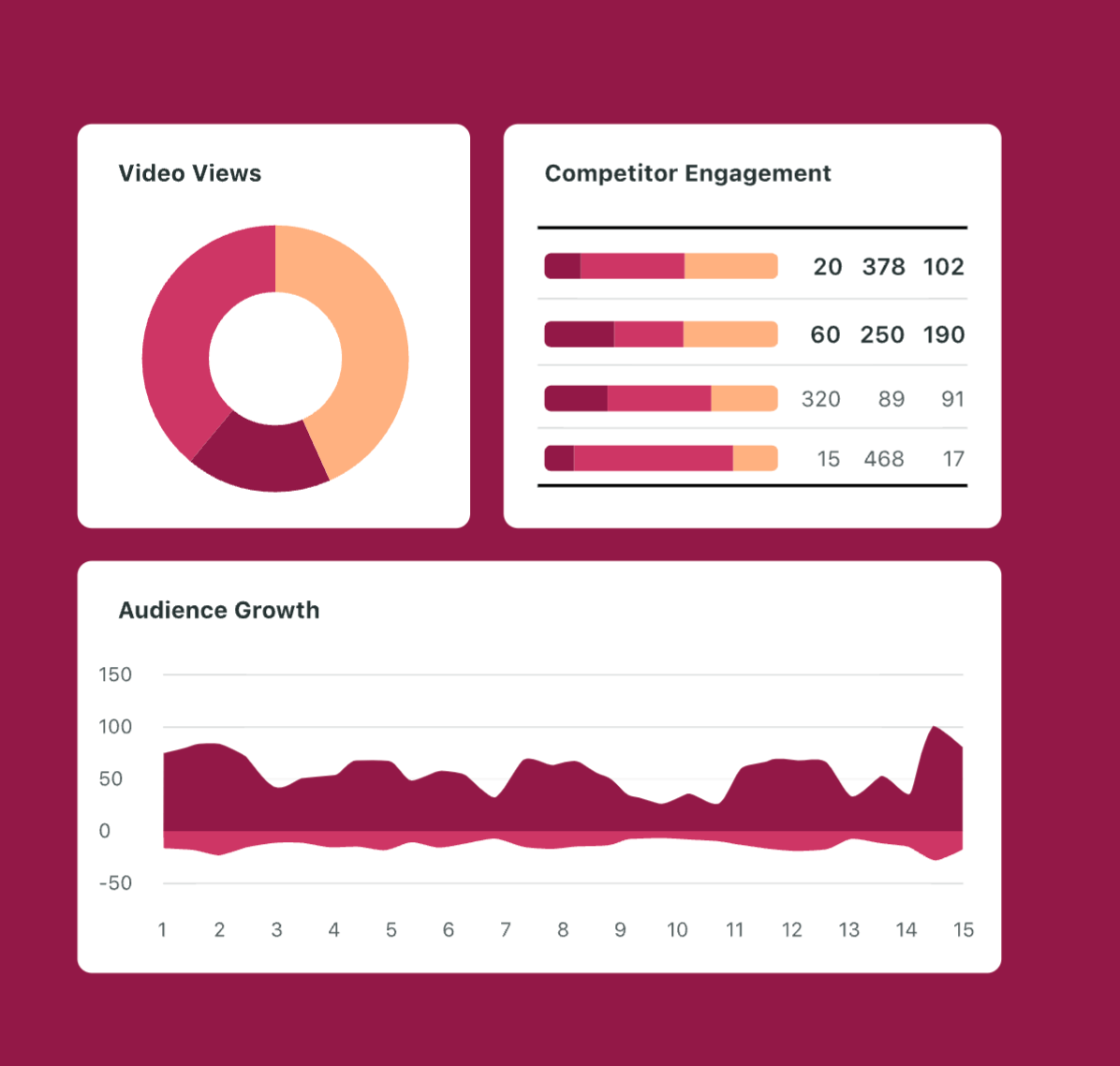
Sprout Social isn’t lacking in the social media management department either. It has an AI assistant, like all popular social media management tools, and its reports are beautiful. You can use various interactive charts and graphs to visualize information — and it’s just a treat to look at. Sprout Social is also recognized for its deep analytics and team collaboration features.
That said, Sprout Social isn’t built for creators or small businesses — the pricing reflects its enterprise focus, and the influencer marketing features cost extra on top of the base plan.
If you’re a larger company with budget to spare, Sprout Social could be worth the investment. For small businesses watching costs closely, you might be better off using separate tools for social media management and influencer marketing.
Free plan/trial available: No free plan available. All paid plans have a 30-day free trial.
Price: Pricing starts at $199 per seat per month.
Bear in mind that the cost of social media management tools like Sprout can increase significantly as users add more profiles or team members, so it’s important to calculate potential future costs when selecting a tool.
7. Oktopost
Favorite features:
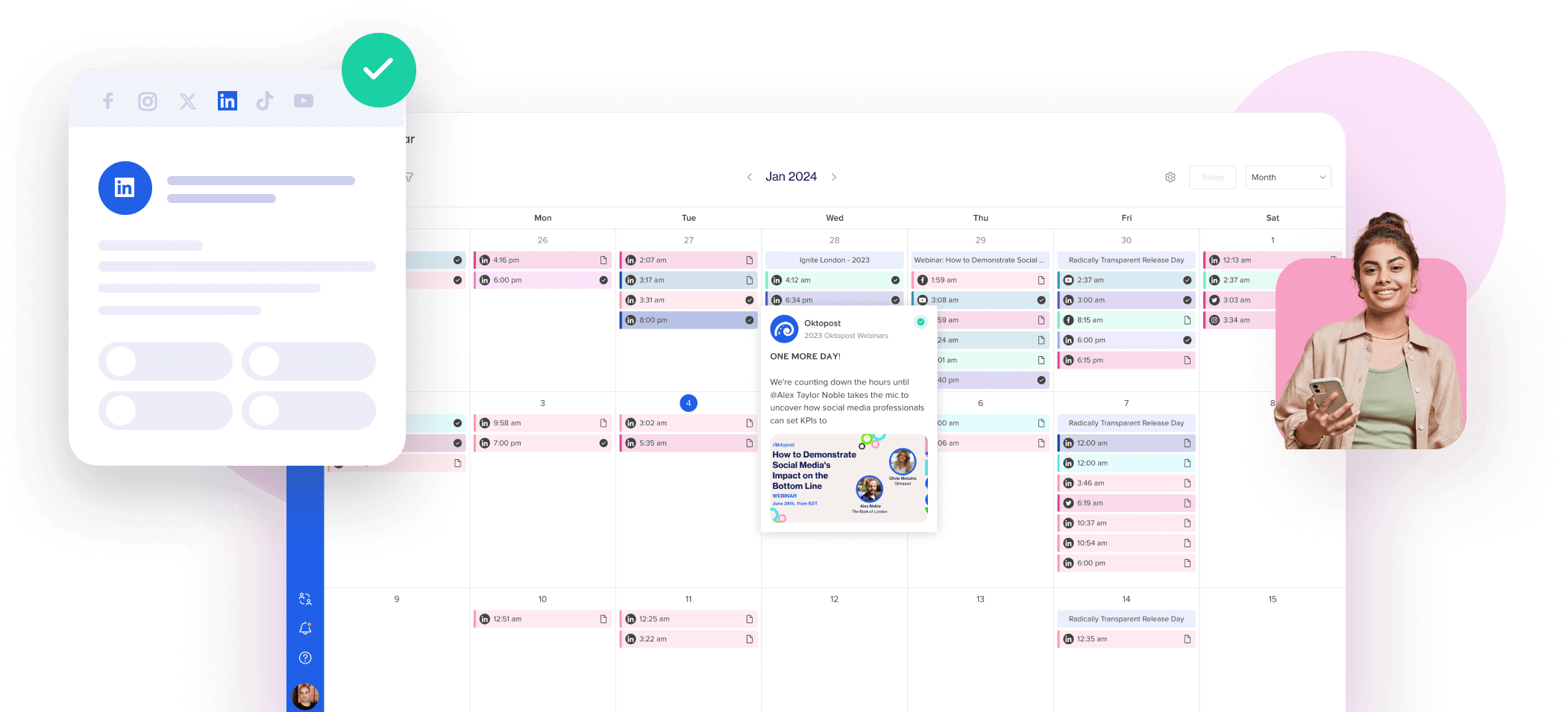
Oktopost specializes in social media management for B2B companies. Every scheduled post is assigned to a campaign for better reporting, and UTM parameters are added to every link you share on social media.
The analytics also look a bit different than your usual social media management software: Oktopost tracks the buyer journey to understand how your social media campaigns are impacting revenue.
The B2B social media experts at Oktopost also recommend premade dashboards that you should be monitoring to analyze your social performance.
A major downside, however, is that you can’t get a feel for the product because there’s no free trial or publicly available pricing.
Free plan/trial available: Pricing not publicly available.
Price: Pricing not publicly available.
8. Later
Best social media management tool for influencer marketing and social listening
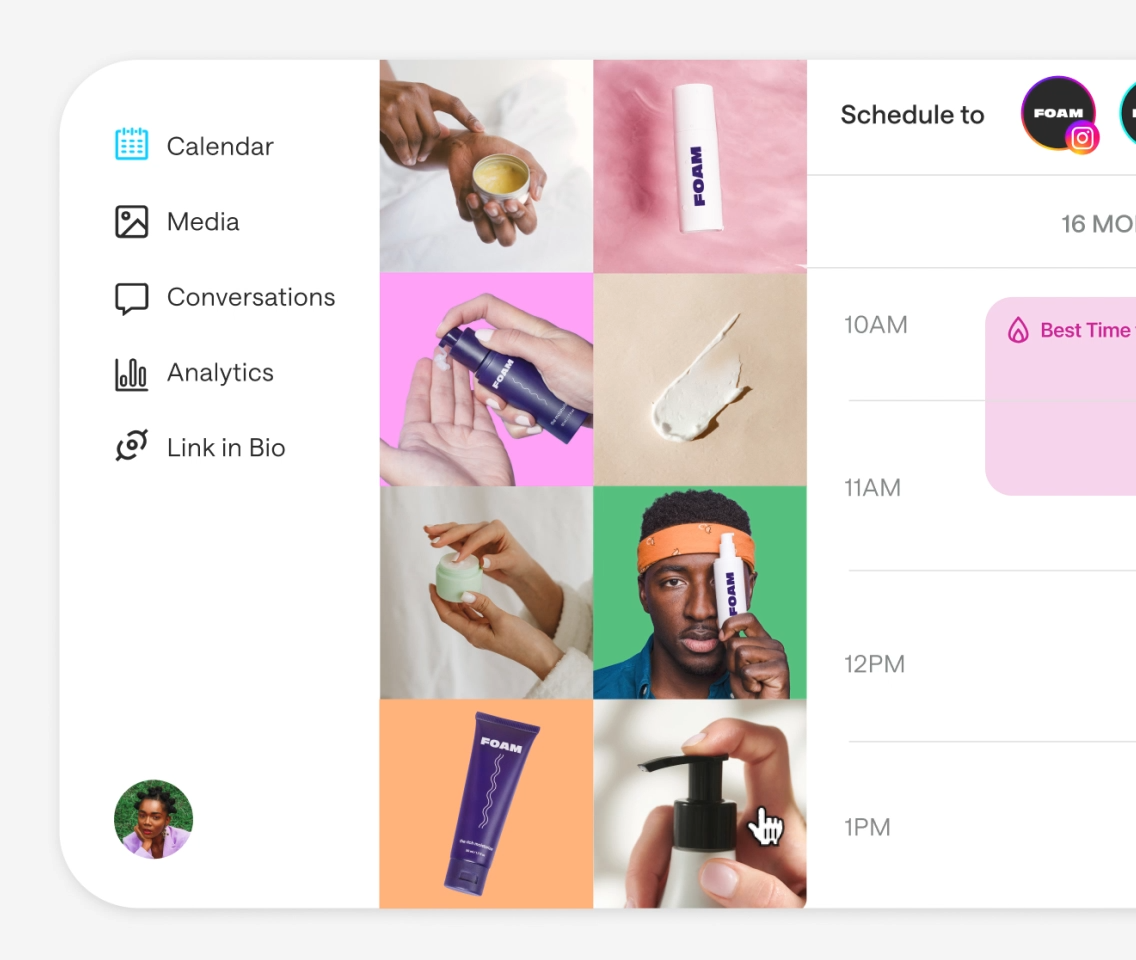
Later is an all-in-one platform designed to help brands and creators manage social media, influencer marketing, analytics, social listening, and link-in-bio tools from one place. It’s recently had a rebrand to reflect its influencer marketing capabilities.
Favourite features:
Later combines traditional social scheduling and social media analytics with more advanced capabilities like influencer campaign tools and social listening in a single dashboard.
Free plan/trial available: No free plan available. All paid plans have a free trial of 14 days.
Price: Pricing starts at $25 per month for one user. You can schedule up to 30 posts per profile.
Favorite features:
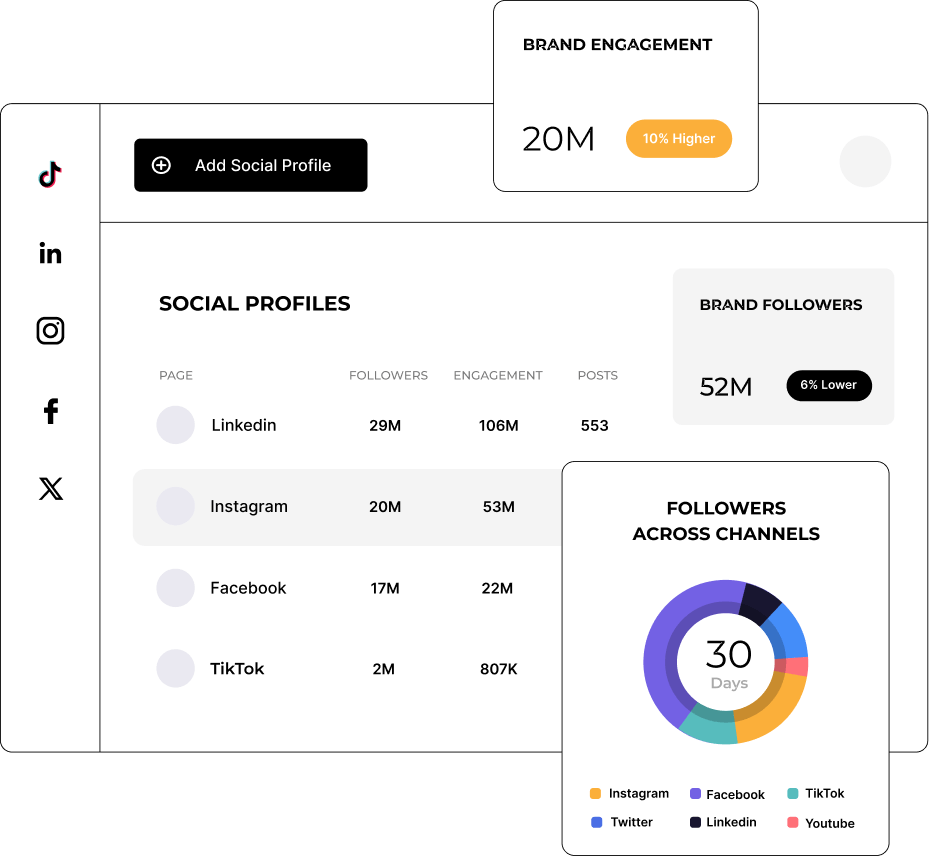
Socialinsider is an analytics tool that provides in-depth reporting on your social posts. In one dashboard, you can monitor engagement, reach, impressions, follower growth, and more across all your social platforms.
This tool doesn’t have many traditional features, like the ability to schedule posts. It’s a dedicated analytics tool. Socialinsider is the perfect choice for someone who needs more detailed insights for their social channels.
You can use it in conjunction with some other tools on this list or use it as a standalone tool if you’re fine with manual posting and social engagement.
Free plan/trial available: No free plans. All paid plans have a free trial of 14 days.
Price: Pricing starts at $99 per month for up to 20 social media accounts.
10. Manychat
Favorite features:
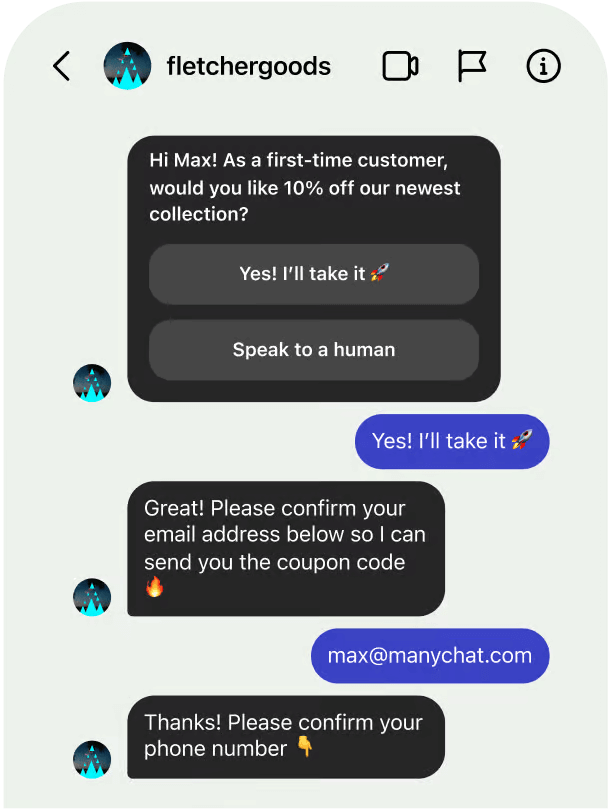
Manychat, like Socialinsider, doesn’t have the classic social management features. But it’s an excellent add-on for social marketing automation.
Have you ever seen those “comment for link†posts where the creator automatically sends the link to a product or info about a topic once you comment on something? That’s what Manychat helps you automate.
You can use this tool to communicate with leads, follow up on time, and ensure you respond to every message you receive on social media.
The only con is that Manychat only works with Instagram, Facebook, TikTok, and WhatsApp. If you have your primary social media accounts on other channels — like X or LinkedIn — you can’t integrate them with this tool.
That said, Manychat’s chat automation for TikTok is in beta, so it’s possible they might add different platforms in the future.
Free plan/trial available: The free plan has limited features, like a limit on the number of contacts you can engage with.
Price: Pricing starts at $15 per month and increases with the number of contacts.
11. Sprinklr
Favorite features:
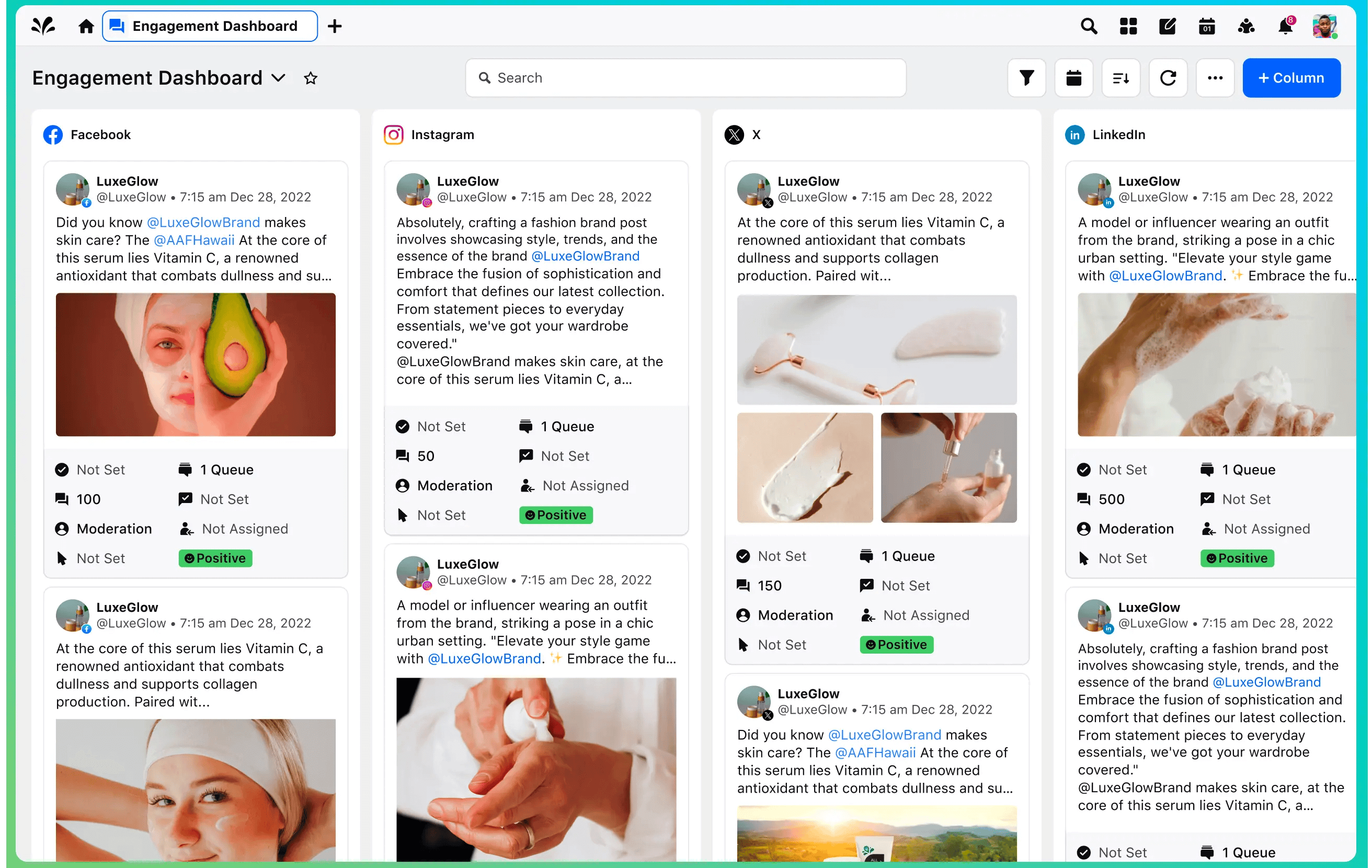
Sprinklr is a customer experience management tool with social management features. It’s an enterprise-grade software, meeting all the governance requirements of companies of that size.
Apart from social media, Sprinklr also has social listening features, competitive benchmarking, social advertising, and conversational commerce features.
If you’re a large company, it’s also important that you use a tool like Sprinklr because it integrates with all the tools in your tech stack, providing you with a unified view of all your efforts in one dashboard.
The learning curve in such tools is long — in addition to the monetary investment — so keep that in mind before you finalize an enterprise tool.
Free plan/trial available: Not publicly available.
Price: Not publicly available.
The problem with choosing social media management platforms is:
In this scenario, choosing the right social media management software can become a difficult task. How do you know which is the right one for you?
| Criteria | Why it matters |
| Network compatibility | Ensure the tool supports current and emerging channels (like Threads or Bluesky) to future-proof your strategy. |
| Reporting depth | Look for tools that measure ROI and engagement, not just vanity metrics like follower counts. |
| Collaboration tools | Teams need granular permission levels and approval workflows to manage brand safety. |
| Scalable pricing | Calculate costs based on adding team members and additional social profiles as you grow. |
| Specialized features | Identify “must-haves” like link-in-bio builders, AI assistants, or CRM integrations. |
The choice of the best social media management tool depends on your budget, team size, and the depth of analytics you need.
Here are five questions you should ask yourself while evaluating social media tools:
Your social media efforts might be focused on one social media platform right now, but that’s bound to change as you grow.
Your target audience is present in multiple social media networks, and you’ll likely expand into multiple social media channels as you scale.
For starters, you can choose specialized social media management apps focusing on just one network, but eventually you might need a platform that connects with all major social media networks.
💡
Pick a tool that integrates with all major social networks and also works to add new channels as they release.
One of the core aspects of a well-made social media strategy is having comprehensive analytics. Detailed analytics are essential in social media management tools, providing insights into post performance and audience engagement, which vary in depth depending on the pricing tier of the tool.
Many social media management tools offer built-in reporting features that allow users to track engagement, reach, impressions, and followers across multiple platforms.
You need these detailed analytics to provide insights into social media ROI, helping you measure the effectiveness of their social media strategies and campaigns. This is true for everyone — social media managers, agencies, freelancers. In all social media management tools, examine the performance measurement tools thoroughly. They should go beyond measuring the basic analytics.
Does it calculate the social media metrics you need? Can you measure audience engagement accurately? Are all customer interactions accounted for? Are the reporting tools providing in-depth social media analytics for multiple platforms?
💡
Choose a tool that has in-depth reporting features. If you can’t afford that right now, you can also find a dedicated analytics tool that integrates with your management tool.
If you’re a creator operating solo, you might not need collaboration features for your marketing efforts. But social media managers and agencies need strong team collaboration tools to work together.
Nail down the specifics of what you need to work together seamlessly. Effective team collaboration tools often include features such as task management, approval workflows, and user permissions to streamline social media management processes.
Almost all social media management tools have plans that allow for team collaboration. But there are differences in a few features, like permission levels. Many social media management tools provide granular permission controls, allowing your team to customize access levels for different users. Check for those.
💡
Pick a tool that has the collaboration features you need. The more granular it can get, the more you can customize permissions. But remember it’ll also likely get more complex to set up and use.
Maybe you choose the tool that the world’s biggest companies use. But what’s the point if it goes out of pocket as soon as you grow?
Don’t just look at the current price of social media management tools. Calculate the cost when you want to connect multiple social media accounts.
The best social media management tool will be able to scale with you — whether that’s in adding team members or adding multiple social media profiles.
💡
Understand the pricing of the tool you pick. Choose one that has plans you can upgrade to as your business grows, not one that becomes out-of-pocket.
Despite the competition, most social media management tools have few features especially designed for their target audience.
Buffer has a DIY landing page builder for its creators, and Sprout Social has an influencer marketing tool, for instance. Many tools also help you generate ideas, choose from an extensive media library, or provide an easy-to-use visual content calendar.
Articles like this one will help you understand the few features that make a social media management platform different from the rest.
💡
Find the specialized features of the tool you land on and ensure its USP aligns with your unique requirements.
After your initial analysis, you’ll be left with a handful of social media management tools that fit your budget and your needs.
Luckily, most tools have long free trials that you can use to get a feel for the software before committing to a monthly or yearly subscription. Yes, testing all shortlisted social media software within free trials is a bit tedious. But it’ll help you make the best long-term choice.
Found a tool that works perfectly for your workflow? We’d love to hear what’s working for you.
They’re apps and software that let you plan, publish, engage, and track social content across several networks from one dashboard.
If you’re a creator or small business owner, look for a tool that’s simple, affordable, and flexible. Buffer is a popular choice because pricing is per channel (starting at $6 per month per channel), and it’s easy to schedule social media posts, reply to comments, and track performance without feeling overwhelmed. The best tool for you is the one you’ll actually use consistently — not the one with the longest feature list.
Larger organizations often need advanced analytics, social listening, and governance features. Tools like Sprinklr and Sprout Social are built for complex teams and multi-layer approvals. They’re more expensive, but they offer deeper reporting, influencer marketing integrations, and enterprise-level controls.
Free plans are absolutely worth trying, especially if you’re just getting started. Many tools offer limited free plans or trials so you can test scheduling, analytics, and collaboration features before committing.
Start with the essentials: scheduling, analytics, and engagement management. Then think about what makes your workflow easier. Do you need a link-in-bio page? Approval workflows for clients? Advanced reporting? AI writing support? Choose a tool that supports the networks you use today — and the ones you might grow into tomorrow.
Most tools support major networks like Facebook, Instagram, LinkedIn, YouTube, TikTok, and X. Many are quickly adding newer platforms like Threads and Bluesky, too. Before signing up, double-check that your priority channels are included.
Pricing varies widely. Some tools charge per channel, others per user. Starter plans can start around $6 to $20 per month, while enterprise tools can run into hundreds (or require custom quotes).
Pro tip: Calculate what the tool will cost 12 months from now if you plan to add more profiles or team members.
They can’t magically make content better, but they can help you post more consistently, respond faster, and learn what resonates. Features like unified inboxes, automated reports, and habit-building reminders make it easier to show up regularly. And consistency is often the biggest driver of engagement.
A common feature among social media management tools is the ability to schedule content in advance, which helps you stay consistent without needing to be online at all times. In most cases, this is definitely a key feature to look out for. Many social media management tools are designed to be user-friendly, allowing you to connect your social accounts and start scheduling posts immediately.
Do I need a separate tool for analytics?
Not always. Many social media management platforms include built-in reporting. But if you need deeper competitor analysis or advanced ROI tracking, you might pair your scheduler with a dedicated analytics tool. It depends on how detailed your reporting needs are and who you’re reporting to.
What’s the difference between social media scheduling and social media management?
Powerful scheduling tools are a key feature of social media management platforms, enabling users to batch their posts and automate their social media presence for efficiency, but scheduling is just one piece of the puzzle.
Social media management includes planning, publishing, responding to comments and DMs, tracking performance, and sometimes even influencer outreach or automation. If you’re serious about growing your presence, you’ll likely want more than just a scheduler.
Start with your goals. Are you focused on growth, lead generation, brand awareness, or community building? Then map your must-haves: supported networks, reporting depth, collaboration features, and pricing that scales with you. Shortlist two or three options and test them during their free trials. The right tool should feel intuitive — and make your day easier, not more complicated.