






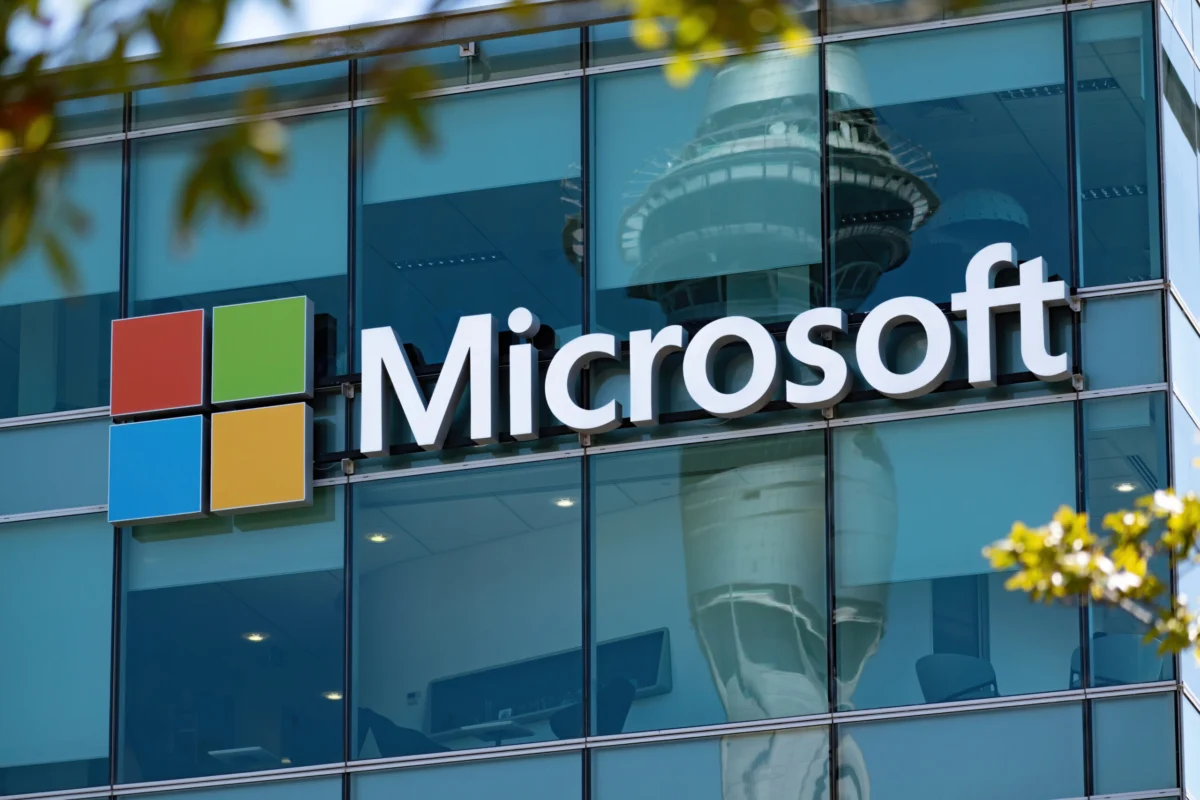
In a sweeping move that underscores the tectonic shift currently reshaping the technology landscape, Microsoft has initiated a widespread Voluntary Exit Offer (VEO) affecting approximately 60,000 employees. This represents roughly 27% of the company’s total workforce. The initiative, announced by Amy Coleman, Executive Vice President and Chief People Officer, is designed to provide a graceful exit path for staff while allowing the software giant to streamline its operations in the face of staggering capital investments in Artificial Intelligence infrastructure.
As Microsoft pivots its massive resources toward the "AI-first" era, the company is demonstrating that its ambition to lead in the generative AI space—specifically through its Copilot and Azure AI ecosystems—comes with a profound human cost. By offering these packages, Microsoft is not merely cutting costs; it is intentionally pruning its organizational structure to gain the "pace and agility" that CFO Amy Hood cited earlier this year as a primary fiscal objective.
The Anatomy of the Voluntary Exit Offer
The VEO program is a strategic mechanism for workforce reduction that eschews the traditional "layoff" label in favor of a consensual transition. According to the internal memo disseminated by Coleman and later mirrored on the official Microsoft corporate blog, the offer is targeted at employees at level 70 and below. Participation is not universal; rather, it is dictated by the specific "priorities, customer commitments, and workforce needs" of individual business units.
Geographic and Organizational Scope
The offer is currently being extended to eligible employees in the United States, Canada, India, and the United Kingdom. While the program’s reach is broad, it is highly selective. Key divisions involved include:
- AI Experiences and Copilot teams
- Xbox and Gaming divisions
- Windows + Devices units
Conversely, several critical sectors have been excluded from the program to ensure business continuity. These include core marketing, sales, commercial business segments, security teams, and essential data center operations staff. This distinction highlights Microsoft’s delicate balancing act: it seeks to reduce headcount in product development and engineering while maintaining a ironclad grip on the customer-facing and infrastructure-heavy teams that generate immediate revenue.
Chronology of a Corporate Transformation
To understand the current buyout, one must look at the trajectory of Microsoft’s fiscal strategy over the last eighteen months.
April 2026: The Testing Ground
Microsoft introduced a Voluntary Retirement Program aimed specifically at long-serving US employees. While initially projected to cost the company roughly $900 million, CFO Amy Hood later reported that the expenses associated with the program were lower than anticipated, providing the company with a proof-of-concept for voluntary workforce reduction.
July 2026: Setting the Fiscal Tone
During the Q4 earnings call, Microsoft leadership confirmed that the company’s headcount had declined by 2% year-over-year. By this point, the narrative of "a smaller company by design" had firmly taken root. The company had begun to signal to investors that, despite record-breaking AI investments, it was not interested in expanding its total payroll.
October 2026: The VEO Launch
The formal announcement of the VEO marks the most significant expansion of this strategy. By moving from a "retirement-focused" model to a "voluntary exit" model, Microsoft has decoupled its workforce reduction from age or tenure, allowing for a more surgical approach to shedding staff across multiple international markets.
The Economics of AI: Investing in Silicon, Cutting in Staff
The sheer scale of Microsoft’s capital expenditure (CapEx) provides the context for these exits. In the quarter ending June 30, 2026, Microsoft reported $41 billion in capital expenditures. Guidance for the subsequent quarter rose to over $50 billion. This capital is being poured primarily into the construction of massive data centers and the acquisition of high-end GPUs necessary to train and deploy advanced Large Language Models (LLMs).
The "Reallocation" Doctrine
CEO Satya Nadella has been transparent about the source of this funding. In early 2026, he noted that IT budgets—both at Microsoft and among its clients—must be "reshaped" by business outcomes. For Microsoft, this means reallocating funds from Operational Expenditure (OpEx)—which includes the salaries and benefits of its 223,000 employees—into the massive infrastructure requirements of AI.
The logic is stark: the company believes that for every dollar saved by reducing human headcount, it can extract greater value through the automation and intelligence provided by its own AI stack.
Industry Implications and Analyst Perspectives
Sanchit Vir Gogia, chief analyst at Greyhound Research, offers a cautionary perspective on Microsoft’s maneuvers. While Wall Street often rewards companies for "lean" operations, Gogia warns that internal AI usage does not necessarily equate to a perfect substitution for human roles.
"Microsoft’s internal AI use does not establish substitution of particular roles," Gogia stated. He argues that enterprises—and even the internal units at Microsoft—must exercise extreme caution. Before cutting, firms must measure the completed work at an agreed quality level across representative roles. "Workforce savings earn credibility through the capability that remains," he added, emphasizing that the danger lies in losing the "tacit knowledge" that veteran employees possess.
The Impact on Customer-Facing Roles
A significant point of anxiety for Microsoft’s enterprise customers is the stability of account coverage. With thousands of staff potentially exiting, CIOs are scrambling to determine if their dedicated account managers or specialized technical engineers are among those taking the buyout.
Microsoft has attempted to mitigate this concern by launching the Microsoft Frontier Co., an initiative that embeds 6,000 industry and engineering experts directly with key clients. This creates a dual-track strategy: while the general workforce is being reduced to save on OpEx, the company is simultaneously "doubling down" on high-touch, high-value engagements with its most critical customers.
Looking Ahead: The Risks of a Leaner Microsoft
The success of this program will not be measured by the number of people who accept the package, but by the "churn" that follows. If the company loses too much institutional knowledge or if the remaining teams are stretched too thin to support the rapid pace of Azure and Dynamics implementations, the cost of the buyout could far exceed the savings on payroll.
Strategic Recommendations for Clients
For organizations reliant on Microsoft’s ecosystem, the advice from industry experts is clear:
- Audit Dependencies: Verify which specific staff members are responsible for critical Azure subscriptions and regional deployments.
- Test the Backup: Ensure that if an account lead leaves, a qualified successor is already in place and has been successfully tested on an unresolved technical exception.
- Differentiate Roadmaps: Distinguish between "preview" features—where support might be thin—and "contractual milestones," which Microsoft is legally obligated to fulfill regardless of staffing changes.
Conclusion: A New Operating Model
Microsoft is currently engaged in one of the most high-stakes corporate transitions in history. By effectively asking 60,000 employees to reconsider their future at the firm, Microsoft is testing whether a global enterprise can "automate itself" into a higher state of efficiency.
The company’s leadership maintains that this is a necessary evolution. By shedding layers of its workforce, Microsoft aims to become more agile, better capitalized to meet the astronomical costs of the AI race, and more focused on the high-value integration services that differentiate it from cloud competitors. However, the true test remains whether a leaner Microsoft can maintain the deep, complex human-centric support that its enterprise clients have relied upon for decades. As the end-of-year deadline for the VEO approaches, the industry watches closely to see which talent stays, which talent leaves, and whether the machine can truly run on silicon alone.