










Main Facts: Stepping into the Premium Audio Arena
Samsung is reportedly setting its sights on the high-end, over-ear headphone market, a sector long dominated by audio heavyweights like Apple, Sony, Bose, and Sennheiser. According to recent leaks, the tech giant is developing a brand-new flagship headset slated to carry the moniker Galaxy Studio.
While Samsung has firmly established itself as a dominant force in the true wireless stereo (TWS) market through its popular Galaxy Buds series—and more recently expanded into open-ear designs with the Galaxy Buds On—the company has notably lacked a dedicated, premium over-ear headphone offering in Western markets. The potential arrival of the Galaxy Studio signals a strategic shift, positioning Samsung to directly challenge industry-standard powerhouses such as the Apple AirPods Max, the Sony WH-1000X series (including the anticipated WH-1000XM6), and Bose’s QuietComfort Ultra lineup.
The leak originated from reliable industry tipster evowizz, who took to social media platform X (formerly Twitter) to reveal the "Galaxy Studio" branding. This is the same source who accurately leaked early details regarding Samsung’s open-ear clip-on earbuds, which officially debuted as the Galaxy Buds On. Although technical specifications, pricing, and design aesthetics remain under wraps, the mere acknowledgment of a high-end over-ear project has sent ripples of excitement through the consumer tech community.
Chronology: Tracing Samsung’s Audio Evolution and the Leak Timeline
Understanding how Samsung arrived at the cusp of releasing an over-ear flagship requires looking back at the brand’s audio hardware trajectory, alongside the rapid sequence of recent leaks.
- The Harman Acquisition (2016–2017): Samsung’s serious push into high-fidelity audio began in earnest when the company acquired Harman International for $8 billion. This brought prestigious audio brands like AKG, JBL, and Harman Kardon under the Samsung umbrella, laying the groundwork for improved acoustic tuning across Samsung’s mobile and accessory ecosystems. AKG tuning subsequently became a staple feature on bundled smartphone earphones and early Galaxy Buds.
- The Inception of Galaxy Buds (2019–Present): Samsung launched its first true wireless earbuds, the Galaxy Buds, in 2019. Over the next several years, the lineup evolved rapidly through iterations like the Galaxy Buds Plus, Live, Pro, Pro 2, and the stem-based Galaxy Buds 3 series, carving out a massive market share among Android users.
- Diversification into Niche Form Factors (Early 2026): Continuing its portfolio expansion, Samsung ventured into alternative form factors. Leaks brought to light by tipster evowizz pointed toward a new open-ear wearable designed to compete with brands like Shokz. These rumors materialized into reality when Samsung officially launched the Galaxy Buds On clip-on earbuds.
- The Galaxy Studio Leak (October 2026): Hot on the heels of the Galaxy Buds On launch, evowizz dropped the bombshell report regarding Samsung’s secretive over-ear project, giving it the developmental and potential commercial name "Galaxy Studio."
- Anticipated Upcoming Windows (Late 2026 and Beyond): Industry analysts are closely watching Samsung’s late-year hardware roadmap. With rumored launches like the Android XR-powered Galaxy Glasses anticipated as soon as November, speculation is running rampant regarding whether Samsung might tease or debut the Galaxy Studio ecosystem alongside its next-generation mixed-reality hardware.
Supporting Data & Market Landscape: The Battle for Over-Ear Supremacy
To understand the weight of Samsung’s rumored entry into the over-ear space, one must examine the current landscape of the premium headphone market. For years, consumer preference in the over-$300 bracket has been fiercely contested by a select few companies:
- Sony WH-1000X Series: Widely regarded as the industry benchmark for Active Noise Cancellation (ANC), audio customization, and codec support (such as LDAC), Sony’s flagship headphones have consistently topped "best wireless headphones" lists globally.
- Apple AirPods Max: Released to significant fanfare, Apple’s luxury over-ear headphones command a premium price tag ($549) and appeal heavily to users embedded within the Apple ecosystem, offering spatial audio integration and seamless device switching.
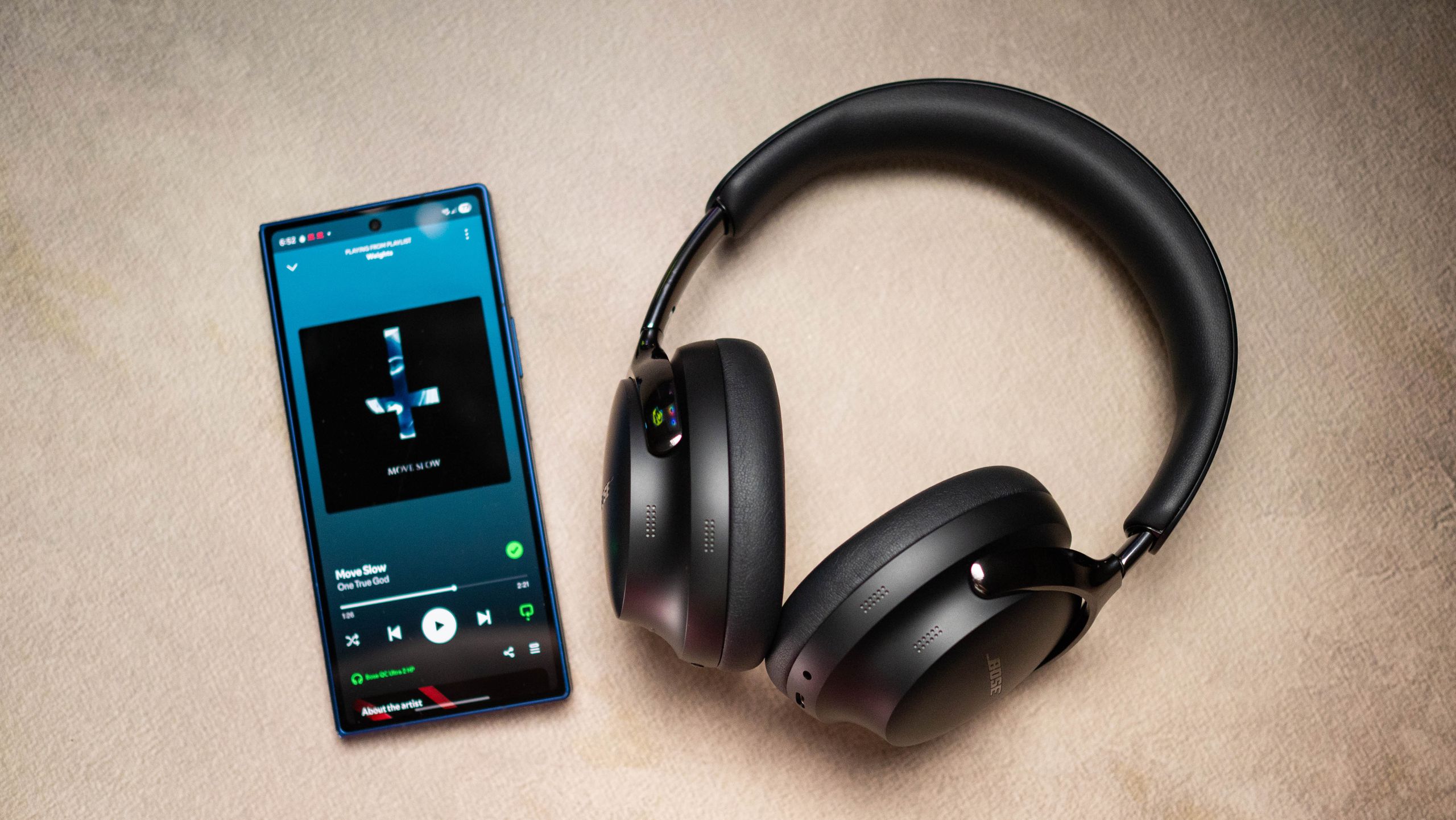
- Bose QuietComfort Ultra: Known universally for setting the gold standard in absolute comfort and industry-leading noise isolation, Bose remains the go-to brand for frequent flyers and remote workers.
- Sennheiser Momentum Series: Catering to audiophiles prioritizing high-resolution sound reproduction and expansive soundstages over pure lifestyle features.
Where Does Samsung Fit In?
Samsung possesses a massive structural advantage that none of these dedicated audio brands can fully replicate on mobile: the Galaxy Ecosystem. With hundreds of millions of active Galaxy smartphone, tablet, and smartwatch users worldwide, Samsung has a direct pipeline to consumers.
If the Galaxy Studio can offer proprietary ecosystem features—such as ultra-low latency audio switching between a Galaxy Book laptop, a Galaxy S-series phone, and a Galaxy Tab—alongside high-end spatial audio, lossless codec compatibility (via Samsung’s proprietary scalable codecs), and top-tier ANC, it could easily capture significant market share from consumers already loyal to the brand.
Official Responses and Industry Silence
As is standard corporate practice for unreleased hardware, Samsung has officially declined to comment on the existence of the Galaxy Studio. Representatives from the company have maintained a strict policy of silence regarding future product roadmaps.
However, supply chain analysts and industry insiders suggest that corporate silence rarely dampens the validity of well-sourced leaks. Given that Samsung frequently registers trademarks and files patent applications for lifestyle audio gear months or even years in advance, the surfacing of the "Galaxy Studio" name strongly implies that the product has moved past early conceptual phases and into active development or pre-production pipelines.
Implications: What the Galaxy Studio Means for Consumers and Competitors
The potential introduction of Samsung’s Galaxy Studio over-ear headphones carries several notable implications for the broader technology and audio markets:
1. Pressure on Incumbent Audio Giants
If Samsung prices and markets the Galaxy Studio aggressively—perhaps bundling them with high-tier Galaxy S-series smartphone pre-order promotions or offering deep ecosystem integration—brands like Sony and Bose will face a formidable new challenger with deep marketing pockets. Furthermore, Apple users locked into the AirPods Max ecosystem may see fewer Android converts tempted to switch if Samsung finally offers a native, high-end alternative that matches or exceeds Apple’s build quality and feature set.
2. Maturation of the Galaxy Ecosystem
For years, Android power users looking for premium over-ear headphones had to rely on third-party ecosystems. While devices paired effortlessly via Bluetooth, they often missed out on the deep, frictionless hardware-software integration that Apple users enjoy with the H1/H2 chips. The Galaxy Studio could bridge this gap, serving as the missing puzzle piece in Samsung’s hardware ecosystem, which already encompasses smartphones, tablets, smartwatches, smart rings, and soon, mixed-reality glasses.
3. Audio Engineering and Harman Synergy
Given Samsung’s ownership of Harman, expectations for the sound signature of the Galaxy Studio will be exceptionally high. Consumers will look to see whether Samsung leverages AKG tuning, advanced custom drivers, or proprietary spatial audio algorithms to rival Sony’s DSEE Extreme upscaling or Bose’s Immersive Audio.
What to Watch Next
As the year progresses toward its final quarter, all eyes remain on Samsung’s upcoming hardware events. While a late-year reveal alongside the rumored Android XR-powered Galaxy Glasses remains speculative, industry watchers expect more concrete certification filings, Bluetooth SIG database entries, and FCC leaks to surface in the coming weeks. Until then, the tech world waits to see if the Galaxy Studio will redefine how Galaxy users experience high-end audio.



