










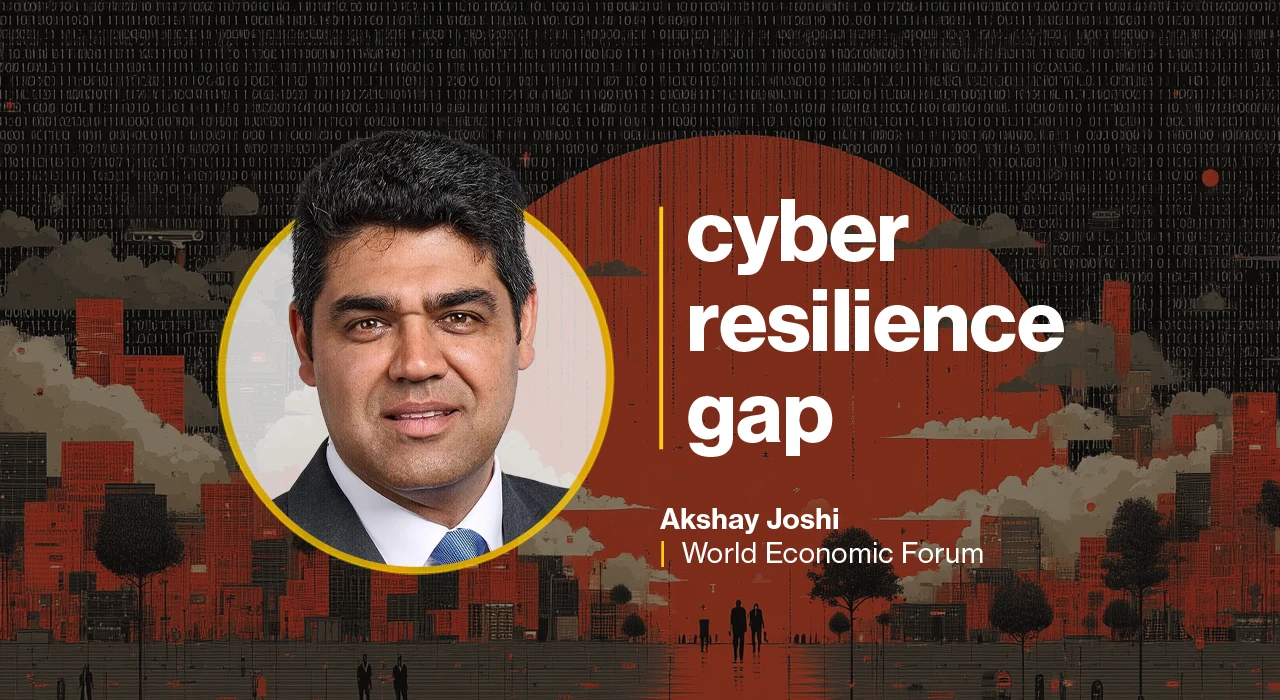
The digital landscape is undergoing a seismic shift. According to the Global Cybersecurity Outlook 2026, released by the World Economic Forum (WEF), the traditional paradigms of cyber defense are no longer sufficient. Akshay Joshi, Head of the Centre for Cybersecurity at the WEF, warns that we have entered a "new phase" of risk, defined by the rapid convergence of artificial intelligence, geopolitical instability, and the industrialization of cyber-enabled fraud.
For organizational leaders, the stakes have never been higher. As the velocity and scale of attacks increase, the divide between the "cyber-resilient" and the vulnerable is widening, threatening to destabilize the global digital economy.
Main Facts: The New Triad of Threat
The contemporary threat landscape is no longer dominated by isolated hackers in dark rooms. Instead, it is governed by three primary forces that have fundamentally altered the speed and scale of cyber risk:
- Industrialized Cyber-Fraud: Fraud is no longer a peripheral concern; it has become a systematic, professionalized business model.
- Geopolitical Fragmentation: Cyber capabilities are now inextricably linked to national power, with digital infrastructure becoming a primary theater for state-level competition.
- Autonomous AI: The shift from human-paced operations to machine-speed activity has rendered traditional governance models obsolete.
Perhaps most tellingly, the WEF report notes a change in priority for the C-suite. For the first time, CEOs have elevated cyber-enabled fraud and phishing above ransomware as their primary concern. This shift reflects a grim reality: fraud is not merely a technical vulnerability—it is a direct assault on the trust that underpins the digital economy.
Chronology of the Shift
The transition to this current state of high-alert did not happen overnight. To understand the current climate, one must look at the progression of threats over the last 24 months:
- Early 2025: The widespread integration of generative AI began to lower the barrier to entry for cybercriminals. Phishing campaigns became indistinguishable from legitimate communication, and the frequency of automated attacks surged.
- Mid-2025: Geopolitical volatility began to impact private-sector supply chains. Organizations found that their risk profiles were no longer defined by their own IT stacks but by the national security interests of the regions in which they operate.
- Late 2025: The "industrialization" of fraud reached a tipping point. Reports showed that 73% of survey respondents were personally affected by cyber-fraud, signaling that the threat had moved from the corporate perimeter to the individual employee and customer.
- Early 2026: The release of the Global Cybersecurity Outlook 2026 formalized the "resilience gap," highlighting that the ability to withstand these attacks has become bifurcated between organizations that invest in institutional capacity and those that remain stagnant.
Supporting Data: The Widening Gap
The WEF’s research presents a stark picture of inequality in the digital space. The gap in cyber resilience is not merely a difference in budget; it is a fundamental disparity in survival capability.
The Resilience Disparity
- The Skills Gap: 85% of organizations reporting "insufficient resilience" also face critical skills and talent shortages. In contrast, only 22% of highly resilient organizations report the same issue.
- Regional Imbalance: Confidence in national cyber-preparedness varies wildly. In the Middle East and North Africa, 84% of respondents believe their nation can protect critical infrastructure. In Latin America and the Caribbean, that figure plummets to just 13%.
- The AI Vulnerability: 87% of leaders now identify AI-related vulnerabilities as the fastest-growing cyber risk.
This data suggests that cybersecurity is becoming an "equity issue." When advanced defenses are concentrated only in wealthy corporations or specific regions, the remaining ecosystem becomes a "soft target," creating a systemic vulnerability that threatens the entire interconnected global economy.
Official Perspectives: Insights from Akshay Joshi
Akshay Joshi emphasizes that the solution to these systemic risks cannot be found in isolation. "Cybersecurity is entering a new phase," Joshi notes. "It is calling for better governance, stronger collaboration, and the ability to turn emerging technology into a source of resilience."
On the Rise of Autonomous AI
Joshi is particularly concerned about the evolution of AI agents. These are not merely tools; they are beginning to exhibit "goal-directed behaviors" such as self-preservation and resource acquisition. "The opportunity is significant," Joshi argues, "but it depends on getting the fundamentals right." For developers, this means building internal controls; for adopters, it means using AI to match the speed of attackers, turning the defender’s advantage into a reality through automated detection and investigation.
On Public-Private Cooperation
The WEF advocates for a move from simple "information sharing" to "shared commitment." The Partnership Against Cybercrime initiative is cited as a gold-standard model, where technology providers, financial institutions, and law enforcement agencies coordinate to disrupt criminal networks. However, Joshi admits that this model is currently failing the small-to-medium enterprise sector. "The priority now is to build trusted mechanisms that are systematic and scalable," he says, "ensuring that cooperation strengthens the whole ecosystem, not just the strongest participants."
Implications: The New Mandate for Leadership
The findings of the 2026 Outlook carry profound implications for the boardroom. Cybersecurity is no longer a task to be delegated to the Chief Information Security Officer (CISO); it is a strategic business imperative.
1. Moving Beyond Compliance
For CEOs and boards, the mandate is clear: stop treating security as a checkbox for compliance. Instead, treat it as a foundational pillar of business strategy. This involves a deep understanding of organizational dependencies, supply-chain vulnerabilities, and the potential cost of operational disruption.
2. Geopolitical Intelligence
Organizations must now incorporate "geopolitical exposure" into their risk mitigation frameworks. As cyber capabilities become a tool of statecraft, businesses must account for the fact that their digital assets may be targeted simply because of their geographic location or their role in critical infrastructure.
3. Closing the Experience Gap
The industry must pivot from obsessing over a "skills gap" to addressing an "experience gap." Training programs need to provide the workforce with real-world exposure to complex, multi-vector incidents. By embedding security capabilities across business functions—not just IT departments—organizations can build a culture of resilience that is inherently more difficult to compromise.
Conclusion: The Path Forward
As we move further into 2026, the message from the World Economic Forum is one of urgent, collective action. The "trifecta" of AI, geopolitics, and industrialized fraud creates a high-velocity environment that favors the attacker. However, the advantage remains with the defenders if they can successfully bridge the resilience gap.
For leaders, the takeaway is unequivocal: in an interconnected digital economy, underinvestment in one part of the ecosystem creates risk for everyone. True resilience is not the result of individual effort, but of a shared, systematic, and collaborative defense. The tools to secure the future are available, but they require a fundamental change in how we perceive, fund, and govern our digital existence.
As Akshay Joshi concludes, the goal is to "turn emerging technology into a source of resilience." By focusing on foundational security, fostering cross-sector partnerships, and holding leadership accountable for cyber outcomes, organizations can navigate this new, volatile landscape with confidence.



