










In the landscape of modern digital finance, data has become the new currency. However, for years, this data remained siloed within individual institutions—banks, insurance firms, and mutual fund houses—creating a fragmented picture of an individual’s financial health. To bridge this gap, the Reserve Bank of India (RBI) introduced a transformative regulatory framework in September 2016: the Account Aggregator (NBFC-AA). By acting as a "consent broker," these entities are set to revolutionize how financial data is shared, accessed, and leveraged across the Indian economy.
The Genesis of the Account Aggregator Framework
The concept of the Account Aggregator was born out of a necessity to simplify the complex web of financial data management. First conceptualized by the RBI in July 2015, the framework sought to move away from the "screen scraping" methods—which were insecure and lacked standardized protocols—toward a secure, API-driven ecosystem.
The core objective was to empower the user. By creating a new class of Non-Banking Financial Companies (NBFCs) specifically dedicated to data aggregation, the RBI aimed to place the power of consent firmly in the hands of the consumer. These entities do not "own" or "see" the data in a way that allows them to store it permanently; instead, they function as secure pipelines through which data flows from providers to users, governed strictly by the user’s explicit authorization.
What is an Account Aggregator?
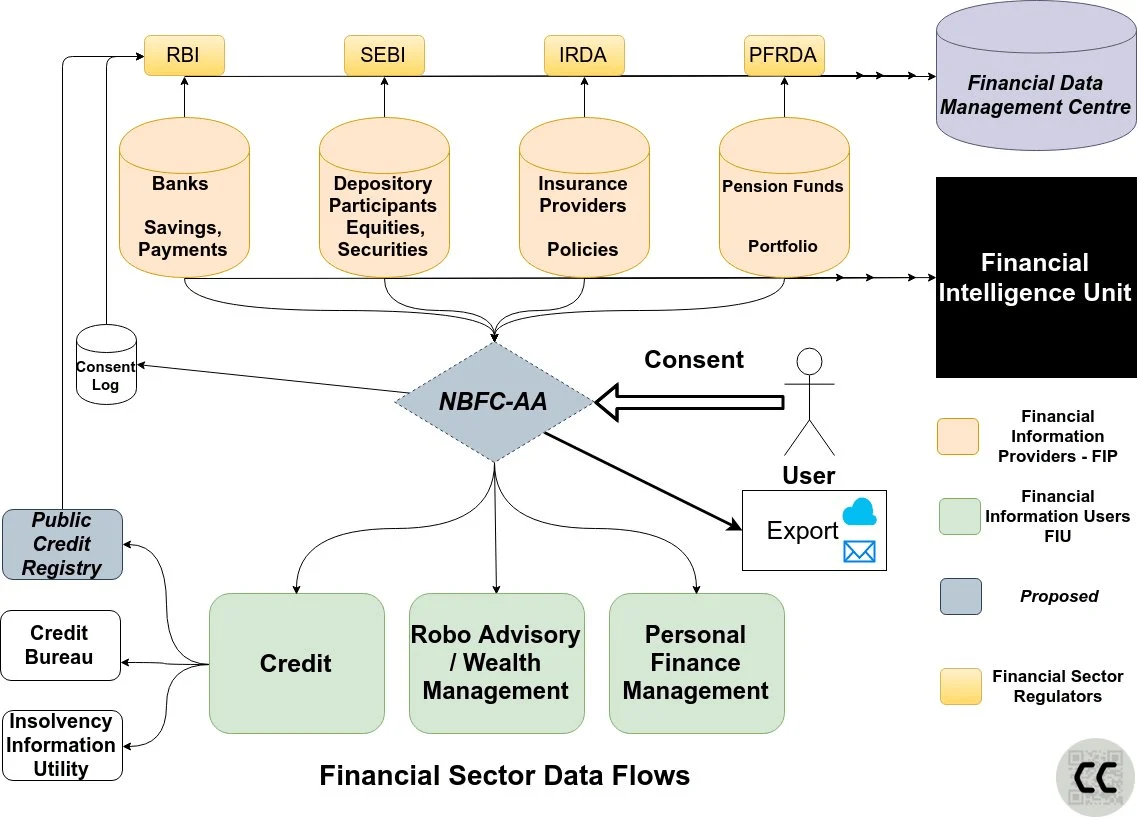
An Account Aggregator is a non-banking financial entity that enables structured financial data sharing between two distinct types of participants: Financial Information Providers (FIPs) and Financial Information Users (FIUs).
Defining the Players
- Financial Information Providers (FIPs): These are the custodians of user data. Any entity currently regulated by the RBI, SEBI, IRDAI, or PFRDA—including commercial banks, non-banking financial companies, insurance companies, and pension funds—falls under this category.
- Financial Information Users (FIUs): These are entities that request access to the data to provide a specific financial service. Like FIPs, they must be regulated financial institutions.
- The Aggregator: The NBFC-AA serves as the mediator. It does not store the underlying financial information of the customer. Instead, it maintains a digital "consent artifact." This artifact is a technical record of what data was requested, for what purpose, for what duration, and which specific account the user has authorized to be shared.
The framework covers 18 distinct classes of financial information, ranging from bank deposit accounts and equity holdings to insurance policies and pension fund contributions. This comprehensive scope ensures that an individual’s entire financial footprint can be consolidated, provided they grant the necessary permission.
Chronology: From Concept to Implementation
The evolution of the NBFC-AA framework has been a methodical, multi-year endeavor:
- July 2015: The RBI first floats the concept of Account Aggregators, identifying the need for a standardized, secure data-sharing mechanism.
- September 2016: The RBI formally issues the Master Directions for the creation of NBFC-AAs. This provides the legal bedrock for these entities to operate.
- 2017–2019: The period of technical standard-setting. The Reserve Bank Information Technology Pvt Ltd (ReBIT) and other industry bodies work on the technical specifications (the Sahamati protocol) to ensure interoperability between banks and aggregators.
- 2020: The framework gains significant momentum as the RBI begins processing license applications. RTI (Right to Information) responses confirm that multiple entities have applied for the license, with several receiving "in-principle" approval.
- Post-2020: The gradual rollout of the ecosystem begins, with major public and private sector banks integrating their APIs with the AA framework, turning the theoretical "consent broker" into a functional reality.
The "UPI Moment" for Financial Data
To understand the impact of the Account Aggregator, one must look at the Unified Payments Interface (UPI). UPI revolutionized monetary transactions by enabling bank-agnostic payments through simple identifiers like Virtual Payment Addresses (VPAs). It stripped away the friction of traditional banking interfaces, allowing users to send and receive money across apps like PhonePe, Google Pay, and BHIM.

The NBFC-AA framework is effectively the "UPI for data." Just as UPI made payments frictionless, the AA framework makes financial data portable.
A user can now register with an AA and create an identifier (e.g., user@accountaggregator). When an FIU—such as a lender—wants to assess the creditworthiness of this user, it sends a request to the user’s AA identifier. The user receives a notification on their device, similar to an UPI "collect" request. Upon the user’s authorization, the AA triggers an API call to the FIPs (the user’s banks or investment houses), which then securely share the requested data directly with the FIU.
This eliminates the need for physical document submission, manual bank statements, or the sharing of sensitive login credentials with third-party aggregators.
Supporting Data and Institutional Participation
The scale of the project is immense. By bringing together the RBI, SEBI, IRDAI, and PFRDA, the framework creates a unified digital architecture for the entire financial sector.
Recent data obtained via RTI queries suggests that the appetite for this license is high. With nine entities initially applying for the license and five receiving in-principle approval, the competition to define the user experience of data sharing is intense. Notably, organizations like NeSL (National eGovernance Services Limited)—a government-backed entity—have entered the fray, indicating that the state views this infrastructure as a critical public utility rather than just a private business opportunity.
The technical architecture is built on the principle of "Open Banking." By standardizing the format in which data is shared, the framework allows for a 360-degree view of an individual’s finance. This data can then be fed into Artificial Intelligence (AI) models to power "robo-advisory" platforms, which can offer hyper-personalized wealth management, insurance products, or credit facilities that were previously unavailable to those without a long-standing credit history.
Implications for the Future of Finance
The transition to an Account Aggregator-led model has profound implications for both consumers and the broader financial system:

1. Financial Inclusion and Credit Access
For the "new-to-credit" population, the primary barrier is the lack of a traditional credit score. By sharing granular data—such as utility bill payments, consistent investment patterns, or cash flow history—from multiple sources, individuals can build a "digital footprint" that lenders can trust. This could unlock credit for millions who were previously excluded from the formal banking system.
2. Hyper-Personalized Wealth Management
Wealth management was once the preserve of the affluent. With the AA framework, automated advisors can access a user’s entire portfolio (mutual funds, insurance, deposits) in real-time. This allows for intelligent portfolio rebalancing, tax optimization, and retirement planning, all managed through an app on the user’s phone.
3. Empowerment through Revocable Consent
One of the most critical features of the AA framework is the ability to manage and revoke consent. Users are no longer "locked in" to data sharing. They can see exactly who has access to their data and can terminate that access at any time through the AA interface. This "Consent Manager" functionality is a landmark in digital data privacy for India.
4. Competitive Dynamics
The AA ecosystem levels the playing field. Smaller fintech startups no longer need to rely on the "walled gardens" of large banks to access user data. As long as they are regulated by an Indian financial authority and obtain the user’s consent, they can innovate on top of the financial data provided by the largest banks.
Conclusion
The Account Aggregator framework is a testament to India’s shift toward a "Data Empowerment and Protection Architecture" (DEPA). By transitioning from a model where data is locked in silos to one where data is a portable, user-controlled asset, the RBI has laid the groundwork for a more inclusive and efficient financial future.
As the ecosystem matures, the challenge will remain in ensuring the security of these data pipelines and fostering public trust. However, by establishing a regulated path for data sharing, the RBI has provided a blueprint that could serve as a global model for financial digitization. The era of the "consent broker" is here, and it promises to reshape the way every Indian interacts with their own financial life.



