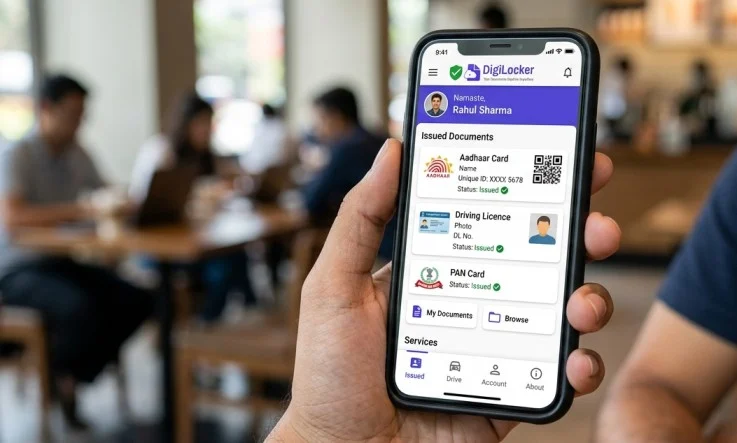
In a significant push to cement DigiLocker as the central repository for citizen documentation, the Ministry of Electronics and Information Technology (MeitY) has signaled a major expansion strategy. Through its National e-Governance Division (NeGD), the government is moving to integrate the platform deep into the private sector—specifically targeting banking, insurance, education, and healthcare institutions.
This move, outlined in a Request for Empanelment (RFE) published on September 21, 2026, represents a paradigm shift from DigiLocker being a government-to-citizen (G2C) utility to a broader business-to-citizen (B2C) infrastructure, potentially streamlining the way millions of Indians interact with private entities.
The Strategic Vision: Expanding the DigiLocker Footprint
For over a decade, DigiLocker has served as a cornerstone of the Digital India initiative, allowing citizens to store, access, and share digital versions of government-issued documents like driving licenses, vehicle registration certificates, and academic mark sheets. However, the latest RFE indicates that the NeGD is no longer content with passive usage.
The government is now actively seeking to outsource the growth of DigiLocker’s user base and utility. By partnering with private agencies, the NeGD aims to identify specific industrial use cases where DigiLocker can replace traditional, paper-heavy verification processes. The selected partners will be responsible for mapping demand, facilitating technical integration, and onboarding institutions that wish to leverage the platform for instant, authenticated document verification.
Chronology of the Initiative
The journey toward this integration has been characterized by iterative technological growth:
- 2015: DigiLocker is launched by the Government of India to provide a secure cloud-based platform for storage of documents.
- 2023-2025: Rapid expansion occurs as more government departments integrate their APIs with DigiLocker, making it the primary source for KYC (Know Your Customer) and academic credentials.
- August 2026: MeitY invites tenders for the development and deployment of AI-driven agents to enhance user interaction across platforms like UMANG and DigiLocker.
- September 21, 2026: NeGD publishes the Request for Empanelment (RFE), officially calling for partners to drive private sector integration.
- October 10, 2026: The deadline for industry stakeholders, institutions, and the public to submit feedback and proposals regarding the RFE.
Sectoral Use Cases: Mapping the Future of Verification
The RFE provides a roadmap for how various sectors can leverage the digital-first approach to reduce friction. While the document notes that these are merely indicative, they provide a clear window into the government’s vision for a paperless economy.
1. Financial Services
The banking and insurance sectors remain the primary targets for DigiLocker integration. Currently, KYC processes often require physical document submission or manual verification. The NeGD envisions:
- Instant Loan Processing: Leveraging DigiLocker-stored tax filings, salary slips, and PAN cards for near-instant credit assessment.
- Automated Insurance Claims: Using verified medical records and policy documents directly from the locker to reduce fraud and processing time.
- Account Opening: Seamless identity verification for bank accounts and investment portfolios without the need for photocopies.
2. The Education Sector
The academic ecosystem is ripe for digital transformation. By integrating with DigiLocker, educational institutions can:
- Streamline Admissions: Universities and colleges can pull verified mark sheets and degrees directly from the issuing authority’s repository in the locker, eliminating the need for physical attestation.
- Simplified Employment Verification: Employers can verify candidate credentials instantly, reducing the reliance on third-party background check agencies.
3. Healthcare Infrastructure
The integration of DigiLocker into the healthcare ecosystem could be transformative for patient data management:

- Unified Health Records: Allowing patients to share their longitudinal health records with private hospitals or insurance providers with consent-based access.
- Vaccination and Diagnostic Verification: Enabling private clinics to verify medical history and vaccination status in real-time, improving patient safety and administrative efficiency.
The Role of AI in the Next Phase of DigiLocker
Parallel to this integration drive, the government is aggressively pursuing an "AI-first" strategy for its digital public infrastructure. As noted in the recent tender for AI agents, the goal is to move beyond simple document storage to a more proactive, intelligent assistant model.
These AI agents are expected to assist users in navigating the complexities of document retrieval, providing proactive notifications regarding document expiry, and even automating the application process for government services based on the data stored in a user’s DigiLocker. This convergence of AI and digital documentation aims to reduce the "digital divide" by making complex government services accessible through natural language interfaces.
Implications for Stakeholders
For the Private Sector
For banks, hospitals, and universities, this move is a double-edged sword. While integration promises a massive reduction in operational costs related to document handling, storage, and verification, it also requires significant technical investment to interface with the NeGD’s APIs. Furthermore, companies must adhere to strict data privacy and security protocols as mandated by the government.
For the Citizens
The end goal is the "single source of truth." If successfully implemented, citizens will no longer need to carry physical folders of documents to government offices or private service providers. The "consent-based sharing" model ensures that users retain control over who sees their documents, theoretically providing a higher level of security than traditional methods.
For Data Privacy
The expansion into the private sector will undoubtedly raise questions regarding data sovereignty. As private entities begin to process sensitive government-issued data, the regulatory framework governing these interactions—likely under the Digital Personal Data Protection Act—will be put to the test. Ensuring that the integration remains transparent and that the data is not used for unauthorized profiling will be critical to public trust.
Call for Feedback: A Collaborative Approach
The NeGD has adopted an open-door policy regarding this RFE, recognizing that a top-down approach may not capture the nuances of various industries. By inviting feedback until October 10, 2026, the government is seeking to understand:
- Technical Hurdles: What barriers exist for smaller institutions to integrate with DigiLocker?
- Innovation: What niche use cases have the government failed to consider?
- Security Concerns: How can the government bolster the trust framework for private partners?
Interested parties are required to submit their responses via email to the NeGD. This phase of consultation is vital, as it will determine the final criteria for the empanelment of agencies, effectively deciding which private players will become the "gatekeepers" of this new digital infrastructure.
Conclusion
The push to integrate DigiLocker into the private sector is a bold move to solidify India’s position as a global leader in digital public infrastructure. By transitioning from a storage facility to an integrated ecosystem, DigiLocker is poised to become an indispensable tool for every Indian citizen. However, the success of this initiative hinges on the government’s ability to balance rapid, large-scale adoption with the stringent data protection and security requirements necessary to maintain the integrity of India’s digital future.
As the October 10 deadline approaches, the industry response will be a significant indicator of how prepared the private sector is to embrace this transition. If executed with the necessary safeguards, the integration of DigiLocker into everyday commercial activities could mark the final step in the transition to a truly paperless, highly efficient digital economy.