In an era where generative artificial intelligence is rapidly redefining the search engine landscape, Google is recalibrating its approach to AI Overviews and AI Mode. The search giant has announced a significant suite of updates designed to bridge the gap between AI-generated summaries and the original sources that power them. By prioritizing inline links, revamping visual elements, and introducing deeper context for publisher profiles, Google is signaling a pivot toward a more collaborative ecosystem between its AI models and the broader web publishing community.
Main Facts: The New Architecture of Search
The core objective of Google’s latest update is to increase the prominence of direct links within AI-generated content. For months, critics and publishers have expressed concerns that AI summaries might cannibalize traffic by providing answers without requiring users to click through to source websites. Google’s new design changes are a direct response to these pressures.
Key updates include:
- Enhanced Inline Linking: Links will now appear significantly higher within AI-generated responses, ensuring that users encounter citation opportunities almost immediately upon reading a summary.
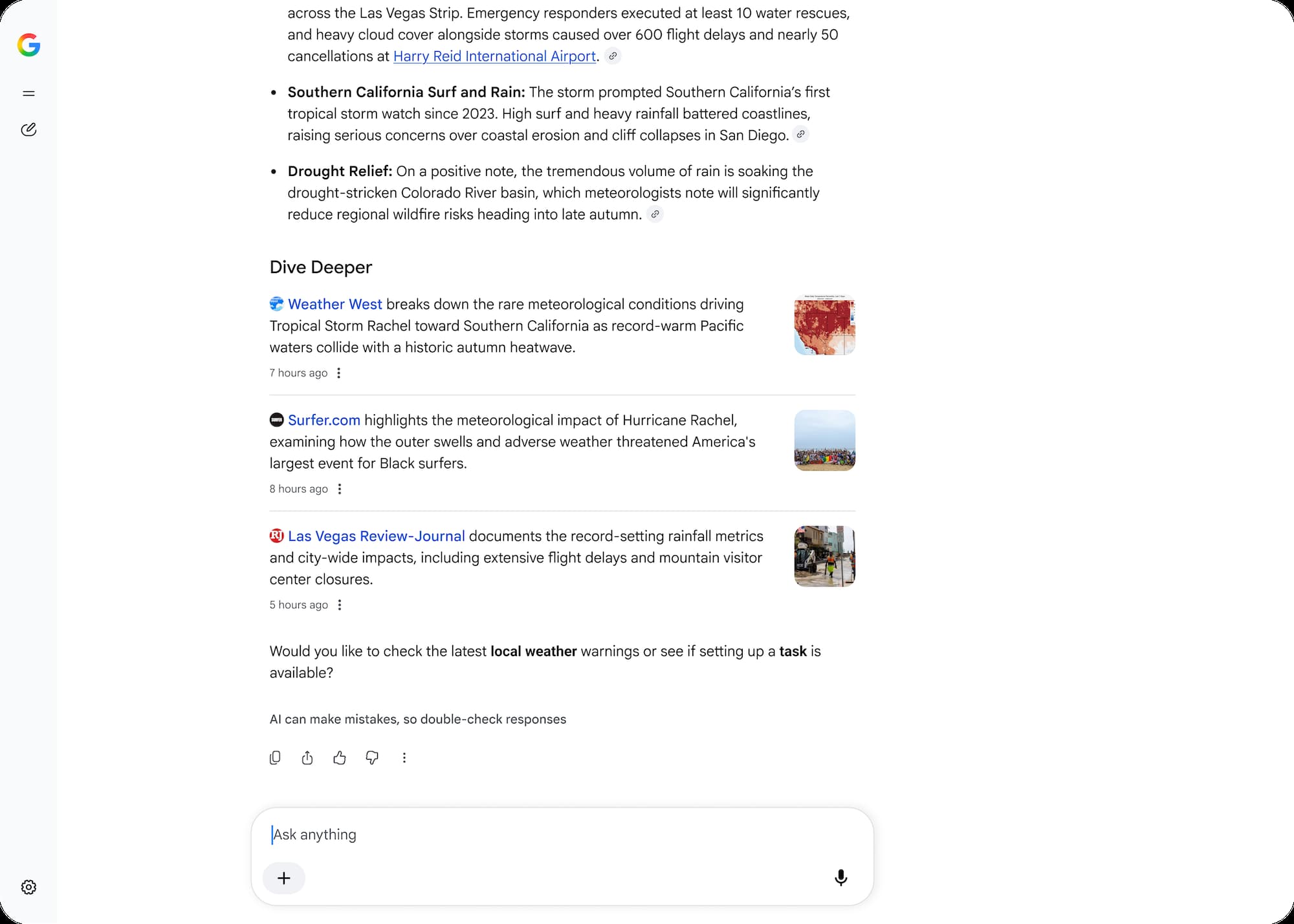
- Visual Overhaul of "Dive Deeper": The section traditionally found at the end of AI responses is being transformed. It will now incorporate image thumbnails and a more intuitive, clickable interface, designed to draw the user’s eye toward external content.
- Contextual Labeling: Google is testing a feature that provides explicit reasoning for why a specific link is included, offering users "context about why each link is useful" before they even click.
- Official Source Highlighting: A new experimental section at the top of AI responses will now feature "one or two official places on the web" specifically designed for users looking to complete a task or retrieve authoritative data.
Chronology: The Evolution of Google’s AI Strategy
Google’s journey toward integrating generative AI into its search engine has been iterative and occasionally volatile.
Early 2026: The Initial Rollout
Google began experimenting with AI Overviews to provide synthesized answers to complex queries. While the speed of information retrieval improved, the initial feedback highlighted a "black box" effect where users struggled to verify information, and publishers reported a decline in referral traffic.

Mid-2026: The Introduction of "Preferred Sources"
By May 2026, Google introduced the "Preferred Sources" feature. This allowed users to prioritize specific publishers in their search results, a move aimed at empowering users to curate their own information ecosystem. This feature saw rapid adoption, with Google reporting a 7x growth in usage within months of its launch.
October 2026: The Current Expansion
The latest update represents the culmination of this year’s feedback cycle. By expanding the availability of carousels for timely articles and globalizing the Preferred Sources feature across multiple languages, Google is attempting to standardize the "AI-plus-human-web" experience.
Supporting Data: Why Visibility Matters
The urgency behind these changes is rooted in data regarding user behavior and the health of the digital publishing ecosystem. Internal and third-party metrics have consistently shown that when AI provides a complete answer without clear attribution, user engagement with source sites drops.
However, Google’s internal testing suggests that when links are presented with visual cues—such as the new thumbnails in the "Dive Deeper" section—the click-through rate (CTR) to source sites increases significantly. The 7x increase in the usage of "Preferred Sources" is a critical data point for the company; it demonstrates that users are not just looking for an "answer," but are increasingly looking for trusted entities to provide those answers.
Furthermore, the expansion of Search Profiles for creators and publishers aims to solve the "trust gap." By providing a clickable, profile-driven experience on video results, Google is leaning into the idea that users want to know the who behind the what. This transparency is designed to foster a more resilient search environment where authority is verified rather than assumed.
Official Responses and Strategic Rationale
While Google has not released a singular press release detailing every technical aspect of the update, company representatives have consistently framed these changes as an evolution of their mission: "to organize the world’s information and make it universally accessible and useful."
The company’s focus on "official places on the web" for task completion suggests a shift toward functional search. Rather than simply summarizing a topic, the AI is now being programmed to act as a directory to the most authoritative source for a specific action—whether that is booking a flight, checking a weather forecast, or reading an official government document.
Industry analysts suggest that Google is under immense pressure to balance its AI-first ambitions with the needs of the web economy. By integrating "creator and publisher names" directly into video search, Google is acknowledging that the future of search isn’t just about text; it is about multimedia attribution and the sustenance of the creator economy.
Implications for the Future of the Web
The implications of these updates are profound for both SEO professionals and general users.
1. The Death of Generic Content
If Google’s AI is increasingly prioritizing "official" sources and those with strong creator profiles, generic, "thin" content will likely lose its visibility. Sites that focus on high-quality, authoritative reporting and build strong brand profiles will be better positioned to be featured in the new "Preferred Sources" and top-tier citation sections.

2. A Shift in SEO Metrics
Publishers will need to shift their focus from keyword density to "attribution-ready" content. Since Google is adding context to links, content creators should ensure that their metadata and page structure clearly explain the value of their content so that Google’s AI can effectively communicate that value to the end user.
3. The Human-AI Partnership
The integration of Search Profiles is perhaps the most significant long-term change. It signals that Google is moving away from an anonymous, automated web toward one where individual and organizational reputation is a ranking factor. This is a clear move to mitigate the spread of AI-generated misinformation; by tying content to a verifiable profile, Google adds a layer of accountability that an anonymous LLM cannot provide on its own.
4. Global Accessibility
By pushing these features into "additional locations and languages," Google is ensuring that the benefits of this updated search experience are not limited to English-speaking markets. This suggests that Google is preparing for a global standard where AI-assisted search is the baseline, and the ability to navigate that system will be a critical digital literacy skill for the general public.
In conclusion, Google’s latest modifications to its search architecture reflect a sophisticated attempt to harmonize the efficiency of AI with the necessity of human-led publishing. As these changes roll out, the digital landscape will likely become more structured, with a greater emphasis on brand authority, visual engagement, and direct, transparent attribution. The success of this strategy will ultimately depend on whether users feel more empowered to explore the web, or whether they remain content with the convenience of a summarized answer. Google is clearly betting on the former.