










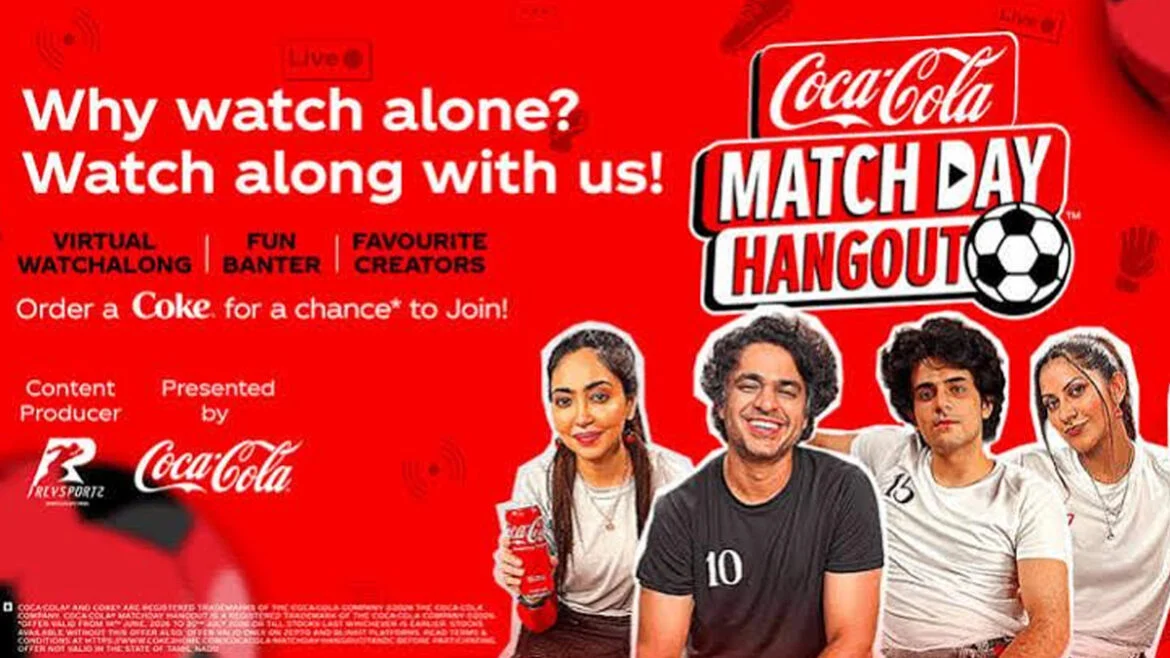
MUMBAI — When the final whistle echoes across social media feeds in a flurry of reaction memes, hot takes, and rapid-fire group chat messages, modern football transcends the confines of the 90 minutes played on the pitch. Today, the beautiful game is as much about the digital ecosystems surrounding it as it is about the ball hitting the back of the net. Recognizing this tectonic shift in consumer behavior, beverage giant Coca-Cola is leaning heavily into the intersection of sport, creator culture, and hyper-connected online communities with the launch of Matchday Hangout.
Designed as a creator-driven, interactive watch-along experience, Matchday Hangout aims to fundamentally reshape how Indian audiences consume, celebrate, and engage with live FIFA World Cup matches. By weaving together influencer culture, quick-commerce utility, and live digital broadcasting, the campaign captures the pulse of a generation that views sports not merely as a passive visual medium, but as an active, social, and deeply participatory lifestyle.
1. Main Facts: Decoding the ‘Matchday Hangout’ Initiative
At its core, Matchday Hangout is a reimagined live-viewing platform that transforms traditional sports broadcasts into dynamic, virtual living rooms. Rather than relying on conventional, one-way television commentary, Coca-Cola’s new property embraces the reality of modern sports consumption: fans want to react instantly, debate referee decisions, share jokes, and celebrate goals in real-time with peers and personalities alike.
Key Pillars of the Campaign:
- The Concept: A closed-door, interactive digital watch-along experience that blends live match analysis with comedy, gaming, trivia, and community interaction.
- The Talent Roster: The initiative will unfold across 12 nationwide live streams hosted by prominent digital creators Rohan Joshi, Sakshi Shivdasani, and Kaashvi Hiranandani.
- Special Guest Appearances: Selected matchdays will feature drop-ins from notable cultural and sports personalities, including Zervaan Bunshah, Varun Thakur, and prominent Indian footballer Dalima Chhibber, injecting professional athletic insight and diverse comedic perspectives.
- Strategic Partnerships: Developed in collaboration with RevSportz, ensuring authentic sports journalism meets entertainment-first programming.
- Access Mechanism: The experience utilizes a innovative commerce-based entry model. Fans who purchase Coca-Cola products through quick-commerce leaders Blinkit or Zepto during designated match windows are granted exclusive entry links to the live streams.
- Interactive Elements: The sessions feature pre-match prediction contests, live in-game reactions, halftime chats, post-match breakdowns, trivia segments, and interactive fan challenges designed to keep viewers continuously engaged.
- Rewards & Incentives: Participants stand a chance to win exclusive branded merchandise, including Coca-Cola mini refrigerators and custom apparel.
2. Chronology: The Evolution of Modern Sports Viewing
To understand the strategic genesis of Matchday Hangout, it is necessary to examine how sports broadcasting has evolved from mass-media appointments into decentralized, digital experiences.
The Era of Passive Viewing (Pre-2010s)
Historically, live football in India was consumed through linear television broadcasts. Families or groups of friends would gather around a single television set. The broadcast was authoritative, linear, and non-interactive. Commentary came from seasoned television anchors and retired professionals, while fan reactions were largely confined to local coffee shops, office watercoolers, or the stadium stands.
The Rise of the Second Screen (2010–2020)
As smartphones permeated the Indian market and mobile data became exceptionally affordable, the "second screen" phenomenon took root. Fans watched matches on television while simultaneously scrolling through Twitter (now X), Instagram, and WhatsApp. The communal viewing experience fractured into digital bubbles where memes, tactical threads, and live text commentary ran parallel to the official broadcast. Live sports became a networked experience, yet the video feed and the social conversation remained fundamentally divorced.
The Advent of Sportainment and Creator-Led Culture (2020–Present)
Post-pandemic media consumption habits accelerated the demand for hyper-personalized, personality-driven content. Audiences, particularly Gen Z and Millennials, began gravitating toward creators who mirror their own tone, humor, and lifestyle. Recognizing this, brands began experimenting with sportainment—an intersection where the spectacle, banter, and community surrounding a sport carry just as much weight as the athletic competition itself.
Coca-Cola’s Matchday Hangout represents the maturation of this timeline: an ecosystem where the digital watch party replaces the traditional broadcast, and internet creators serve as the ultimate sports hosts.
3. Supporting Data & Market Dynamics: The Quick-Commerce and Creator Economy Boom
The architecture of Matchday Hangout is deeply informed by two massive, intersecting macro-trends in the Indian market: the explosive growth of the creator economy and the meteoric rise of quick-commerce delivery infrastructure.
The Quick-Commerce Catalyst
India’s quick-commerce sector—anchored by platforms like Blinkit, Zepto, and Instamart—has fundamentally altered urban shopping habits, scaling from grocery delivery into lifestyle enablement. By tying event access directly to quick-commerce transactions, Coca-Cola is bridging impulse shopping with immediate digital utility.
- Data Point: Industry estimates indicate that quick-commerce in India has witnessed triple-digit year-on-year growth in urban centers, with beverage and snack categories experiencing massive spikes during major sporting tournaments.
- By partnering with Blinkit and Zepto, Coca-Cola is leveraging transactional intent: a consumer orders a beverage for the match, and within 10 minutes, they receive not just the product, but a digital passport to an exclusive community experience.
The Creator Economy Footprint
India boasts one of the largest and most vibrant creator ecosystems globally, with hundreds of millions of active social media users. Creators like Rohan Joshi, Sakshi Shivdasani, and Kaashvi Hiranandani command highly engaged, loyal communities that dwarf traditional media viewership demographics in terms of direct interaction.
- According to digital marketing reports, campaigns leveraging diversified creator rosters see significantly higher engagement and brand recall rates compared to traditional banner advertising or spot buys, particularly among demographic cohorts under the age of 30.
4. Official Perspectives and Industry Insights
While Coca-Cola has positioned Matchday Hangout as a cornerstone of its modern marketing playbook, sports marketing experts and digital strategists have weighed in on the implications of this hybrid model.
Industry analysts note that traditional sports sponsorships—traditionally limited to stadium hoardings, jersey branding, and standard 30-second television commercials—are suffering from diminishing returns among younger audiences who actively skip ads or consume content via ad-free streaming tiers.
"Brands can no longer simply buy eyeballs; they must buy participation," notes a senior media strategist based in Mumbai. "When you invite fans into a curated, intimate digital room hosted by their favorite internet personalities, you aren’t interrupting their entertainment—you are facilitating it. That builds an emotional equity that a standard television commercial can never replicate."
Furthermore, the inclusion of elite athletes like Indian footballer Dalima Chhibber bridges the gap between internet culture and authentic athletic expertise. By pairing digital comedians and lifestyle creators with professional sports figures, Coca-Cola ensures that the streams maintain credibility among die-hard football purists while remaining accessible and entertaining for casual fans.
RevSportz, co-architects of the initiative, have emphasized that the partnership was formed with the explicit goal of democratizing sports conversations. By moving away from sterile, academic sports analysis and toward conversational, interactive storytelling, the platform caters to an evolving audience that values authenticity and humor above clinical tactical breakdowns.
5. Strategic Implications: The Future of Fandom and Brand Integration
The rollout of Matchday Hangout carries profound implications for the future of sports marketing, brand partnerships, and digital community building in India.
1. The Death of the Mass-Broadcast Monopoly
For decades, media rights holders held a strict monopoly on how live sports were packaged and consumed. Matchday Hangout signals a decentralized future where brands can partner with alternative content producers, creators, and commerce platforms to build parallel viewing experiences that compete directly with official broadcasts in terms of engagement and cultural relevance.
2. Cultivating Intimacy at Scale
Paradoxically, while the campaign targets nationwide audiences, its structural design prioritizes intimacy. By capping or structuring access windows and utilizing interactive formats (such as live trivia, direct Q&A, and real-time chat prompts), Coca-Cola is recreating the psychological safety and warmth of a neighborhood watch party. Consumers are transformed from silent spectators into active contributors.
3. Fusing Commerce with Content
The seamless integration of quick-commerce into the marketing funnel sets a powerful precedent for future brand campaigns. Rather than treating commerce and content as separate funnels (e.g., seeing an ad on TV and walking to a local store later), quick-commerce enables instantaneous, frictionless conversion. A consumer’s desire for refreshment during a tense penalty shootout is immediately met, validated, and rewarded with exclusive community access.
4. Redefining the ‘Sportainment’ Playbook
As sports organizations and brands look toward future global tournaments—including cricket leagues, football championships, and emerging esports events—the success of Matchday Hangout will likely serve as a blueprint. Brands that successfully merge influencer marketing, community-first digital spaces, and instant retail utility will dominate the modern attention economy.
Conclusion
Coca-Cola’s Matchday Hangout is much more than a promotional campaign for a sporting tournament; it is a masterclass in modern cultural alignment. By understanding that contemporary fandom is collaborative, conversational, and digital-first, the brand has successfully bridged the gap between what happens on the pitch and how fans process it together.
In an era where attention is the world’s most fiercely contested currency, Coca-Cola is proving that the winning formula lies not in shouting louder over the noise, but in creating a better room to sit in. As Rohan Joshi, Sakshi Shivdasani, Kaashvi Hiranandani, and guest stars welcome thousands of fans into their digital living rooms this season, one thing is certain: the conversations, laughs, and shared community moments surrounding the match have officially become just as compelling as the goals themselves.



