










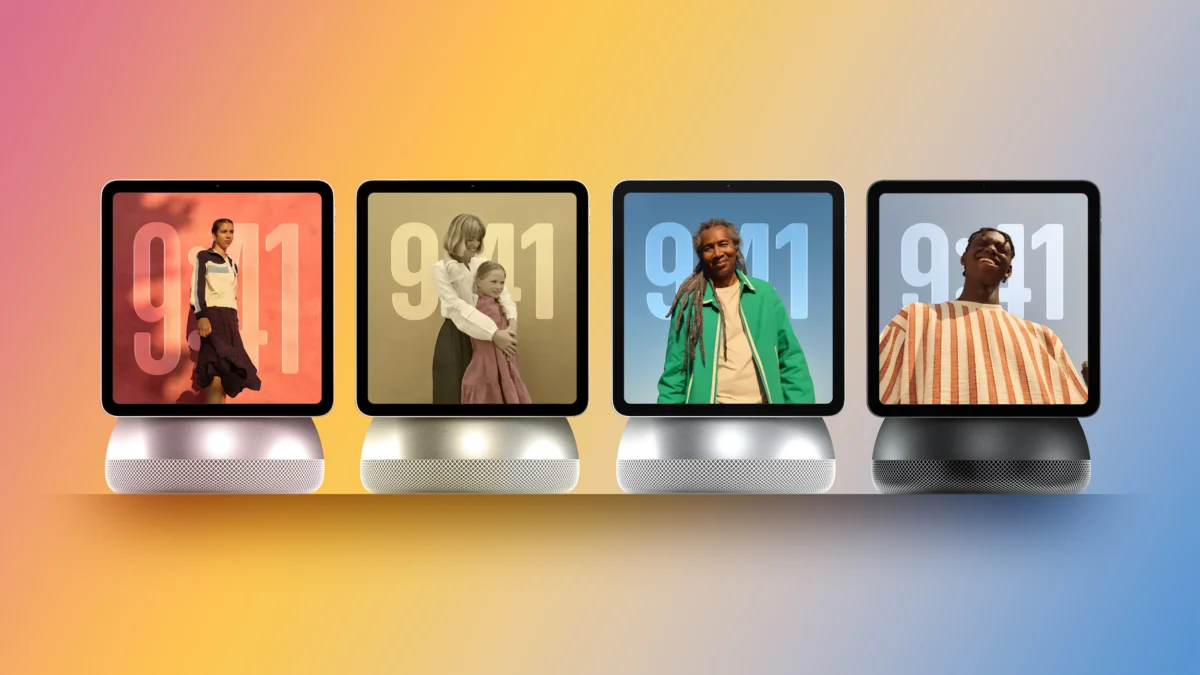
The technological landscape of the modern home is on the precipice of a significant evolution. Tomorrow, Apple is set to host its “Welcome Home” product launch, a highly anticipated event that promises to pivot the company’s focus toward the next frontier of consumer electronics: the intelligent, interconnected living space. While Apple has long maintained a presence in the smart home sector through HomeKit, the forthcoming announcements suggest a more aggressive, hardware-centric strategy designed to unify the disparate threads of home automation, artificial intelligence, and media consumption.
Main Facts: The New Lineup
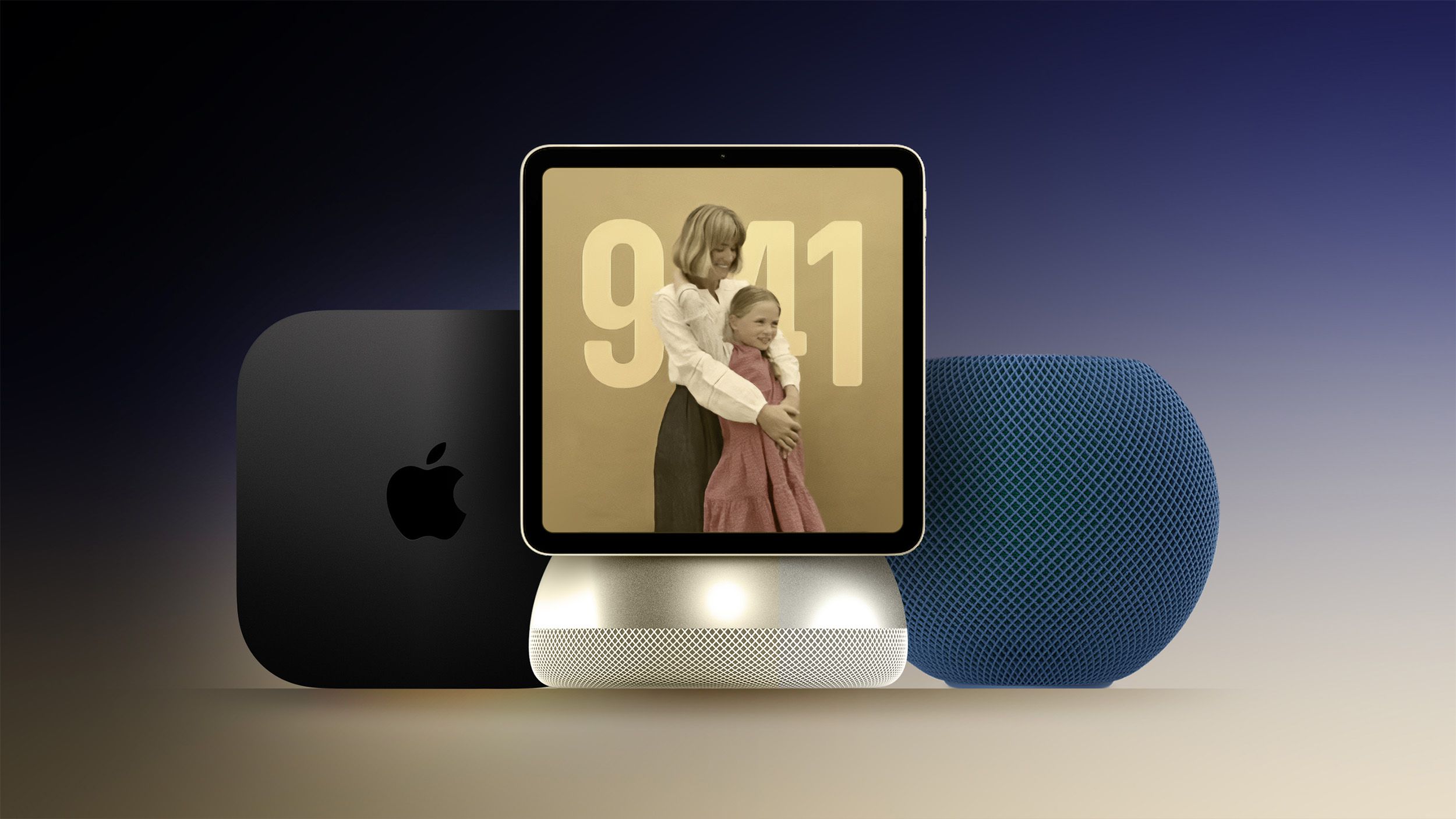
The centerpiece of tomorrow’s reveal is the long-rumored smart home hub, officially branded as HomeView. This device represents Apple’s answer to the evolving needs of multi-occupant households, aiming to centralize control through the power of advanced Siri AI. Beyond the hub, Apple is refreshing its existing staples—the Apple TV 4K and the HomePod mini—giving them significant internal overhauls to ensure they function as robust nodes within this new, AI-driven ecosystem.
HomeView: The Command Center
The HomeView is more than just a speaker; it is a dedicated home assistant built around a sophisticated A18 chip and supported by 8GB of RAM. Designed to be the "brain" of the residence, it features a 6-inch touch display that serves as a portal for managing everything from daily schedules to home security.
Users will have two distinct form factors to choose from: a wall-mounted unit for minimalist installations and a desktop version perched on a half-dome speaker base with a flexible tilt-adjustable arm. The interface is heavily widget-based, mirroring the aesthetic and functional utility of the iPhone’s "StandBy" mode. While it will not feature a dedicated App Store, it is designed to run core Apple services, including Safari, Messages, FaceTime, Photos, and Calendar, ensuring that the hub acts as an extension of one’s personal digital life.
Apple TV 4K and HomePod mini: Internal Powerhouses
Though the exterior design of the Apple TV 4K remains unchanged—retaining its iconic, unassuming black-box aesthetic—the internal specifications are seeing a massive leap. The integration of an A19 chip and 8GB of RAM positions the new Apple TV as a gaming-grade media device. With support for ray tracing and mesh shading, Apple is clearly targeting the living room as a legitimate gaming hub.
Similarly, the HomePod mini is receiving a vital refresh. While it retains its familiar silhouette, the inclusion of the S10 chip and the new N1 networking chip (bringing Wi-Fi 7 and Bluetooth 6 support) ensures that it remains relevant in an increasingly data-heavy smart home environment.
Chronology of the “Welcome Home” Rollout
The path to tomorrow’s announcement has been marked by a flurry of leaks, trademark filings, and supply chain reports.
- September 2026: Initial reports emerge regarding an internal hardware refresh for the Apple TV and HomePod lines, focusing on N1 networking chips.
- Early October 2026: Trademark filings for "HomeView" surfaced, confirming the branding of the long-rumored smart hub.
- October 6, 2026: Reports confirm a strategic partnership with LG to produce a suite of smart home accessories, ranging from video doorbells to smart locks, branded under the "Apple Home Collection."
- October 13, 2026 (Tomorrow): The official product reveal via a digital event and a media-exclusive hands-on session in New York City.
- October 30, 2026: The official launch and retail availability for the new Apple TV 4K and the refreshed HomePod mini.
- Mid-November 2026: The anticipated shipping date for the flagship HomeView hub.
Supporting Data and Technical Specifications
To understand the performance ceiling of these new devices, one must look at the underlying architecture. The shift to the A18 and A19 chips across the smart home portfolio indicates that Apple is prioritizing "on-device" processing.
- Processing Power: The HomeView’s A18 chip is explicitly chosen to handle the complex, real-time natural language processing required by the new Siri AI.
- Security and Privacy: Privacy remains paramount. The HomeView uses a variation of Face ID to authenticate users. When a resident approaches the hub, the presence sensor triggers the camera to recognize the individual, allowing the device to display personalized content—such as specific email threads or calendar events—only when the authorized user is detected.
- Connectivity: The inclusion of the N1 networking chip is a strategic move. By supporting Wi-Fi 7 and Bluetooth 6, these devices are future-proofed against network congestion, ensuring that high-bandwidth activities like 4K streaming or multi-room audio synchronization remain lag-free.
- The LG Partnership: The "Apple Home Collection" is an acknowledgement of the need for hardware consistency. By working with a third-party giant like LG, Apple is ensuring that the ecosystem is populated with high-quality, reliable hardware (thermostats, cameras, and floodlights) that is pre-certified to work seamlessly with the HomeView hub.
Official Responses and Market Positioning
While Apple has maintained its traditional silence regarding unreleased products, industry analysts have been vocal about the implications of this event.
Market sentiment suggests that Apple is moving away from a "passive" smart home—where devices are merely endpoints—to an "active" one, where the home anticipates user needs. By pricing the HomeView at approximately $350, Apple is positioning it as a premium household tool, distinct from the mass-market, lower-cost smart speakers of competitors.
The increase in price for the HomePod mini (now $129) and the Apple TV 4K (starting at $199) reflects a broader trend within Apple’s strategy: the commoditization of the smart home is over. The company is now selling "intelligence" rather than just connectivity, betting that consumers are willing to pay a premium for a more robust, private, and AI-capable home environment.
Implications for the Future of Smart Home Tech
The "Welcome Home" event signals a tectonic shift in how we interact with our living spaces.

The AI-First Home
The most significant implication is the democratization of advanced AI. By integrating Siri AI into every corner of the house, Apple is attempting to solve the "context problem." Previously, smart speakers were often disconnected; asking your speaker to "add milk to the list" rarely integrated well with your visual calendar or email. The new, unified Siri, capable of accessing information across apps and handling multi-request queries, mimics the experience of using high-end LLMs like ChatGPT, but with the added layer of local privacy and home-specific context.
The Ecosystem Moat
Apple is effectively closing its ecosystem "moat" around the home. By utilizing the UWB (Ultra-Wideband) technology in the new HomePod mini for seamless Handoff and the HomeView for cross-device authentication, Apple is creating a friction-less experience that is difficult to replicate with a piecemeal collection of third-party devices. For the average user, the temptation to stay within the Apple ecosystem will become significantly stronger as the "HomeView" hub ties all these threads together.
The Role of Gaming
The pivot of the Apple TV 4K into a more capable gaming machine is perhaps the most intriguing secondary story. By including ray tracing and pushing for a dedicated Beats-branded gaming controller, Apple is making a subtle but clear play for the casual gaming market. They are not trying to displace high-end consoles, but they are clearly positioning the Apple TV as the premier gateway for Apple Arcade, hoping to turn the living room into a hub for both smart home control and entertainment.
Conclusion
As the industry turns its eyes toward the NYC event tomorrow, it is clear that Apple is not just launching hardware; it is launching a new philosophy. The HomeView, alongside its refreshed siblings, represents a bold attempt to define the "Smart Home 2.0." With a heavy emphasis on privacy, deep AI integration, and high-performance silicon, Apple is gambling that the future of the home is not just about turning lights on and off—it is about creating an environment that understands, adapts, and responds to the people living within it. Tomorrow’s "Welcome Home" event may well be remembered as the moment the smart home finally grew up.



