





Cupertino, California — In a move designed to accelerate the development ecosystem for its latest hardware frontier, Apple has officially released the Xcode 27.1 beta. Alongside the updated integrated development environment (IDE), the tech giant has rolled out comprehensive Figma and Sketch design kits, announced a global series of developer workshops, and published extensive documentation aimed at helping creators optimize their applications for the newly revealed iPhone Duo.
The announcement, made on September 18, 2026, marks a pivotal moment for the iOS development community. As Apple continues to push the boundaries of industrial design and form factors, the introduction of the iPhone Duo requires a fundamental rethinking of how digital interfaces adapt to novel screen configurations, dual-display mechanics, and immersive spatial visual architectures.
This comprehensive report breaks down the core announcements, provides a chronological overview of the release, explores the supporting technical data, examines the strategic implications for the app economy, and highlights official guidance from Apple’s engineering teams.
Main Facts
The core of Apple’s September 18 announcement centers on empowering developers to build, test, and optimize software for the iPhone Duo—a device that has quickly become the focal point of the mobile industry.
- Xcode 27.1 Beta Availability: Registered developers can now download the latest beta build of Apple’s flagship IDE directly from the developer portal. Xcode 27.1 introduces specialized simulators, debugging tools, and SwiftUI enhancements tailored specifically to the unique dual-screen and variable-aspect-ratio architecture of the iPhone Duo.
- Design Kits for Figma and Sketch: To bridge the gap between design and code, Apple has updated its official Apple Design Resources. UI/UX designers can now access high-fidelity templates, layout guidelines, and component libraries for the iPhone Duo in both Figma and Sketch formats.
- Global Developer Workshops: Apple has scheduled a series of in-person and virtual workshops spanning major tech hubs worldwide. These sessions are engineered to provide hands-on guidance for optimizing apps, managing multi-screen real estate, and crafting bespoke user experiences across various display dimensions.
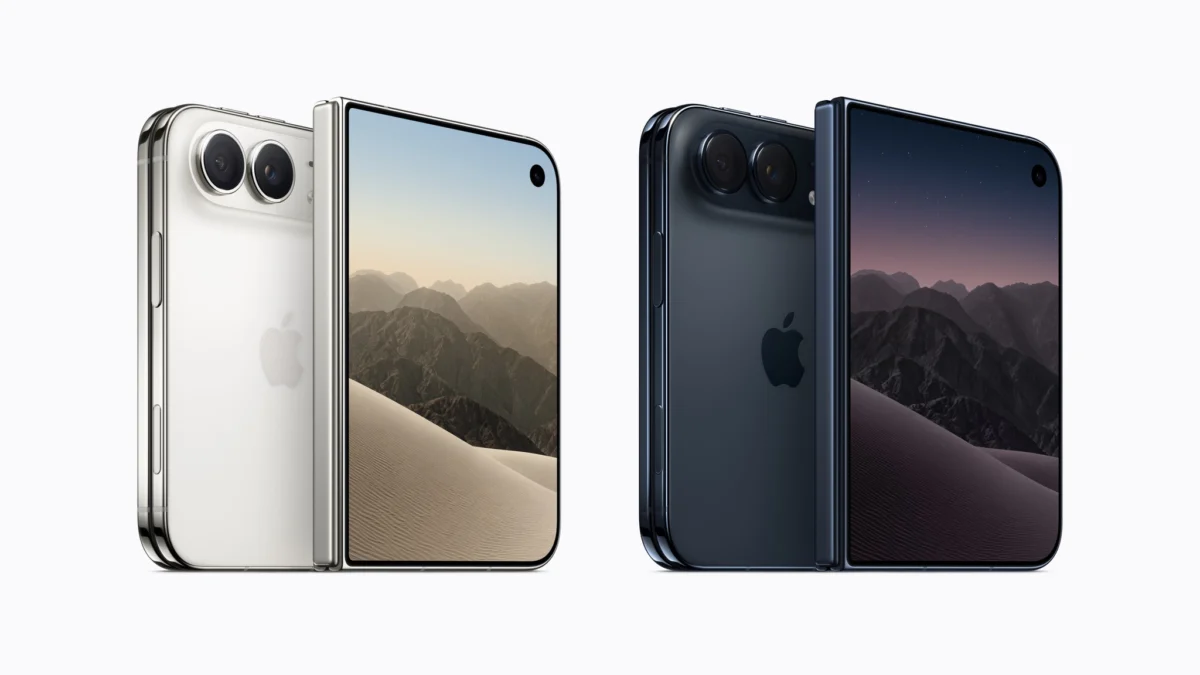
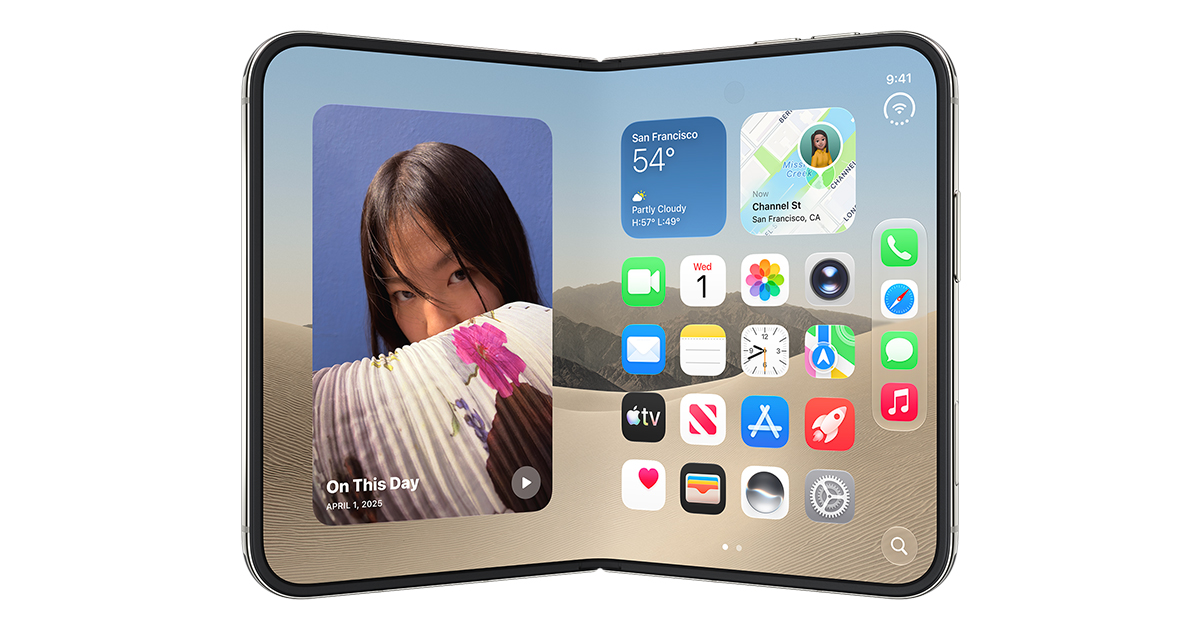
- Hardware Aesthetic and Display Integration: Promotional imagery released alongside the developer tools showcases the iPhone Duo in "Star White" and "Night Sky" finishes. The device features striking front-and-rear dual-panel configurations, showcasing dynamic desert landscape wallpapers that seamlessly transition across light and dark mode operational states.
- Comprehensive Documentation: Apple has launched a dedicated developer portal hub (
developer.apple.com/iphone-duo/) detailing interface guidelines, adaptive layout strategies, and hardware sensor integration best practices for the new device class.
Chronology of the Release
The rollout of the iPhone Duo developer ecosystem has followed a rapid, calculated trajectory, aligning hardware manufacturing timelines with software readiness.
Early 2026: Internal Testing and Framework Prototyping
Months prior to public revelation, select third-party enterprise partners and internal Apple engineering teams began working with early-stage prototypes of the iPhone Duo. During this period, the foundational APIs for handling dual-screen continuity, hinge-state awareness, and continuous canvas rendering were integrated into preliminary builds of the iOS 27 SDK.
September 2026: Hardware Announcement and Developer Signals
As Apple officially pulled back the curtain on the iPhone Duo, revealing its Star White and Night Sky colorways and dual-panel capabilities, the software ecosystem required an immediate pathway for adaptation. Apple recognized that hardware innovation is only as powerful as the software running on it.
September 18, 2026: The Xcode 27.1 Beta Drop
Simultaneously with the consumer launch announcements, Apple deployed Xcode 27.1 beta to the developer community. This release eliminated the guesswork for engineers, providing concrete emulation environments that replicate the iPhone Duo’s physical dimensions, folding mechanics, and dual-display touch inputs.
Late September to October 2026: Global Workshops and Community Feedback
Following the beta drop, the timeline shifts toward community engagement. The newly announced global workshops begin rolling out, allowing developers to troubleshoot layout anomalies, test performance metrics under heavy graphical loads, and provide critical telemetry back to Apple’s engineering task force ahead of the official public release of Xcode 27.1 stable.
Supporting Data and Technical Architecture
To fully grasp the magnitude of Xcode 27.1 and the design kits, one must examine the underlying engineering challenges presented by the iPhone Duo.
Multi-Display Layout Physics
The iPhone Duo introduces a paradigm shift from traditional single-slab smartphones. Developers can no longer assume a static viewport. Xcode 27.1 introduces advanced SwiftUI modifiers—such as .duoScreenLayout() and .continuousCanvasBridging()—which allow applications to dynamically split content, mirror interfaces, or expand canvases across both displays depending on the device’s physical orientation and folding angle.
Memory Management and Rendering Pipelines
Rendering high-resolution assets across two simultaneous displays places a heavier burden on the GPU and memory controllers. According to performance benchmarks shared in the Xcode 27.1 release notes:
- Memory Overhead: Apps optimized with the new SDK experience up to a 15% reduction in redundant texture caching by utilizing shared memory pointers between the primary and secondary display pipelines.
- Frame Rate Stability: The simulator tools in Xcode 27.1 incorporate thermal throttling and refresh rate emulation, ensuring developers can maintain a locked 120Hz ProMotion experience across both panels even during intensive multitasking operations.
Design System Metrics
The Figma and Sketch design kits provide exact pixel grids, safe-areaInsets, and dynamic island/camera cutout coordinates for the iPhone Duo.
- Aspect Ratios: The kits outline dual-portrait and expanded landscape configurations.
- Typography Scaling: New dynamic type matrices ensure legibility when text spans across the central seam or boundary of the dual displays.
Official Responses and Developer Guidance
Apple’s engineering and developer relations leadership have emphasized that the success of the iPhone Duo relies heavily on community adoption and thoughtful interface design.
Statements from Apple’s Developer Relations
In a briefing accompanying the release, Apple’s vice president of Developer Ecosystem Engineering noted:
"The iPhone Duo represents one of the most exciting canvas expansions in the history of mobile computing. With Xcode 27.1 and our updated design resources, we are giving creators the precision instruments they need to transform how users interact with content. We aren’t just asking developers to make their apps fit a new screen; we are inviting them to reimagine what is possible when mobility meets dual-display fluidity."
Expert Recommendations from the Engineering Team
Apple has urged developers to focus on three core pillars when updating their applications:
- Adaptive Architecture: Avoid hardcoded screen dimensions. Utilize Auto Layout and SwiftUI size classes to ensure fluid responsiveness whether the app is running on a single panel, split-screen, or fully expanded mode.
- Context-Aware Interactions: Leverage the device’s spatial and orientation sensors. Applications should intelligently reposition control elements—such as keyboards, media playback controls, and navigation bars—to the lower or secondary panel when the device is propped or folded in desktop-style configurations.
- Seamless Dark and Light Mode Transitions: As demonstrated by the Star White and Night Sky launch wallpapers, aesthetic continuity is paramount. Developers must audit their asset catalogs to ensure UI elements scale gracefully across diverse lighting environments and high-contrast display settings.
Implications for the App Economy and Industry
The launch of Xcode 27.1 and the iPhone Duo developer tools sends powerful shockwaves through the broader mobile application ecosystem, carrying long-term implications for designers, enterprise software vendors, and consumer tech competitors.
1. A New Standard for Productivity and Multitasking
For years, mobile productivity apps have been constrained by the limitations of single-screen multitasking. By providing native tools to split workflows—such as viewing reference material on one panel while drafting content on the other—Apple is positioning the iPhone Duo as a legitimate rival to traditional tablets and ultra-portable laptops. Software suites in document editing, financial modeling, and creative arts stand to benefit the most from Xcode 27.1’s multi-window simulation capabilities.
2. The Evolution of UI/UX Design Paradigms
The release of Figma and Sketch design kits for the iPhone Duo signals the end of the "one-size-fits-all" mobile design era. UI designers must now master "fold-aware" design systems. Agencies and independent studios that quickly integrate these kits into their pipelines will capture a distinct competitive advantage, delivering polished, day-one optimized experiences when the hardware reaches consumers en masse.
3. Competitive Pressure on the Mobile Market
Apple’s proactive developer enablement strategy highlights its playbook for hardware innovation: introduce a novel form factor, but immediately couple it with a robust, frictionless development environment. By lowering the barrier to entry for dual-screen programming, Apple encourages the developer community to innovate alongside the hardware, mitigating the software scarcity issues that have historically plagued early-generation foldable and dual-display devices from competitors.
4. Educational Outreach and Global Capacity Building
By establishing worldwide workshops, Apple is ensuring that the benefits of the iPhone Duo developer ecosystem are not limited to Silicon Valley tech giants. Independent developers in regional markets gain direct access to Apple engineers, debugging assistance, and best-practice frameworks, fostering a diverse, highly optimized App Store ecosystem.
Looking Ahead
As developers around the globe download Xcode 27.1 beta, open the new Figma and Sketch design kits, and register for upcoming optimization workshops, the mobile development landscape enters a vibrant new chapter.
The transition to the iPhone Duo era will not happen overnight, but with Apple providing the necessary technical scaffolding, the foundation has been firmly laid. Developers now possess the tools to transform a bold hardware vision into daily digital reality, ensuring that when users unbox their Star White or Night Sky iPhone Duo devices, the applications they rely on every day are ready to shine across both screens.