







By Financial Correspondent
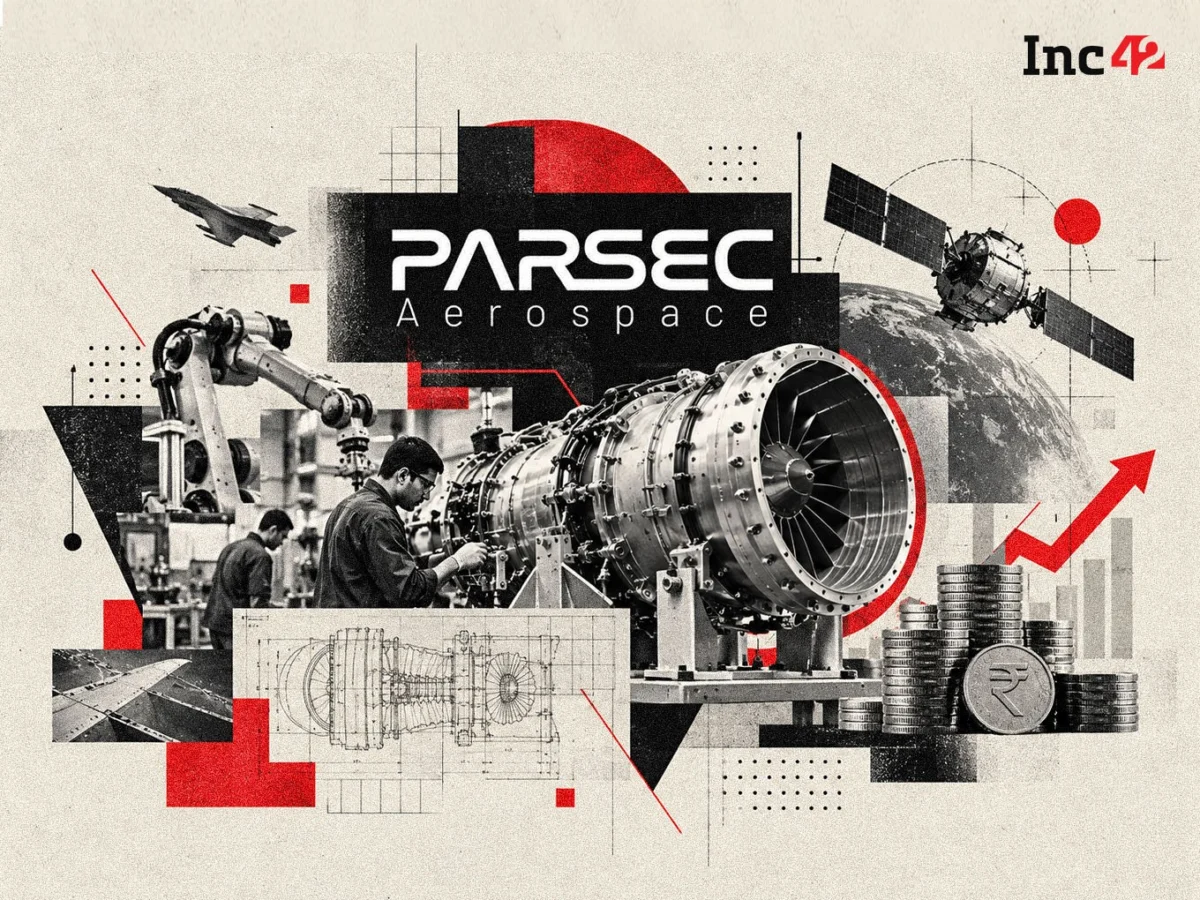
The Indian deeptech landscape, long considered the frontier of high-risk, high-reward venture capital, is witnessing a renewed surge of institutional interest. Bengaluru-based stealth-mode startup Parsec Aerospace is currently in advanced discussions to secure approximately $10 million (roughly ₹95 Cr) in a new funding round. According to industry sources, the round is expected to be led by the prominent venture capital firm Nexus Venture Partners, with significant follow-on participation from existing backers, including Lightspeed Venture Partners.
This potential capital injection, while substantial for an early-stage venture, highlights a growing trend among top-tier investors: a willingness to bet on high-complexity, capital-intensive aerospace engineering even before those technologies have reached commercial maturity.
The Genesis: A New Chapter in Indian Spacetech
Parsec Aerospace represents the next wave of indigenous innovation in India’s rapidly evolving space economy. Incorporated in September 2025, the company is the brainchild of Effy John, an engineer who previously cut his teeth at Pixxel, the renowned Indian spacetech firm specializing in hyperspectral imaging satellites and Earth-observation data.
John’s transition from a well-established player like Pixxel to the founder’s seat at Parsec underscores a broader trend of "founder-operator" talent moving into the deeper layers of aerospace infrastructure—specifically, propulsion and engine technology. While Parsec remains firmly in "stealth mode," the industry consensus is that the company is focused on the development of next-generation propulsion systems.
In the aerospace sector, propulsion remains the "holy grail" of engineering. Whether for orbital insertion, satellite maneuvering, or defense applications, the ability to design efficient, reliable, and scalable engines is the primary barrier to entry for any aerospace firm. By focusing on this niche, Parsec is positioning itself at the very heart of the aerospace value chain.
Chronology: From Incorporation to Capital Infusion
The timeline of Parsec Aerospace’s journey, though short, is characteristic of the accelerated pace of the current Indian deeptech market:
- September 2025: Parsec Aerospace is formally incorporated in Bengaluru. The company establishes its operational base in the city, tapping into India’s largest pool of aerospace engineering talent and proximity to ISRO-linked research clusters.
- Late 2025 – Early 2026: The company initiates its stealth operations, focusing on R&D for proprietary engine technologies. During this period, the startup secures initial backing from Lightspeed Venture Partners, signaling early institutional confidence in the founding team’s vision.
- Q3 – Q4 2026: As the company matures its initial prototypes, discussions for a larger Series A-type round begin. Nexus Venture Partners enters the fray as the lead negotiator, aiming to provide the necessary runway for Parsec to move from theoretical models to hardware testing.
- Current Status: Parsec is in the final stages of closing the $10 million round. The capital is expected to provide the startup with the resources needed to expand its laboratory capabilities, hire specialized propulsion engineers, and potentially initiate initial component testing phases.
The Strategic Logic: Why Deeptech?
The decision by Nexus Venture Partners and Lightspeed to back Parsec Aerospace—a company with no public product, no disclosed customer list, and a long road to commercialization—might appear counter-intuitive in a market that has recently prioritized profitability. However, the logic lies in the long-term strategic importance of "sovereign tech."
Deeptech, which encompasses aerospace, defense, robotics, and semiconductors, is increasingly being viewed by VCs as a fundamental hedge against global supply chain volatility.
Funding Trends in the Deeptech Sector
The data supports this shift. According to recent reports, Indian deeptech startups raised $290 million across 28 deals in Q3 2026 alone. This represents a staggering 2.8x increase in funding compared to the $105 million raised in the same quarter of the previous year.
While the number of deals has slightly moderated, the average ticket size has ballooned. This indicates that investors are moving away from "spray and pray" seed-stage investing and are instead concentrating capital into companies that demonstrate high technical defensibility. Parsec fits this mold perfectly.
Market Landscape: Peers and Competitors
Parsec is not operating in a vacuum. Its emergence coincides with a broader push by Indian startups to indigenize aerospace manufacturing.
- D-Propulse Aerospace: Earlier this year, D-Propulse raised ₹25 Cr from IAN Alpha Fund. Their mission—developing propulsion systems for defense and aerospace—is perhaps the closest direct parallel to Parsec’s operations.
- Aeron Systems: With a recent ₹45 Cr pre-Series B round, Aeron is scaling its inertial navigation and weather-monitoring systems, proving that the market for "enabling technology" in aerospace is ripe for growth.
- ThinkMetal: Proving that the hardware ecosystem is expanding beyond pure propulsion, ThinkMetal raised ₹27 Cr to build industrial printing systems. These systems are essential for manufacturing the complex, heat-resistant components that Parsec and its peers will eventually require.
Official Responses and Transparency
In the world of stealth-mode startups, silence is often a deliberate strategy to protect intellectual property and maintain a competitive advantage during the R&D phase.
When contacted for this report, representatives from both Parsec Aerospace and Nexus Venture Partners declined to comment on the funding round. This is standard protocol for high-stakes venture deals prior to a formal announcement. The lack of public information regarding Parsec’s engine architecture, target markets, or specific commercialization timelines remains a point of curiosity for industry analysts.
However, investors argue that in the aerospace sector, transparency is secondary to technical validation. Once the engines move from digital simulations to "hot fire" tests, the company’s valuation will likely shift from speculative to market-driven.
Implications: The Road Ahead
The investment into Parsec Aerospace has several significant implications for the Indian startup ecosystem:
1. Scaling the Capital Intensity
Aerospace is notoriously capital-intensive. Unlike software-as-a-service (SaaS) firms that can scale with minimal overhead, a startup like Parsec requires massive expenditure on R&D, specialized software, and advanced manufacturing machinery. The involvement of major VCs like Nexus and Lightspeed suggests that there is now a clearer pathway for these companies to raise the multi-million dollar "bridge" rounds needed before they can secure defense contracts or commercial space launch agreements.
2. Talent Migration
The shift of talent from established spacetech companies (like Pixxel) to new startups indicates a maturing ecosystem. It creates a "multiplier effect" where the knowledge acquired in one generation of startups is applied to build more sophisticated, next-generation infrastructure.
3. Geopolitical Alignment
With India’s focus on the Atmanirbhar Bharat (Self-Reliant India) initiative, particularly in the defense and space sectors, companies like Parsec are well-positioned to benefit from government-backed procurement programs in the future. The ability to produce indigenous aerospace engines is not just a commercial objective; it is a strategic national asset.
4. The Risk Factor
Despite the enthusiasm, the risks are undeniable. Aerospace engineering is unforgiving; technical failures can lead to the total loss of capital. Unlike an app that can be "pivoted," a failed engine design can effectively end a company. Investors are banking on the assumption that Parsec’s team, led by Effy John, has the technical rigor to navigate these hurdles.
Conclusion
Parsec Aerospace’s ongoing $10 million funding round serves as a bellwether for the Indian investment landscape. As the venture capital community continues to pivot toward the "hard" sciences, companies that solve fundamental engineering problems are finding themselves in the spotlight.
While the company remains shrouded in the secrecy of stealth mode, its trajectory is clear. By tackling the complex challenge of aerospace propulsion, Parsec is attempting to move from the periphery of the Indian space industry to its very core. Whether it succeeds in delivering an engine that can compete with global incumbents remains to be seen, but the confidence of its investors suggests that the era of Indian deeptech dominance may just be beginning.
As we look toward 2027 and beyond, all eyes will be on Bengaluru’s R&D labs to see if Parsec can turn its $10 million in capital into a breakthrough that defines the next decade of Indian aerospace.