







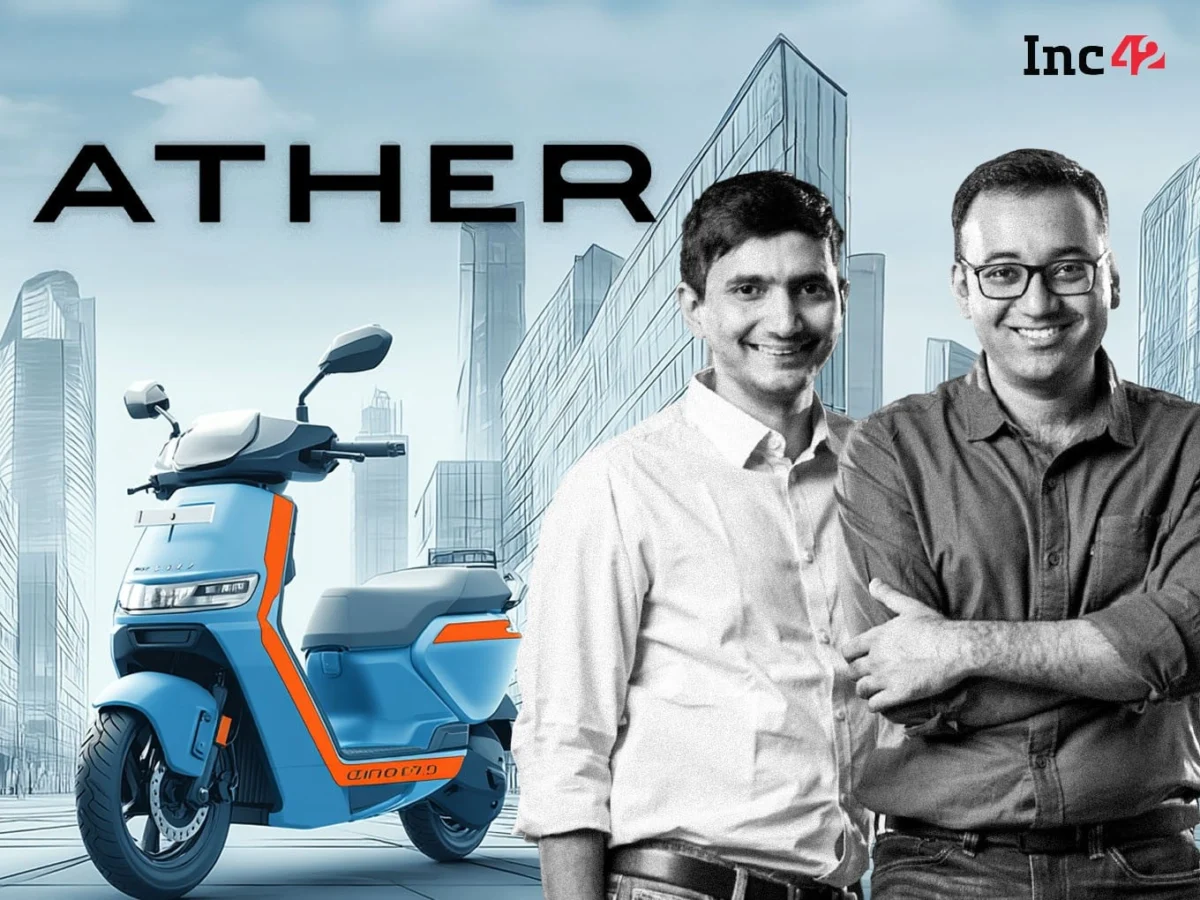
The Indian electric vehicle (EV) landscape witnessed a seismic shift this week as Ather Energy, the Bengaluru-based pioneer of high-performance electric two-wheelers, officially signaled its transition from a high-growth startup to a sustainable, profit-generating manufacturing powerhouse. Shares of Ather Energy soared by 8.1%, hitting an intraday high of ₹1,702 on the Bombay Stock Exchange (BSE), as investors reacted with overwhelming optimism to the company’s Q2 FY27 financial results and a bullish outlook from global financial institutions.
This market rally follows an already impressive 13.7% surge in the previous session, underscoring the investor community’s confidence in Ather’s ability to navigate the notoriously capital-intensive EV sector while maintaining aggressive market share growth.
The Catalyst: Why Brokerages are Bullish
The renewed investor enthusiasm is largely tethered to the confidence expressed by HSBC and Nomura. Both global brokerages maintained their "Buy" ratings and significantly revised their price targets upward, citing Ather’s superior operational efficiency and the successful market reception of the new "Konarc" scooter range.
HSBC has raised its price target to ₹1,800, up from ₹1,600, highlighting that Ather achieved an EBITDA breakeven point ahead of consensus expectations. Despite the lingering headwinds of commodity cost volatility, Ather’s ability to stabilize its margins has been lauded as a significant competitive advantage.
Nomura, meanwhile, has taken an even more optimistic stance, hiking its target price to ₹2,070 from ₹1,926. Nomura’s analysis points to an EBITDA margin (excluding other income) of 0.8%, which comfortably outperformed their estimates of -2.6% and the broader market consensus of -2.7%. Analysts noted that the "Konarc" launch has not only broadened Ather’s consumer base but has also provided much-needed visibility for future growth, effectively de-risking the company’s trajectory in the eyes of institutional investors.
Chronology: From Losses to Breakthrough
The journey to this milestone has been characterized by intense investment and strategic pivoting. For years, Ather, like many of its peers, prioritized aggressive expansion and research and development over bottom-line profitability. However, the Q2 FY27 results mark a definitive turning point.
- Year-on-Year Improvement: Ather reported a consolidated net profit of ₹1.3 Cr for Q2 FY27, a stark contrast to the ₹154.1 Cr loss recorded in the same quarter last year.
- Sequential Recovery: This follows a challenging Q1 FY27, where the company reported a net loss of ₹51.1 Cr. The rapid turnaround in just three months highlights the effectiveness of recent operational adjustments.
- Revenue Growth: Operating revenue jumped 62.9% year-on-year (YoY) and 20.3% quarter-on-quarter (QoQ), reaching ₹1,464.2 Cr.
- The EBITDA Milestone: Including other income, Ather achieved an EBITDA of ₹74.2 Cr, representing a margin of 4.9%. This is a massive improvement from the -9.6% margin reported in the corresponding quarter of the previous fiscal year.
Supporting Data: The Anatomy of Success
Ather’s financial turnaround is supported by a robust operational performance that paints a picture of a brand in high demand. During the quarter, customer engagement metrics saw an unprecedented uptick. Enquiries for Ather vehicles surged by 109% YoY, reaching the 10-lakh mark. More importantly, pre-orders doubled to 1.8 lakh, signaling that the demand for the company’s product line is currently outstripping its manufacturing footprint.
Total vehicle sales grew by 42% to 93,211 units. The introduction of the Konarc range, which sits at the sub-₹1 lakh price point, has been a masterstroke in capturing the mass-market segment, effectively diversifying the company’s portfolio to 15 variants across three distinct product lines.
However, a granular look at the balance sheet reveals that while profitability has been achieved, it remains thin. Total income reached ₹1,527 Cr, yet expenses hovered at ₹1,525.7 Cr. This indicates that "other income" played a crucial role in pushing the company into the black. As CEO Tarun Mehta noted, the company is currently leveraging temporary measures—such as product mix optimization and reduced incentive structures—to manage margins.
Official Responses: Strategy Over Short-Term Gains
In a candid earnings call with investors and analysts, Ather Energy CEO Tarun Mehta offered a nuanced view of the company’s current financial standing. While acknowledging the importance of the maiden profit, Mehta emphasized that Ather would prioritize long-term capacity expansion and market share acquisition over short-term net profitability.
"We are currently in a high-growth phase," Mehta remarked, cautioning stakeholders that some of the current margin gains are a result of strategic product adjustments that may not be sustainable if commodity prices—particularly for battery materials—remain elevated for an extended period.
The focus, therefore, remains on scaling. By opting to reinvest profits into infrastructure and R&D, Ather is signaling that it intends to lead the Indian EV transition rather than simply surviving it. The leadership team’s transparency regarding these risks has been well-received by the market, as it suggests a disciplined, rather than reckless, approach to expansion.
Future Implications: Scaling for the Next Wave
Ather has outlined a comprehensive ₹122 Cr investment plan designed to ensure that supply chain constraints do not impede their growth momentum. This capital expenditure is split across two critical hubs:
1. The Hosur Expansion
Ather plans to invest ₹58 Cr (inclusive of taxes) to augment its Hosur facility in Tamil Nadu. This expansion will add 75,000 units to its annual capacity by December 2026. Furthermore, ₹53 Cr has been earmarked specifically for a new battery production line, which is slated for completion by Q3 FY28. This move is strategic; by insourcing battery production, Ather aims to insulate itself from supply chain shocks and capture a greater share of the value chain.
2. Factory 3.0
The company’s flagship "Factory 3.0" in Chhatrapati Sambhajinagar, Maharashtra, is set to receive an additional ₹64 Cr investment to bolster capacity by 1.5 lakh units annually, on top of the already planned 5 lakh units. This facility is expected to be fully operational by Q2 FY28, providing the necessary scale to meet the soaring demand from the western and northern Indian markets.
Financing the Future
Ather is in a strong liquidity position to fund these ambitious projects. Through a successful qualified institutions placement (QIP) that raised ₹1,300 Cr, supplemented by a ₹200 Cr preferential equity allotment, the company has the dry powder required to execute its vision.
Conclusion: The Path Ahead
Ather Energy’s Q2 FY27 performance is more than just a headline-grabbing profit figure; it is a validation of the company’s long-term business model. By successfully navigating the "trough of disillusionment" that often claims EV startups, Ather has proven it can balance the demands of growth with the rigors of financial discipline.
As the company prepares to scale its production capacity by over 2 lakh units, the real test will be maintaining this margin efficiency in a competitive market. However, with strong institutional backing, a clear roadmap for localized manufacturing, and a product portfolio that is resonating with a rapidly digitizing Indian consumer, Ather Energy appears well-positioned to remain the frontrunner in the electrification of India’s roads. Investors will be watching closely to see if the company can sustain this momentum as it moves into the next phase of its manufacturing evolution.