







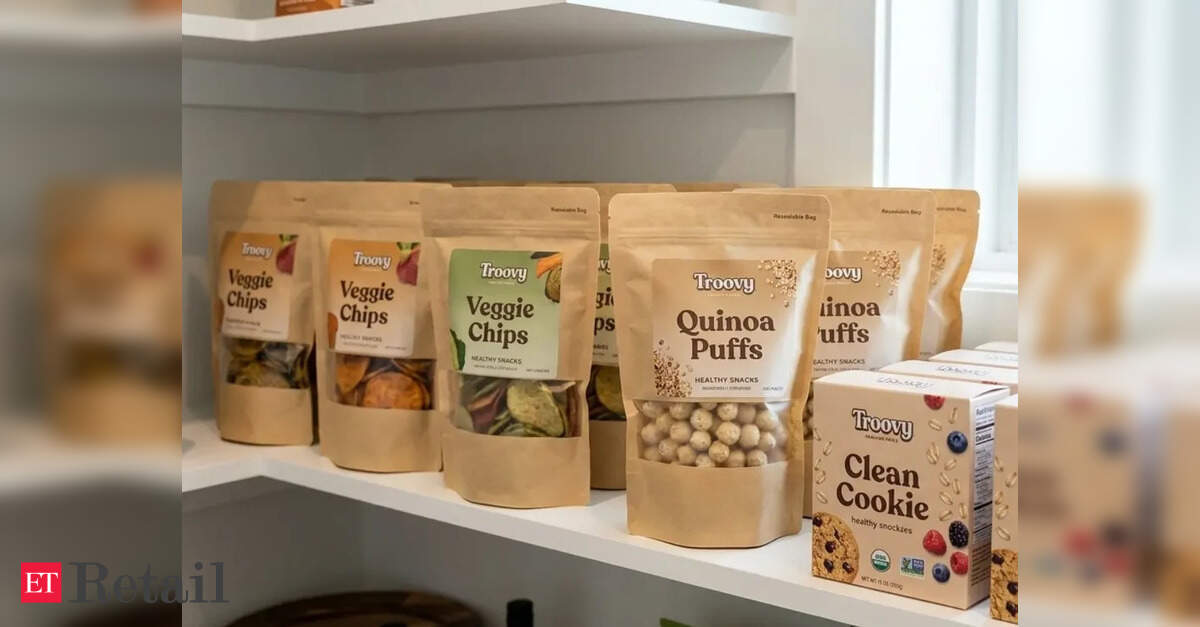
In a significant move that underscores the tectonic shifts within India’s fast-moving consumer goods (FMCG) sector, clean-label, digital-first snacking brand Troovy has successfully closed a fresh funding round of Rs 100 crore. The round, which effectively doubles the capital raised by the company earlier this year, was spearheaded by prominent venture capital firms Fireside Ventures and Sharrp Ventures.
This infusion of capital comes at a pivotal juncture for the Indian food industry, which is currently grappling with stringent regulatory changes regarding nutritional transparency and a rapidly evolving consumer base that is increasingly wary of processed additives.
The Growth Trajectory: A Chronology of Success
Founded in 2021 by entrepreneurs Aditya Mukherjee and Mansi Baranwal, Troovy was born out of a desire to bridge the gap between convenience and nutrition. In a market historically dominated by legacy giants and high-sugar snacks, Troovy positioned itself as a "clean-label" alternative, emphasizing minimal processing and transparent ingredient sourcing.
Key Milestones:
- 2021: Troovy is launched with a focus on healthy, convenient snacking for the modern Indian family.
- January 2026: The company secures a $5 million (approx. Rs 45.8 crore) Series A funding round, backed by Fireside Ventures and Sharrp Ventures, with participation from Spring Marketing Capital and Veltis Capital.
- October 2026: Troovy formalizes a secondary, larger funding round of Rs 100 crore, signaling strong investor confidence and rapid market penetration.
While the company has opted not to disclose its official post-money valuation, industry estimates peg the brand at a valuation of approximately Rs 400 crore. This rapid appreciation in value, occurring within less than a year of their last raise, reflects the brand’s aggressive growth metrics and its ability to scale in a highly competitive category.
Competitive Landscape: Navigating the "Healthy" Space
Troovy operates in one of the most vibrant yet crowded segments of the Indian retail market. It finds itself competing against well-funded and established players such as Slurrp Farm, Farmley, and phab.
The battle for the health-conscious consumer is no longer just about taste; it is about trust. While legacy players are struggling to reformulate products to meet modern health standards, digital-first brands like Troovy have the advantage of agility. By leveraging quick commerce platforms and direct-to-consumer (D2C) models, these companies are bypassing traditional supply chain bottlenecks, reaching the discerning, urban, health-conscious demographic with surgical precision.
Market Dynamics: The Rising Tide of Healthy Snacking
The financial backing of Troovy is not an isolated incident; it is a symptom of a broader macroeconomic trend. According to an IMARC report, the domestic clean and healthy snacking market was valued at US $3.28 billion in 2026. The trajectory remains bullish, with the market projected to reach US $4.77 billion by 2034, growing at a Compound Annual Growth Rate (CAGR) of 4.80%.
Several drivers are fueling this expansion:
- Urbanization and Time Poverty: The demand for "on-the-go" nutrition is skyrocketing as the professional workforce grows.
- Health Consciousness: Post-pandemic, consumers are shifting away from empty calories toward high-protein, low-calorie, and natural snack alternatives.
- Ingredient Awareness: There is a growing intolerance for artificial preservatives, synthetic colors, and hidden sugars, leading consumers to scrutinize the back of the pack before making a purchase.
Regulatory Headwinds: The FOPL Mandate
Perhaps the most significant external driver for Troovy’s business model is the impending implementation of Front-of-Pack Labelling (FOPL). The Food Safety and Standards Authority of India (FSSAI) has proposed a single-phase rollout of FOPL, currently being deliberated before the Supreme Court.
Under the proposed regulations, manufacturers of packaged foods will be required to display "red hexagonal" warning labels on products high in salt, sugar, or saturated fats. This move is designed to empower consumers to make informed dietary choices at a glance.
The Strategic Advantage for Troovy
For a brand like Troovy, which has built its identity on the "clean-label" promise, this regulatory shift is less of a burden and more of a catalyst. As Mansi Baranwal, co-founder of Troovy, noted:
"There is a growing segment that is very conscious about ingredients for whom front-pack-labels will really matter. We’re seeing that in our growth numbers as well."
While major food conglomerates have pushed back against FOPL for nearly a decade, citing potential impact on sales, digital-first brands that already adhere to strict nutritional standards are positioned to gain market share. When the "red labels" appear on traditional snacks, the contrast between those products and Troovy’s clean-label offerings will become stark, effectively providing free "negative marketing" for competitors while validating Troovy’s value proposition.
Strategic Roadmap: Where the Money Goes
With the fresh capital, Troovy is set to embark on a multi-pronged growth strategy. Baranwal highlighted that the funds are earmarked for three primary pillars:

1. Research and Development (R&D)
To maintain its edge, the company plans to double down on food science. The objective is to innovate with ingredients that do not sacrifice flavor for health—a common hurdle in the healthy snacking category.
2. Manufacturing Capacity
Scaling production is essential to meet the demand generated by the rapid adoption of quick commerce. The company intends to upgrade its manufacturing facilities to ensure consistent quality control and cost-efficiency as it scales volume.
3. Distribution Expansion
Troovy is moving beyond its digital roots. While quick commerce (platforms like Blinkit, Zepto, and Swiggy Instamart) remains a core growth engine, the brand is planning a robust push into offline retail. Establishing a physical presence in modern trade outlets and premium supermarkets will be crucial to capturing the "discovery-based" buying behavior of consumers.
Implications for the Future of Retail
The success of this funding round signals a permanent shift in how food companies are valued. Investors are moving away from brands that rely solely on marketing spend and distribution depth, favoring those that possess "nutritional integrity."
For industry professionals, the Troovy story offers three critical takeaways:
- Transparency is the new marketing: In an era of social media-driven health awareness, brands that hide behind complex ingredient lists will face severe reputational and regulatory risks.
- Regulatory Alignment: Proactive alignment with government health initiatives (like FOPL) can serve as a competitive moat rather than a hurdle.
- The Quick Commerce Advantage: The ability to move products from warehouse to consumer in under 15 minutes is not just a logistics feat; it is a fundamental shift in the snacking category, which is inherently driven by impulse.
As the Indian consumer becomes more sophisticated, the snacking category is undergoing a "clean-up" phase. Brands like Troovy, backed by institutional investors, are leading the charge. Whether they can maintain this momentum in a market where deep-pocketed FMCG giants are also beginning to pivot toward healthier alternatives remains to be seen. However, for now, Troovy’s rapid rise from a 2021 startup to a Rs 400 crore-valued player is a testament to the fact that when health meets convenience, the market responds with substantial capital.
As the company scales its manufacturing and distribution, it will serve as a bellwether for the health-snacking segment. If they can successfully navigate the transition from a niche digital brand to a mass-market household name, Troovy may well define the standard for the next generation of Indian food brands.