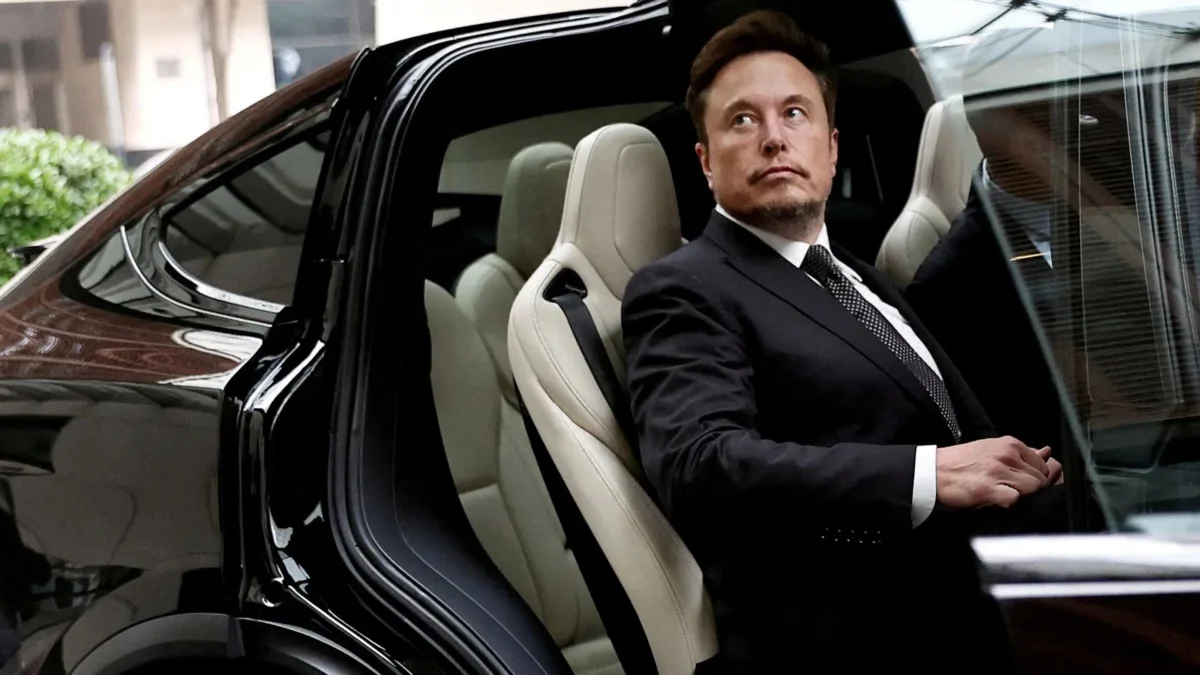
NEW DELHI — Tech billionaire and SpaceX CEO Elon Musk has dramatically escalated his public campaign against India’s telecommunications regulatory framework, launching a scathing, direct attack on billionaire industrialist Mukesh Ambani. Musk accused the Reliance Industries chairman of maintaining a "monopolistic exploitation" of the Indian market and deliberately blocking the commercial rollout of Starlink, SpaceX’s satellite-based internet service.
The fiery online exchange marks a severe escalation in the ongoing high-stakes corporate and geopolitical battle over India’s burgeoning multi-billion-dollar satellite communications (satcom) sector. As global technology giants eye the world’s most populous nation as the ultimate frontier for digital expansion, the friction between domestic heavyweights and foreign market disruptors has burst into open regulatory and public warfare.
Main Facts
The ongoing confrontation centers on the protracted delay in securing final operational approvals for Starlink to launch commercial services in India. Despite securing several statutory clearances over the past few years—including a Global Mobile Personal Communication by Satellite (GMPCS) license and authorizations from the Indian National Space Promotion and Authorisation Centre (IN-SPACe)—Starlink remains sidelined.
The core elements of the current standoff include:
- The Direct Accusation: Musk took to social media platform X (formerly Twitter) to sarcastically address Mukesh Ambani as the "real boss of India," accusing him of leveraging his influence to delay Starlink’s entry to protect domestic market share.
- The Humanitarian and Economic Pitch: Musk framed the delay as a humanitarian and developmental crisis, arguing that millions of children in remote, unserved regions of India are being denied educational opportunities and small businesses are locked out of global markets due to a lack of high-speed internet access.
- The Regulatory Reality: The Indian government, specifically the Ministry of Communications and the Ministry of Home Affairs, has firmly pushed back against Musk’s allegations. Officials stress that Starlink, alongside rival operators, is currently undergoing mandatory, non-discriminatory security clearances that apply equally to all entities in the sector.
- Competitive Landscape: Starlink is locked in a fierce race with domestic and international heavyweights, including Bharti-backed Eutelsat OneWeb, Reliance’s Jio Satellite Communications Ltd., and Amazon’s Project Kuiper, all vying for dominance in India’s low-earth orbit (LEO) satellite internet market.
Chronology of Events
The path toward satellite internet in India has been a long and winding road, marked by regulatory hurdles, policy pivots, and shifting geopolitical alignments.
2021: The Initial Entry and Early Friction
Starlink’s journey in India began with high ambitions when the company incorporated its local subsidiary, Starlink Satellite Communications Private Limited, in late 2021. The company even began accepting pre-orders from Indian consumers without possessing the requisite government licenses. This move drew a sharp reprimand from the Department of Telecommunications (DoT), which advised the public not to subscribe to the unapproved service and forced Starlink to refund early deposits.
2022–2023: The Regulatory Slog
For the next three years, Starlink navigated India’s complex bureaucratic landscape, attempting to secure the foundational permits required to operate telecommunications services. The process required extensive coordination across multiple ministries and regulatory bodies, from the Telecom Regulatory Authority of India (TRAI) to the DoT.
July 2025: IN-SPACe Authorisation
A major milestone was achieved when Starlink secured authorization from IN-SPACe for its satellite constellation. Industry insiders viewed this as the penultimate hurdle cleared, paving the way for the company to finalize its operational architecture within the country.
October 2026: The Public Meltdown and Regulatory Standoff
The tension boiled over in October 2026. Musk took to X to accuse "certain oligarchs" of orchestrating a "crime against the people of India" by stalling Starlink’s entry. This was followed by his viral "Prime Minister Ambani" post, which triggered widespread international media coverage and a swift, defensive response from the Indian establishment.
Official Responses and Government Stance
In the wake of Musk’s incendiary remarks, the Indian government moved quickly to defend the integrity and transparency of its regulatory framework.
In a formal statement released by the Ministry of Communications, New Delhi dismissed Musk’s claims as "baseless and misconceived." The ministry underscored that the national framework for telecommunication services—including cutting-edge satellite communications—is strictly fair, transparent, and non-discriminatory.
"The Government has put in place a fair and non-discriminatory authorisation framework for all telecommunication services, including satellite communication services... Under the terms and conditions of licence, every such licensee is required to demonstrate compliance with security conditions... aimed at ensuring that services provided meet various security requirements to ensure safety of all users and their data."
— Ministry of Communications, Government of India
The government clarified that security assessments are currently underway concurrently for all three major licensees that have secured foundational approvals. Officials emphasized that once these rigorous national security audits are completed, companies will proceed to the next regulatory phase: spectrum assignment.
Industry leaders within India have similarly rejected Musk’s characterization of the market. Sunil Bharti Mittal, chairman of Bharti Airtel—whose joint venture Eutelsat OneWeb is also awaiting final operational clearances—publicly dismissed Musk’s complaints. Mittal pointed out that domestic and allied foreign players are subject to the exact same regulatory timelines and security vetting processes, noting that OneWeb is similarly positioned and awaiting final greenlights.
Supporting Data and Market Dynamics
To fully understand the gravity of Musk’s outburst, one must examine the massive economic stakes involved in India’s digital transformation.
- The Addressable Market: India is home to over 1.4 billion people. While urban centers boast robust 4G and expanding 5G networks, vast swathes of rural, mountainous, and forested terrain remain entirely devoid of reliable terrestrial broadband infrastructure.
- The Competitors:
- Starlink (SpaceX): Relies on a massive, rapidly expanding constellation of Low Earth Orbit (LEO) satellites designed to deliver high-speed, low-latency internet directly to user terminals.
- Jio Satellite Communications Ltd.: A wholly owned subsidiary of Reliance Jio Platforms. Reliance is reportedly investing heavily in developing a sovereign LEO satellite constellation—projected to comprise 1,600 to 1,650 satellites at an estimated cost of $10 billion to $15 billion—to secure domestic infrastructural independence.
- Eutelsat OneWeb: Backed by India’s Bharti Enterprises alongside the UK government and other international partners, OneWeb holds a powerful early-mover advantage in securing enterprise-grade satcom permissions in India.
- Amazon Kuiper: Jeff Bezos’s satellite venture is also moving through the preliminary phases of regulatory alignment to enter the Indian market.
Behind the scenes, government hesitation is deeply rooted in national security. Regulators and intelligence agencies harbor acute anxieties regarding foreign-owned satellite operators potentially bypassing terrestrial Indian gateway earth stations (GES). Allowing data traffic to flow outside domestic borders without localized routing and interception capabilities represents a non-negotiable security risk for New Delhi, particularly given heightened regional tensions and data sovereignty mandates.
Implications for the Future of Indian Telecommunications
Musk’s public confrontation with India’s corporate establishment carries profound implications for foreign direct investment, regulatory independence, and the future of digital connectivity in the Global South.
1. The Clash of Titans: Sovereign Control vs. Silicon Valley Agility
India has consistently demonstrated that it will not bend its national security protocols or regulatory timelines for foreign tech billionaires, regardless of their global market valuation or technological clout. By framing the delay as monopolistic sabotage, Musk risks alienating regulators who hold the ultimate keys to the world’s most lucrative untapped internet market. Conversely, the episode shines a glaring spotlight on the immense influence wielded by domestic conglomerates like Reliance Industries, intensifying debates over market concentration and fair competition in India.
2. The LEO Satcom Race Shifts to Geopolitics
The satcom battle is no longer merely a commercial race for subscribers; it has evolved into a geopolitical proxy war. With Reliance building out its own multi-billion-dollar sovereign satellite network to rival foreign constellations, the domestic industry is racing to ensure that local capital and infrastructure dictate the terms of India’s next-generation digital economy.
3. Impact on Rural Connectivity
Amidst the corporate crossfire and executive posturing remains the core issue highlighted by Musk: the millions of unserved citizens in remote villages. While the political and corporate fallout of Musk’s tweets will likely reverberate through corporate boardrooms in Mumbai and Washington for months to come, the ultimate resolution rests on how swiftly New Delhi can balance its rigorous national security imperatives with the urgent, growing demand for universal digital inclusion.