










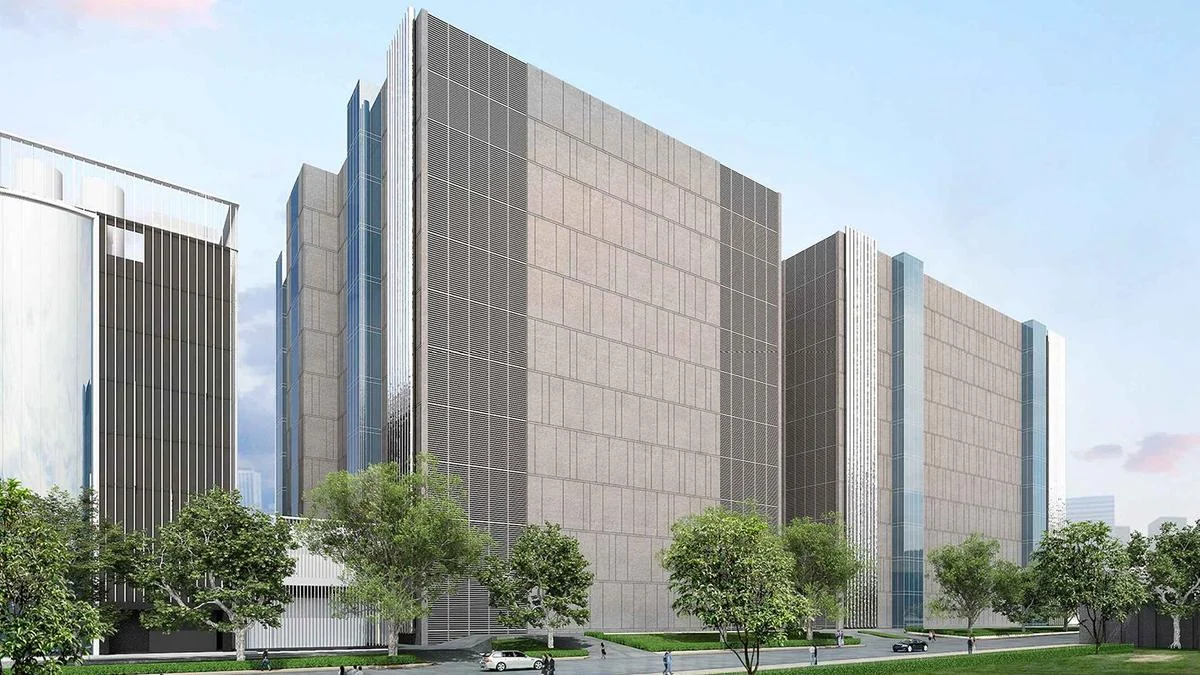
PATNA, INDIA — In a landmark development for eastern India’s digital and technological landscape, CtrlS Datacenters officially inaugurated a state-of-the-art, ₹400-crore data centre in Patna on Tuesday. The high-profile launch was marked by the presence of Bihar’s Deputy Chief Minister, Samrat Choudhary, alongside other senior government and corporate dignitaries.
Going beyond the immediate launch of the Patna facility, the company also signed a significant Letter of Intent (LoI) with the Government of Bihar. Under this agreement, CtrlS Datacenters has committed a massive ₹10,000-crore investment to establish a 150-megawatt (MW) hyperscale Artificial Intelligence (AI) factory in Bodh Gaya.
This dual announcement represents one of the most substantial private-sector digital infrastructure investments in Bihar’s modern history. It signals a strategic shift away from traditional industrial hubs toward Tier-2 and Tier-3 cities, driven by an exponential surge in data consumption, government digitization initiatives, and the rapid rise of enterprise AI adoption across the country.
Main Facts
The latest expansion by CtrlS Datacenters introduces robust, enterprise-grade digital infrastructure directly into the heart of Bihar, fundamentally altering the technological capabilities of eastern India.
- The Patna Facility: Spanning a strategic greenfield footprint in the Patliputra Industrial Area, the newly inaugurated data centre represents an investment of ₹400 crore. In its initial phase, the facility offers a robust IT load capacity of 12 MW. Crucially, the infrastructure is engineered with modular scalability in mind, allowing CtrlS to rapidly expand capacity as local and regional demand scales upward.
- The Bodh Gaya AI Factory: Cementing a long-term vision for the region, CtrlS has signed an LoI with the state government to channel ₹10,000 crore into a massive 150 MW hyperscale AI factory in Bodh Gaya. This facility is slated to serve as a critical computing engine for next-generation AI workloads, machine learning models, and deep-tech innovations.
- Strategic Utility: Designed to cater to a diverse clientele, the Patna facility will deliver cloud-ready infrastructure to regional enterprises, government departments, global hyperscalers, and expanding technology businesses.
- Engineering and Security: The greenfield facility boasts cutting-edge architectural integrity, engineered to withstand severe natural disasters. It features military-grade physical and digital security protocols, alongside advanced energy-efficient operations to minimize its carbon footprint.
Chronology
The unfolding of CtrlS Datacenters’ strategic entry into Bihar is the result of meticulous planning, government alignment, and long-term capability building.
2007: Foundation and Early Growth
CtrlS Datacenters commenced operations in India with a vision to build world-class, fault-tolerant data infrastructure. Over the subsequent decade and a half, the company carved out a reputation as a pioneer in green data centre operations, scaling its presence across major metropolitan hubs.
2023–2025: Expanding into Tier-2 and Tier-3 Markets
Recognizing the saturation of tier-1 markets like Mumbai, Chennai, and Bengaluru, CtrlS formulated a strategic roadmap to penetrate India’s burgeoning tier-2 and tier-3 cities. The company identified eastern India—and Bihar in particular—as an untapped frontier with immense potential for digital transformation, low-latency connectivity, and localized cloud hosting. Discussions with the Bihar government regarding policy frameworks, land acquisition, and power availability gathered momentum during this period.
Early 2026: Construction and Completion of the Patna Facility
Civil construction, mechanical and electrical (M&E) installations, and rigorous testing of the Patliputra Industrial Area facility in Patna were finalized. The project was executed to meet global tier-4 standards, ensuring absolute uptime and reliability for enterprise and government workloads.
Tuesday, October 13, 2026: Official Inauguration and LoI Signing
In a high-profile ceremony attended by state leadership, the ₹400-crore Patna data centre was officially thrown open to the public and corporate sector. Simultaneously, the formal signing of the ₹10,000-crore LoI for the Bodh Gaya AI factory took place, sealing a transformative public-private partnership for the state of Bihar.
Supporting Data
To fully contextualize CtrlS Datacenters’ latest investments, it is essential to examine the company’s broader operational footprint, its aggressive future targets, and the macro-trends governing India’s data centre economy.
Corporate Footprint and National Ambitions
- Current Operations: CtrlS currently operates a formidable portfolio of 19 state-of-the-art data centres spread across nine major markets in India.
- Capacity Targets: The company has set an ambitious target to build over 4.4 gigawatts (GW) of cumulative data centre capacity by 2030, positioning itself at the forefront of India’s digital infrastructure boom.
- Edge Strategy: In addition to hyperscale facilities, CtrlS is rolling out more than 20 edge data centres across tier-2 and tier-3 cities nationwide over the coming years. This decentralized network is designed to bring computing power and content delivery networks (CDNs) physically closer to consumers, drastically reducing latency for real-time applications such as 5G, IoT, and autonomous systems.
Macro-Economic Drivers in Bihar
- Rising Data Consumption: Driven by affordable mobile data, extensive rural electrification, and government-backed digital literacy programs, data consumption in eastern India has skyrocketed by over 300% in the last four years.
- Energy Infrastructure: The availability of stable, scalable power supplies in designated industrial zones has made ambitious projects like the 150 MW Bodh Gaya AI factory technically feasible. AI workloads require immense electricity for compute and cooling; meeting these demands sustainably is a core pillar of CtrlS’s engineering philosophy.
Official Responses
The convergence of private enterprise ambition and state-level policy support drew enthusiastic remarks from corporate leadership and government representatives alike.
Sridhar Pinnapureddy, Founder and CEO, CtrlS Datacenters
Articulating the company’s vision for the region, Mr. Pinnapureddy emphasized the immense untapped potential of Bihar’s economy:

"Together with our ecosystem partners, we are bringing significant investments into Bihar while creating new employment opportunities and contributing to the region’s economic growth. The strong market potential and growing demand for digital infrastructure have reinforced our confidence in Bihar."
He further underscored that the deployment of advanced hyperscale and AI infrastructure is no longer confined to coastal tech capitals:
"Data is the new oil, and compute is the refinery. By establishing our presence in Patna and laying the groundwork for a massive AI factory in Bodh Gaya, we are ensuring that businesses, academic institutions, and government bodies in eastern India have direct, low-latency access to the world-class digital infrastructure they need to thrive in the artificial intelligence era."
Bihar State Government Perspective
Speaking at the inauguration, Deputy Chief Minister Samrat Choudhary lauded the investment as a watershed moment for the state’s industrial climate. Government officials stressed that the arrival of a premier data centre operator like CtrlS validates Bihar’s improving ease-of-doing-business metrics, robust law-and-order environment, and proactive investor-friendly policies.
The state administration has pledged full administrative support, streamlined single-window clearances, and preferential power tariffs to facilitate the rapid execution of the Bodh Gaya AI factory project.
Implications
The establishment of the Patna data centre and the planned Bodh Gaya AI factory carry far-reaching implications for Bihar, the technology sector, and the broader Indian economy.
1. Catalyzing Regional Economic Growth and High-Value Job Creation
Historically, Bihar has faced challenges with industrial diversification, often exporting its skilled youth to metropolitan tech hubs across India. The introduction of advanced digital infrastructure alters this dynamic.
- Direct and Indirect Employment: The construction, maintenance, and operational management of the Patna facility and the upcoming Bodh Gaya AI factory will generate thousands of direct and indirect jobs.
- Specialized Tech Roles: These opportunities extend beyond blue-collar construction roles to high-value white-collar positions in network engineering, cloud architecture, cybersecurity, and artificial intelligence research.
2. Democratizing Access to Advanced AI and Cloud Computing
For years, regional enterprises, local startups, and academic institutions in eastern India faced prohibitive latency and high networking costs when routing their data through servers located in Mumbai, Chennai, or Singapore.
- Reduced Latency: With local compute nodes established in Patna, local businesses can now process data in real-time.
- Empowering Startups: Regional tech startups can build and scale applications—such as agritech platforms, vernacular AI models, and e-commerce solutions—without worrying about infrastructure bottlenecks.
3. Strengthening Digital Governance and Public Sector Efficiency
State government departments in Bihar handle massive volumes of citizen data, land records, healthcare registries, and financial transactions.
- Data Localization & Security: Housing these critical datasets within a military-grade, disaster-resilient local facility enhances data sovereignty and shields public infrastructure from external cyber threats.
- E-Governance: Faster processing speeds will supercharge state e-governance initiatives, ensuring seamless service delivery to citizens across rural and urban districts alike.
4. Setting a Benchmark for Green and Resilient Infrastructure
As global climate concerns take center stage, the environmental impact of data centres—particularly their heavy energy and water consumption—has come under scrutiny.
- Sustainability: CtrlS’s reputation for building greenfield, energy-efficient facilities means that Bihar’s new digital backbone will leverage advanced cooling technologies, renewable energy integration, and optimized Power Usage Effectiveness (PUE) ratios.
- Disaster Resilience: Engineered to withstand natural calamities like earthquakes and floods, the Patna facility ensures uninterrupted business continuity, cementing Bihar as a safe harbor for mission-critical enterprise data.
Conclusion
CtrlS Datacenters’ ₹400-crore launch in Patna and its ambitious ₹10,000-crore commitment to Bodh Gaya mark the dawn of a new technological era for Bihar. By bridging the digital divide between India’s traditional tech metros and its emerging heartlands, this initiative lays a rock-solid foundation for a digitally empowered, AI-ready eastern India.



