










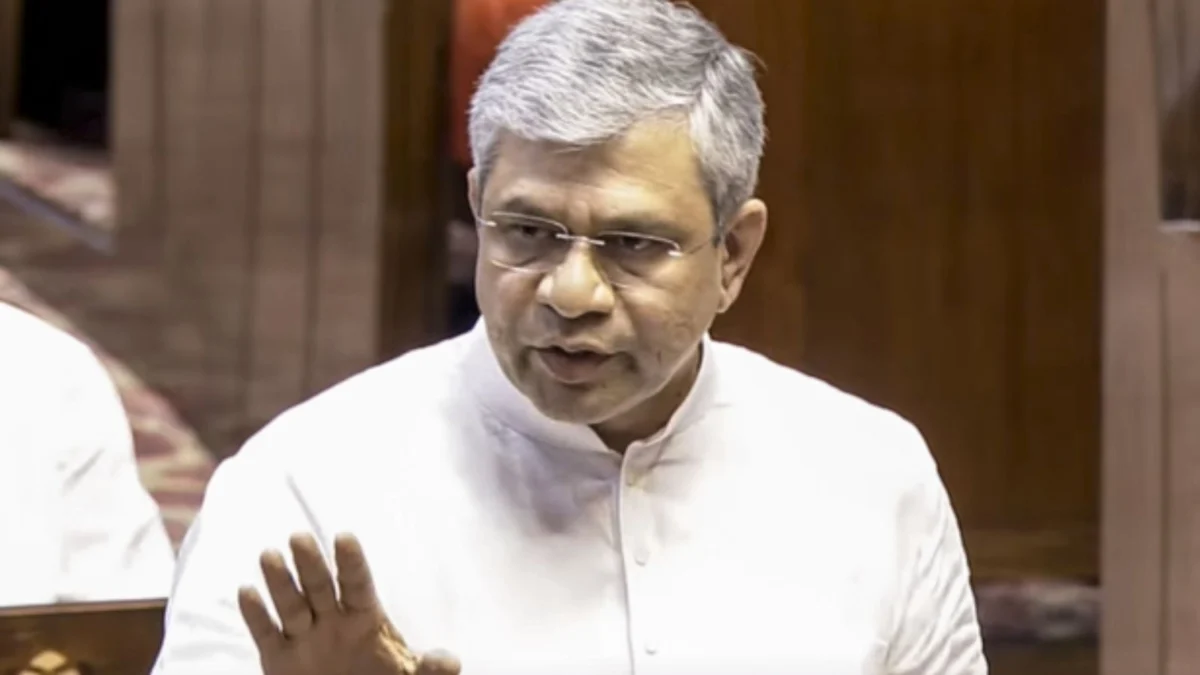
New Delhi: In a major policy shift signaling a departure from its earlier reliance on existing legal frameworks, the Indian government is set to release a comprehensive consultation paper on artificial intelligence (AI) within the month. Union Minister for Electronics and Information Technology (MeitY) Ashwini Vaishnaw announced the upcoming regulatory roadmap, emphasizing that the rapid evolution of generative and autonomous technologies has necessitated formal state intervention to protect citizens, ensure inclusivity, and place accountability squarely on the technology industry.
The upcoming draft framework marks a critical juncture in India’s digital governance trajectory. While the government previously maintained that existing statutes—such as the Information Technology (IT) Act and the Digital Personal Data Protection (DPDP) Act—were sufficient to manage technological fallout, mounting apprehensions over sophisticated deepfakes, cybersecurity vulnerabilities, and the rise of autonomous "agentic" AI systems have triggered a strategic rethink.
Main Facts
- Consultation Timeline: The Ministry of Electronics and Information Technology (MeitY) will release the official draft consultation paper on AI regulation within a month, inviting public comments, industry feedback, and stakeholder submissions.
- Core Focus Areas: The proposed framework prioritizes AI safety, human-centric design, skilling, digital inclusivity, the containment of deceptive synthetic media (deepfakes), and the psychological impacts of unregulated AI usage.
- Industry Accountability: Minister Ashwini Vaishnaw stressed that the "bulk of the responsibility" must rest on technology companies and industry stakeholders to mitigate the harms associated with their platforms.
- Paradigm Shift: The initiative represents a definitive move away from piecemeal, reactive rules toward a unified, expansive legislative and regulatory architecture tailored specifically to the unique challenges of artificial intelligence.
- Targeting Advanced Threats: The framework aims to directly address complex technical frontiers, including the autonomy levels of agentic AI, data reuse rights, platform liability, and the conceptual inadequacy of traditional "safe harbour" immunities for generative models.
Chronology: The Evolution of India’s AI Policy Stance
The path leading to the upcoming comprehensive regulatory framework has evolved rapidly over recent years, characterized by a transition from hands-off encouragement to targeted interventions, and finally, toward sweeping structural oversight.
- Early Phase (2023–Early 2024): Following the global explosion of generative AI tools like OpenAI’s ChatGPT, Indian policymakers initially adopted a cautious, pro-innovation stance. The official government position was that existing laws, including copyright laws and provisions under the IT Act dealing with cybercrime and impersonation, were adequate to tackle AI-related infractions without stifling a nascent startup ecosystem.
- April 2025: Facing an escalating wave of manipulated media, the government enacted its first major piecemeal regulation. It proposed strict mandates requiring major social media intermediaries—including YouTube, Instagram, and X (formerly Twitter)—to "continuously" display explicit labels on all AI-generated content to prevent public deception.
- July 2025: Investigative reporting revealed that MeitY had begun actively exploring advanced regulatory mechanisms. These included consent-based frameworks for synthetic content, hard curbs on the autonomy limits of agentic AI, and regulatory sandboxes designed to test high-risk AI deployments safely.
- October 2026: IT Minister Ashwini Vaishnaw officially confirmed that the Centre is formalizing its approach. By announcing a public consultation paper slated for release within a month, the government formalized its transition from fragmented rules to a cohesive, dedicated national AI law.
Supporting Data and Technical Challenges
The urgency driving the government’s new regulatory push is underscored by deep technical complexities that separate AI platforms from traditional consumer internet services. Policymakers are grappling with several unprecedented challenges:
1. The Deepfake Crisis
The quality of generative video and audio models has advanced to a degree where human visual and auditory verification is frequently compromised. Malicious actors utilize these tools to generate hyper-realistic fraudulent media, political disinformation, and financial scams. The psychological impact of continuous exposure to deceptive media is an emerging public health concern, with global precedents highlighting severe mental health consequences for victims of targeted harassment and deepfake abuse.
2. The Rise of Agentic AI
Traditional AI models respond strictly to direct prompts. In contrast, agentic AI systems possess a high degree of autonomy. Given a high-level objective, these systems independently plan multi-step execution chains, leverage external digital tools, query databases, and dynamically adjust their strategies in real time with minimal or no human intervention. The government is examining where to draw legal boundaries regarding how much autonomy these agents should wield and whether they should be permitted to persistently retain and reuse sensitive user data.
3. The Collapse of Traditional "Safe Harbour"
In the consumer internet era, platforms benefited from safe harbour immunity—a legal doctrine protecting hosts of user-generated content from liability for individual posts, operating on the premise that platforms cannot realistically preview every user upload.
Applying this logic to generative AI, however, is deeply problematic. AI models are trained on vast corpora of internet data and synthesize responses dynamically through complex pattern-matching and probabilistic generation. Because these models editorialize outputs and blend information from multiple sources without direct attribution, tracing problematic, defamatory, or copyrighted output back to a single human user or origin point is exceptionally difficult. This creates a regulatory vacuum regarding who bears ultimate legal liability for AI-generated falsehoods.
Official Responses and Stakeholder Perspectives
The impending consultation has elicited sharp reactions from industry leaders, legal experts, and policymakers alike.
- The Government Perspective: Announcing the initiative, IT Minister Ashwini Vaishnaw emphasized that human dignity and welfare remain paramount. "Humanity has to be the most important part of this aspect," Vaishnaw stated, adding that the framework will also prioritize workforce skilling to ensure the digital transformation leaves no societal segment behind. Emphasizing corporate obligation, he noted, "The bulk of the responsibility has to be on industry."
- The Industry Dilemma: Technology companies, ranging from domestic startups to multinational Big Tech firms, have expressed mixed reactions. While established players generally welcome regulatory clarity to reduce legal uncertainty, many are concerned that overly rigid compliance mandates, strict licensing for agentic systems, or the dilution of platform liability protections could stifle innovation, slow down research and development, and disadvantage Indian firms relative to global competitors.
- Civil Society and Legal Experts: Digital rights advocates have praised the government’s pivot toward safeguarding citizens from algorithmic bias, deepfake abuse, and data exploitation. However, experts caution that the consultation must strike a delicate balance to avoid broad, vague definitions of harm that could inadvertently lead to over-censorship or compromise fundamental freedoms like expression and privacy.
Implications for India’s Digital Ecosystem
The release of the draft AI regulations will permanently alter the operational landscape for technology developers, corporations, and everyday citizens in India.
For Tech Companies and Developers
- Compliance Overhaul: Companies deploying generative or autonomous AI models in India will face mandatory compliance audits, rigorous pre-market safety testing, and strict technical standards for synthetic content labeling.
- Liability Shifts: With traditional safe harbour protections unlikely to apply neatly to generative systems, AI developers and deployers may find themselves directly liable for hallucinations, copyright infringements, and harmful outputs generated by their models.
- Sandboxed Innovation: High-risk AI applications will likely be subjected to regulatory sandboxes—controlled environments where developers must prove safety and compliance before securing commercial deployment licenses.
For Citizens and Consumers
- Enhanced Protection: Ordinary users will gain stronger legal recourse against malicious deepfakes, identity theft, and psychological manipulation enabled by synthetic media.
- Transparency: Mandatory watermarking and labeling will ensure consumers can readily distinguish between human-created and machine-generated content, fostering a more trustworthy digital environment.
- Inclusive Growth: By deliberately integrating skilling and socio-economic inclusivity into the regulatory architecture, the government aims to bridge the digital divide, ensuring that the economic dividends of artificial intelligence are distributed equitably across all strata of Indian society.
As MeitY prepares to open the floor for public discourse, the upcoming consultation paper will serve as a foundational blueprint for how one of the world’s fastest-growing digital economies intends to harness the immense potential of artificial intelligence while firmly anchoring it within democratic, ethical, and human-centric boundaries.



