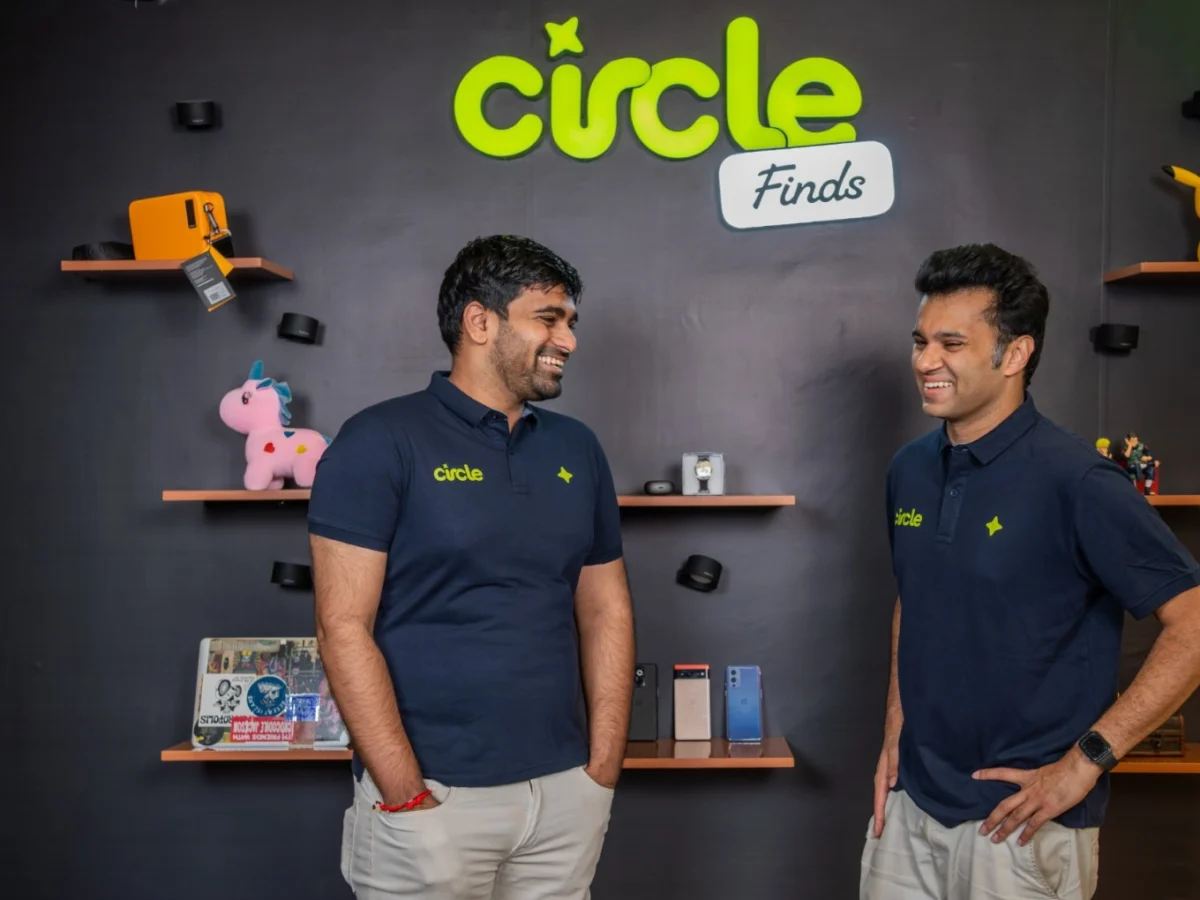
In a significant boost for India’s burgeoning recommerce sector, Bengaluru-based pre-owned goods marketplace Circle has successfully raised ₹25 Cr (approximately $2.6 million) in a seed funding round. The investment was spearheaded by Nexus Venture Partners, with continued backing from early investors Titan Capital and Myntra co-founder Raveen Sastry. The round also saw the participation of notable angel investor Ajith Pai, the Chief Operating Officer (COO) of logistics giant Delhivery, signaling strong institutional and industry confidence in the startup’s operational model.
This capital injection arrives at a pivotal moment for the Indian secondary market, where trust, verification, and logistics remain the primary friction points for consumers. By positioning itself as a managed marketplace that oversees the entire transaction lifecycle—without the capital-heavy burden of owning inventory—Circle is attempting to bridge the gap between traditional classifieds and high-trust, dedicated e-commerce platforms.
The Genesis and Evolution: A Chronology of Growth
The story of Circle is one of rapid execution in a high-velocity market. Founded in early 2025 by Chirag Kataruka and Ankit Misra, the startup was built on a simple yet profound premise: the process of buying and selling used goods is fundamentally broken. Traditional classifieds platforms, while providing reach, often expose users to fraudulent listings, logistical nightmares, and safety concerns.
2024: The Pre-Seed Foundation
Before the brand gained significant public traction, Circle secured ₹3.4 Cr in a pre-seed funding round in November 2024. Led by Titan Capital with participation from Raveen Sastry, this initial capital was earmarked for product-market fit testing and the development of the company’s proprietary AI-driven verification algorithms. This period was critical for refining the "Trust Hub" model—a decentralized network where products are physically inspected before reaching the buyer.
2025: Scaling and Institutional Validation
Within less than a year of its official launch, Circle demonstrated remarkable velocity. By mid-2025, the platform had already facilitated ₹25 Cr in gross merchandise value (GMV) within the Bengaluru market alone. The platform’s ability to attract over 1 million visitors and generate 1 lakh listings in a short timeframe served as the primary catalyst for the current seed round. The transition from a pre-seed startup to a venture-backed enterprise highlights the founders’ ability to leverage technology to solve operational inefficiencies in the informal resale economy.
Operational Mechanics: The "Managed" Advantage
Unlike traditional horizontal classifieds where the platform acts merely as a directory, Circle operates as an end-to-end service provider. Its model is designed to mimic the convenience of buying new items from e-commerce giants while maintaining the price advantages of the secondary market.
AI-Powered Pricing and Discovery
One of the core pillars of Circle’s technology stack is its AI-driven pricing engine. By analyzing market trends, depreciation curves, and real-time demand, the platform provides sellers with optimized pricing suggestions. This ensures that listings are competitive, leading to a median "time-to-sell" of just three days—a drastic improvement over the weeks or months often required on legacy classifieds.
The Trust Hub Ecosystem
The "Trust Hub" is the physical manifestation of Circle’s promise. When a deal is struck, the product is routed through these hubs. Here, the company employs a hybrid model:
- Human Expertise: Skilled technicians and inspectors verify the condition of high-value items, including electronics, furniture, watches, and luxury handbags.
- Algorithmic Verification: AI tools assist in cross-referencing product data to ensure authenticity and prevent counterfeit goods from entering the circular economy.
- Logistics Integration: By partnering with logistics providers and utilizing the expertise of advisors like Ajith Pai, Circle manages the pickup and delivery, ensuring that the seller is paid promptly and the buyer receives a product that matches the description.
Supporting Data: The Recommerce Opportunity
The decision by Nexus Venture Partners to lead this round is backed by robust macroeconomic trends. According to projections by ResearchAndMarkets, India’s recommerce sector is on a steep growth trajectory.
- Market Projections: The sector is expected to reach $5.91 billion by 2026, ballooning to $8.61 billion by 2030.
- Compound Annual Growth Rate (CAGR): The market is anticipated to grow at a CAGR of 9.8% between 2026 and 2030.
- Consumer Shift: Increasing price sensitivity combined with a growing cultural acceptance of "pre-owned" as a sustainable and economical lifestyle choice is fueling this surge.
Circle is positioned to capture a significant slice of this pie by targeting high-involvement categories—smartphones, gaming consoles, high-end cameras, furniture, and premium lifestyle goods like sneakers and luxury watches—where verification is the biggest hurdle to purchase.
Competitive Landscape and Market Positioning
Circle enters a complex competitive arena. Its rivals range from established classified giants to niche electronics specialists:
- OLX India and Quikr: These platforms dominate in terms of volume and reach but have struggled to solve the trust deficit, often leaving the transaction risk entirely on the user.
- Cashify: A direct competitor in the electronics space, Cashify has built a strong brand around gadget buybacks and repairs. Circle, however, differentiates itself by being a multi-category marketplace.
- FreeUp: Focuses on community-led resale, particularly in fashion.
Circle’s unique value proposition lies in its agnostic category approach combined with the "managed" workflow. By acting as a third-party guarantor rather than just a digital bulletin board, Circle is effectively commoditizing trust.
Implications: The Path Ahead
The infusion of ₹25 Cr will trigger a multi-pronged expansion strategy. The company’s primary objectives for the next 18–24 months include:
1. Geographic Expansion
Having mastered the Bengaluru market, Circle is now set to enter other Tier-1 cities. Scaling a managed marketplace is notoriously difficult because it requires building local infrastructure (logistics and Trust Hubs) in every new city. The involvement of Delhivery’s Ajith Pai as an investor suggests that Circle is looking to tap into professional-grade logistics networks to solve the "last-mile" challenge of used goods.
2. Product and Technology Enhancement
The startup will continue to pour capital into its AI tools. This includes refining the computer vision capabilities of its verification software, which could potentially automate more of the inspection process, reducing human labor costs and increasing the speed of throughput in the Trust Hubs.
3. Sustainability as a Growth Driver
Beyond the economics, Circle is tapping into the growing global trend of "circularity." By extending the lifecycle of products, the platform is effectively participating in a greener retail ecosystem. This sustainability narrative is likely to resonate with Gen Z and Millennial consumers, who are increasingly conscious of their environmental footprint.
4. The "Inventory-Light" Risk
The central challenge for Circle will be maintaining its inventory-light model while scaling. Unlike platforms that buy stock (like some electronics refurbishers), Circle relies on a "C2C" (Consumer-to-Consumer) model. If the platform scales too quickly, maintaining the quality of verification across thousands of individual transactions could strain the Trust Hubs. Ensuring that the "three-day guarantee" remains enforceable as volume increases will be the true test of the founders’ operational discipline.
Conclusion
Circle represents a new wave of Indian startups that are not just digitizing existing industries, but are actively intervening in the supply chain to fix inherent flaws. With a solid war chest, the backing of marquee venture capital, and a proven model that prioritizes user trust, the startup is well-poised to become a household name in the Indian recommerce market. As it prepares for a wider rollout, the company’s ability to balance rapid growth with rigorous verification will determine whether it can successfully transform the fragmented Indian resale market into a seamless, modern retail experience.