










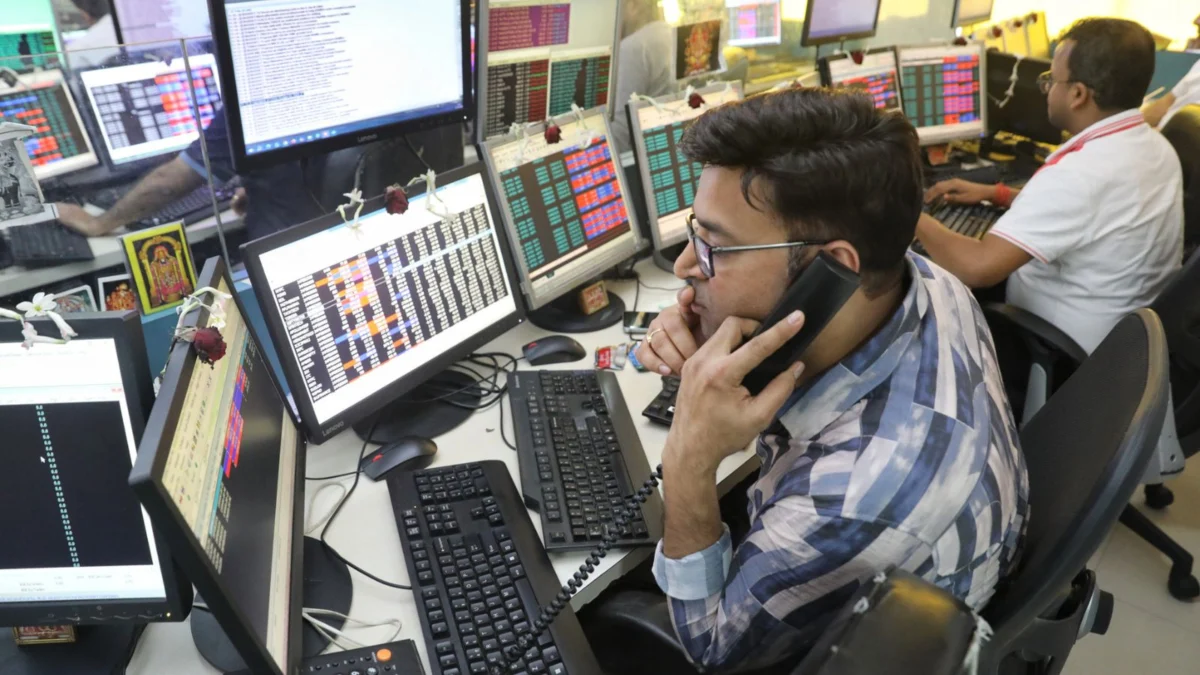
MUMBAI — Indian equity markets suffered a brutal sell-off on Thursday, extending a two-day downward spiral triggered by an unexpected and decidedly hawkish pivot from the Reserve Bank of India (RBI). The benchmark BSE Sensex tumbled 1,045.46 points, or 1.4%, to close at 71,593.24—its lowest level since February 2024. Simultaneously, the broader NSE Nifty 50 plummeted 1.6% to finish the session at 22,231, marking its weakest closing level in nearly 18 months.
The dramatic correction underscores mounting anxieties among institutional and retail investors alike. As the market digests the central bank’s abrupt shift in monetary policy, concerns over higher borrowing costs, squeezed corporate profit margins, and unrelenting geopolitical pressures in West Asia have converged to create a formidable wall of worry for investors.
Main Facts: The Anatomy of Thursday’s Market Rout
The carnage on Dalal Street was comprehensive, sparing virtually no sector or market capitalization. All sectoral indices and broader market gauges ended firmly in the red.
Rate-sensitive and capital-intensive sectors bore the brunt of the selling pressure. Heavyweights such as Adani Enterprises Ltd., JSW Steel Ltd., InterGlobe Aviation Ltd., and Adani Ports Ltd. suffered steep losses of up to 5%, dragging down the benchmark indices.
The bloodbath was not confined to equities. The Indian rupee remained under severe pressure, hovering flat at 96.78 against the US dollar following a sharp 0.4% drop the previous day. That mid-week slide pushed the domestic currency to its lowest level since mid-May, bringing it within striking distance of its all-time low of 96.96.
Market strategists attribute the rout directly to the RBI’s decision to hike the benchmark repo rate by 25 basis points (bps) to 5.50%—its first rate hike in over three years—while formally abandoning its long-standing "neutral" stance in favor of "calibrated tightening."
Chronology of Events: A Two-Day Descent
Wednesday: The Policy Shock
The market downturn began in earnest on Wednesday afternoon immediately following the Monetary Policy Committee’s (MPC) rate announcement.
- The Rate Hike: The RBI announced a 25 bps increase in the repo rate, moving it to 5.50%. While a modest rate hike had been largely priced in by seasoned traders, the accompanying policy language came as a profound shock.
- The Stance Change: The central bank officially pivoted away from its accomodative and neutral postures, introducing a stance of "calibrated tightening."
- Immediate Reaction: Realizing that the era of cheap money had decisively come to an end, automated algorithms and panic-driven selling kicked in. The market closed 0.8% lower on Wednesday, with the rupee sliding to 96.77 per dollar.
Thursday: Capitulation and Broad-Based Selling
- Morning Trade: Asian markets provided little solace, but the domestic sentiment was already poisoned by the previous day’s revelations regarding the RBI’s trajectory. Indices opened sharply in the red and faced relentless selling throughout the day.
- The Tipping Point: As analysts digested the longer-term implications of a sustained tightening cycle, institutional selling accelerated. By the closing bell, the Sensex had breached critical technical supports, shedding over 1,000 points to settle at 71,593.24, while the Nifty cratered to 22,231.
Supporting Data and Financial Metrics
The macroeconomic backdrop compound the difficulties facing Indian financial markets:
- Index Performance:
- BSE Sensex: Down 1,045.46 points (-1.4%) to 71,593.24.
- Nifty 50: Down 1.6% to 22,231 (lowest in 18 months).
- Worst-Hit Sectors: Metals, real estate, and oil & gas indices registered the heaviest losses due to their capital-intensive nature, which makes them acutely vulnerable to climbing interest rates.
- Foreign Exchange: The rupee trade near 96.78/USD, testing historic lows.
- Crude Oil Pressures: International benchmark crude prices remained elevated in the $102–$104 per barrel range, sustained by an eight-month-long geopolitical conflict in West Asia and mounting shipping disruptions through the Strait of Hormuz.
Official Responses and Central Bank Messaging
Recognizing the severe market turbulence sparked by its messaging, the central bank and its leadership attempted to calm frayed nerves, though their efforts met with mixed reactions on trading desks.
RBI Governor Sanjay Malhotra sought to soften the blow during post-policy interactions, describing the shift in stance as a "milder form of tightening" rather than an aggressive onslaught. Official communication from the MPC stressed that it is premature to pre-empt the ultimate depth of the rate hike cycle and that future policy actions will remain strictly data-dependent.
"We believe the RBI may have opted for an overly hawkish start to the hiking cycle at a point when core inflationary pressures are still benign as a form of pre-emptive signalling and to anchor expectations," noted global financial services firm Nomura in a note to clients.
Nomura added that the MPC’s statement ultimately aims to signal that "rate cuts are off the table in the near term," while maintaining its base-case projection of another 25 bps hike in December followed by an extended pause.
However, independent economists and institutional analysts are split on whether the RBI will stop there.
- State Bank of India (SBI): Chief Economist Soumya Kanti Ghosh has warned of a potential 50 bps rate hike at the upcoming December MPC meeting, pointing to a steepening inflation trajectory and volatile global conditions.
- Jefferies: Has sharply revised its outlook, now forecasting cumulative rate hikes of 75 to 100 bps, up significantly from its prior estimate of 50 bps.
- Systematix Institutional Equities: Argued that inflation remains a "bigger challenge than the RBI acknowledges," warning that the market faces a dangerous double-whammy of asset valuations compressing under high interest rates alongside shrinking corporate earnings.
Market Implications and Outlook
The transition to a high-interest-rate environment carries profound structural implications for the Indian economy and financial markets.
1. Corporate Earnings Under Pressure
With the July–September quarter (Q2) earnings season kicking off—led by IT bellwether Tata Consultancy Services (TCS) on Thursday—analysts warn that corporate margins will face a dual squeeze. Higher borrowing costs increase debt servicing obligations, while persistently high input costs and potential cooling in consumer demand threaten top-line growth.
"The stance has become hawkish, and the change in stance was definitely a surprise. The market is expected to remain weak, unless there is some positive surprise from Q2 earnings," noted Kranthi Bathini, Equity Strategist at WealthMills Securities.
2. External Vulnerabilities: The Crude Factor
Compounding domestic monetary tightening is external vulnerability. Crude oil prices stubbornly remaining above $100 a barrel continue to widen India’s trade deficit. With tanker attacks in the Strait of Hormuz hitting wartime highs and US-Iran peace talks deadlocked, imported inflation remains a clear and present danger. As a net importer of crude, India finds both its currency and equity valuations directly correlated with energy market volatility.
3. Valuation Adjustments
For months, Indian equity markets traded at lofty valuations driven by strong domestic retail inflows and robust economic growth expectations. However, the repricing of risk-free rates means equity risk premiums must adjust. Higher discount rates naturally lead to lower present values for future corporate cash flows, signaling that the era of effortless double-digit market returns may be giving way to a more volatile, range-bound paradigm.
As market participants pivot their focus toward upcoming Q2 corporate scorecards and look ahead to the December monetary policy review, caution remains the dominant watchword across Dalal Street.



