










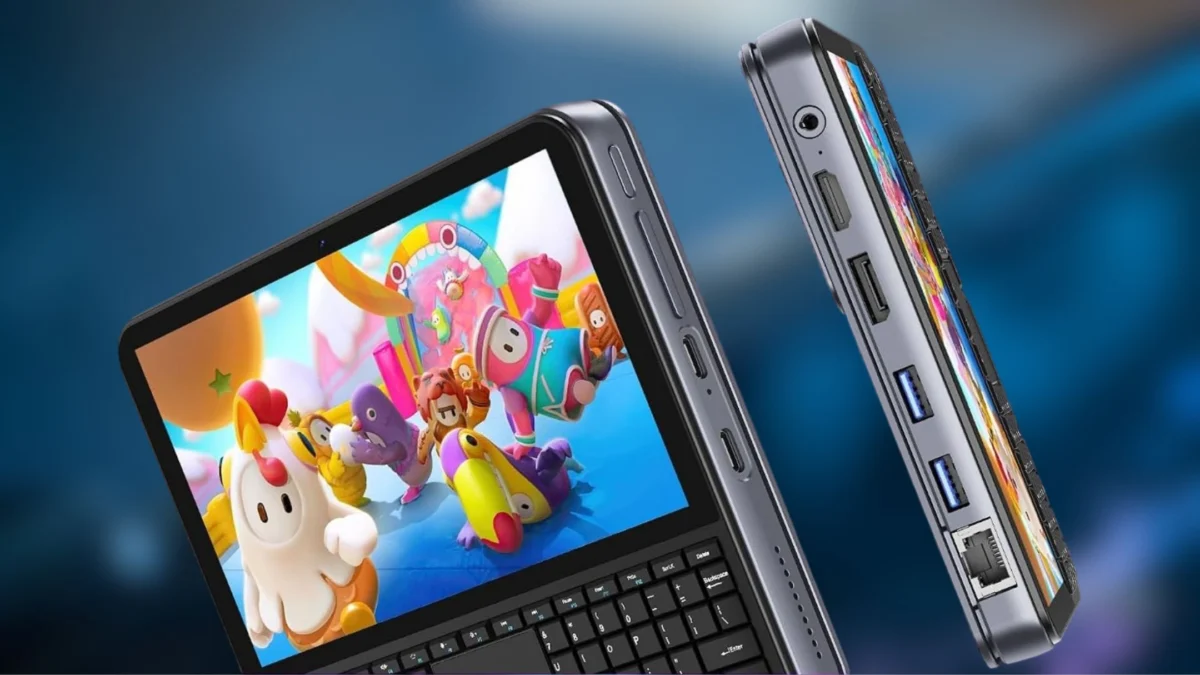
Main Facts: The All-in-One Compact Powerhouse
The market for compact computing has undergone a seismic shift over the past several years. Mini PCs have rapidly evolved from niche, low-powered novelty items into legitimate daily drivers capable of replacing bulky desktop towers for office productivity, media consumption, and light development work. However, a persistent friction point remains for most consumers: the surrounding ecosystem. Purchasing a traditional mini PC means buying into a web of peripheral expenses. Users must source, purchase, and wire up a dedicated monitor, external speakers, a keyboard, and a mouse, instantly destroying the minimalist aesthetic that made the small form factor attractive in the first place.
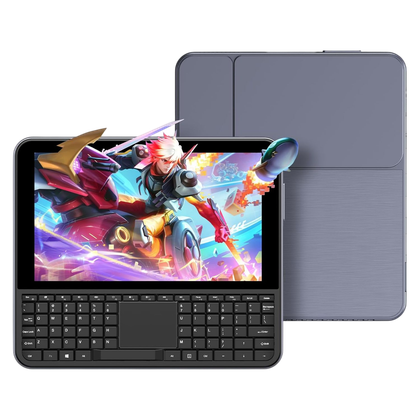
Enter the AE86 5.7-inch Mini PC—a device that aggressively challenges traditional computing paradigms by fusing the core internals of a modern Windows desktop directly with an integrated 5.7-inch touchscreen, a built-in keyboard, a touchpad, dual speakers, and a front-facing camera.
Originally retailing at a standard MSRP of $600, the AE86 has caught the attention of tech enthusiasts following a recent promotional discount. Thanks to a limited-time $120 Amazon coupon, buyers can acquire the device for $480. Underneath its unconventional chassis, the AE86 runs on an Intel N95 processor, supported by 16GB of DDR4 RAM and a brisk 512GB solid-state drive. It arrives out of the box with Windows 11 and Office 2024 preinstalled, though it retains the flexibility for users to wipe the drive and install alternative operating systems like Linux.
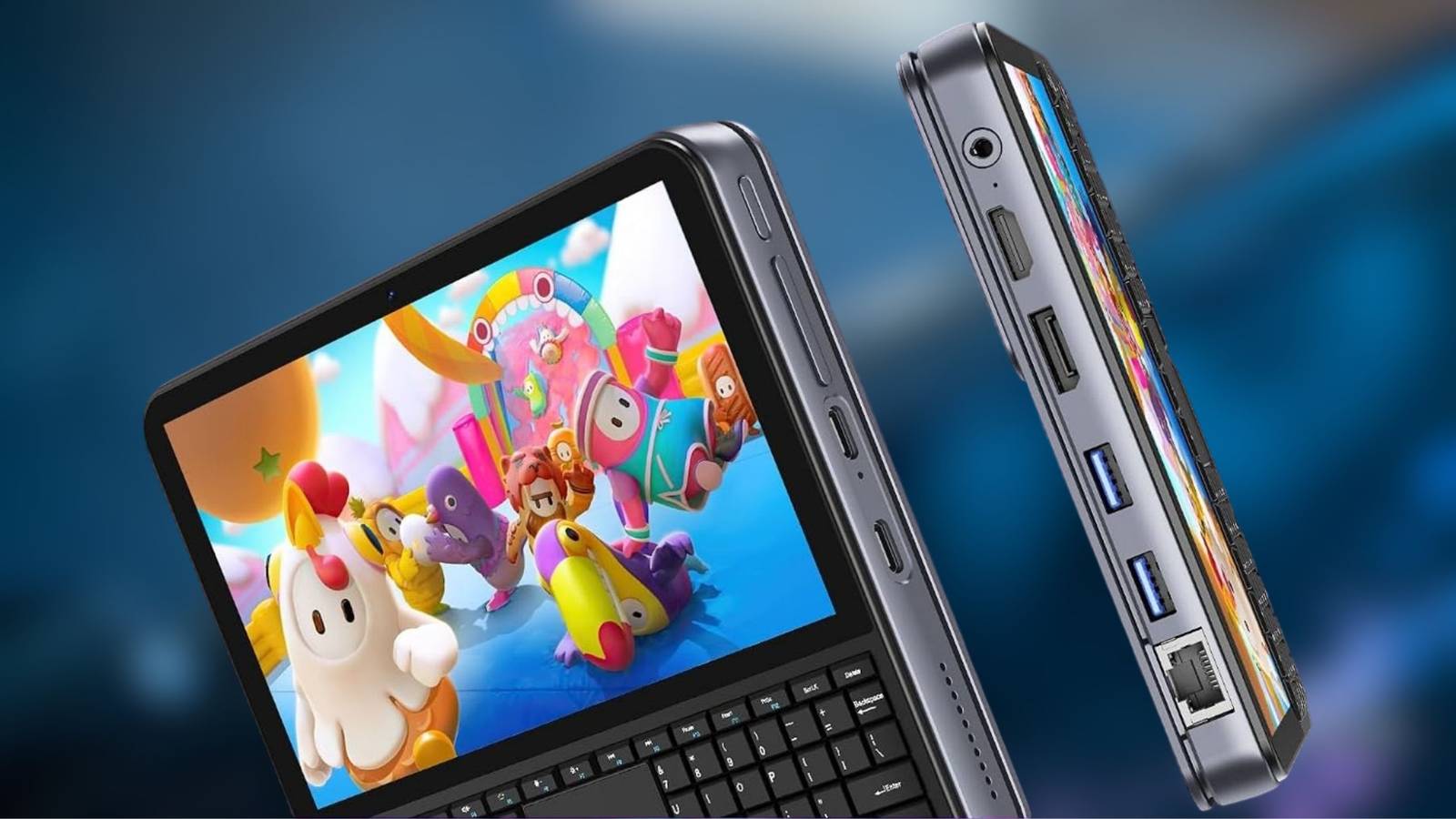
Equipped with an array of modern input/output (I/O) ports and wireless connectivity options—including Wi-Fi 6 and Bluetooth 5.2—the AE86 is designed to serve as both an independent portable workstation and a centralized smart home hub.
Chronology: The Evolution of Compact Form Factors
To understand the innovation behind the AE86, it is helpful to look back at the trajectory of miniaturized computing over the last decade.
- The Early 2010s (The Nettop Era): Compact computing initially emerged via "nettops"—low-power, highly restricted machines designed primarily for basic web browsing. These early models suffered from severe thermal throttling and sluggish performance, making them frustrating for everyday users.
- The Mid-to-Late 2010s (The NUC Revolution): Intel popularized the Next Unit of Computing (NUC) standard, proving that powerful desktop components could be squeezed into a four-inch-by-four-inch square footprint. While performance skyrocketed, these units still lacked built-in displays and input devices.
- The Early 2020s (The Rise of Chinese Mini PC Manufacturers): Brands began leveraging efficient mobile chipsets (such as AMD Ryzen and Intel Celeron/N-series processors) to offer incredible value-per-dollar ratios. Mini PCs became viable for gaming, home labs, and media servers.
- October 2026 (The Introduction of the AE86 All-in-One): The release and subsequent promotional discounting of the AE86 5.7-inch model marks a new frontier. By integrating a display, keyboard, and trackpad directly into a mini PC enclosure, manufacturers have effectively created a modern spiritual successor to the classic retro pocket computers and keyboard-integrated personal computers of the 1980s (such as the Commodore 64 and Sinclair ZX Spectrum), modernized for the 21st century.
Supporting Data & Technical Specifications
A closer examination of the AE86’s hardware sheet reveals a carefully balanced compromise between energy efficiency, physical space constraints, and everyday usability.
| Component | Specification Details |
|---|---|
| Processor (CPU) | Intel Processor N95 (Quad-core, up to 3.4GHz burst) |
| Memory (RAM) | 16GB DDR4 RAM |
| Storage | 512GB M.2 NVMe SSD |
| Display | 5.7-inch Integrated Touchscreen |
| Built-in Controls | Integrated mini keyboard and precision touchpad |
| Wireless Connectivity | Wi-Fi 6, Bluetooth 5.2 |
| Wired I/O Ports | 2x USB-C, 2x USB-A, 1x HDMI, 1x DisplayPort, 1x Ethernet RJ45 |
| Audio & Video | Dual built-in speakers, internal microphone, front-facing camera |
| Battery Capacity | 2,150mAh internal backup battery |
| Software | Windows 11 Pro and Microsoft Office 2024 preinstalled |
| Pricing | $600 standard MSRP (currently $480 via $120 Amazon clip-on coupon) |
Performance Analysis of the Intel N95
The choice of the Intel N95 processor—part of Intel’s Alder Lake-N family—is central to the AE86’s value proposition. Built on an efficient 7nm process, the N95 features four efficient cores without hyperthreading. It is intentionally designed for fanless or low-cooling environments, operating at a modest Thermal Design Power (TDP) of 15 watts.
While it will not replace a dedicated gaming rig or a heavy-duty video editing workstation, benchmark tests indicate that the N95 effortlessly handles standard web browsing with dozens of open tabs, 4K video playback, document editing, and lightweight coding environments. Paired with 16GB of DDR4 RAM—a generous allotment for a machine at this price point—multitasking between office apps is remarkably smooth. Furthermore, the inclusion of a 512GB SSD ensures fast boot times and snappy application loading compared to traditional mechanical hard drives or slower eMMC storage found in ultra-budget laptops.
Official Perspectives and Industry Reception
Reviewers and tech analysts have shared varied yet largely optimistic perspectives regarding the AE86’s hybrid design philosophy. Industry commentators point out that while a 5.7-inch screen and integrated keyboard are entirely impractical for writing thousands of words or compiling massive software projects, they serve entirely different, highly practical use cases.
"The greatest barrier to entry for mini PCs has never been performance; it has been setup friction," notes one hardware reviewer. "By embedding a functional display and input matrix directly into the housing, the AE86 completely changes how users interact with edge devices."

Manufacturers of similar niche form-factor PCs argue that devices like the AE86 bridge the gap between headless servers and traditional laptops. Instead of keeping a laptop running open on a desk or hooking up a cumbersome monitor to check server diagnostics, an all-in-one mini PC provides instant, localized interaction.
Consumer reception on platforms like Amazon and tech forums has been equally enthusiastic, particularly regarding the pricing structure. Industry watchers emphasize that the $120 discount coupon transforms the device from a speculative novelty purchase into an aggressively priced productivity tool.
Implications: What the AE86 Means for the Future of Computing
The arrival of devices like the AE86 5.7-inch Mini PC signals broader implications for the consumer hardware ecosystem, particularly in the realm of edge computing, smart homes, and portable workstations.
1. The Death of the Dedicated Terminal Monitor
For system administrators, home automation hobbyists, and server managers, maintaining local control over hardware usually requires a dedicated "crash cart" (a monitor, keyboard, and mouse kept on hand for troubleshooting) or remote desktop software. The AE86 acts as a self-contained terminal. Its built-in screen and battery backup allow technicians to unplug the unit from a main setup, carry it to a network rack, and troubleshoot connectivity issues or server scripts on the fly without dragging external monitors around.
2. Multi-Monitor Versatility in a Tiny Footprint
Despite its diminutive size and built-in screen, the AE86 does not compromise on external output capabilities. Thanks to its HDMI and DisplayPort connections, users can utilize the onboard 5.7-inch display as a secondary or tertiary dashboard (ideal for monitoring system resource utilization, Discord chats, or stock tickers) while driving up to three external 4K monitors for a full-scale desktop experience.
3. The Power Management Paradox
One of the most heavily scrutinized aspects of the AE86 is its internal 2,150mAh battery. While industry observers praise the inclusion of a battery—noting that it prevents sudden data loss during power outages and allows for untethered mobility around a room—realistic expectations must be maintained. Given the power demands of an Intel N95 processor and an integrated display, battery life is estimated to hover around 2 to 5 hours depending on workload intensity. It is not designed to be a true all-day mobile laptop, but rather a UPS (Uninterruptible Power Supply) with legs.
4. Value and Accessibility
At the discounted price of $480 (down from $600), the AE86 undercuts the combined cost of purchasing a standalone budget mini PC, an entry-level monitor, a keyboard, a mouse, and a Windows 11 license separately. For students living in tight dormitory spaces, remote workers optimizing desk real estate, or tech enthusiasts looking for an experimental home lab node, the device presents a compelling, all-inclusive package.
Buying Advice
For those interested in adopting this unique form factor, timing is crucial. Prospective buyers should ensure they actively clip the $120 digital coupon on Amazon prior to completing checkout to secure the $480 promotional rate. Whether used as a smart home dashboard, a portable coding station, or a space-saving desktop replacement, the AE86 proves that sometimes, less space truly yields more versatility.



