










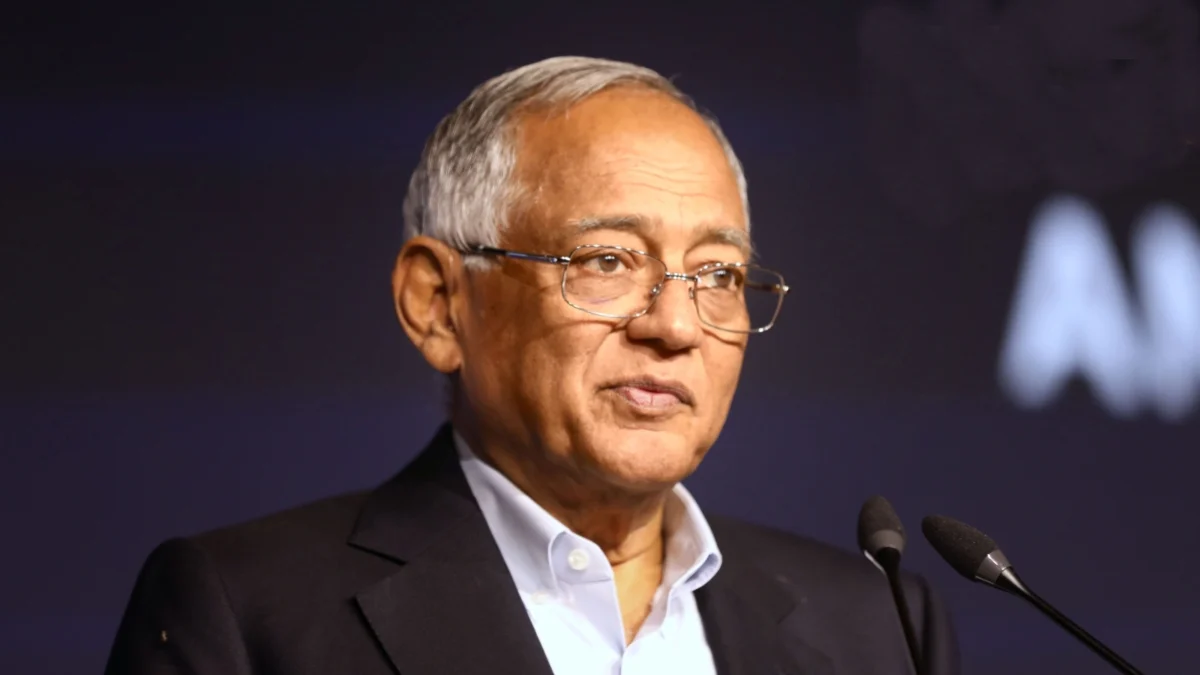
Mumbai — The protracted and carefully guarded restructuring of one of India’s most storied industrial dynasties has run into a formidable roadblock. Lakshmi Venu and Mallika Srinivasan have publicly broken their silence, asserting that no economic settlement has been reached regarding the ownership and division of assets within the core Venu Srinivasan family.
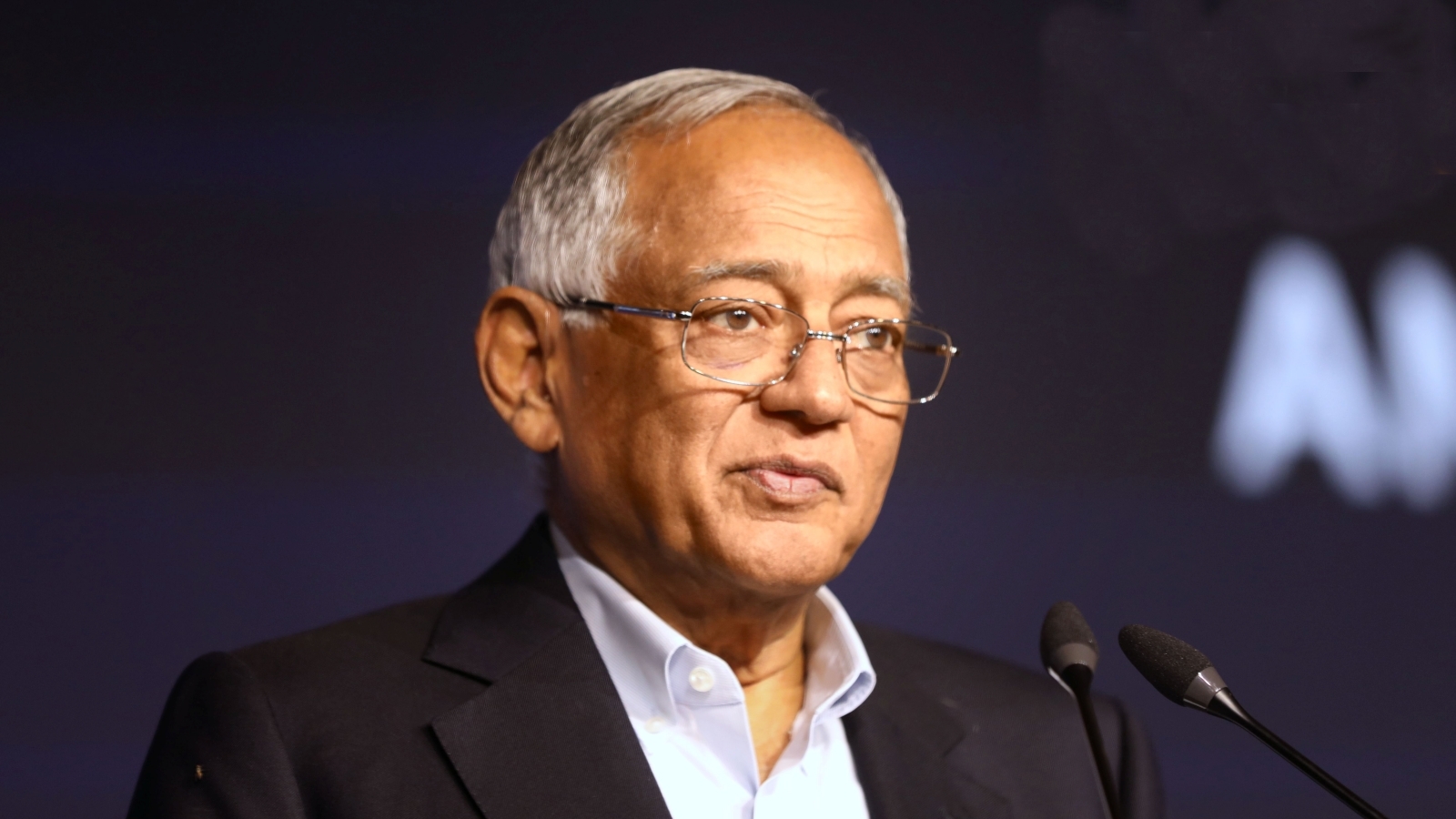
The joint declaration shatters the perception of a seamless succession and asset partition across the broader TVS group. It underscores a widening chasm between TVS Motor Chairman Emeritus Venu Srinivasan and his son, Sudarshan Venu, on one side, and Mallika Srinivasan (Venu Srinivasan’s wife) and their daughter, Lakshmi Venu, on the other.
While the historic, multi-layered partitioning of the wider TVS family—agreed upon in 2020 and systematically implemented—successfully untangled a century-old web of cross-holdings among various branches of the founding family, the domestic ledger within the Venu Srinivasan household remains starkly unfinalized.
Main Facts: The Core Dispute and Leadership Lines
The friction centers not on operational control or executive compensation, but on the foundational bedrock of generational wealth and asset ownership.
According to the joint statement issued by Lakshmi and Mallika, executive titles and boardroom seats have been appropriately compensated, but these professional allocations do not equate to a fair or final distribution of rightful economic ownership.
- The Key Players:
- Venu Srinivasan: Chairman Emeritus of TVS Motor Company and a towering figure in Indian manufacturing, who has also played a prominent governance role within entities like Tata Sons.
- Sudarshan Venu: Managing Director of TVS Motor Company, representing the younger male leadership line alongside his father.
- Mallika Srinivasan: Wife of Venu Srinivasan and the powerhouse Chairperson and Managing Director of tractor major TAFE (Tractors and Farm Equipment Limited).
- Lakshmi Venu: Daughter of Venu and Mallika, serving as Vice Chairman of TAFE while concurrently holding the position of Executive Director and Managing Director at Sundaram-Clayton.
The central thesis of the mother-daughter duo is uncompromising: the successful resolution of the wider TVS family partition—which divided the conglomerate among different ancestral branches—cannot and should not be used as a blanket proxy or precedent for settling the private economic interests within the Venu Srinivasan nuclear household.
Furthermore, Mallika Srinivasan specifically distanced her leadership at TAFE from the domestic dispute. TAFE operates under the Amalgamations Group, a distinct and separate family business collective in which she is a shareholder. Using her stewardship of TAFE as evidence of an equitable settlement within the Venu Srinivasan family, she argued, is fundamentally misleading.
Chronology: From the 2020 TVS Family Pact to Public Divergence
To understand the gravity of the current impasse, one must trace the timeline of the TVS group’s monumental restructuring, which stands as one of the most complex corporate unravelling operations in Indian business history.
The Foundation of the Empire (Early 20th Century to 2020)
For over a century, the TVS Group operated as a tightly integrated, multi-generational conglomerate founded by T.V. Sundaram Iyengar. Over decades, it burgeoned into a powerhouse spanning two-wheelers, automotive components, logistics, and distribution. However, as successive generations expanded the family tree, cross-holdings across various operating entities grew labyrinthine.
The 2020 Realignment Pact
Recognizing the necessity for a modern corporate architecture and smooth generational transitions, the extended TVS family reached a historic agreement in August 2020. This pact was designed to parse out operating companies among different family branches. The framework allowed individual branches to take independent operational control of businesses most aligned with their leadership strengths, effectively concluding a generational management separation.
Implementation and Post-Pact Realignment (2021–2025)
Over the subsequent years, the group executed the unbundling. Leadership roles were formalized. Sundarshan Venu assumed helm-driving responsibilities at TVS Motor, while other branches took charge of distinct corporate verticals. Within the Sundaram-Clayton and TVS Motor ecosystem, Venu Srinivasan transitioned into emeritus and advisory roles, paving the way for younger leadership.
The Boiling Point (Late 2025–October 2026)
As corporate governance structures settled into their new normal, expectations grew regarding the private domestic allocation of wealth and assets among the immediate Venu Srinivasan family members. However, subterranean disagreements over valuations, unilateral decision-making, and asset boundaries festered. The breakdown of private dialogue ultimately culminated in October 2026, when Lakshmi and Mallika felt compelled to issue a public clarification to correct what they termed an inaccurate narrative surrounding asset distribution.
Supporting Data: Dissecting the Fault Lines
The dispute exposes a classic corporate governance dilemma: the dangerous blurring of lines between management control and equity ownership.
1. Management Roles vs. Economic Ownership
The crux of the dissent lies in the separation of corporate administration from capital entitlement. Lakshmi and Mallika assert that management responsibilities—such as serving as Managing Director or Executive Director—are operational positions tied to professional execution and compensation. They cannot legally or equitably substitute for the division of underlying family assets and capital holdings.
2. Unilateral Actions and Valuations
The joint statement explicitly rejects any narrative suggesting that all family assets belong exclusively to a single individual who possesses the authority to distribute them unilaterally. The duo maintains that no transparent valuation, formal discussion, or mutual consent framework has yet been applied to the family’s core economic interests.
3. Trademarks, Brands, and Non-Compete Clauses
The friction also extends to ancillary corporate arrangements. The statement warns that agreements governing trademarks, brand usage rights, and non-compete obligations executed during the broader corporate restructuring cannot be packaged or represented as a comprehensive economic settlement when no such domestic asset division was baked into those pacts.
Official Responses and Perspectives
For months, the dispute remained an internal boardroom and drawing-room secret, guarded closely by advisors and family counselors. The decision by Lakshmi and Mallika to publish their stance marks a strategic pivot from private negotiation to public positioning.
"The fundamental issue is not about management positions, which have been compensated appropriately and commensurately. It is about the fair recognition of rightful economic ownership, which remains unresolved," the joint statement emphasized.
Furthermore, addressing the broader narrative, they noted:
"No comparable process involving transparent valuation, discussion and mutual consent has taken place concerning the economic interests within the Venu Srinivasan family. No agreement dividing these economic interests has been concluded."
Significantly, the duo took pains to clarify that their public intervention is not an act of hostility, but a necessary corrective measure against misleading public impressions.
"We have consistently sought an amicable resolution through family dialogue and have refrained from discussing private family matters publicly. However, given the narrative now being presented, we believe it is necessary to clarify certain fundamental facts."
Despite the sharpness of the divergence, both leaders reiterated their commitment to finding a peaceful way forward:
"We remain committed to an early and amicable resolution through constructive dialogue, in the interests of the family, its businesses and their stakeholders."
At the time of reporting, formal counter-statements from Venu Srinivasan or Sudarshan Venu addressing the specific claims of asset ownership and valuation processes had not been immediately released, keeping market watchers and institutional investors on high alert.
Implications: What This Means for TVS Group and Indian Corporate Governance
While the Venu Srinivasan family dispute is fundamentally a private family matter, its ripple effects carry profound implications for the broader corporate ecosystem, investors, and the governance standards of legacy Indian conglomerates.
1. Investor Sentiment and Market Stability
TVS Motor Company and Sundaram-Clayton are publicly listed entities with massive institutional shareholding, foreign portfolio investments (FPIs), and millions of retail investors. While operational management remains insulated—with professional teams and designated leaders like Sudarshan Venu and Lakshmi Venu maintaining day-to-day control—prolonged friction at the promoter-shareholder level can introduce speculative volatility and corporate governance questions.
2. The Anatomy of Family Business Successions
The TVS family partition was initially hailed as a masterclass in how generational handovers should be conducted in multi-billion-dollar Indian enterprises. However, this current public rift illustrates the hidden complexities of family offices. It serves as a cautionary case study on the importance of decoupling corporate restructuring from domestic asset settlements. When operating company partitions are executed without concurrently resolving private ownership equities, domestic friction is bound to spill over.
3. The Path Forward: Dialogue vs. Litigation
For India’s corporate historians and legal experts, the trajectory of this dispute will be closely watched. The public declaration by Lakshmi and Mallika signals a firm refusal to accept fait accompli arrangements dictated from above. Yet, their reiterated commitment to "constructive dialogue" leaves the door open for mediation, independent valuation experts, and institutional arbiters to step in.
As India’s family-run enterprises continue to navigate generational handovers worth tens of billions of dollars, the resolution—or escalation—of the Venu Srinivasan family dispute will serve as a vital bellwether for how modern Indian dynasties balance patriarchal legacy with demands for transparent, equitable economic rights.



