







By [Author Name]
Published July 22, 2026
The foldable smartphone market has officially matured. What began as a fragile, experimental category in the late 2010s has transformed into a staple of the premium mobile landscape. However, as we cross the midpoint of 2026, a fundamental design conflict has emerged that challenges the status quo: the battle between the "narrow" cover screen and the "wide" aspect ratio. For years, manufacturers opted for tall, slender external displays to mimic traditional smartphone ergonomics. Today, a growing contingent of hardware engineers and power users are arguing that the future of the foldable is wide.
But is this shift purely a matter of preference, or does it represent a necessary evolution for the foldable form factor?
The Core Dilemma: Narrow vs. Wide
For the better part of five years, the industry standard for book-style foldables was defined by a narrow, "candy bar" cover screen. The logic was sound: a narrow device is easier to hold in one hand, provides a comfortable grip for thumb-reach, and minimizes the overall footprint when folded.
However, the "wide" movement argues that this narrowness comes at a significant cost. When a cover screen is too narrow, the keyboard becomes cramped, making quick replies frustrating. Furthermore, standard applications—which are designed for a more traditional 19:9 or 20:9 aspect ratio—often suffer from letterboxing or awkward scaling issues on a narrow display.
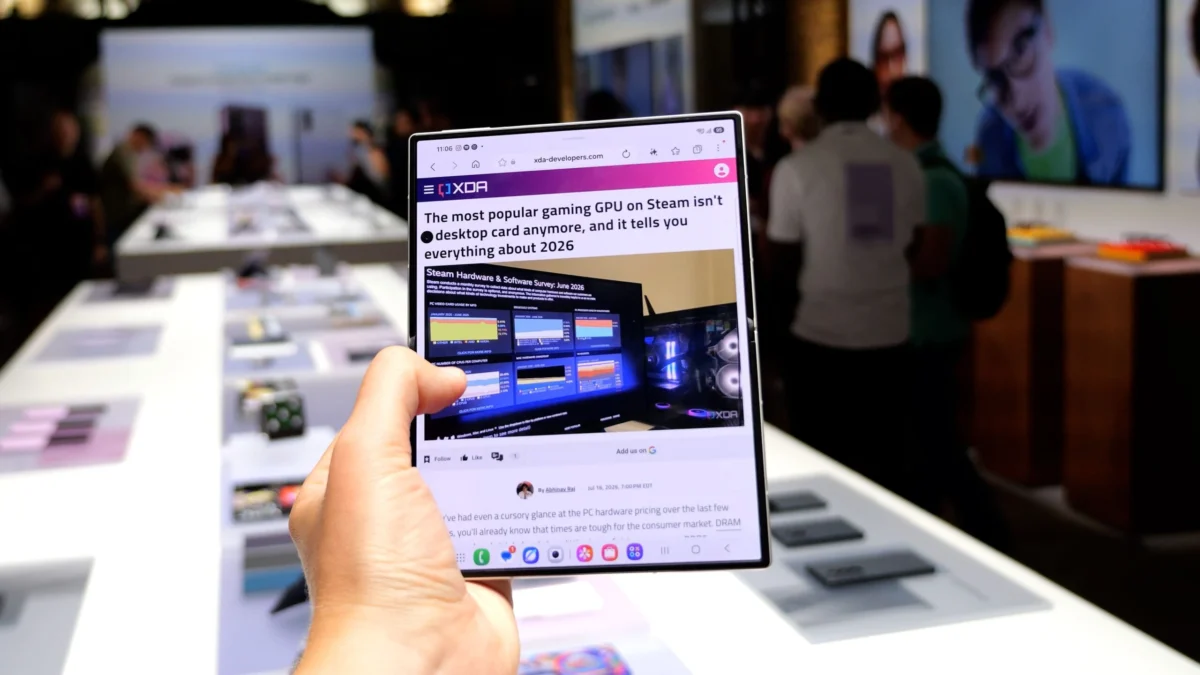
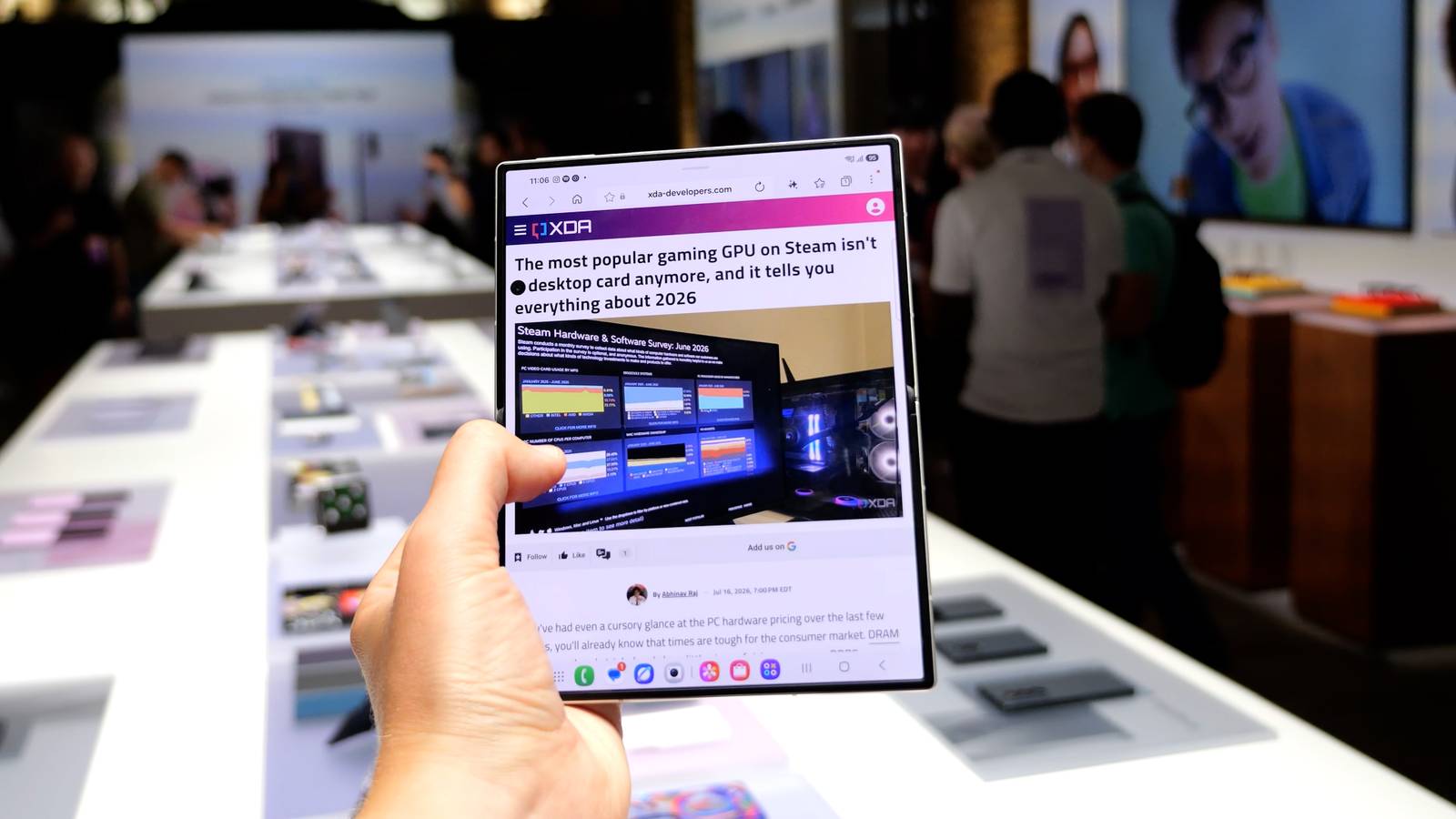
Going "wide" means adopting a cover screen aspect ratio closer to that of a standard flagship device, such as the Galaxy S series or the iPhone. While this increases the device’s width in the pocket, it transforms the cover screen from a "notification triage" tool into a fully functional, primary display.
A Chronological Evolution of Form Factors
To understand why we are debating the "wide" factor in 2026, we must look at the timeline of foldable evolution.
- 2019–2020: The Experimental Phase. Devices like the original Galaxy Fold featured tiny, almost unusable cover screens. They were meant only for incoming alerts, pushing the user to open the device for any meaningful task.
- 2021–2023: The Narrow Standard. Manufacturers found a sweet spot with tall, narrow screens. These were easier to manufacture and provided a "secure" feeling in the palm. The industry converged on this design, believing consumers preferred pocketability over desktop-class utility.
- 2024–2025: The Shift to Utility. As app developers optimized for foldables, the limitations of narrow screens became apparent. Users began demanding better multitasking capabilities on the outside screen. Several Chinese OEMs began experimenting with wider cover screens, proving that a foldable could be as comfortable to type on as a standard phone.
- 2026: The "Wide" Mandate. By mid-2026, the market has reached a tipping point. With flagship processors and advanced battery technologies allowing for thinner chassis designs, the "wide" foldable is no longer a bulky compromise—it is the new gold standard for premium devices.
Supporting Data: The Case for Width
Market research and ergonomics studies conducted throughout 2025 and 2026 highlight a clear trend: consumer preference is shifting away from "pocket-first" ergonomics toward "productivity-first" utility.
Typing Accuracy and User Fatigue
A study by the Mobile Interaction Lab found that users with a cover screen width of 70mm or greater experienced a 22% reduction in typing errors compared to those using screens in the 60mm–64mm range. For a device intended to handle emails, social media, and professional communication, this margin is critical.
App Compatibility
In 2026, the "compatibility gap" remains the biggest hurdle for foldables. Data from the Play Store indicates that 85% of top-tier apps are now optimized for a 20:9 aspect ratio. When these apps are forced into a narrow 23:9 or 24:9 foldable screen, UI elements often overlap or become misaligned. By adopting a wider format, manufacturers ensure that their devices are "out-of-the-box" ready for the modern app ecosystem.
Battery and Thermal Efficiency
Critics of the wide foldable argue that a larger screen consumes more battery. However, advancements in LTPO (Low-Temperature Polycrystalline Oxide) technology in 2026 have mitigated this. Modern wide displays consume roughly the same power as their narrower counterparts when viewing similar content, while the increased surface area allows for better heat dissipation across the chassis, keeping the processor cooler during intensive multitasking sessions.
Official Responses and Industry Sentiment
The industry is currently divided, though the momentum is clearly swinging.
In a recent interview, a senior product manager at a leading display manufacturing firm noted: "We are seeing a 40% increase in demand for wider, high-resolution flexible OLED panels. The narrative has shifted from ‘How thin can we make the fold?’ to ‘How much utility can we pack into the front?’"
Conversely, some traditionalists argue that the "wide" foldable risks becoming too heavy. One design lead for a major handset manufacturer stated, "We remain committed to the ‘slim’ form factor. Our data suggests that for a large portion of our user base, the device must disappear into the pocket. Once you go past a certain width, the ‘foldable’ identity is compromised."
Despite this, the sales figures from the first half of 2026 suggest that consumers are increasingly willing to trade a few millimeters of thickness for a more expansive, usable screen.
The Implications: What This Means for You
If you are considering a foldable upgrade in late 2026, the implications of this "wide" trend are profound.
1. The Death of the "Second-Class" Cover Screen
Gone are the days when the cover screen was a mere shortcut. A wide foldable is effectively two phones in one: a standard, highly usable smartphone on the outside, and a tablet-sized powerhouse on the inside. You no longer need to flip the phone open to check a complex spreadsheet or respond to a long-form email.
2. Case and Accessory Compatibility
The shift to wider aspect ratios has caused some friction in the accessory market. Cases, screen protectors, and car mounts designed for the narrow devices of 2024 are largely incompatible with the new 2026 wide-format foldables. If you are a power user who relies on specific mounts or rugged cases, you may find that the accessory ecosystem for these new devices is still catching up.
3. The Ergonomic Trade-off
It is important to acknowledge that "wide" is not a universal solution. For users with smaller hands, the move to a wider external screen may make the device more difficult to use with one hand. Before committing to a wide foldable, it is recommended to visit a retail store to test the reach of the new aspect ratio.
Conclusion: A New Paradigm
As we look toward the remainder of 2026 and into 2027, the "wide" foldable is no longer just an experiment—it is the destination. The technical hurdles that once prevented wide screens (such as hinge bulk and chassis thickness) have been largely solved by advancements in materials science and folding mechanisms.
The choice to "go wide" represents a transition in how we view mobile computing. We are moving away from the idea that a foldable is a niche device that requires compromises in comfort and utility. Instead, the wide foldable of 2026 stands as a testament to the fact that we can have our cake and eat it too: the portability of a smartphone and the immersive power of a tablet, wrapped in a design that finally feels like a cohesive, singular product.
Whether you prioritize the slim, pocketable nature of the legacy foldables or the expansive, productivity-focused potential of the new wide-format devices, one thing is certain: the bar has been raised. The era of the narrow foldable is fading, and the age of the wide foldable has only just begun.