










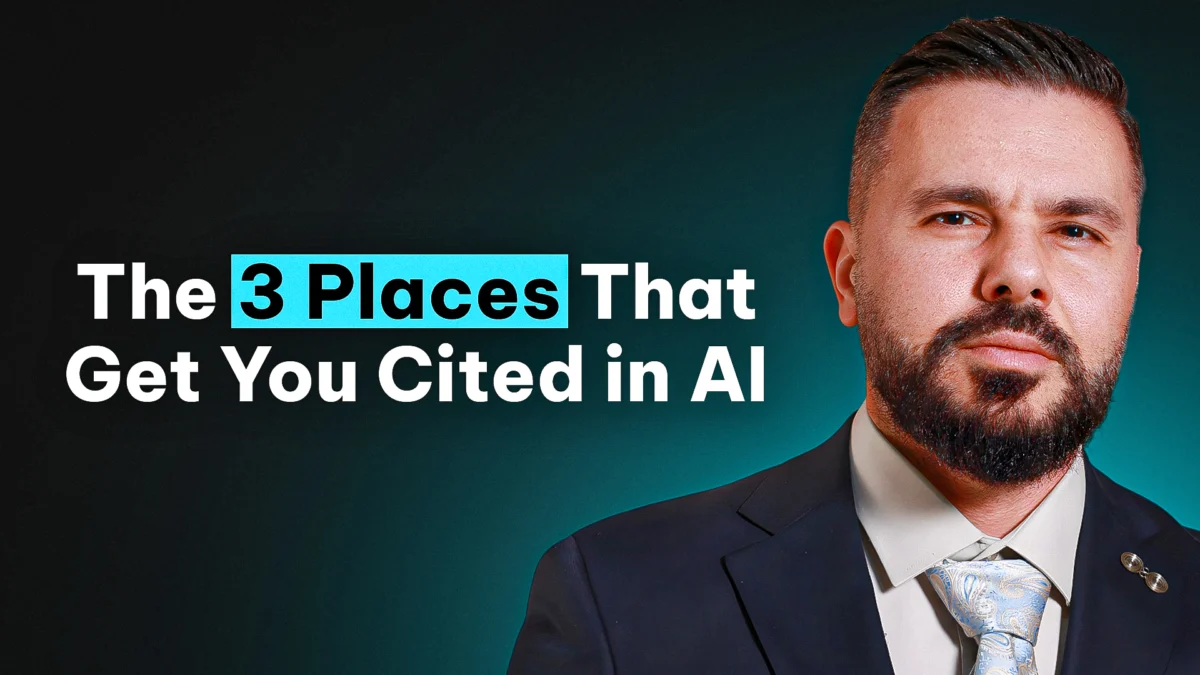
The landscape of digital discovery is undergoing its most radical transformation in decades. As traditional search engines evolve into conversational artificial intelligence, visibility is no longer just about ranking #1 on a Google search engine results page (SERP). Today, businesses are fighting for a coveted citation within ChatGPT responses, Google AI Overviews, and other Large Language Model (LLM)-driven search experiences.
To understand what truly drives AI citations in 2026, industry experts are turning to data-driven platforms like ZeroRank. Founded by veteran marketer Besmir Bregasi and his co-founder Kelvin Çobanaj, ZeroRank has scaled from an ambitious three-month project to a mid-six-figure Annual Recurring Revenue (ARR) business. By analyzing visibility data across thousands of brands, locations, and prompts, Bregasi offers a rare empirical look into the mechanics of Answer Engine Optimization (AEO).
The Main Facts: The Shift from SEO to AEO
For nearly twenty years, Besmir Bregasi’s career was rooted in traditional Search Engine Optimization (SEO). He subsequently spent roughly fifteen years mastering paid advertising and affiliate marketing. However, when traffic patterns shifted toward LLMs, Bregasi recognized an opening that mirrored the early days of digital marketing: a massive new channel characterized by explosive growth and relatively low initial competition.
This realization prompted the creation of ZeroRank. The platform tracks how, when, and why brands are cited by generative AI engines. According to ZeroRank’s data, the rules of visibility have fundamentally changed. While on-site technical health remains a baseline requirement, the primary engines of AI visibility are off-site signals, topical freshness, and third-party validation.
Key Takeaways:
- The AEO Revolution: AI search engines synthesize answers rather than just indexing links, requiring brands to optimize for citations rather than keywords.
- Off-Site Dominance: Data suggests that off-site discussions—reviews, social chatter, and niche mentions—outweigh traditional on-page factors in driving LLM recommendations.
- The Freshness Factor: Real-time, highly engaged content frequently supersedes deep archives of older, static web pages in AI models.
Chronology: From Concept to Mid-Six Figures in 12 Months
The trajectory of ZeroRank highlights the speed at which modern software-as-a-service (SaaS) companies can be built, validated, and scaled in the AI era.
Phase 1: The Three-Month Build (Pre-Launch)
When Bregasi and Çobanaj decided to pursue ZeroRank, they imposed an aggressive three-month timeline to build a viable minimum viable product (MVP). Çobanaj, who previously served as the CTO of a conference company built by Bregasi, walked away from a lucrative CTO role in the crypto sector to dedicate himself to the project full-time.
During this foundational window, the team engineered a proprietary method for tracking LLM visibility. Recognizing that standard LLM APIs fail to capture nuanced regional differences, they built custom infrastructure to evaluate how brand visibility varied across international markets like Italy, Germany, and the United States.
Phase 2: The AppSumo Validation Bet
To rapidly stress-test the platform and secure early user feedback, ZeroRank launched on AppSumo. The campaign exceeded expectations:
- ZeroRank surpassed 1,000 customers in record time.
- It emerged as one of AppSumo’s top-selling products during its launch month, securing stellar five-star reviews.
- The team intentionally priced the offer around break-even, treating the campaign primarily as a high-impact customer acquisition and marketing spend rather than an immediate profit center.
Phase 3: Scaling and the Next Growth Phase
Following the AppSumo push, ZeroRank rapidly expanded its core team and achieved mid-six-figure ARR in just over a year of existence. The company is now transitioning into its next growth phase, utilizing a multi-channel acquisition strategy that includes traditional SEO, paid advertising, podcast appearances, affiliate partnerships, and a strategic referral program offering free AI credits.
Supporting Data: What the Numbers Tell Us About LLM Citations
ZeroRank’s visibility engine monitors a complex web of factors that dictate whether an AI model will recommend a specific company.
1. The Power Trio: Reddit, X, and YouTube
When evaluating which external platforms carry the most weight in AI citations, ZeroRank’s client data consistently points to three major hubs:
- Reddit: Despite fluctuations in platform algorithms over the years, Reddit remains an authority goldmine for LLMs. AI models frequently scrape Reddit threads to gauge authentic human sentiment, reviews, and community consensus.
- X (formerly Twitter): X provides real-time velocity. In one of ZeroRank’s experimental campaigns, utilizing paid post-promotions on X artificially sparked initial engagement, which subsequently triggered algorithmic amplification and wider digital reach—a pattern that AI scrapers readily ingest.
- YouTube: Particularly influential within Google AI Overviews, fresh video content accompanied by high early engagement (comments, likes, and shares) serves as a potent bridge connecting a brand to specific topical queries.
2. The Weight Distribution: UGC vs. Traditional Search
Bregasi illustrates the modern citation ecosystem through an approximate breakdown: user-generated content (UGC) and third-party discussions account for roughly 60% to 70% of an LLM’s citation influence, while the remaining 30% relies on traditional web architecture and SEO fundamentals.
+-------------------------------------------------------------+
|              LLM Citation Influence Breakdown               |
+----------------------------------+--------------------------+
| User-Generated Content & UGC     | 60% - 70%                |
| (Reddit, X, YouTube, Niche Sites)|                          |
+----------------------------------+--------------------------+
| Traditional SEO & On-Site Domain | 30%                      |
| (Structure, Schema, Authority)   |                          |
+----------------------------------+--------------------------+
3. The Local Search Advantage
In a striking case study highlighted by Bregasi, a vacation rental company struggling to outrank entrenched competitors via traditional local SEO pivoted its strategy. Instead of focusing solely on domain authority, the business targeted authentic local conversations, deploying Italian-language discussions across Reddit and regional X communities. Because the market competition was relatively light, this injection of targeted, native-language UGC successfully altered how LLMs perceived and recommended the brand for localized queries.
Official Perspectives and Methodological Challenges
Tracking generative AI search presents a unique technological hurdle: personalization. Two users typing identical prompts into ChatGPT or Google AI Overviews can receive entirely different answers based on their geographic location, search history, device type, and account settings.
Overcoming Personalization Through Scale
Rather than treating a single AI response as definitive, ZeroRank’s methodology relies on high-volume sampling. The platform runs extensive automated queries across numerous accounts, parameters, and geographic locations to identify recurring citation patterns. By establishing a statistical visibility baseline, brands can measure directional progress over time rather than chasing unpredictable, one-off search results.
"The goal is to find directional change and repeatable patterns, not pretend every LLM response will be identical," Bregasi notes, emphasizing that AI analytics require a macro-level statistical approach.
Implications for Marketers and Site Owners in 2026
The shift from classic search engine optimization to Answer Engine Optimization carries profound implications for digital strategists.
1. Abandoning On-Site Exclusivity
Historically, brands focused 90% of their marketing energy on optimizing properties they fully owned (their primary website and blog). ZeroRank’s data suggests this inward-facing strategy is becoming obsolete. While a technically sound website with clean architecture, fast load times, and structured data schema remains essential, it is no longer enough. On-site optimization merely removes friction; off-site visibility drives growth.
2. The Death of Stale Content Archives
The immense value placed on freshness means that legacy content libraries are losing their comparative advantage unless actively updated and discussed. AI models favor living conversations—discussions happening right now on social platforms, active forums, and niche editorial sites.
3. Actionable Strategic Roadmap
For business owners navigating the 2026 digital landscape, the playbook requires a dual approach:
- Maintain the Baseline: Keep your website technically pristine, indexable, and structured for machine readability.
- Invest in External Conversations: Shift resources toward community engagement, digital PR, niche editorial mentions, and video content. Creating content worth debating on Reddit or YouTube yields a higher return on AI visibility than publishing generic, uninspired blog posts.
Ultimately, winning in the age of AI search requires looking beyond your own domain. As Besmir Bregasi’s work with ZeroRank proves, the brands that dominate tomorrow’s AI recommendations are those that successfully weave their narrative into the broader, real-time conversations happening across the entire web.



