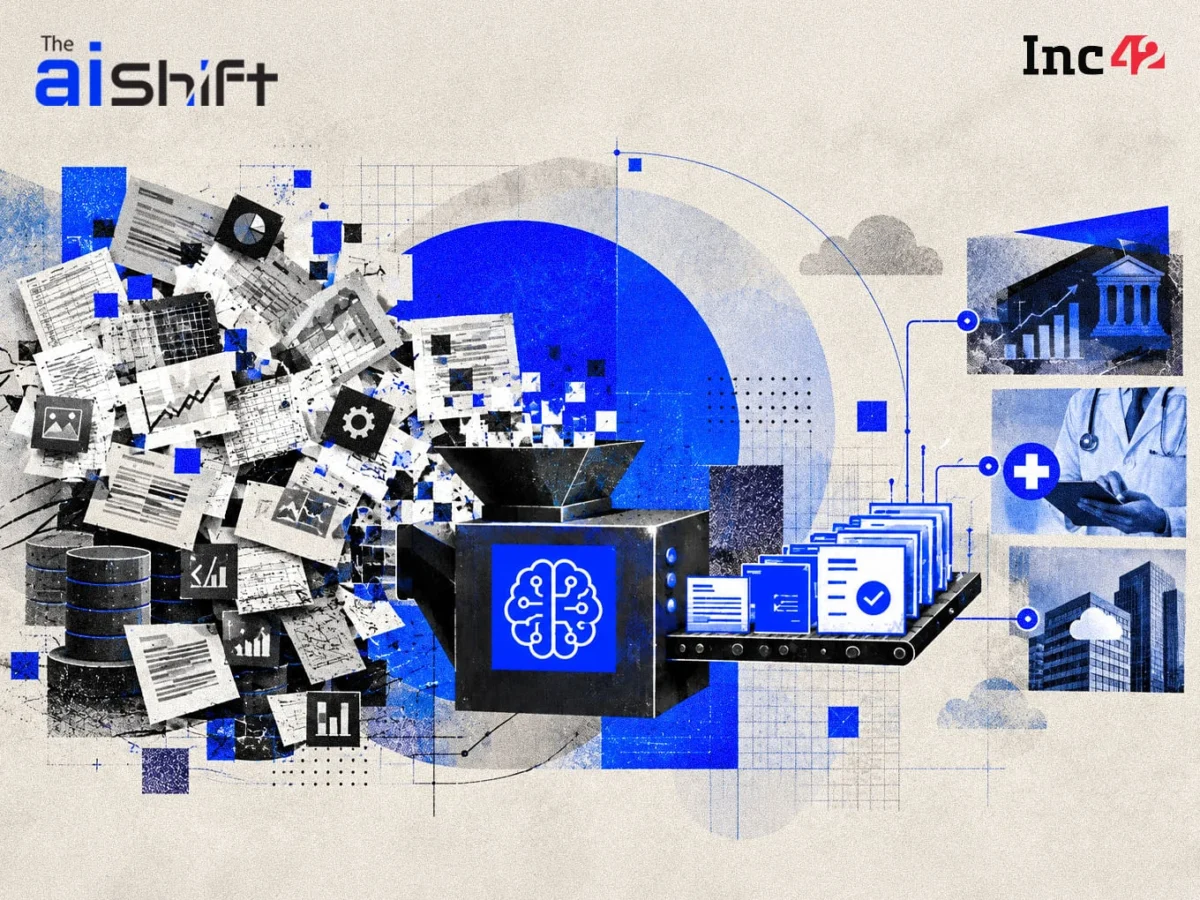
In the rapidly evolving landscape of enterprise artificial intelligence, a fundamental truth has emerged: AI agents are only as reliable as the data that feeds them. As corporations transition from experimental chatbots to deploying autonomous agents capable of assessing creditworthiness, managing complex clinical workflows, and executing high-stakes financial tasks, the discourse is shifting from "model capability" to "data hygiene."
In this edition of The AI Shift, we explore why data quality has become the primary bottleneck for AI deployment and why, in an age of generative intelligence, the most sophisticated model cannot compensate for a faulty foundation.
The Core Challenge: Moving Beyond "Garbage In, Garbage Out"
The conventional wisdom of "garbage in, garbage out" has taken on a more sinister dimension in the era of agentic AI. When a system is merely processing information, a flawed input might result in a mediocre output. However, when an agent is empowered to act—to approve a loan, order inventory, or update a medical record—a flawed input can trigger a catastrophic chain reaction.
The problem is rarely as simple as correcting typos or fixing formatting errors. Enterprise data is inherently "messy." It is frequently stale, duplicated, contradictory, or siloed across disconnected legacy applications. Moreover, AI agents often lack the nuanced organizational context required to distinguish between technically accurate data and data that is contextually relevant to a specific business decision.
As Srijan Nagar, co-founder of FinBox, aptly notes: "Model confidence should not be confused with confidence in the data." A model can output a decision with 99% statistical confidence, but if that confidence is built upon a premise derived from a missing transaction feed or an outdated document, the decision itself is inherently compromised.
Chronology of the Data Quality Crisis
The evolution of enterprise AI has progressed through three distinct phases, each highlighting different facets of the data quality dilemma:
- The Exploratory Phase (2022–2023): Organizations focused on Large Language Models (LLMs) and general knowledge retrieval. Data quality issues were masked by the "human-in-the-loop" requirement, where employees verified most outputs.
- The Integration Phase (2024): Companies began connecting AI to enterprise resource planning (ERP) and customer relationship management (CRM) systems. This revealed the "silo effect," where data inconsistencies across departments (e.g., Finance vs. Sales) caused hallucinations and logical errors.
- The Agentic Phase (2025–Present): With the rise of autonomous agents, the margin for error has vanished. Systems are now expected to execute workflows with minimal supervision, making data reliability a prerequisite for operational safety.
Supporting Data: Why Reliability Varies by Sector
The impact of poor data quality is not uniform; it manifests differently depending on the industry, yet the underlying risk remains systemic.
Fintech: The High Cost of Misinterpretation
In financial services, an incorrect identity signal or a missing transaction record can result in either the facilitation of fraud or the unfair exclusion of a creditworthy customer. The risk is compounded when agents rely on probabilistic judgements—such as "liveness" checks on a selfie—which must be carefully balanced against deterministic checks, like a national ID verification.
Healthcare: The Normalization Hurdle
Healthcare presents the most complex environment for AI. Patient data is fragmented across hospital electronic health records (EHRs), diagnostic labs, wearable devices, and billing systems. Before an agent can safely assist a clinician, the data must undergo rigorous normalization—mapping disparate sources into a common clinical vocabulary. Without this, an agent might conflate similar terms, leading to dangerous clinical errors.
Enterprise Operations: The Context Trap
In general enterprise software, data often resides in unstructured formats like emails, archived contracts, and legacy PDFs. The challenge here is "lineage"—knowing not just what a document says, but whether it is the current version, who is authorized to view it, and how it aligns with current company policies.
Engineering Data Reliability: A Four-Step Framework
There is no single "silver bullet" for data quality. Instead, experts suggest a methodical, layered approach to engineering reliability into the AI pipeline.
1. Screening at the Point of Entry
The most cost-effective way to ensure data quality is to catch errors before they enter the system. This involves validating completeness, recency, and anomaly detection the moment data is ingested.

2. Contextualization
Data must be tagged with business logic. An agent should not just retrieve a contract; it must understand the company’s specific definitions of liability, currency, and authorization levels associated with that contract.
3. Governance and Audit Trails
For every decision made by an AI, there must be a traceable path of evidence. If an agent denies a loan or flags a medical file, the enterprise must be able to audit the specific data points that triggered that decision.
4. Continuous Monitoring
Data drift—where the quality or distribution of data changes over time—is a constant threat. Post-deployment monitoring ensures that as business practices evolve, the data feeding the AI agents remains representative and accurate.
Kedar Parikh, CPO at HyperVerge, emphasizes the "Pyramid of Trust." Regulated source data (e.g., credit bureau records) is treated as the primary source of truth, while corroborated documents (like OCR-processed bank statements) sit in the middle. Self-declared information sits at the base, serving as a signal that triggers a check rather than a definitive conclusion.
Official Perspectives: Industry Leaders Weigh In
Arjun Nagulapully, CTO of AIONOS, argues that we must move beyond merely having data. He defines "AI-ready" datasets as those that have undergone governed ingestion and expert-reviewed training, ensuring that models learn from clinical standards rather than the "noise" of raw system outputs.
Mayank Verma, Global Head of Data and AI at Xebia, highlights the urgency of this work in the context of "agentic data platforms." He warns that without shared terminology and rigorous data engineering, agents will inevitably "trip up" as they attempt to reconcile conflicting definitions across different business units.
Implications: The Shift Toward Deterministic AI
The industry is moving toward a model where the "agent" acts as a bridge between raw, unstructured data and specific business outcomes. Companies like Zenalyst are leading this charge, building platforms that prioritize "deterministic" outcomes over pure probability. By gating reasoning through verification steps and grounding queries in a client’s proprietary schema, these systems aim to minimize the unpredictability that has historically plagued AI.
The broader market for autonomous finance is projected to reach over $112 billion by 2031, signaling a massive shift in how enterprises manage operations. This growth is contingent on the ability of firms to transition from manual number-crunching to agent-led automation that is as accurate as it is efficient.
The Weekly Buzz: Meta’s Muse Goes Enterprise
As the industry grapples with these foundational issues, Meta is making a significant play for the enterprise market. Following the consumer success of its "Muse" personal agent—capable of booking travel, shopping, and managing app workflows—Meta has launched the Meta Enterprise Platform.
By hiring former MongoDB CEO Chirantan "CJ" Desai to lead this unit, Meta is signaling its intent to offer a full-stack enterprise solution. Unlike traditional chatbots, Muse is designed to be an "action-oriented" agent that works across connected apps and runs on secure cloud infrastructure. For enterprises, this means moving toward a standardized agentic framework, provided they have the data hygiene necessary to support such powerful tools.
Strategic Takeaway: The Path Forward
The pursuit of AI-driven efficiency is often interrupted by the mundane reality of data maintenance. However, the organizations that will succeed are those that treat data as a strategic asset rather than a byproduct of operations.
By defining what "trustworthy data" means, enforcing strict entry screening, and maintaining transparency through audit trails, enterprises can transform their AI agents from unpredictable tools into reliable, scalable engines of growth. As we move further into this shift, the competitive advantage will belong to those who build not just for intelligence, but for reliability.