Introduction and Main Facts
For a decade, a freelance content writer approaching his 40s enjoyed what many in the digital economy consider the holy grail: a single, steady client who provided a reliable monthly income, complete creative autonomy, and the comfort of working from home. There was no need to trawl through competitive freelance marketplaces, pitch cold leads, or weather the feast-or-famine cycles typical of independent labor.
Then, generative artificial intelligence arrived.
What began as a quiet corporate cost-cutting measure spiraled into a cautionary tale for the modern digital workforce. The client rapidly integrated AI tools to automate the bulk of the content production, slashing the writer’s compensation before letting him go entirely as organic web traffic plummeted. Google search rankings evaporated, website revenue cratered, and a succession of new owners learned a harsh market lesson: readers quickly abandon robotic, low-quality, AI-generated prose.
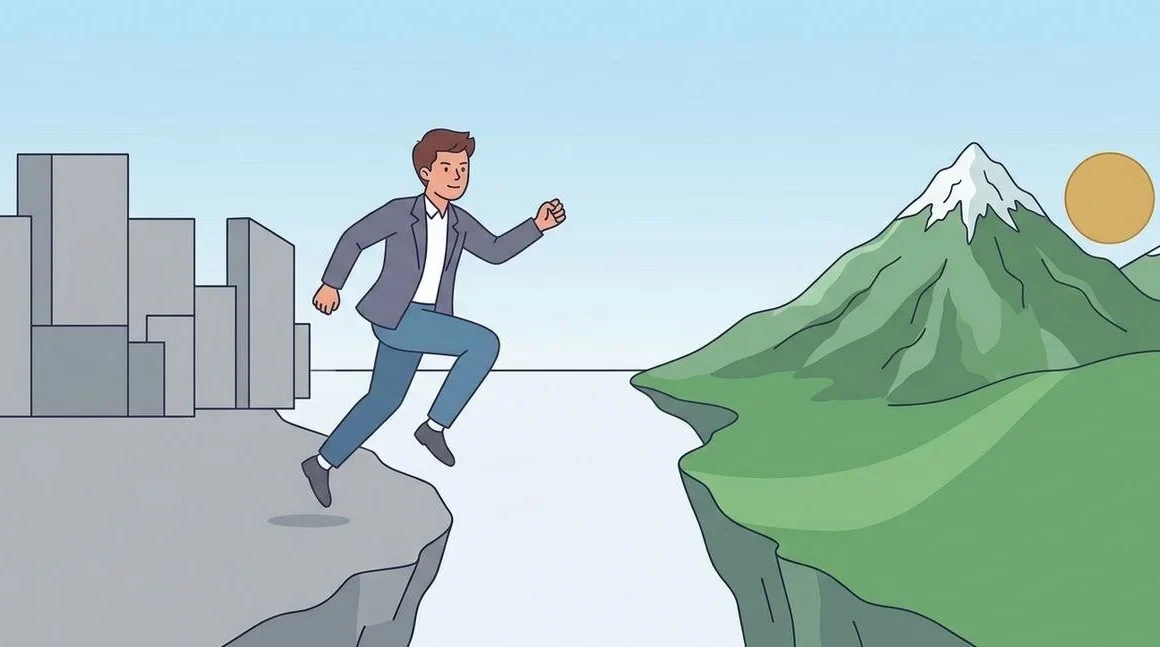
Today, this writer finds himself at a precarious career crossroads. Teetering on the edge of his fourth decade, he is forced to unlearn a decade of specialized habits, rethink his aversion to traditional employment, and weigh the allure of tangible, physical labor against a shifting digital landscape. His experience is not an isolated anecdote; it is a macro-level window into the volatile intersection of generative AI, the creator economy, and the future of knowledge work.

Chronology of a Collapse: Ten Years to Zero
To understand the sudden disruption of this career, one must trace the timeline of how digital content production shifted from a human-centric craft to an automated assembly line.
Phase One: The Golden Decade (2013–2022)
For ten years, the arrangement was mutually beneficial. The writer produced specialized content for a prominent niche website. The arrangement offered insulation from the chaotic gig economy. Because the work was consistent and high-performing, the writer invested all his professional energy into a single ecosystem, inadvertently creating a single point of failure in his livelihood.
Phase Two: The AI Disruption (Late 2022–2023)
Following the public rollout of foundational large language models like ChatGPT, the primary client identified an opportunity to minimize operational costs. AI tools were deployed to churn out articles at scale. The writer’s workload shifted from creation to editing and minimal oversight, accompanied by systematic pay cuts. Believing that a reduced income was still superior to none, the writer stayed.
Phase Three: The Algorithm Backlash and Sale (2023–2024)
As search engine algorithms grew more sophisticated at detecting low-value, automated text, the website’s search engine optimization (SEO) standings collapsed. Traffic bled away, pulling ad revenue down with it. Facing diminishing returns, the original owner sold the digital asset.

Phase Four: The Final Cut and Unemployment (2024–Present)
A new owner took over the struggling property, retaining the writer under even more depressed financial terms. After several months of trying to salvage a broken site, the new management initiated deep cost-cutting measures, terminating the contract. The realization set in: the automated shortcut had destroyed the asset’s underlying value.
Supporting Data and Industry Implications
The plight of this freelance writer reflects broader structural shifts across the global labor market. The rapid deployment of generative AI has triggered profound economic adjustments across creative, administrative, and technical sectors.
+-------------------------------------------------------------------------+
                    THE LIFECYCLE OF AI CONTENT ADOPTION
+-------------------------------------------------------------------------+

  [ Phase 1: Implementation ]
  --> Companies adopt AI for rapid, low-cost content scaling.

  [ Phase 2: Short-Term Savings ]
  --> Human payroll is slashed; output volume surges.

  [ Phase 3: Algorithmic Penalty ]
  --> Search engines penalize low-quality bulk AI text; traffic drops.

  [ Phase 4: Audience Rejection ]
  --> Readers disengage due to generic tones and lack of authenticity.

  [ Phase 5: Market Correction ]
  --> Businesses experience revenue loss and begin rehiring human talent.
+-------------------------------------------------------------------------+
The Illusion of Free Scaling
Many digital publishers fell into the trap of viewing content as a mere commodity rather than a medium for human connection. By replacing human writers with unedited AI outputs, these businesses achieved short-term savings at the expense of long-term brand equity. Search engine giants, including Google, continuously update their core algorithms to prioritize "helpful content" written by people, for people. Sites that flooded their pages with raw AI text quickly found themselves relegated to search engine obscurity.
The Portfolio Trap
A major takeaway from this digital upheaval is the danger of professional over-specialization. By dedicating a decade to a single client within a single niche, the writer neglected to build a diversified portfolio. When the niche collapsed and the client vanished, he possessed no proof of work for broader content strategy, multi-role digital marketing, or emerging content formats.

Furthermore, the freelance writing market itself has contracted. Traditional copywriting and basic blogging roles are increasingly consolidated into multi-disciplinary digital marketing positions. Freelancers who once thrived on single-skill execution are now expected to manage end-to-end content lifecycles, analytics, and strategy—often for lower relative compensation due to hyper-competition.
Official Responses and Expert Perspectives
As the initial wave of corporate enthusiasm for generative AI matures, industry analysts and workforce economists are observing a pronounced market correction.
The Return of the Human Element
According to various digital marketing insights and SEO analysts, corporate boards are beginning to realize that uncurated AI text damages brand trust. Readers have developed an intuitive resistance to robotic phrasing, generic structures, and repetitive arguments. Consequently, a growing segment of enterprises is actively pivoting away from purely automated content pipelines, recognizing that human judgment, empathetic storytelling, and original research are irreplaceable.
Labor Economists on the 9-to-5 vs. Freelance Debate
For independent workers displaced by automation, the choice between returning to traditional corporate employment and navigating the modern gig economy has never been starker. Career advisors note a spike in mid-career professionals experiencing displacement anxiety.

- The Traditional Job Market: While corporate roles on professional networks like LinkedIn offer stability and formalized benefits, they are currently flooded with hundreds of applicants per posting. This hyper-competition creates prolonged job-search cycles for seasoned freelancers unaccustomed to corporate hiring funnels.
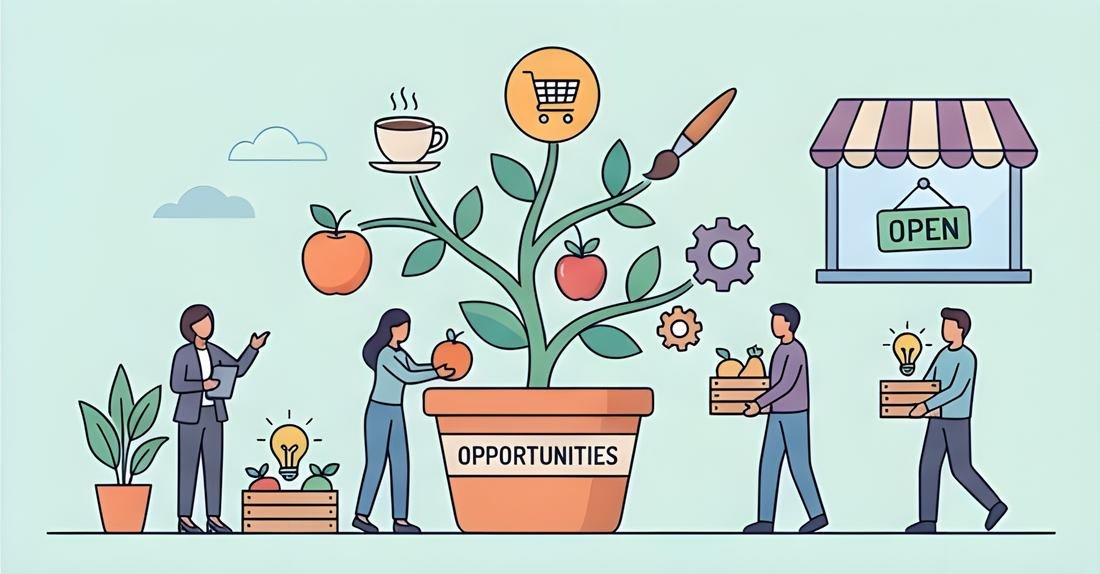
- The Entrepreneurial Pivot: A subset of displaced knowledge workers is rejecting both digital freelancing and corporate structures entirely. Moving toward "hands-on" micro-businesses—such as specialized local services, sustainable agriculture, and traditional crafts—represents a psychological flight from virtual burnout into tangible reality.
Implications for the Future of Work
The trajectory of this freelancer’s career offers several critical lessons for the future of employment in an AI-driven world.
1. Diversification is Mandatory
The era of relying on a single anchor client is definitively over. Professionals in the digital sector must continuously diversify their client bases, expand their skill sets, and maintain dynamic portfolios. Single-niche dependency leaves workers vulnerable to sudden technological shifts.
2. Quality Trumps Volume
While AI can generate high volumes of text instantaneously, it cannot replicate lived human experience, proprietary data, or genuine emotional resonance. The future belongs to hybrid professionals—workers who leverage AI as a productivity tool rather than a wholesale replacement for thought. Writers who refuse to compromise on their rates, standards, and unique creative voice are positioned to capture the high-end market as companies seek to undo the damage of low-quality automation.
3. The Revaluation of Physical Work
Perhaps the most striking implication of the current tech-driven displacement is the psychological toll it takes on knowledge workers. Spending a decade optimizing content for algorithms can lead to profound existential fatigue. The gravitation toward physical trades, small businesses, and tactile labor signals a broader cultural recalibration: as digital spaces become saturated with synthetic artifacts, humanity’s appreciation for the authentic, the physical, and the real is experiencing a powerful renaissance.
Conclusion
As this writer looks toward turning 40, the path forward remains unwritten. Whether he secures a renewed human-centric content role or transitions into an entirely different, hands-on enterprise, his journey serves as a stark reminder. Technology can automate tasks, disrupt business models, and shatter complacent routines, but it cannot manufacture the depth of human experience. For workers navigating this turbulent era, holding fast to professional standards and embracing adaptability will be the ultimate keys to survival.