










The digital landscape is undergoing a tectonic shift. For two decades, the "customer journey" was a predictable, linear path: a user would enter a broad query into a search engine, browse several websites, digest category information, and eventually arrive at a product page to evaluate a purchase. Today, that journey has been truncated, disrupted, and fundamentally altered by the rise of Large Language Models (LLMs).
As users increasingly turn to AI models to compare options, summarize vendor capabilities, and distill complex features into digestible summaries, the traditional digital "top-of-funnel" is disappearing. By the time a potential customer lands on your pricing or product page, they are no longer a "cold visitor" wandering in from a search query. They are informed, opinionated, and—most importantly—operating under a compressed timeline.
This shift has created a high-stakes environment for digital businesses. With traffic becoming a scarce commodity in an AI-dominated search ecosystem, the cost of an irrelevant user experience has never been higher.
The New Reality: Traffic Scarcity and the Conversion Imperative
The era of relying on massive, low-intent traffic volume to drive revenue is effectively over. Sparsh Gupta, Co-founder and CEO at Wingify, describes the current environment as a structural challenge for global brands.
"Traffic is a big challenge now," Gupta explains. "There’s a scarcity of it. AI is taking traffic away globally, and plenty of brands report steep declines. Traffic is no longer a luxury, which means conversion becomes far more important. If your traffic is down by approximately 30%, you need to convert at least 30% better just to get the same business outcome."
This sentiment underscores a grim reality for digital marketers: the "luxury" of poor conversion rates is a relic of the past. When users arrive further along in their research phase, they do so with specific objections. If a landing page is designed for a novice who is three steps behind the user’s current intent, that user will bounce in under sixty seconds. The window to capture value has narrowed, and the margin for error has vanished.
Analytics: The Evidence Gap
Most organizations are not flying blind. They possess a wealth of data—session recordings, heatmaps, funnel reports, and sophisticated product analytics. However, there is a profound disconnect between possessing evidence and acting upon it.
The traditional workflow for optimizing a digital experience is a manual, human-speed slog:
- Identification: An analyst notices a drop-off in the funnel.
- Investigation: A team member spends hours watching session recordings to form a hypothesis.
- Validation: The insight must be segmented and verified to ensure it represents a broad trend.
- Collaboration: The insight is socialized across design, engineering, and marketing teams to build a, "winning" variation.
In this model, an insight captured on day one often doesn’t materialize as a live site change until five weeks later. In the context of rapidly shifting consumer behavior, a five-week latency is the difference between market leadership and obsolescence.
Wingz: The Intelligence Layer of the Future
To bridge the gap between data-driven insight and immediate action, Wingify has introduced Wingz, an agentic AI layer designed to integrate across the entire optimization loop. Wingz functions by connecting the disparate silos of analytics, experimentation, personalization, and commerce into a unified intelligence ecosystem.

Unlike standard AI tools that simply offer advice, Wingz acts as an orchestrator. It identifies behavioral signals, formulates a hypothesis, executes the experiment, and interprets the results. By maintaining the context of every interaction, the system ensures that every subsequent test is more informed than the last.
Divyanshu Kalra, Director of Data Sciences at Wingify, emphasizes the necessity of this "closed-loop" approach. "Experimentation teams don’t lack ideas or data. They lack time to connect the two. Wingz closes that gap. You can ask it why a funnel is leaking, get an answer grounded in your own analytics, and turn that insight into a live variation just by describing it."
The Relevance Loop: A Four-Stage Framework
To combat the volatility of modern consumer behavior, Wingify posits that businesses must adopt a "Relevance Loop." This is not a one-time configuration; it is a continuous, automated cycle that prevents relevance from slipping.
1. Understand: Behavioral Interpretation
Wingz processes behavioral data with the nuance of a veteran analyst. It doesn’t just show that a bounce happened; it surfaces the specific friction point—whether it’s a confusing pricing table or a broken mobile flow—that is costing the business revenue.
2. Decide: Prioritizing Impact
This is the stage where most organizations stumble. Wingz evaluates which changes are worth testing based on predicted impact and current site performance, removing the paralysis of choice that often hampers growth teams.
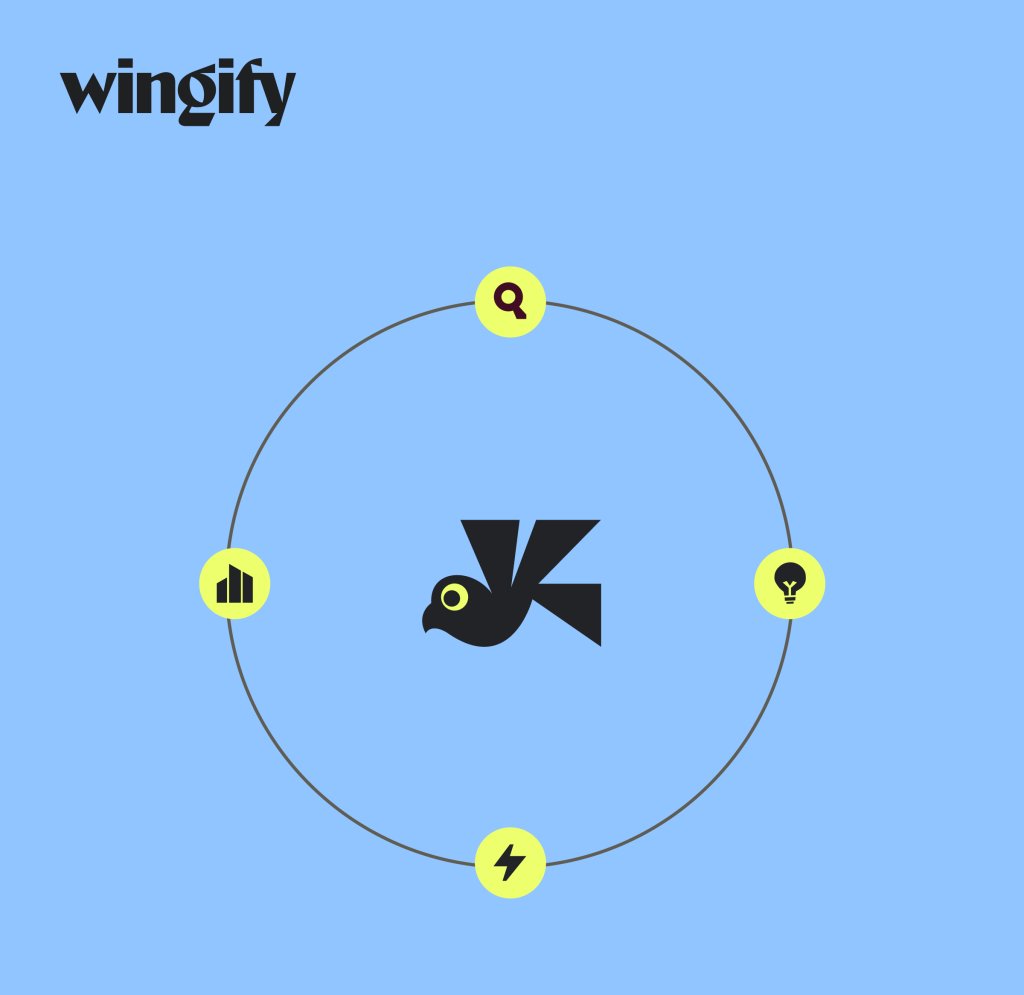
3. Act: Natural Language Execution
The "Act" phase is where the friction of traditional development is removed. A user can describe a desired experiment in plain English, and Wingz handles the technical heavy lifting: building the variation, setting the targeting, and pushing the experiment live.
4. Measure and Learn: Compounding Intelligence
The final stage is the most critical. Because an untested change is merely a guess, Wingz automatically monitors performance. Crucially, the result of the test feeds back into the system, influencing the next set of recommendations. This creates a compounding advantage where the platform becomes more effective the longer it runs.
Implications for Industry Leaders
The adoption of agentic AI in conversion optimization is fundamentally changing how teams operate. For companies like NRMA Parks and Resorts, the value lies in the acceleration of the feedback loop.
"The feature I’ve found most useful is Wingz and its ability to surface patterns and accelerate interpretation of test results," says Ben Hoefel, Product Owner at NRMA. "It acts as a strong assistive layer by helping summarize performance trends, highlight meaningful differences between variants, and speed up the synthesis of learnings."
The implications are clear: the companies that survive the AI-driven traffic contraction will be those that treat their website as a living, breathing entity that evolves in real-time.

Frequently Asked Questions
Q1. How much faster does Wingz make the loop?
At the build stage, describing a change in plain language allows for a ready-to-review variation in seconds, replacing hours of manual coding. At the analysis stage, it consolidates heatmaps, session recordings, and funnel metrics into a single, cohesive workflow, allowing teams to skip the administrative burden of synthesis.
Q2. Does AI have full autonomy over my site?
No. Wingz is built on a "human-in-the-loop" philosophy. The AI handles the analysis and the construction of variations, but your team retains full control over what goes live. You can choose to start with a "propose-and-approve" model and gradually increase automation as the team builds trust in the system’s guardrails.
Q3. How do I ensure data security and privacy?
Data isolation is a core tenet of the platform. Your site’s traffic data is used to optimize your experience alone; it never leaks into a competitor’s account or a shared global model. Wingify adheres to rigorous security standards, including ISO 27001, SOC 2 Type II, GDPR, and HIPAA.
Q4. What happens when a test succeeds?
Because consumer behavior is dynamic, optimization is never "finished." Wingz allows you to schedule recurring checks. If a previously winning variation begins to underperform due to a shift in user trends, the system flags the issue, prompting a new cycle of optimization.
The Road Ahead: Compounding Advantages
In the new digital order, static optimization is a liability. A website optimized for the user of last quarter is effectively broken for the user of today. By automating the experimentation loop, companies can move beyond the "guesswork" model of A/B testing and move toward a continuous, compounding growth engine.
The transition to AI-integrated optimization is not merely about using a new tool; it is about adopting a new speed of business. As traffic becomes harder to win and easier to lose, the ability to act on data at the speed of the user journey is the only lever left. For those ready to close the loop, the opportunity is not just to convert better—it is to build a deeper, more relevant relationship with every customer who interacts with their brand.



