










In an era where the internet serves as the global backbone for commerce, healthcare, and civic engagement, the digital divide remains a profound challenge. For the 1.3 billion people worldwide living with disabilities, the promise of a "world wide web" is often thwarted by inaccessible interfaces, broken navigation, and software that fails to account for assistive technologies.
AudioEye, a leader in the digital accessibility sector, is shifting the paradigm. By moving away from reactive, "check-the-box" compliance strategies, the company is championing a hybrid model—merging high-speed AI automation with the nuanced judgment of human experts. As global regulations tighten and the digital landscape evolves, AudioEye’s mission is clear: to ensure the internet is not just a collection of sites, but a functional, inclusive space for everyone.
The Evolution of Accessibility: From Niche Concern to Business Imperative
To understand the current state of digital accessibility, one must look at how far the industry has traveled. Two decades ago, web accessibility was largely a fringe topic, often ignored by corporate boards or relegated to a minor IT footnote.
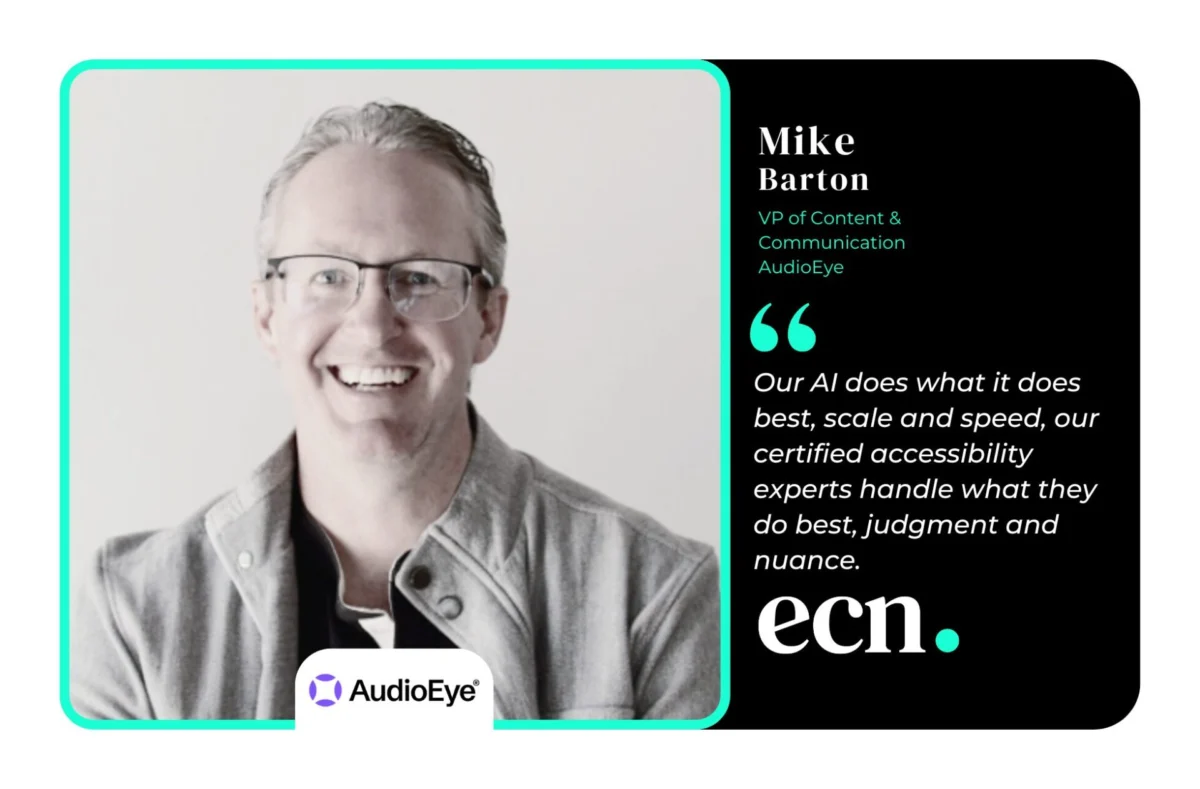
"Digital accessibility was a niche concern when AudioEye started," explains Mike Barton, VP of Content Marketing and Communications at AudioEye. "Most companies treated it as a checkbox or ignored it entirely. What’s changed is that the stakes have caught up to the principle."
The shift has been driven by three primary catalysts:
- Legal Pressure: In the United States, accessibility-related lawsuits have doubled since 2020. This trend is not confined to North America; the European Accessibility Act (EAA) has introduced stringent requirements that now demand cross-border compliance.
- Technological Complexity: The rise of AI-generated content has paradoxically made the web less accessible, as automated code generation often ignores foundational accessibility standards.
- Economic Recognition: Businesses are finally acknowledging the $18 trillion in global spending power held by people with disabilities. Accessibility is no longer just a legal cost—it is a massive, untapped market opportunity.
The Hybrid Model: Why AI Needs Human Intuition
A central pillar of AudioEye’s operational philosophy is the integration of machine learning and human expertise. In the world of web development, automation is essential for scalability, but it is insufficient for total inclusivity.
"Automation is how you scale accessibility, and human expertise is how you get it right," Barton notes. AudioEye’s platform functions by deploying a snippet of JavaScript that scans websites in real-time, matching them against WCAG (Web Content Accessibility Guidelines) standards. According to an independent 2026 study by Adience, this automated engine detects up to 2.5 times more issues than competing solutions.
However, the "gray areas"—the complex user journeys, the context of a button’s function, or the intent behind a dynamic carousel—require human judgment. AudioEye employs certified accessibility specialists, including individuals with disabilities, to manually audit these complex interactions. By automating the "easy" 50% and applying human intelligence to the remaining, more difficult issues, AudioEye achieves a resolution rate of roughly 97% before a company’s internal development team even needs to intervene.
Supporting Data: The Cost of Inaction
The numbers paint a stark picture for businesses that ignore digital inclusivity. With 78% of accessibility lawsuits currently targeting online retailers, e-commerce is the frontline of this conflict.
Research indicates that 7 out of 10 people with disabilities will abandon a website that does not accommodate their needs, opting instead to take their business to a competitor. In a digital economy where customer loyalty is built on seamless experiences, a lack of accessibility is a direct drain on conversion rates.
Furthermore, AudioEye’s data suggests that its hybrid approach provides significantly higher protection than legacy methods. Their internal metrics show:
- 300% more legal protection compared to traditional "fix-at-source" consulting.
- 400% more legal protection than automation-only "widget" solutions.
This data suggests that companies relying solely on automated "overlays" without human validation are leaving themselves exposed to litigation and alienating a significant portion of their potential customer base.
Official Responses and Strategic Vision
AudioEye’s leadership emphasizes that compliance should be the byproduct of good design, not the end goal of a panicked, one-time audit. By providing ongoing, real-time monitoring, the company helps organizations stay ahead of the regulatory curve.
When a legal demand letter arrives, AudioEye provides expert "debunk reports" to legal counsel, backed by documented history of successful courtroom dismissals. This proactive posture is designed to shift the conversation from "avoiding fines" to "investing in user experience."
Looking toward the future, Barton identifies two major trends that will define the next decade:
- The Globalization of Law: As the EAA and other international regulations come into force, the compliance map for multinational corporations is expanding rapidly.
- The Rise of AI Discovery: AI agents are beginning to navigate the web to provide answers and product recommendations to users. These agents rely on the "accessibility tree" of a website to understand its content. If a site is inaccessible, it is effectively invisible to these next-generation search tools. "Accessibility and AI discovery are going to be the same conversation in a few years," says Barton.
Implications for the Modern Enterprise
For CTOs, CMOs, and legal teams, the implications are profound. Integrating accessibility into the existing tech stack—whether through a CMS, a headless architecture, or a custom build—must become a standard operating procedure.
AudioEye’s platform is designed to minimize the burden on internal development teams. By deploying via a single line of JavaScript, the platform can monitor user sessions 24/7 and deploy fixes instantly. For the rare issues that require source-level code changes (typically under 5% of cases), the platform provides granular, actionable feedback to engineers, ensuring that developer time is spent efficiently.
Conclusion: The Moral and Economic Case
The digital world is not static; it is constantly evolving, and the tools we use to navigate it must evolve with it. AudioEye’s approach underscores a fundamental truth: technology should serve to empower rather than exclude.
As we look toward a future where AI becomes the primary interface between humans and the internet, the demand for accessible, clean, and semantically sound digital infrastructure will only increase. Companies that treat accessibility as a foundational element of their brand will not only mitigate legal risk and boost their bottom line but will also contribute to a more equitable digital future.
As Mike Barton concludes, "The internet should work for everyone who uses it. Our job is to make sure it does." In a world increasingly defined by its digital architecture, that mission has never been more vital.
Key Takeaways for Businesses
- Compliance is a Continuous Process: One-time audits are insufficient in a dynamic web environment. Continuous monitoring is the only way to stay compliant with evolving laws like the EAA.
- Conversion and Retention: Accessible websites are objectively better for all users, leading to higher conversion rates, better SEO, and lower bounce rates.
- The AI Blind Spot: As AI agents increasingly index the web, ensuring your site is accessible is a requirement for future-proofing your brand’s digital discoverability.
- Hybrid Efficiency: Combining AI for volume and human expertise for nuance is the most cost-effective and legally robust way to manage digital accessibility at scale.



