










SAN FRANCISCO — In what industry analysts are already calling one of the most significant paradigm shifts in consumer and enterprise hardware in decades, Microsoft and Nvidia have joined forces to launch an entirely new class of Windows-powered laptops. Unveiled at a high-profile joint event in San Francisco, the new hardware ecosystem is anchored by Nvidia’s groundbreaking RTX Spark chipset and a heavily optimized version of Windows 11.
Designed specifically to take direct aim at Apple Inc.’s dominant MacBook Pro lineup, these machines represent a major milestone for developers, creators, and power users. By combining workstation-class computing, supercomputer capabilities, and advanced local AI processing into a single unified architecture, Microsoft and Nvidia are looking to shift the paradigm of modern computing away from total cloud reliance and back onto the local device.
Main Facts: The Hardware, Pricing, and Ecosystem
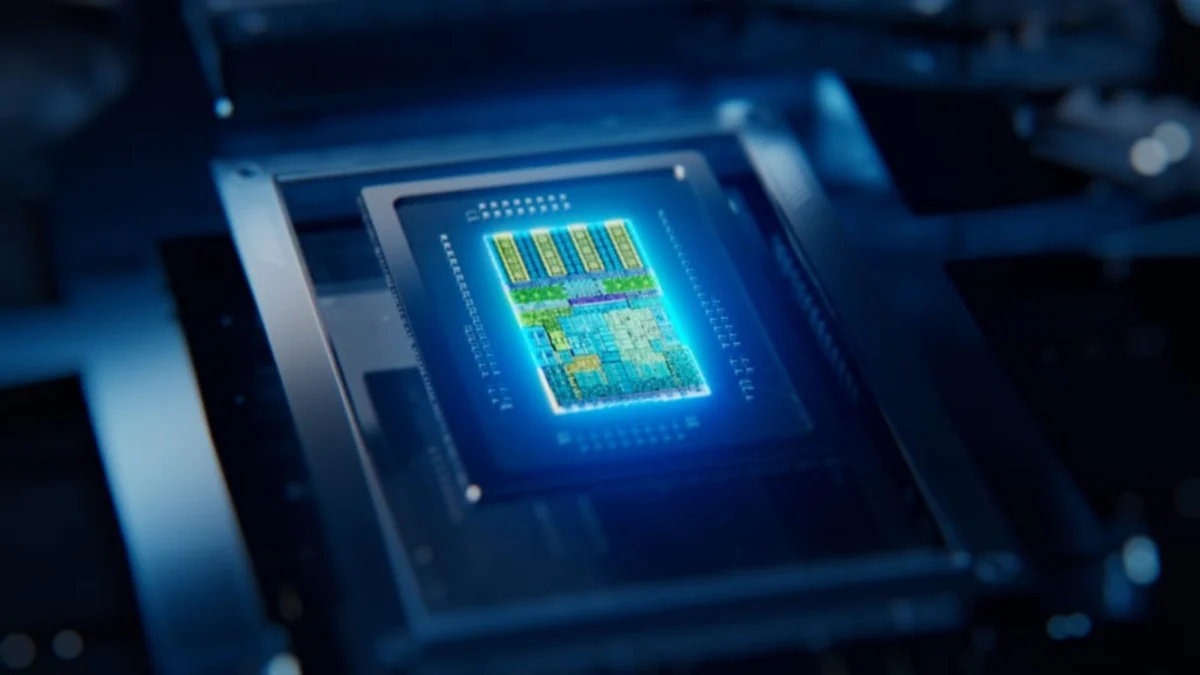
At the heart of this new computing era is the Nvidia RTX Spark chipset—a technological marvel that the companies claim took over 4,000 engineering years to develop. This unified architecture merges traditional CPU and GPU capabilities with dedicated neural processing units, enabling unprecedented local AI performance.
The hardware rollout is spearheaded by two flagship Microsoft devices:
- Surface Laptop Ultra: A premium 15-inch laptop starting at $2,599, configurable with up to 128 GB of unified memory. It features the brightest peak HDR display ever fitted to a laptop and introduces "Magnetic Connect," a standardized magnetic USB-C charging port reminiscent of Apple’s MagSafe.
- Surface RTX Spark Dev Box: Engineered explicitly for hardcore developers, AI researchers, and digital creators, this specialized workstation-class device starts at $5,999.
Beyond Microsoft’s own first-party hardware, major original equipment manufacturers (OEMs)—including Asus, Dell, Lenovo, HP, and MSI—are rolling out their own RTX Spark-powered PCs. All announced devices are scheduled to hit shelves globally starting Friday, October 16.
Chronology of the Unveiling Event
The joint product unveiling in San Francisco brought together tech royalty, featuring Microsoft CEO Satya Nadella, Nvidia CEO Jensen Huang, and Pavan Davuluri, Head of Windows and Devices.
The event unfolded through a carefully choreographed sequence of hardware reveals, live performance demonstrations, and strategic software updates:
- The Grand Vision: Jensen Huang took the stage first to frame the magnitude of the project, declaring that the companies had successfully reinvented the personal computer by compressing the architecture of a supercomputer, workstation, and gaming rig into a single silicon superchip.
- Hardware Showcase: Pavan Davuluri introduced the Surface Laptop Ultra and Dev Box, detailing their structural design, pricing, and the innovative Magnetic Connect charging system.
- Gaming and Performance Demos: Davuluri demonstrated the hardware’s real-world versatility by running GitHub Copilot seamlessly alongside Gears of War: E-Day at a fluid 60 frames per second. He announced that "hundreds" of AAA and indie titles would be fully optimized on day one, with Call of Duty slated for an RTX Spark release in 2027.
- AI and Rendering Benchmarks: Microsoft presented side-by-side video demonstrations showing heavy workloads across Blender, Photoshop, ComfyUI, and Unreal Engine running locally, reducing rendering times from days down to hours.
- Software & Hybrid Intelligence: The event concluded with deep dives into Windows 11 updates, local AI agent hosting capabilities, and Microsoft’s broader vision for a "frontier ecosystem" driven by Agent 365 and Microsoft IQ.
Supporting Data: Benchmarking Against Apple’s M5 Pro
Microsoft did not shy away from direct comparisons with its primary rival in the high-end creative market, pitting the RTX Spark directly against Apple’s M5 Pro chip found in the latest MacBook Pros. According to Microsoft’s internal metrics, the RTX Spark architecture delivers staggering performance multipliers:
- Time to First Token (LLMs): Up to 2.1x faster than the M5 Pro, drastically accelerating response times for local large language models.
- Image Generation: Up to 4.3x faster, offering digital artists near-instantaneous rendering for complex diffusion models.
- Video Generation: Up to 6.2x faster, fundamentally transforming local video production workflows and editing timelines.
Furthermore, the integration of up to 128 GB of unified memory on the Surface Laptop Ultra allows data scientists and developers to load massive, uncompressed AI models directly into local memory, bypassing bandwidth bottlenecks associated with cloud transfers.
Official Responses and Executive Insights
The leadership team on stage emphasized that this partnership was born out of a shared necessity to redefine what a personal computer can achieve in an AI-first world.
"It took more than 4,000 engineering years. This is a massive project. We have reinvented the personal computer," said Nvidia CEO Jensen Huang during his keynote. "For the first time, we took all the capabilities that used to be in a gaming laptop, a workstation, a supercomputer or the cloud, unified the architecture and made it run on one superchip."
Microsoft CEO Satya Nadella framed the launch as a foundational step toward building a cohesive "frontier ecosystem." Nadella stressed that hardware and software must evolve in tandem to support modern workflows centered around platforms like Agent 365, Microsoft IQ, and advanced copilots.
Pavan Davuluri underscored the security implications of this new hardware paradigm, positioning Windows 11 as the industry’s most secure platform for autonomous agents. He highlighted built-in system containment features that ensure local AI agents operate safely without compromising user data or system integrity.
Implications: The Shift Toward Hybrid Intelligence and Local AI
The launch of the RTX Spark ecosystem carries profound implications for the tech industry, touching on enterprise software, consumer habits, and developer workflows.
1. The Rise of Hybrid Intelligence
Until now, running sophisticated AI workloads meant routing data to massive, power-hungry cloud data centers. The RTX Spark laptops pivot toward a "hybrid intelligence" model. Under this updated Windows 11 framework, Microsoft Copilot dynamically routes queries: complex reasoning tasks are sent to the cloud, while routine, repetitive, or privacy-sensitive tasks are processed entirely on the local device. This not only preserves user "tokens" and lowers operational costs but also drastically enhances data privacy.
2. Democratizing Local AI Agents
Beyond Microsoft’s proprietary tools, the updated Windows 11 operating system is engineered to host multiple third-party AI agents natively. Users can run advanced models locally, including Hermes Agent, OpenClaw, Perplexity, and Facebook Muse. This transforms the PC from a passive consumption tool into an active, autonomous assistant capable of executing complex multi-step workflows across local files and applications using natural language.
3. Natural Language Operating Systems
Windows 11 is receiving significant usability upgrades that leverage the new chip’s neural processing muscle. Users can now utilize natural language directly within the Task Bar Search menu to perform quick actions, alter system settings, capture screenshots, or intelligently organize open window layouts.
4. Direct Challenge to Apple’s Creative Monopoly
For years, the MacBook Pro has reigned supreme among creative professionals, video editors, and software developers. By delivering performance metrics that outpace Apple’s silicon by factors of 2x to 6x in specialized AI and rendering tasks—while simultaneously guaranteeing robust AAA gaming support—Microsoft and Nvidia have offered a compelling, high-performance alternative that addresses the longstanding limitations of Windows laptops in professional media creation.
As these machines roll out to consumers and enterprises on October 16, the tech world will be watching closely to see how the market responds to this bold reimagining of the personal computer.



