










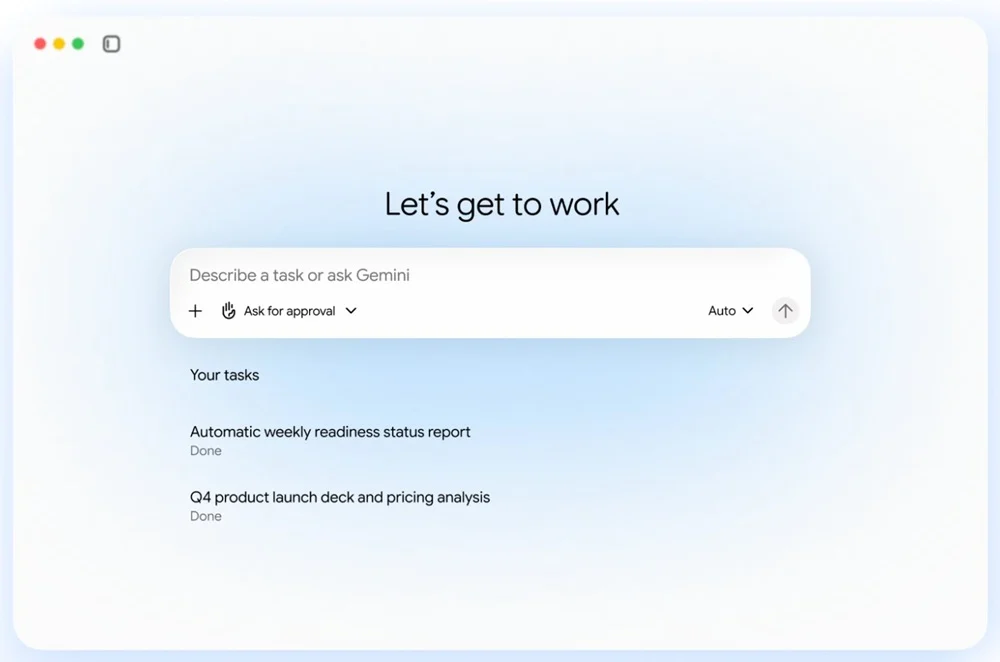
At the highly anticipated "Gemini at Work 2026" event, Google Cloud took a monumental leap forward in the evolution of enterprise artificial intelligence. The tech giant unveiled its new Gemini agent architecture, positioning it not merely as a chatbot or a productivity add-on, but as a "universal agent" capable of operating across the entire spectrum of enterprise workflows. As organizations grapple with the complexities of digital transformation, Google’s new ecosystem promises to unify fragmented data, disparate applications, and multi-model AI environments into a single, cohesive intelligence layer.
The Evolution of Enterprise AI: Core Facts
The centerpiece of the announcement is the Gemini agent, a sophisticated framework designed to transcend the limitations of current generative AI models. Unlike previous iterations that functioned in silos, the Gemini agent is engineered to retain context across tasks, devices, and enterprise boundaries.
The architecture is built upon six foundational pillars:
- Unified Agent: A single point of interaction for content creation, coding, and complex knowledge work.
- Omnipresent Access: Seamless integration across web, mobile (iOS/Android), desktop (Windows/Mac), command lines, and third-party ecosystems like Microsoft 365, Slack, and headless environments.
- Persistent Execution: The ability for agents to run autonomously for hours or days, maintaining memory and identity.
- Multi-Agent Orchestration: The capacity to coordinate sub-agents and coworker agents to execute large-scale, cross-functional workflows.
- Deep Context: Real-time access to business data, internal tools, and specialized memory.
- Model Choice: A flexible routing system that directs tasks to the most efficient model, whether it be Google’s own Gemini family, Anthropic’s Claude, or future private and open-source models.
Chronology: A Year of Exponential Growth
The launch comes on the heels of a massive surge in AI adoption. Google reported that nearly 500 of its Cloud customers have processed more than 1 trillion tokens each over the past year—a staggering indicator of the depth at which AI is being integrated into business processes. Today, 80% of Google Cloud customers leverage its AI products, and an impressive 90% of Fortune 100 companies have integrated Gemini Enterprise into their operations. This trajectory suggests that we are moving beyond the "experimental" phase of AI into a period of deep, operational deployment.
Supporting Data: Infrastructure and Capability
The power behind the Gemini agent lies in its sophisticated memory and tool-registry systems. Google has categorized agent memory into four distinct types:
- Session Memory: Keeps context within an active, immediate interaction.
- Semantic Memory: Retains critical business facts and organizational knowledge.
- Procedural Memory: Stores "how-to" playbooks and standardized task performance.
- Episodic Memory: Leverages historical experiences and past completed work to inform future decisions.
Furthermore, the "Borderless Lakehouse" initiative addresses the critical challenge of data silos. With roughly 90% of enterprise data existing in unstructured formats, Google’s platform now connects data across clouds and platforms—including Amazon S3, Azure Data Lake, Salesforce Data 360, and SAP—via integrations with Databricks Unity, Snowflake Polaris, and AWS Glue.
Official Responses and Strategic Vision
Google executives emphasized that the new architecture is designed to empower human workers through three distinct modes within Workspace:
- Personal Assistance: Supporting the individual’s daily information needs.
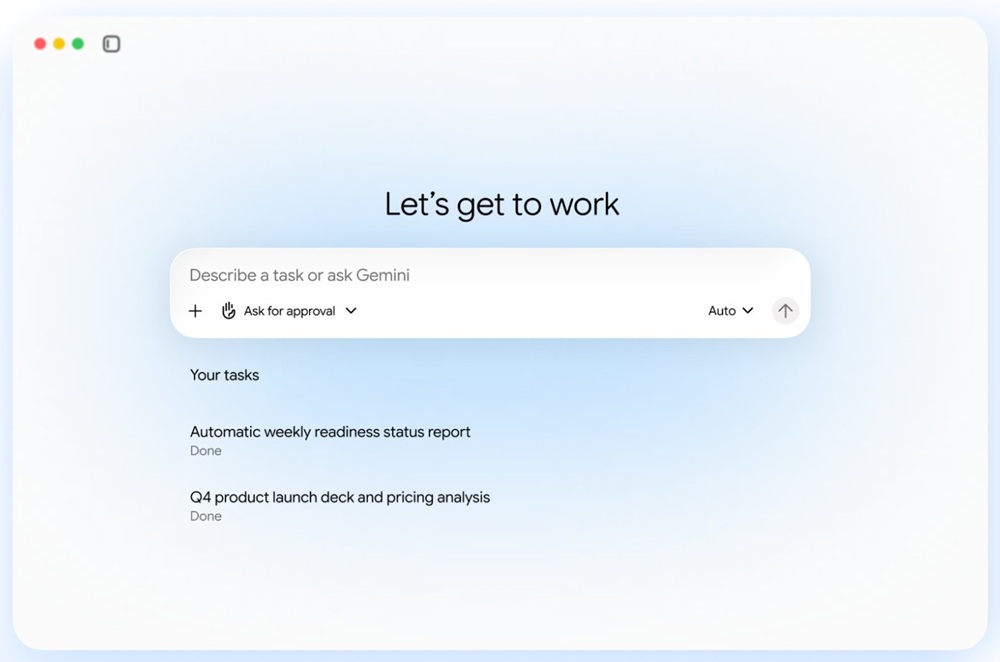
- Proactive Delegation: Allowing users to offload complex, multi-step tasks, such as generating an entire project update deck based on an email thread.
- Coworker Agent: A transformative feature where an agent is assigned its own
@agents.company.comidentity, calendar, and Drive access, allowing it to act as an autonomous teammate that can schedule meetings, comment on documents, and coordinate events.
"We are moving from a world where AI is a tool you use, to a world where AI is a teammate you work with," said a Google spokesperson during the keynote. This sentiment reflects the company’s push toward "agentic" AI, where the software does not just wait for prompts but actively manages and resolves business workflows.
Industry-Specific Implementations
Recognizing that one size does not fit all, Google has introduced industry-specific capabilities that are currently in preview:
- Financial Services: Integration with FactSet, LSEG, and SEC filings. These agents provide confidence scores, methodologies, and source citations, ensuring that high-stakes financial decisions remain auditable and accurate.
- Legal: Deep integration with platforms like NetDocuments, iManage, and Harvey. These tools are specifically engineered for confidential document handling, automated redaction, and complex legal research.
- Government, Healthcare, and Retail: While currently in the roadmap, these sectors are slated for specialized support soon, reflecting Google’s commitment to addressing the regulatory and operational nuances of these high-compliance fields.
Implications for the Global Enterprise
The shift toward "Gemini at Work" has profound implications for the global labor market and IT infrastructure.
1. The Rise of the AI Workforce
By assigning unique identities and persistent storage to agents, companies are effectively creating a digital workforce. This shifts the role of the human employee from "operator" to "manager," where the primary responsibility is supervising agent workflows and validating outputs. For organizations, this could lead to unprecedented gains in efficiency, but it also necessitates new governance frameworks to manage agent access, data privacy, and AI spending.
2. Democratization of Data
The "Borderless Lakehouse" and "Knowledge Catalog" are designed to break down the walls between data scientists and business users. By enabling non-technical staff to generate operational reports through natural language queries that tap into BigQuery and Knowledge Catalog, Google is lowering the barrier to data-driven decision-making.
3. Price-Performance Competition
Google’s continued investment in infrastructure, specifically the TPU 8i, underscores the company’s determination to maintain a competitive edge in AI cost-efficiency. By delivering 80% better price-performance compared to previous generations, Google is signaling to enterprises that AI is not just a high-cost luxury but a scalable, budget-friendly utility.
4. Ecosystem Expansion
The launch is supported by an expanding network of consulting and implementation partners. By providing an "AI Solution Finder" and allowing third-party connectors, Google is building an ecosystem similar to the App Store model. This will likely accelerate the development of custom agents tailored to niche business needs, ranging from supply chain optimization to customer experience management.
Conclusion: The Future is Agentic
The Gemini at Work 2026 event marks a pivot point in the history of cloud computing. By synthesizing intelligence, memory, and multi-cloud connectivity, Google Cloud has provided a blueprint for the future of work. As these agents move from preview to full production, the challenge for enterprises will shift from "how do we access AI" to "how do we effectively orchestrate these autonomous entities."
For now, the message from Google is clear: the age of the universal agent has arrived. Whether through the automation of routine administrative tasks or the orchestration of complex data workflows, Gemini is set to become the invisible engine of the modern, digital-first enterprise. Organizations that successfully integrate these agents into their existing infrastructure stand to gain a significant competitive advantage, while those that remain stagnant may find their workflows increasingly antiquated in an agent-driven world.



