










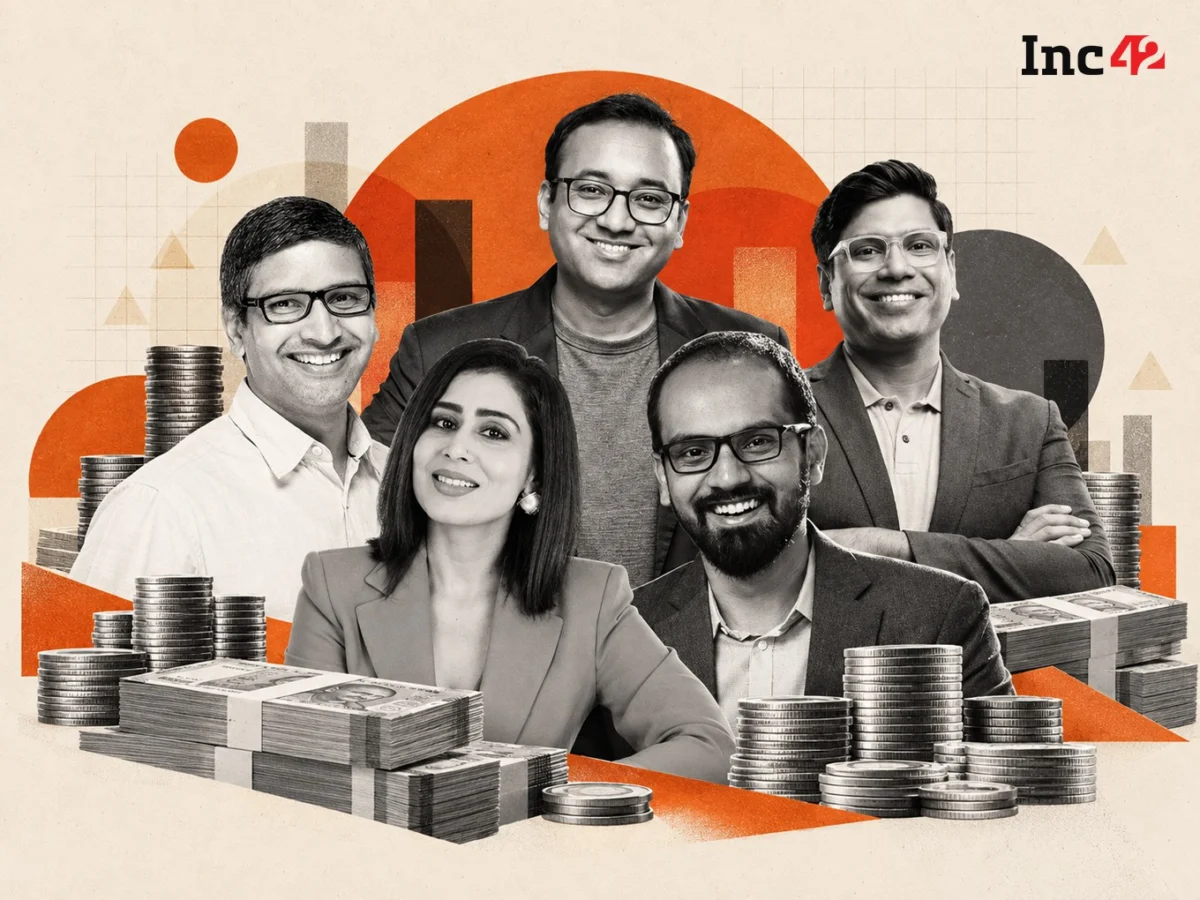
The Indian startup landscape has undergone a profound metamorphosis over the last few years. Moving away from the "growth-at-all-costs" era that defined the 2021 funding boom, the ecosystem has matured into a more disciplined, profitability-focused regime. As these new-age tech companies transition from private unicorns to public market entities, the scrutiny over corporate governance—specifically, founder remuneration—has intensified.
Data compiled by Inc42 for FY26 reveals a nuanced picture of how the architects of India’s digital economy are being compensated. While fixed salaries remain the standard benchmark, the reality of founder wealth is increasingly tied to complex performance-based incentives and equity-linked instruments.
The Big Picture: Fixed Remuneration Trends
In FY26, 16 founders across 10 prominent new-age tech companies drew a combined fixed remuneration of ₹43.4 Cr. This represents an 8.2% year-on-year increase from the ₹40.2 Cr reported in FY25. On an individual level, the average fixed pay per founder rose to ₹2.7 Cr, up from ₹2.5 Cr in the previous fiscal year.
Of the 16 founders tracked, 12 saw an upward trajectory in their fixed pay, three experienced a reduction, and one remained stagnant. This upward trend suggests that despite the pressure to maintain lean operational costs, boards are continuing to recalibrate base salaries to align with the increasing scale and complexities of managing listed or mature private entities.
Chronology of Compensation: From Funding Winter to Profitability
To understand these figures, one must look at the timeline of the startup ecosystem.
- FY23: The "Funding Winter" began, forcing companies to slash burn rates and restructure. Founder pay was often frozen or reduced as a sign of solidarity with cost-cutting measures.
- FY24: A period of stabilization, where companies focused heavily on unit economics and the path to EBITDA positivity.
- FY25: The shift toward IPOs and public listing mandates brought transparency to the forefront. Regulatory filings started providing a clearer view of executive compensation.
- FY26 (Current Tracker): The focus has shifted to sustainability and scaling. Companies that have successfully navigated the transition to profitability, such as Lenskart and Paytm, are now seeing remuneration packages that reflect both performance and market maturity.
Deconstructing the Pay: Salary vs. Variable Components
A critical takeaway from the FY26 data is that "fixed salary" is a misleading metric if viewed in isolation. For many founders, the fixed component is merely the base upon which substantial variable rewards are layered.
Lenskart’s Peyush Bansal provides the most striking example. While he topped the list with a fixed remuneration of ₹5.7 Cr, his total earnings were significantly bolstered by ₹12 Cr in bonuses and performance incentives. When factoring in perquisites and retirement benefits, his total package dwarfs the base figure. Similarly, Neha Bansal (Lenskart) received a fixed salary of ₹2.7 Cr, but added a staggering ₹6 Cr in bonuses and performance incentives.
This divergence is also visible in equity-linked compensation. Swiggy’s Sriharsha Majety, despite a modest fixed salary of ₹1.4 Cr, recorded ESOP gains of ₹549.3 Cr, highlighting that for many founders, the true value accrual happens through long-term stock-based incentives rather than monthly paychecks.
Sector-Specific Deep Dives
1. Lenskart: Scaling Through Profitability
Lenskart has emerged as a poster child for balanced growth. With net profits rising 69% YoY to ₹500.9 Cr and operating revenue climbing 33% to ₹8,814 Cr, the company’s ability to reward its leadership has grown in tandem with its financial health. The substantial variable bonuses paid to Peyush and Neha Bansal reflect a board-approved compensation structure tied directly to the company’s aggressive expansion and profitability milestones.
2. Meesho: Aggressive Growth vs. Bottom-line Focus
Meesho’s founders, Vidit Aatrey and Sanjeev Kumar, each saw their fixed pay climb to ₹4.8 Cr. While the company continues to report losses (₹1,357.7 Cr), the narrative has shifted to the massive scale of its user base—reaching 26.4 Cr transacting users. The salary hike here reflects the complexity of managing an e-commerce giant that is simultaneously trying to bridge the gap between aggressive market share capture and operational efficiency.
3. Delhivery: Logistics as the Backbone
Sahil Barua and Kapil Bharati of Delhivery have seen consistent growth in their remuneration. With fixed pay increases of 21.4% and 17.9% respectively, their compensation aligns with the company’s sustained revenue growth of ₹10,486 Cr. Notably, the use of performance incentives and ESOPs (as seen with Bharati’s ₹6.9 Cr ESOP gains) points to a compensation philosophy designed to keep leadership tethered to long-term value creation.
4. Paytm: The Turnaround Story
Vijay Shekhar Sharma’s fixed salary of ₹4 Cr remained unchanged in FY26. However, the context is vital: Paytm achieved its first full-year net profit of ₹552 Cr, a massive swing from the previous year’s losses. The decision to keep fixed pay stable while the company celebrates its first profitable year suggests a move toward fiscal conservatism—a signal often welcomed by public market investors.
5. Ather Energy: The EV Frontier
Tarun Mehta and Swapnil Jain, the minds behind Ather Energy, represent the high-growth EV sector. Their fixed pay of ₹2.1 Cr, supplemented by ₹90 Lakh in variable compensation, brings their total annual take-home to ₹3 Cr. With the company narrowing its losses by over 36%, the incentive structure seems designed to reward the leadership for steering the firm through the capital-intensive phase of EV manufacturing.
The Implications: What This Means for the Ecosystem
The data underscores three significant shifts in the Indian startup ecosystem:
- Transparency as a Governance Tool: The increased disclosure of "Other Perks," "ESOP Gains," and "Performance Incentives" is a direct result of more companies entering the public markets. Institutional investors now demand granular visibility into how management is incentivized.
- The "Pay for Performance" Mandate: Gone are the days when high fixed salaries were the norm regardless of the company’s health. We are seeing a clear correlation between the performance of the company and the variable pay components of the founders.
- Equity is King: The massive disparity between fixed salaries and ESOP gains (as seen in the cases of Swiggy and FirstCry) highlights that founders are effectively "owners" first and "employees" second. The wealth creation mechanism in the Indian tech sector remains predominantly equity-driven, which aligns founder incentives with the long-term stock price performance, ultimately protecting retail and institutional shareholders.
Conclusion: A Maturing Market
The FY26 tracker serves as a mirror to the Indian startup ecosystem’s current stage of maturity. We are moving toward a period where compensation is no longer just about the cash in the bank, but about the alignment of leadership goals with the sustainable, long-term success of the organization.
As more companies prepare for IPOs and existing listed companies face the scrutiny of quarterly earnings calls, the conversation around founder pay will only become more sophisticated. The trend toward variable pay and equity-linked rewards is a positive indicator—it ensures that the individuals who built these empires from scratch are rewarded for building sustainable businesses, not just for scaling revenue on borrowed capital.
Editor’s Note: This report is based on a compilation of data from MCA filings, annual reports, and DRHPs. The figures reflect the current landscape as of the latest filings. The tracker will be updated as more companies release their audited financial statements for FY26.



