










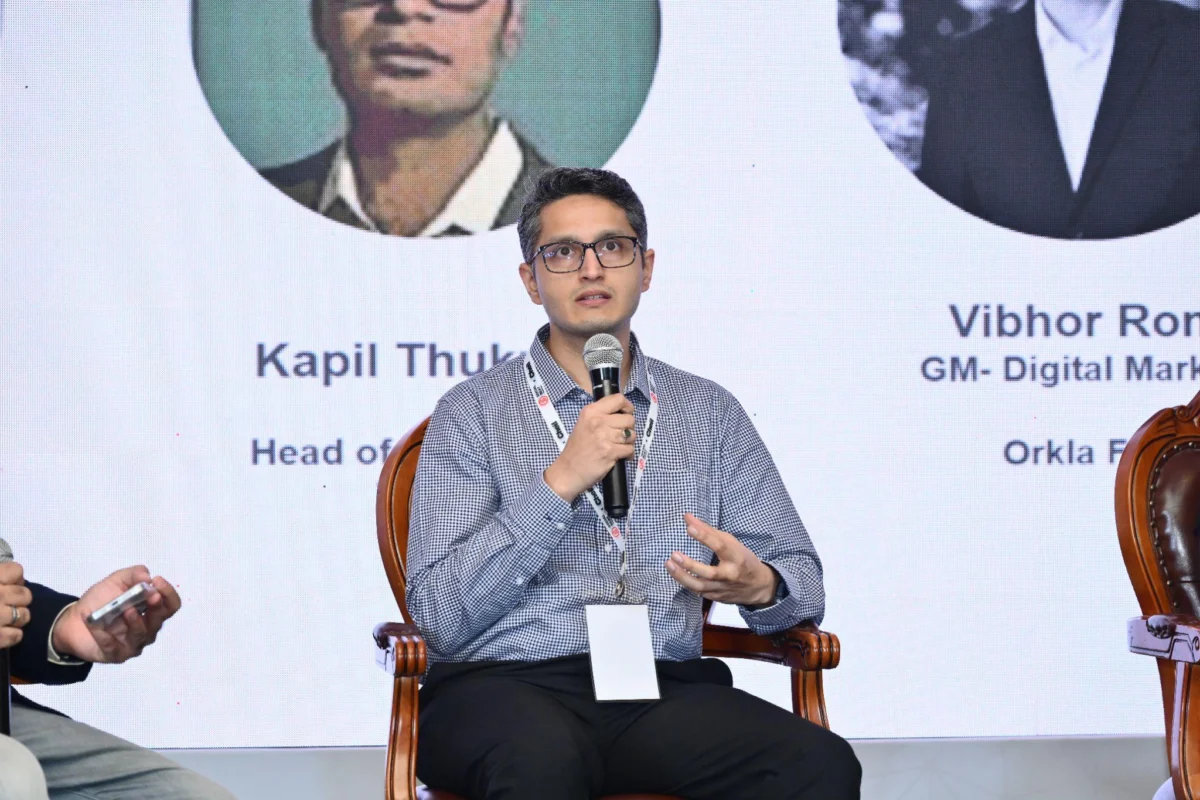
Bengaluru, 31 July 2026 — As the marketing landscape undergoes a seismic shift driven by the democratization of AI and the rapid commoditization of convenience, the 17th edition of the Digital Leadership Summit, held at the Taj MG Road, provided a sobering reality check for the industry. Co-hosted by Google and Cheil, the summit brought together a cross-section of India’s most influential brand leaders—from diagnostics and accounting software to pressure cookers and online education—to address a single, existential question: What do you own once the thing that made you famous is available to everybody?
The consensus among the speakers was stark: the traditional pillars of brand differentiation—speed, distribution, and even creative execution—are rapidly becoming "infrastructure." In a world where these advantages can be purchased or automated, the true competitive edge is moving toward what cannot be bought.
The Chronology of the Shift: From Entry Fees to Enduring Trust
The summit’s narrative arc followed a clear path: the transition from "first-promise" marketing to "second-promise" brand equity.
The Death of the "Speed" Differentiator
For decades, convenience was the holy grail. Brands like First Club and Orange Health Labs built their early market share on the back of sheer speed. However, the 2026 summit signaled a pivot. Lucky Saini of First Club noted that they have systematically removed the "quick commerce" narrative from their branding. The rationale is simple: when speed becomes the baseline expectation of the market, it ceases to be a competitive advantage.
The data confirms this transition. Saini reported a fundamental shift in customer sentiment: once the speed of delivery was no longer a point of friction, complaints shifted from "Why is my delivery late?" to "Why is this mango not sweet?" The customer had moved from judging the service to judging the product. Similarly, Smita Murarka of Orange Health Labs explained that their transition to the tagline "Speed Meets Science" was an effort to ground their operational speed in a credible, defensible "second promise"—automated lab integrity and sample accuracy.
The New Discovery Surface
The incumbents in the room, specifically those in traditional manufacturing, are grappling with the changing nature of retail. Akila Chandrasekar of TTK Prestige noted that for legacy brands, platforms like quick-commerce apps have morphed from simple delivery channels into "discovery surfaces." The search bar on these apps has replaced the traditional Google search for specific product categories. Vibhor Ronge of MTR echoed this, observing that the collapsing of the impression-to-conversion funnel within a single session has fundamentally rewritten the rules for testing marketing budgets for centennial brands.
Supporting Data and Strategic Pillars
The day was defined by the rejection of superficial growth metrics in favor of sustainable, compounding assets. The insights provided by the speakers highlighted three critical pillars for the next decade of brand building.
1. The Power of Unpaid Well-Wishers
Kapil Thukral of Tally provided perhaps the most compelling argument for non-transactional marketing. Tally has fostered vast offline communities—chartered accountants, business owners, and tax practitioners—who act as brand advocates without a rate card.
"In long-term brand building, the role of a well-wisher cannot be bought with any amount of paid advertising," Thukral remarked. While most marketing budgets are saturated with influencer fees, the "well-wisher" ecosystem operates on a principle of shared success. Because there is no dashboard for this, it is often ignored by competitors, allowing it to compound silently over years.
2. The Operational-Marketing Synthesis
Ankit Kedia of Capital A offered a defining axiom for the modern era: "Marketing states the promise and the factory keeps it." The traditional silo between operations and marketing is dissolving. When a consumer experiences a failed product, they do not blame the logistics provider; they blame the brand. Consequently, control over the supply chain, packaging, and tooling has become the most potent form of brand marketing. In an era where startups can launch with a sharpened, narrow focus against an incumbent’s 40-year portfolio, the incumbent’s only true defense is the relentless control of the product experience.
3. AI: The Middle-Layer Tool
Perhaps the most nuanced discussion of the day centered on Artificial Intelligence. The leaders on stage were neither evangelists nor skeptics; they were operators. Rahul Datta of NoBroker, who employs AI for customer-facing voice agents, made it clear that AI is strictly limited to operational scaling. "You need a neck to catch," he said, emphasizing that someone must be accountable for the final, human-centric promise.
Across the board, the strategy was consistent: automate the output that results in a number, but keep the human in the loop where the output results in a promise. This extends to the nascent field of Generative Engine Optimization (GEO). Kiran Kumar R of UNext pointed out that as discovery shifts toward AI models, the ability to be cited in an AI-generated answer is becoming the new SEO. Most brands are currently blind to this metric.
Official Perspectives: The Resolution of the Performance Debate
A significant moment of the summit occurred during the panel featuring Google’s Nikhil Khemani, Epik’s Varun, and Neosapien’s Gandharv Bakshi. The long-standing debate of "Brand vs. Performance" was effectively declared over.
The speakers argued that the binary choice is a false construct. A strong brand identity creates a halo effect that lowers acquisition costs in performance channels. Gandharv Bakshi provided the ultimate proof: his company successfully raised prices and reduced discounts, yet demand remained stable. This is a brand marketing success story that satisfies the most skeptical CFO.
Furthermore, the data from Epik suggested that brand health can be measured through internal metrics—such as employees displaying the brand on their LinkedIn profiles—which often acts as a leading indicator for organic search growth before any paid campaigns are even deployed.
Implications: The Road Ahead
As the 17th Digital Leadership Summit concluded, the prevailing sentiment was one of "disciplined patience." The era of "growth at any cost" has been replaced by an era of "compounding trust."
Three Moves for the Modern Marketer:
- Identify the Infrastructure: Conduct an audit of your current differentiators. If your primary selling point—be it delivery time, reach, or AI-generated content—can be replicated by a competitor, it is infrastructure, not an asset.
- Build the Second Promise: Once the entry fee (speed/distribution) is paid, what is the product-level truth that keeps the customer coming back?
- Invest in Unpaid Advocates: Create value for your ecosystem that has nothing to do with your sales cycle. This is the only asset that cannot be bought by a competitor with a larger budget.
Conclusion: The Infrastructure Trap
For seventeen years, the summit has tracked the evolution of Indian brands. The pattern is clear: once an attribute becomes infrastructure, it ceases to be a reason to choose a brand. The companies that will thrive in the next decade are those that are already retiring the attributes that made them famous, moving the argument to a level that is narrow, human, and difficult to copy.
As leaders returned to their offices, they were left with a final, haunting question: Which of your current advantages will be considered basic infrastructure in eighteen months, and what are you building on top of it?
Frequently Asked Questions (FAQs)
What is the difference between brand and performance marketing?
Brand marketing establishes long-term memory, preference, and trust. Performance marketing captures intent and drives immediate action. The 2026 summit concluded that this divide is artificial; in the long term, your performance metrics are a direct reflection of your brand’s strength.
Why is "speed" no longer a competitive advantage?
Speed has become an expectation, not a differentiator. In sectors like groceries and diagnostics, consumers now treat speed as a baseline. Once the barrier of entry is met, customers judge the brand on product quality and reliability.
What is Generative Engine Optimization (GEO)?
GEO is the process of optimizing brand presence for AI-driven search results. As users increasingly turn to AI models for answers, appearing in these citations is becoming more critical than traditional webpage ranking.
How does brand strength affect performance costs?
A stronger brand increases click-through rates and reduces price sensitivity. This allows companies to raise prices or reduce discounts while maintaining demand, effectively lowering the cost of customer acquisition over time.
What is the "Second Promise"?
The first promise is the entry fee (e.g., "we are fast"). The second promise is the reason the customer stays (e.g., "our product is superior, our data is accurate, our service is reliable"). The second promise is what builds long-term loyalty.



