










Date: September 23, 2026
Subject: Digital Transformation in Video Consumption
YouTube has long served as the world’s primary digital encyclopedia, entertainment hub, and social classroom. Whether a user is seeking to master a complex culinary technique, explore the geography of a distant land, or find a new community of creators, the platform has historically been a search-first experience. However, at the annual "Made on YouTube" summit held this week, the company signaled a fundamental shift: YouTube is moving from a search-driven model toward a highly personalized, AI-augmented discovery ecosystem.
By introducing "Custom Feeds" and the "Ask YouTube" interactive intelligence layer, the platform is attempting to solve the "paradox of choice" that often plagues its billions of users. These updates represent the most significant changes to the viewer interface in years, aiming to bridge the gap between long-form content, short-form engagement, and transactional utility.
Main Facts: Redefining the Homepage and Search
The core announcement at Made on YouTube 2026 centers on two flagship features designed to give users more agency over their digital diet.
Custom Feeds: The Curated Front Page
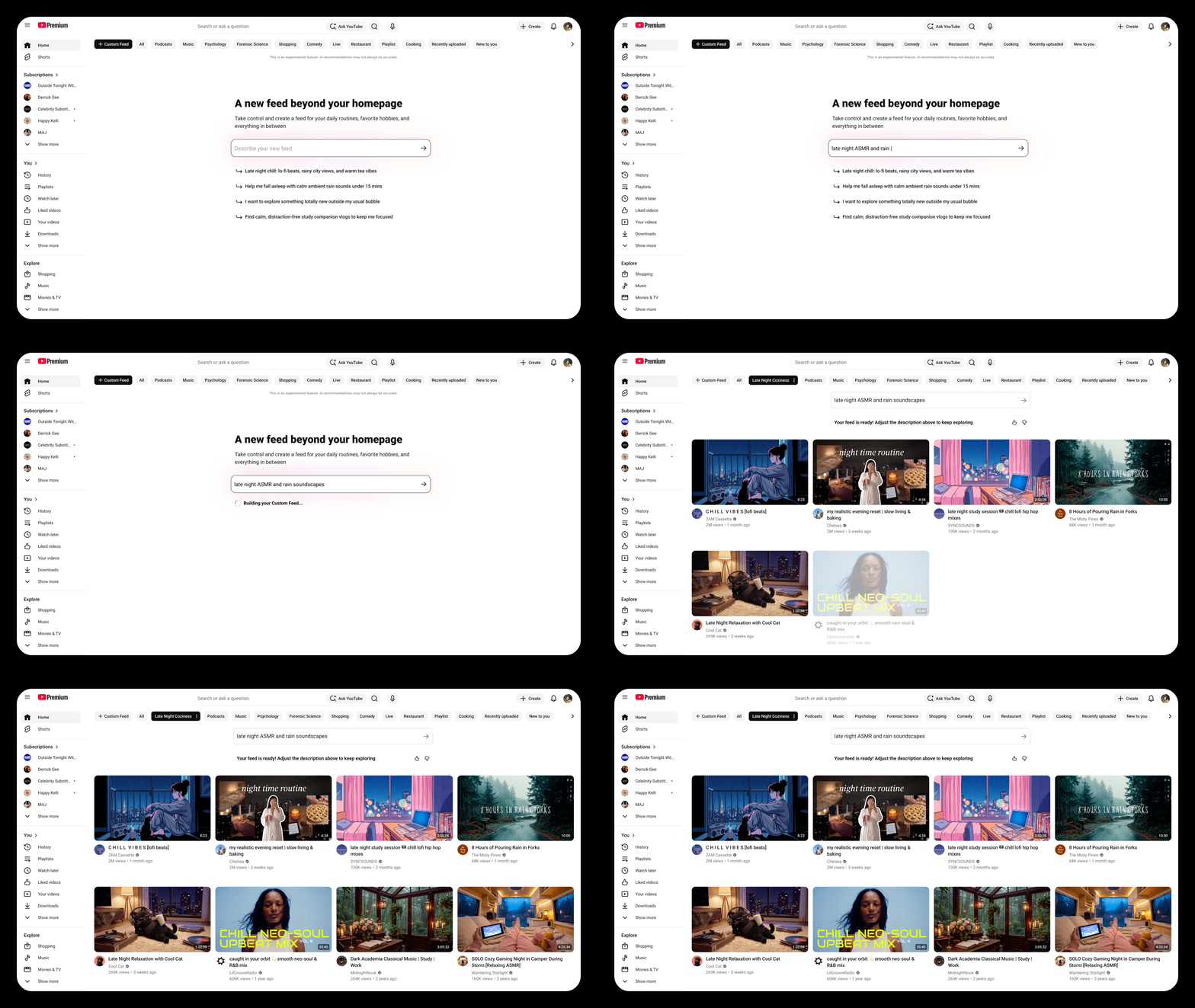
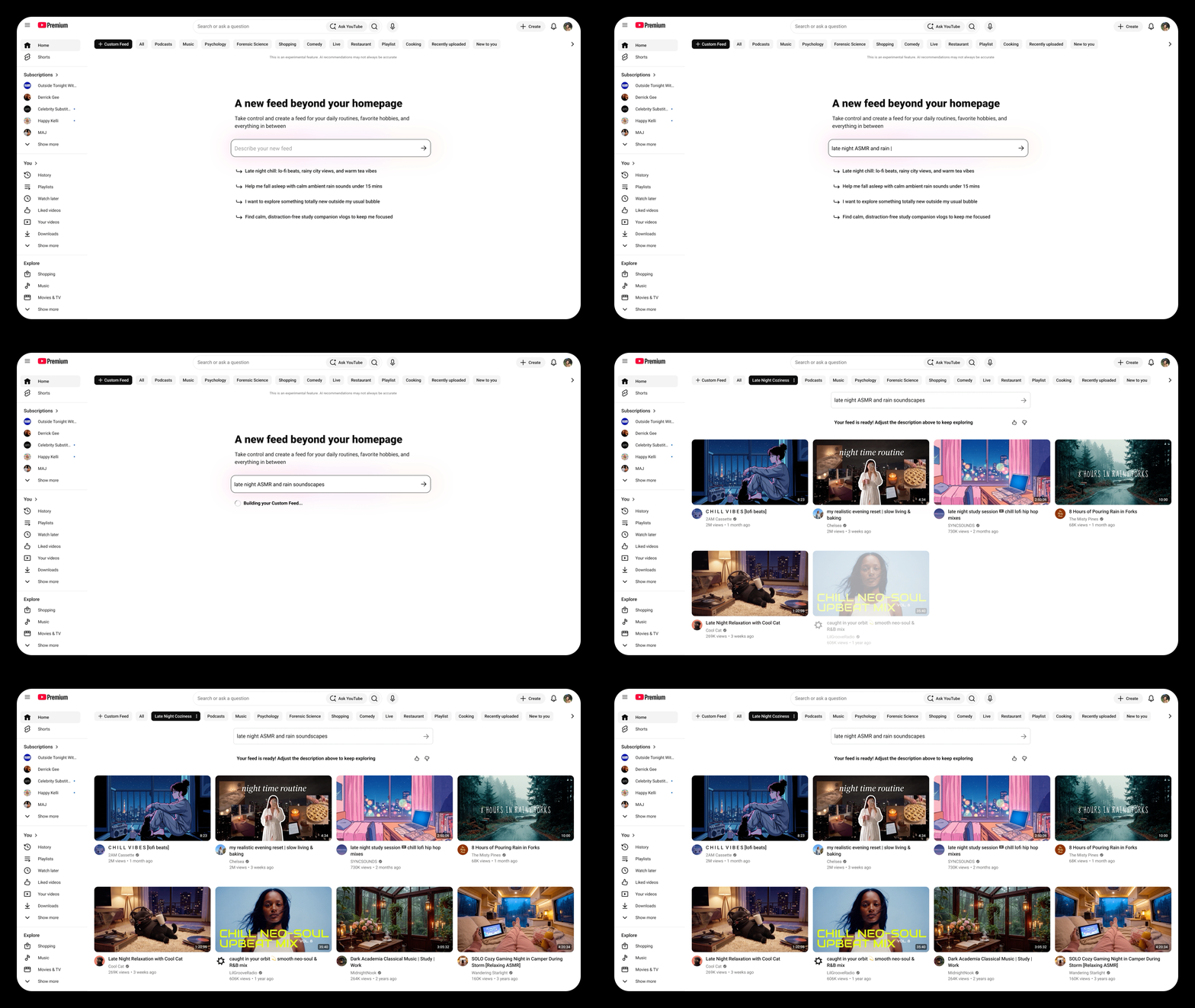
The "Custom Feeds" feature represents a departure from the monolithic, algorithmically-driven "Home" tab that has defined YouTube for over a decade. Starting in the United States, users will gain the ability to create dedicated tabs that populate based on specific interests, moods, or routines.
Instead of a single, generic feed, users can toggle between specialized views—for instance, an "Evening Wind-Down" feed populated by long-form documentaries, or a "DIY Home Improvement" feed that prioritizes high-quality instructional content. By allowing users to curate their own front page, YouTube is essentially handing the keys of its recommendation engine back to the viewer, fostering a more intentional consumption habit.
Ask YouTube: The AI-Powered Shopping Assistant
Perhaps more transformative is the "Ask YouTube" feature, which integrates generative AI directly into the watch and search experience. This tool is designed to act as a personal shopping consultant. When a user searches for product reviews—such as the latest flagship smartphone or a new skincare line—"Ask YouTube" will synthesize information from multiple videos.

The system provides an interactive experience where viewers can ask follow-up questions, receive comparison tables, and view product attributes categorized by preference. This feature effectively turns the passive act of watching a review into a dynamic, query-based shopping journey.
Chronology: The Evolution Toward AI-Native Discovery
The transition to these features has been a multi-year effort, reflecting YouTube’s broader strategy to integrate artificial intelligence into every facet of the platform.
- 2023–2024 (The Foundations): YouTube began experimenting with AI-generated summaries and automated dubbing tools, laying the groundwork for more complex natural language processing (NLP) applications.
- Early 2025 (The Shift to Commerce): The platform heavily invested in "Shop the Look" and affiliate link integrations, signaling that YouTube was no longer just a media company, but a critical player in the e-commerce funnel.
- Mid-2026 (The Integration Phase): Engineering teams focused on the "Ask YouTube" architecture, ensuring that the AI could parse long-form video transcripts in real-time to provide accurate, context-aware answers to user queries.
- September 23, 2026 (The Reveal): At the Made on YouTube event, these tools were officially unveiled for a phased rollout, marking the beginning of the "User-Defined Era" of video streaming.
Supporting Data: Why Personalization Matters
The necessity for these updates is underscored by the sheer volume of content on the platform. With hundreds of hours of video uploaded every minute, the "discovery problem" is a mathematical inevitability.
According to internal platform metrics, viewer retention drops significantly when users struggle to find content that matches their current "contextual state." For example, a user looking for "short-term entertainment" during a commute is unlikely to engage with a two-hour lecture, regardless of the lecture’s quality.
- Increased Intent: Data suggests that users who utilize custom categorization tools spend 30% more time on the platform because their content sessions are more satisfying.
- The Conversion Gap: Research conducted during the beta testing of "Ask YouTube" showed that viewers are 45% more likely to click through to a product purchase if they are provided with a side-by-side comparison table generated by AI, as opposed to manually searching for multiple reviews themselves.
- Multi-Platform Usage: Usage data confirms that 60% of YouTube viewership now spans multiple devices—mobile for discovery, and TV for deep-dive long-form content. Custom Feeds are specifically designed to sync across these devices, ensuring a seamless transition.
Official Perspectives
Executives at YouTube emphasized that these changes are not meant to replace the human element of content creation, but to highlight it.
"We are building a bridge between the vast, chaotic, beautiful library of human creativity and the specific needs of the individual," said a company spokesperson during the keynote. "Creators are the heart of this platform. By making their content more discoverable—and by helping viewers understand the value of their recommendations—we are strengthening the creator-viewer bond."
The development team also highlighted the accessibility benefits of "Ask YouTube." By allowing voice commands on TV interfaces, the platform is moving toward a conversational AI model that makes navigating complex information as simple as asking a question.
Implications: The Future of the Creator Economy
The introduction of these features has profound implications for the creator economy and digital advertising.
For Creators: The Premium on "Searchability"
With "Ask YouTube" synthesizing reviews and product comparisons, creators who produce high-quality, data-rich reviews are likely to see their content surfaced more frequently. However, this creates a new challenge: creators must ensure their content is "AI-readable." Clear structure, explicit product mentions, and organized information within videos will become essential for creators who want their work to appear in the AI-generated comparison tables.
For Advertisers: The Rise of Contextual Shopping
The shift toward an AI-driven shopping assistant changes the nature of advertising. Rather than relying solely on pre-roll ads, brands now have the opportunity to have their products featured in the "Ask YouTube" comparison interface. This is a form of high-intent advertising that is far more valuable to brands than traditional broad-reach impressions.
For Viewers: The End of "Doomscrolling"?
By offering "Custom Feeds," YouTube is directly challenging the "infinite scroll" model popularized by short-form video platforms. By encouraging users to define their intent—"I am currently in learning mode," or "I am currently in entertainment mode"—YouTube is positioning itself as a platform for intentional, rather than addictive, consumption.
Conclusion
The Made on YouTube 2026 announcements confirm that the platform is not content with being a passive repository of video files. Instead, it is evolving into an intelligent, active assistant that helps users navigate the complexities of modern information and commerce.
As "Custom Feeds" and "Ask YouTube" begin their rollout across mobile, web, and TV interfaces, the platform will be closely monitored to see if these tools successfully mitigate the overwhelming nature of the digital age. If successful, YouTube will have effectively transformed from a place where you go to search for videos, into a place where you go to find answers to your life’s questions—all while continuing to support the creators who provide the raw material for that discovery.
The future of YouTube is no longer just about watching; it is about interacting, curating, and, ultimately, deciding exactly what your experience on the platform should be. In an era of digital noise, this move toward clarity and personalization may well be YouTube’s most competitive advantage yet.



