In the modern digital landscape, content quality is only half the battle. Creators, small business owners, and enterprise marketing teams pour countless hours into scripting Reels, designing striking carousels, and capturing high-resolution photos. Yet, hitting publish during an algorithmic dead zone can reduce even the most brilliant creative work to absolute silence.
To help brands navigate an increasingly crowded ecosystem, Buffer has released comprehensive findings from its State of Social Engagement 2026 report. By analyzing an unprecedented dataset of 9.6 million Instagram posts—part of a broader examination of 52 million posts across 10 platforms from more than 200,000 accounts—researchers have uncovered the exact windows that maximize reach and audience interaction.
The verdict? The holy grail of Instagram posting slots for 2026 lands squarely on Thursday at 9 a.m., Wednesday at 12 p.m., and Wednesday at 6 p.m. (local time).
![Best Time to Post on Instagram: Data from 9.6M Posts [Updated Sep 2026]](https://storage.ghost.io/c/6d/21/6d217297-aa70-41fe-b68d-e29e411dd3ed/content/images/2026/01/best-time-to-post-on-instagram-2026.png)
Main Facts: The 2026 Engagement Landscape
The competition for digital real estate on Instagram is fiercer than ever. As more brands pivot toward robust social strategies and user screen time climbs, understanding when your target audience is actively receptive to your content has become a core competency of digital marketing.
Buffer’s data reveals sharp contrasts between peak and trough engagement periods. Rather than a gentle slope, the gap between high-performing windows and algorithmic lulls is immense.
- The Overall Winner: Wednesday takes the crown as the strongest day of the week for overall engagement, buoyed by unique mid-day and evening spikes.
- The Peak Windows: Thursday at 9 a.m., Wednesday at 12 p.m., and Wednesday at 6 p.m. represent the absolute highest-performing individual slots across the platform.
- The Weakest Links: Friday and Saturday consistently underperform, showing significantly lower engagement across nearly all time zones.
- The Overnight Dead Zone: Posting between 1 a.m. and 5 a.m. yields the lowest engagement rates across every single day of the week.
Global Time Zone Normalization
A major hurdle in global social media research is time zone translation. Fortunately, Buffer’s data science team normalized the dataset so that the suggested times apply directly to your local clock. Whether you operate out of Eastern Standard Time (EST), Pacific Standard Time (PST), Mountain Standard Time (MST), or Indian Standard Time (IST), a 12 p.m. slot means 12 p.m. wherever you are sitting.
![Best Time to Post on Instagram: Data from 9.6M Posts [Updated Sep 2026]](https://storage.ghost.io/c/6d/21/6d217297-aa70-41fe-b68d-e29e411dd3ed/content/images/2026/01/best-time-to-post-instagram-2026-heatmap.png)
Chronology and Behavioral Patterns: When Users Scroll
Understanding when to post requires understanding why audiences open the app. The daily rhythms of Instagram users—over a third of whom fall into the 25-to-34 age demographic, according to Statista—largely dictate these behavioral patterns.
Weekday Momentum (Monday to Thursday)
- Monday: Audiences settle back into their routines after the weekend. Engagement begins to pick up in the evening, making the 6 p.m. to 8 p.m. window (peaking at 7 p.m.) the ideal time to kick off the week.
- Tuesday: As the third-strongest day overall, Tuesday bridges mid-afternoon and early evening. Top slots stretch from 3 p.m. to 7 p.m.
- Wednesday: Midweek hits its stride with a rare phenomenon: a notable midday surge at 12 p.m., followed by strong evening engagement at 6 p.m.
- Thursday: In the most counterintuitive discovery of the dataset, Thursday morning breaks the evening-heavy trend. Thursday at 9 a.m. (preceded by 7 a.m. and 8 a.m.) represents the single highest engagement slot of the entire week, likely driven by end-of-week planning and weekend mapping behavior.
The Weekend Drop-Off (Friday to Sunday)
- Friday & Saturday: Engagement plummets across these two days. Friday lunchtimes and Saturday mornings are particularly barren. If you must post on weekends, push content to late evening windows—specifically 8 p.m. to 10 p.m.—to catch users winding down.
- Sunday: Sunday evenings (9 p.m.) show a resurgence as users scroll in preparation for the upcoming work week.
Supporting Data: Day-by-Day Engagement Breakdown
| Day of the Week | Best Time(s) to Post (Local) | Engagement Tier |
|---|---|---|
| Wednesday | 12 p.m., 6 p.m., 8 a.m. | Highest |
| Thursday | 9 a.m., 8 a.m., 7 a.m. | Highest |
| Tuesday | 7 p.m., 3 p.m., 5 p.m. | High |
| Monday | 7 p.m., 6 p.m., 8 p.m. | Moderate |
| Sunday | 9 p.m., 10 p.m., 8 p.m. | Moderate |
| Friday | 10 p.m., 9 p.m., 6 a.m. | Low |
| Saturday | 9 p.m., 10 p.m., 8 p.m. | Low |
Official Responses and Platform Insights
Platform leadership has repeatedly emphasized the mechanics behind these numbers. Adam Mosseri, Head of Instagram, has provided critical context regarding how content is consumed and ranked across different app surfaces.
According to Mosseri, users approach different Instagram features with distinct mindsets:
![Best Time to Post on Instagram: Data from 9.6M Posts [Updated Sep 2026]](https://storage.ghost.io/c/6d/21/6d217297-aa70-41fe-b68d-e29e411dd3ed/content/images/2026/01/best-day-to-post-instagram-2026-.png)
- Stories: Used primarily to catch up with close friends and family on a daily, habitual basis.
- Explore: Utilized for discovering entirely new content and creators.
- Reels: Designed purely for entertainment, typically consumed during periods of prolonged downtime.
The Algorithm’s Core Signal
In 2026, the Instagram algorithm continues to prioritize recency to establish initial momentum, but engagement rules supreme. The platform’s premier ranking signal is sends per reach—the frequency with which users direct-message your Reel or post to a friend.
Mosseri suggests posting content 30 to 60 minutes before your target audience comes online. This gives the algorithm time to process the media and queue it up just as your followers open the app, securing the early interactions necessary to push the post out to a broader audience. Furthermore, Mosseri recommends a cadence of 3 to 5 feed posts (Reels, carousels, or photos) per week, paired with 1 to 2 Stories daily.
Implications for Marketers, Creators, and Businesses
Pinpointing the best time to post is not a silver bullet; it cannot salvage fundamentally unengaging content. However, when paired with high-value creative assets, timing acts as a force multiplier.
![Best Time to Post on Instagram: Data from 9.6M Posts [Updated Sep 2026]](https://storage.ghost.io/c/6d/21/6d217297-aa70-41fe-b68d-e29e411dd3ed/content/images/2026/05/image-6.png)
Format-Specific Strategies
- Instagram Reels: Because Reels are designed for entertainment and heavily evaluated on "sends per reach," evening hours (6 p.m. to 11 p.m.) on Wednesdays and Thursdays offer the highest probability of success. Users need uninterrupted downtime to watch and share video content.
- Instagram Carousels: Carousels thrive when audiences have time to swipe through multi-image narratives. Midday lunch breaks (Wednesdays at 12 p.m.) and post-work windows align perfectly with this consumption style.
- Instagram Stories: Because Stories vanish after 24 hours, consistency overrides precise timing. Committing to a daily posting schedule ensures your brand bubble remains front-and-center at the top of your followers’ feeds.
Operationalizing the Data
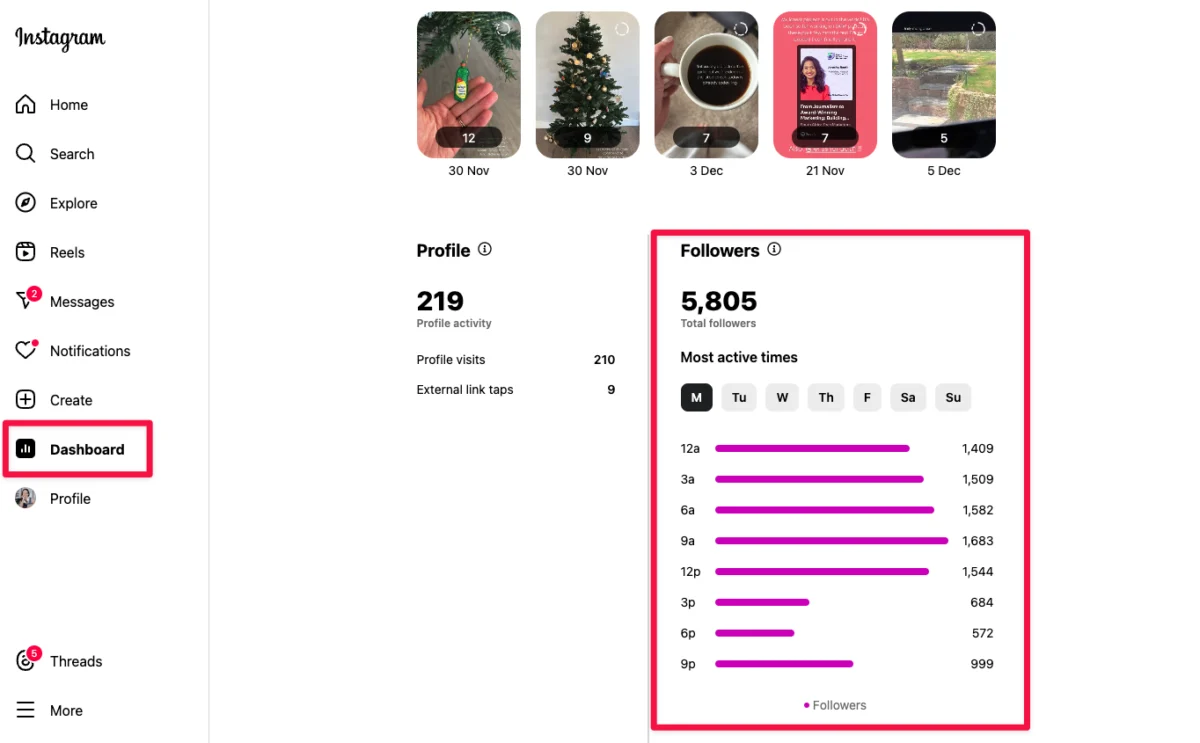
Manually calculating time zones, tracking engagement metrics, and timing your publishes can introduce human error. Modern scheduling solutions—such as Buffer’s automated posting tools—allow creators to input optimized schedule slots directly into their content calendar. By automating these windows, teams ensure their content hits optimal publishing thresholds even during chaotic workweeks.
Ultimately, while platform-wide studies offer a reliable baseline, every audience is unique. Social media managers should cross-reference global benchmarks with native platform analytics (Instagram Insights) to fine-tune their strategies, treating data as a compass rather than a rigid rulebook.