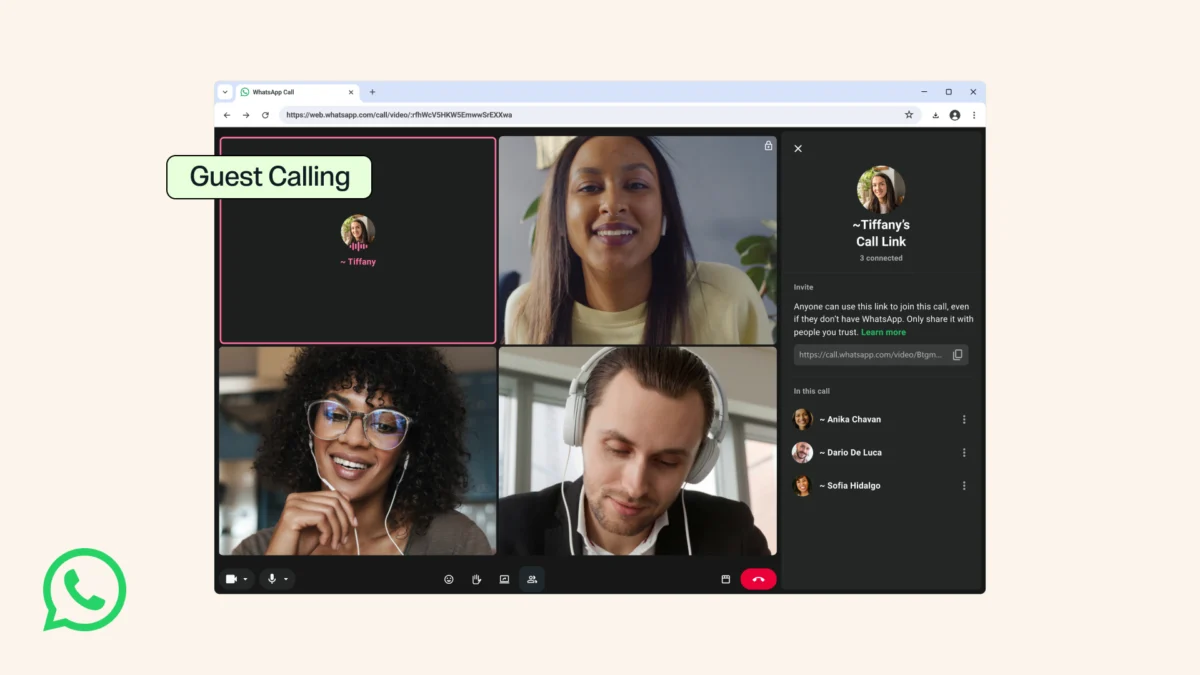
GLOBAL REPORT — In a major strategic shift for one of the world’s most ubiquitous communication platforms, WhatsApp has announced the rollout of a groundbreaking feature set designed to bridge the gap between application-locked ecosystems and open web communication. The Meta-owned messaging giant has officially unveiled Guest Calling, a tool that allows individuals to participate in WhatsApp voice and video calls without needing a registered WhatsApp account, mobile application, or existing profile.
Coupled with upcoming calendar integrations for enterprise-grade platforms like Google Calendar and Microsoft Outlook, this update marks a decisive evolution for WhatsApp. Once primarily known as a mobile-first, peer-to-peer messaging application for smartphone users, the platform is rapidly positioning itself as a formidable competitor in the professional conferencing and collaborative workspace arenas, currently dominated by Zoom, Microsoft Teams, and Google Meet.
Industry analysts are calling this one of the most consequential accessibility updates in the platform’s history, signaling a shift toward frictionless, platform-agnostic connectivity while maintaining the company’s trademark end-to-end encryption.
Main Facts: What is WhatsApp Guest Calling?
The core mechanic of the new update revolves around simplicity, accessibility, and security. At its foundational level, WhatsApp Guest Calling allows any WhatsApp user with an active account to generate a unique call link and share it with external participants. These participants can be friends, family members, prospective clients, external contractors, or academic tutors who may not use WhatsApp or possess a smartphone compatible with the app.
Key Operational Parameters:
- No Account Required: External participants (guests) can join 1:1 or group calls directly through a desktop web browser. They are not required to download the application, create a profile, or register a phone number.
- Unlimited Duration: True to WhatsApp’s consumer calling model, these sessions feature no artificial time caps or minute restrictions, eliminating the dreaded abrupt cutoffs common in other freemium conferencing software.
- Participant Capacity: Guest-inclusive calls support up to 32 participants, matching WhatsApp’s standard group call capacity.
- Host Control Center: Security is prioritized through a mandatory waiting room architecture. Guests cannot enter a call autonomously; they must wait in a virtual lobby until the host explicitly admits them. Furthermore, hosts retain the power to remove disruptive guests at any point during the session.
- Privacy Protections for Guests: To safeguard personal data, guests do not have access to other participants’ phone numbers. They cannot send text messages within the call interface, nor can they invite additional people to the ongoing session.
- Cross-Platform Compatibility: While only registered WhatsApp users on mobile or desktop apps can create and initiate a call link, guests can easily join via modern computer web browsers by simply entering their preferred display name.
- Interactive In-Call Features: Despite entering via a browser, guests retain access to critical collaborative tools, including desktop screen sharing (ideal for reviewing documents, reviewing code, or presenting slideshows), emoji reactions (such as thumbs-up or heart icons), and the "raise hand" feature for orderly turn-taking.
Chronology: The Evolution of WhatsApp Calling
To understand the weight of this announcement, it is necessary to trace how WhatsApp transformed from a simple text-based SMS replacement into a robust voice-over-IP (VoIP) and video-conferencing utility.
- 2014–2015 (The Voice Era): WhatsApp first introduced voice calling capabilities, shocking traditional telecommunication networks by offering free internet-based phone calls globally. This move disrupted standard cellular carrier revenue models, particularly for international long-distance calling.
- 2016 (Video Integration): Building on the success of voice calls, WhatsApp rolled out cross-platform video calling for Android and iOS devices, expanding its utility from simple chats to face-to-face visual communication.
- 2022 (The Link Feature & Expansion): Recognizing the need to compete with structured meeting platforms during the remote-work boom, WhatsApp introduced Call Links. This allowed users to schedule and share links for voice and video calls ahead of time. However, a major bottleneck remained: every participant was still strictly required to have a WhatsApp account and the app installed.
- 2024 (Web Calling Focus): Meta steadily increased its focus on desktop infrastructure, improving web-browser client capabilities, expanding participant limits, and optimizing streaming bandwidth for low-latency desktop connections.
- Late 2025 (The Guest Calling Revolution): Culminating months of beta testing and infrastructural development, WhatsApp officially drops the account requirement for call joiners, bridging the gap between closed messaging ecosystems and open web browsers. Simultaneously, the company announces forthcoming native integrations for corporate calendar suites.
Supporting Data: The Meeting Software Landscape and Encryption Dynamics
The timing of WhatsApp’s guest calling feature is strategically calculated to capture a larger share of the hybrid work, educational, and casual conferencing markets.
The Competitive Landscape
According to recent workplace technology studies, the global video conferencing market size is valued in the tens of billions of dollars. While corporate giants like Microsoft Teams and Zoom have captured the enterprise sector, and Google Meet dominates educational and lightweight business sectors, millions of independent contractors, small business owners, freelancers, and educators frequently face "app fatigue." Asking a client to download a specific messaging app just for a 15-minute consultation often creates friction.
By utilizing WhatsApp—an application already installed on over 2.7 billion active mobile devices worldwide—users can now bypass this friction. A lawyer can consult a client, a tutor can instruct a student, or a hiring manager can interview a candidate without either party needing to exchange personal phone numbers or install auxiliary software.
The Security and Encryption Factor
A primary concern when opening closed communication networks to anonymous web browsers is security. WhatsApp has leaned heavily on its core competency: End-to-End Encryption (E2EE).
Even when external participants join via a web browser without a WhatsApp account, the media streams—audio and video—remain fully encrypted using the Signal Protocol framework that protects standard WhatsApp chats. Meta asserts that neither the company nor any third-party intermediary can intercept, listen to, or view the contents of a guest-inclusive call.
Furthermore, the implementation of the "waiting room" feature directly addresses "zoombombing" and unauthorized intrusion issues that plagued early iterations of remote conferencing software during the COVID-19 pandemic. By placing every incoming guest in a holding pen that requires manual authorization from the host, WhatsApp effectively neutralizes the risk of automated link-crawlers or malicious actors dropping uninvited into private sessions.
Official Responses and Strategic Vision
Meta executives and product leads have framed these updates as part of a broader, long-term philosophical commitment to universal, private communication.
In an official corporate statement released alongside the feature rollout, a WhatsApp spokesperson emphasized:
"We believe WhatsApp calling should always work wherever you are and with whoever you need, with the privacy you can count on. By removing the barrier of needing an account just to hop on a quick call or join a collaborative session, we are making our platform more open, accessible, and practical for daily personal and professional life."
Product managers have highlighted that the upcoming Calendar Integrations, slated to roll out later this year, represent the logical next step in this evolution. Under this upcoming system, users will be able to install a lightweight WhatsApp plugin for Google Calendar or Microsoft Outlook. Once connected, scheduling a virtual meeting will automatically generate a secure WhatsApp call link embedded directly into the calendar invitation.
When meeting time arrives, all invited attendees—whether they manage their lives through corporate Outlook exchanges or personal Google accounts—can click the link and join seamlessly. This effectively positions WhatsApp as a direct, lightweight alternative to dedicated calendar-integrated video software, appealing heavily to remote freelancers and SMBs who already use WhatsApp as a primary client touchpoint.
Implications: What This Means for Users, Businesses, and Competitors
The introduction of guest calling and calendar synchronization carries profound implications across multiple sectors of technology, communication, and business operations.
1. For Everyday Users: Frictionless Social and Family Connections
For the average consumer, connecting with older family members or tech-averse acquaintances just got easier. Previously, organizing a family video call required every relative to download the app, set up a profile, verify a phone number, and navigate a mobile interface. Now, a tech-savvy family member can generate a link, text it via traditional SMS, email, or post it in a shared space, allowing grandparents or relatives to join instantly from a laptop or desktop computer web browser.
2. For Small Businesses and Freelancers: Professionalizing Without Enterprise Overhead
Small business owners—from real estate agents and consultants to independent fitness trainers and legal advisors—frequently interact with clients who use varied technical setups. Asking a high-value client to download a specific app can sometimes feel unprofessional or burdensome. WhatsApp’s new setup allows businesses to conduct professional, encrypted video consultations, share documents via screen sharing, and schedule appointments directly through standard workplace calendars, all without investing in costly enterprise tiers of traditional video conferencing software.
3. For Enterprise Competitors: A Serious Challenger to Zoom and Teams
While WhatsApp is not yet positioned to completely replace deeply embedded corporate enterprise ecosystems like Microsoft Teams (which integrates tightly with enterprise file management, Active Directory, and corporate governance tools), it presents a clear and present danger to lightweight competitors. Services like free-tier Zoom, Google Meet, and various browser-based video chat utilities now face a formidable rival backed by Meta’s massive global distribution network and unassailable brand recognition in mobile messaging.
4. Privacy and Digital Footprint Considerations
Privacy advocates are generally reacting favorably to the implementation, noting that because guests do not need to register a phone number or create an account, their personal metadata is insulated from mass profiling. However, security experts advise that users must remain vigilant regarding link hygiene. Because call links can be shared freely, hosts must practice disciplined virtual room management—utilizing the waiting room effectively and promptly removing unrecognized participants to prevent social engineering or data exposure risks.
Conclusion and Future Outlook
WhatsApp’s rollout of Guest Calling and upcoming calendar integrations signals the maturation of the platform from a simple smartphone chat app into a comprehensive, cross-platform communication utility. By dismantling the artificial walls that previously locked features behind mandatory account registrations, Meta has successfully modernized its communication toolkit to meet the demands of a fluid, hybrid world.
As these features complete their global rollout and calendar integrations go live later this year, the way humanity connects, consults, and collaborates online will become smoother, faster, and more secure than ever before. Whether for a quick catch-up with an old friend, a high-stakes business consultation, or a collaborative academic review session, WhatsApp is ensuring that the threshold for connection is lower—and safer—than it has ever been.