










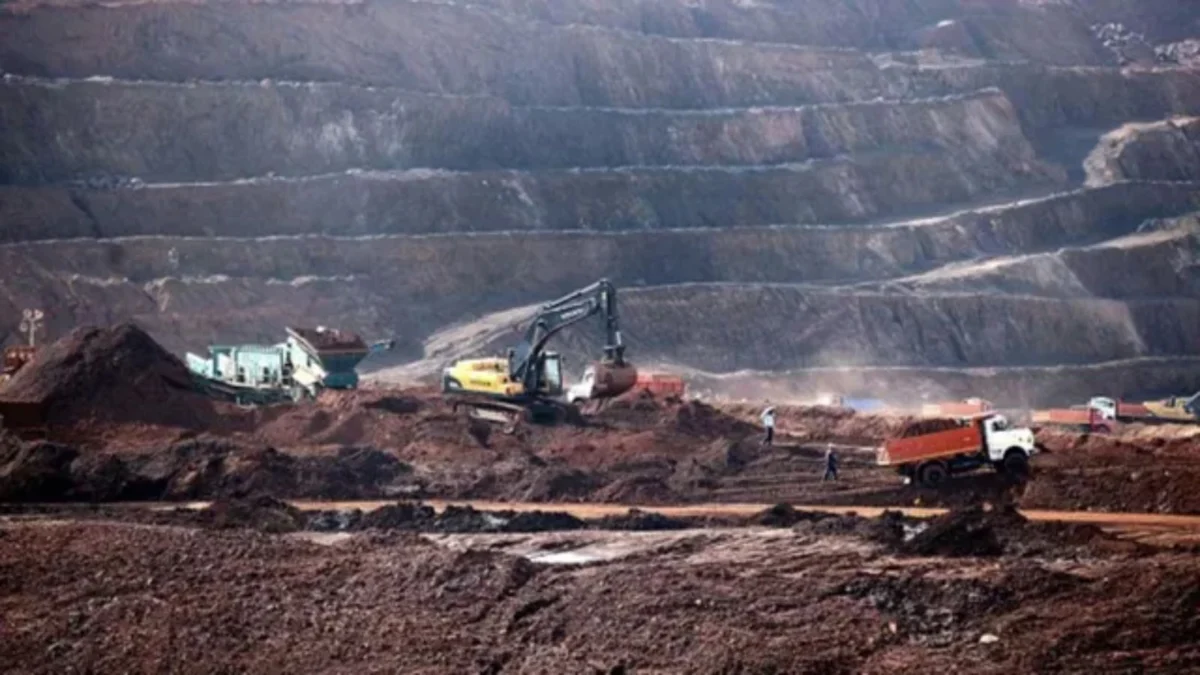
New Delhi: Amid escalating geopolitical tensions, fierce global competition for rare resources, and mounting vulnerabilities in international supply chains, the Indian government is set to unveil a comprehensive policy on the strategic stockpiling of critical minerals within the next month.
The announcement was made by Keshav Chandra, Secretary of the Ministry of Mines, while addressing industry leaders and stakeholders at the India Mines and Minerals Conclave 2026, organized by the Associated Chambers of Commerce and Industry of India (ASSOCHAM). The forthcoming policy aims to insulate India’s rapidly expanding clean energy manufacturing ecosystem from sudden geopolitical shocks, trade embargoes, and artificial supply squeezes, while decisively cutting down the nation’s absolute dependence on foreign imports for essential raw materials.
"We are making very elaborate plans for the stockpiles," Chandra stated during the conclave, confirming that the regulatory framework and operational guidelines are in the final stages of drafting and will likely be finalized within weeks.
This policy pivot comes at a critical juncture for New Delhi, which has committed to ambitious net-zero carbon emission targets by 2070. While India accelerates its transition toward green energy, electric vehicles (EVs), and high-tech manufacturing, its domestic industrial base remains heavily exposed to external vulnerabilities, particularly concerning minerals that form the bedrock of the modern technological economy.
Main Facts: The Anatomy of India’s Critical Mineral Vulnerability
At its core, a strategic mineral stockpile is a government-maintained reserve designed to ensure an uninterrupted, shock-proof supply of vital industrial inputs during national emergencies, supply chain breakdowns, or acute geopolitical crises.
The minerals in question—primarily lithium, nickel, cobalt, copper, and rare earth elements (REEs)—are non-negotiable components for modern low-carbon technologies. They are the essential raw materials required to manufacture wind turbines, high-capacity electricity grids, advanced energy storage systems, electric vehicles, and cutting-edge electronics.
However, India faces a stark structural reality: it possesses virtually no domestic processing capacity for these critical minerals and remains nearly 100% import-dependent for their refined forms.
Compounding this challenge, India’s strategic attempts to secure overseas mineral assets have faced steep bureaucratic, financial, and geopolitical hurdles. Khanij Bidesh India Ltd (KABIL)—the joint venture company established by the central government specifically to acquire critical mineral assets abroad—has struggled to build a substantial international footprint. While KABIL successfully secured five lithium brine blocks in the Catamarca province of Argentina, its proposed extraction and exploration investments in other mineral-rich jurisdictions such as Australia, Vietnam, Chile, and Mali have either stalled or completely fallen through due to competitive pressures and regulatory roadblocks.
To make matters worse, global supply chains are heavily concentrated. China currently controls approximately 90% of global critical mineral processing capacity, granting Beijing immense geopolitical leverage that it has frequently deployed during periods of international trade friction.
To safeguard domestic industries against such asymmetric leverage, the National Critical Minerals Mission (NCMM) has formulated the National Critical Mineral Stockpile Programme. Backed by an initial financial allocation of ₹500 crore ($60 million USD) for a seven-year mission period spanning from 2024–25 to 2030–31, the stockpile will initially target at least five primary critical minerals. The operational model envisions a collaborative framework where central Public Sector Undertakings (PSUs) partner with private enterprises to institutionalize and manage these strategic reserves.
Chronology of Events: From Vulnerability Recognition to Strategic Action
The journey toward establishing a robust critical mineral framework has evolved rapidly over recent years as policymakers recognized the mounting risks of external dependency:
- 2024–2025: Recognizing the existential threat posed by foreign supply monopolies, the government formally conceptualizes the National Critical Minerals Mission (NCMM). Official mission documents layout the roadmap for a National Critical Mineral Stockpile Programme, supported by a dedicated seven-year financial outlay of ₹500 crore.
- April 2025: Government policy circles signal an impending shift toward domestic processing incentives. Then-Mines Secretary Piyush Goyal announces that the ministry is in advanced stages of formulating a targeted policy to promote critical mineral processing, focusing initially on two core battery minerals without officially naming them.
- Late 2025: Comprehensive policy drafts for domestic processing clusters emerge, identifying four key industrial states—Andhra Pradesh, Odisha, Gujarat, and Maharashtra—as specialized hubs for mineral refining and technological incubation.
- October 9, 2026: Speaking at the ASSOCHAM India Mines and Minerals Conclave 2026, Ministry of Mines Secretary Keshav Chandra officially announces that the formal policy on the strategic stockpiling of critical minerals will be finalized within a month. He emphasizes the critical need for indigenous technology development to break external tech-denial regimes.
Supporting Data and Strategic Initiatives
The Indian government’s multi-pronged strategy to secure its mineral future relies on three primary pillars: strategic stockpiling, domestic processing hubs, and indigenous technology development.
1. The National Critical Mineral Stockpile Programme
Designed to mitigate global volatility, the stockpile will maintain a buffer of at least five high-priority critical minerals. According to government documents released under the NCMM framework, the program will operate via institutionalized partnerships between central PSUs and private sector entities. This public-private synergy aims to ensure that domestic manufacturing lines—especially in the automotive and defense sectors—do not grind to a halt during sudden international disruptions.
2. Decentralized Processing Hubs
Recognizing that raw material extraction alone is insufficient without refining capabilities, the Ministry of Mines has mapped out specialized regional processing ecosystems across four states:
- Gujarat and Andhra Pradesh: Designated to spearhead the processing and refining of Rare Earth Elements (REEs).
- Odisha: Positioned as the primary industrial hub for nickel processing.
- Maharashtra: Tailored to focus heavily on lithium processing and the downstream EV battery ecosystem.
3. The Quest for Indigenous Technology
A major roadblock identified by the Ministry of Mines is the reluctance of established global players to share proprietary processing know-how.
"No country which has actually established their technology in the critical mineral processing and development is ready to share it with any upcoming country," noted Keshav Chandra during his address. "And so the only option left in front of us is to develop our own indigenous technology or get the technology where it is available."
To achieve technological self-reliance, the government has identified nine specialized Centers of Excellence (CoEs) across the country. Several of these centers are already reporting substantial progress in formulating indigenous metallurgical extraction and refining techniques for complex ores, particularly for lithium and nickel.
Official Responses and Stakeholder Perspectives
The government’s proactive stance has drawn cautious optimism from industrial bodies and economic analysts, who view the upcoming stockpile policy as a vital insurance policy for India’s manufacturing ambitions.
Industry leaders at the ASSOCHAM conclave emphasized that while securing foreign assets through KABIL remains important, building domestic buffers and refining infrastructure must take precedence. Business leaders noted that high capital expenditures, complex environmental clearances, and technical know-how gaps have historically hindered private sector participation in mineral processing. The upcoming policy is expected to address these friction points through financial incentives, viability gap funding, and streamlined regulatory approvals.
Furthermore, environmental and geostrategic experts have praised the integration of sustainability standards into the new policy framework. As India ramps up its domestic mining and processing sectors, the government has signaled that adherence to strict environmental, social, and governance (ESG) norms will be non-negotiable to prevent ecological degradation while securing national sovereignty.
Implications for India’s Economic and Geopolitical Future
The formalization of the critical mineral stockpiling policy within the next month carries profound implications for India’s economic trajectory and geopolitical standing over the coming decades.
Economic Resilience
By creating strategic buffers for lithium, nickel, cobalt, and rare earths, India is directly protecting its multi-billion-dollar green transition. The rapid scaling of the domestic Electric Vehicle (EV) market, the expansion of grid-scale renewable energy storage, and the growth of consumer electronics manufacturing rely entirely on predictable raw material costs and stable supply chains. Insulating these sectors from international price shocks will keep domestic manufacturing competitive and inflation under control.
Geopolitical Bargaining Power
For decades, global clean energy supply chains have been subject to the whims of a single dominant supplier. By actively developing domestic processing clusters, investing in indigenous technological research, and forging diversified trade partnerships, India is positioning itself as a credible, reliable alternative manufacturing hub in the Indo-Pacific region. This aligns with the broader "Make in India" and Atmanirbhar Bharat (Self-Reliant India) frameworks, shifting the country’s status from a vulnerable importer to a strategic stakeholder in the global clean-tech supply chain.
As the Ministry of Mines finalizes the operational details of the stockpile policy over the coming weeks, all eyes will be on New Delhi to see how effectively public-private partnerships can be marshaled to transform India’s mineral vulnerability into long-term strategic strength.



